

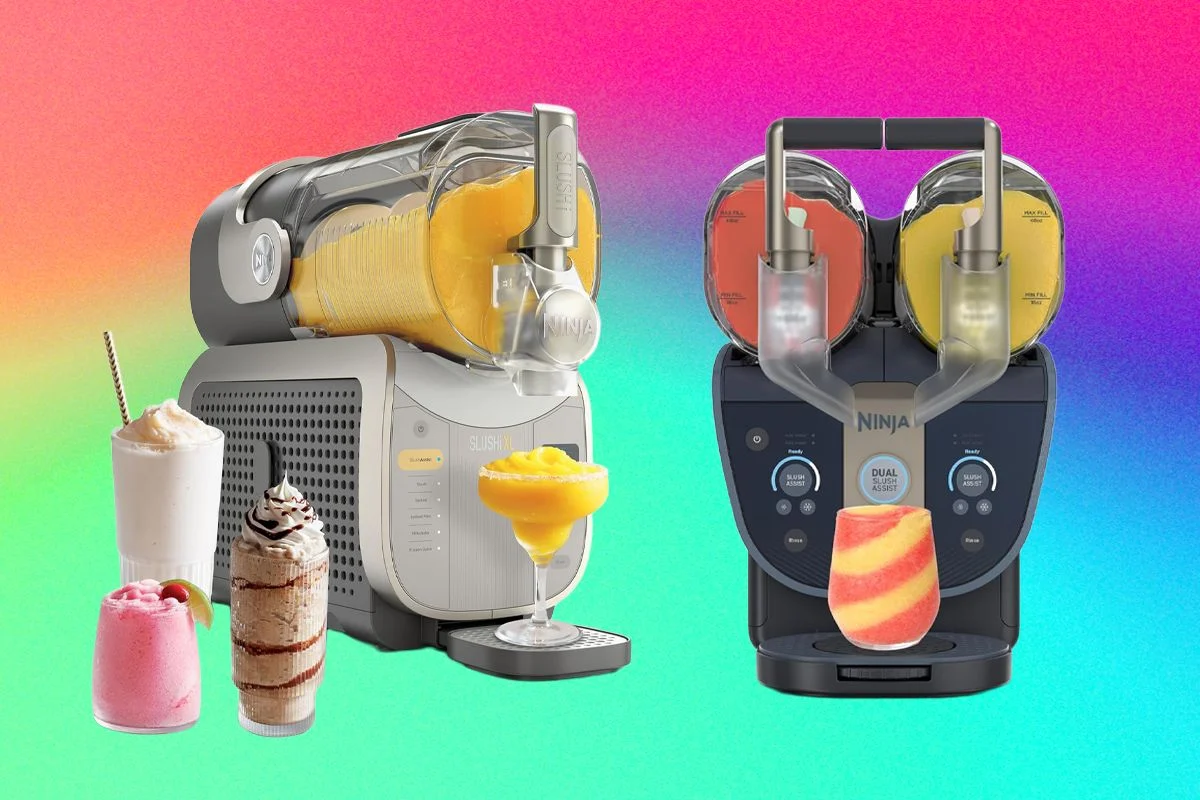
We are officially living in the golden age of the home slushie. What was once a convenience store novelty or a state-fair luxury has migrated into the American kitchen, fundamentally altering the way we entertain, hydrate, and indulge. This culinary shift was sparked by the viral success of the Ninja Slushi machine, a $349 appliance that brought professional-grade chilling technology to residential countertops. In its wake, a new cottage industry of frozen drink machines has flooded digital marketplaces, promising everything from the perfect frosé to the ultimate dairy-rich milkshake.
After three intensive weeks of rigorous testing, I am happy to report that the state of the slushie is not just strong—it is thriving. The democratization of frozen cocktails and mocktails has turned home hosts into amateur mixologists, fueling a surge of creative, sometimes eccentric, recipes circulating on Reddit and TikTok. Whether you are looking to recreate the nostalgic joy of a 7-Eleven run or seeking to elevate your summer hosting game with a batch of slushed tamarind micheladas, the technology has finally caught up to the ambition.
The Evolution of the Home Slushie: A Chronology
The recent obsession with home-frozen beverages can be traced back to the shift in domestic dining habits that occurred during the COVID-19 pandemic. During that first summer of lockdowns, "supporting local business" often meant standing in a parking lot, sipping whiskey slushies from a takeaway cup—a fleeting, bittersweet experience that left many craving a way to replicate that specific icy texture at home.
For years, the home market was dominated by blenders, which provide a "crushed ice" texture rather than the refined, velvety micro-crystal structure of a true commercial slushie. The introduction of the Ninja Slushi changed the landscape by utilizing a compact, high-efficiency refrigeration system similar to those found in commercial units. Following its release, the market saw an influx of alternatives. Brands like Chivalz entered the fray, offering competitive options for those who found the Ninja perpetually sold out. This rapid expansion has led to a marketplace that is as confusing as it is exciting, filled with all-caps brand names and varying degrees of build quality.

Supporting Data: The Mechanics of the Freeze
To understand why these machines have captured the public imagination, one must understand the simplicity of the engineering. At the core of every modern home slushie machine is a "beefy" cylindrical freezing core. This central element maintains a sub-zero temperature, while a plastic spiral auger—driven by a robust motor—continually mixes the liquid.
The physics behind the slushie is a lesson in thermodynamics. To prevent the drink from turning into a solid block of ice, the liquid must contain specific concentrations of sugar or alcohol. These solutes act as "chaos agents," disrupting the formation of ice crystals and lowering the freezing point of the mixture.
The Chemistry of the Perfect Pour
- The Sugar Factor: For an ideal slushie consistency, most experts recommend a sugar concentration of approximately 15 percent. While this may seem high, common beverages like orange juice and Coca-Cola hover around 11 percent. Using a "slush calculator" is highly recommended for those looking to fine-tune their ratios.
- The Alcohol Variable: Alcohol also serves as an anti-freeze. A concentration between 3 and 16 percent is generally the "sweet spot" for achieving a stable, drinkable consistency without stalling the machine’s motor.
- Volume Requirements: Most 88-ounce home machines require a minimum of 16 ounces of liquid. This volume is essential to ensure that the fluid remains in constant contact with the cooling core, preventing the buildup of ice "hunks" that can strain the mechanical components.
Testing the Field: Performance and Pitfalls
Our testing process was exhaustive. We put the Ninja Slushi, the Chivalz, and the Inoviva 88-Ounce Slushie Machine through a series of "stress tests," ranging from dairy-based milkshakes to acidic fruit juices and high-proof spirits.
A Cautionary Tale: The Inoviva Experience
While the Inoviva machine is a top seller on Amazon, our testing yielded discouraging results. Despite the manufacturer’s claims that the unit is quieter than the competition, our decibel meters indicated it was the loudest machine in the group. More concerning, however, was the inconsistency of the compressor. The machine struggled to maintain a steady temperature, leading to erratic freezing times and occasional system failures.

Physical build quality was also an issue. The condenser drip tray arrived stuck, requiring a level of force to dislodge that threatened the structural integrity of the machine. Furthermore, the aesthetic elements, such as the logo stickers, began to detach almost immediately. While the machine offers an adjustable thickness setting, it lacks the intuitive temperature monitoring found in more premium models, making it difficult for the user to troubleshoot the freezing process.
The Rise of the Competitors: Chivalz
In contrast, the Chivalz ($260) proved to be a legitimate contender. It successfully navigated the challenge of producing a dense, espresso martini slushie, offering a credible alternative to the industry-leading Ninja. Its ability to handle diverse viscosity levels suggests that the market for high-quality, mid-range slushie machines is finally maturing.
The "Diet" Dilemma: Can You Skip the Sugar?
One of the most frequently asked questions concerns the use of diet sodas. The answer is a qualified "no and yes." Because artificial sweeteners do not share the same freezing-point depression properties as sugar, using them in a standard slushie machine often leads to the formation of hard, jagged ice crystals. This can cause the cooling cylinder to seize, putting immense strain on the auger and the motor.
However, there is a workaround: Allulose. This rare, naturally occurring sugar is 70 percent as sweet as sucrose but is not fully metabolized by the human body. Because it mimics the behavior of sugar in a freezing environment, it is the gold standard for low-calorie slushies. We found that liquid allulose is significantly easier to integrate than powdered versions, which often require the user to create a simple syrup to ensure total dissolution. Note, however, that allulose consumption can lead to gastrointestinal distress in some individuals, a caveat worth considering before serving a full round of low-cal margaritas.

Milkshakes: The Great Texture Debate
Perhaps the most ambitious claim made by these manufacturers is the ability to produce restaurant-quality milkshakes. Our findings suggest that while these machines are capable of creating a cold, creamy beverage, they struggle to replicate the dense, silky texture of a traditional shake.
The primary obstacle is protein separation. When milk is agitated, the proteins tend to clump, leading to an unpleasant foaminess rather than a smooth emulsion. To mitigate this, we recommend adding heavy cream or half-and-half to your base. The increased fat content acts as a stabilizer. Additionally, a "tiny pinch" of salt is essential to elevate the flavor profile, balancing the heavy cream and preventing the drink from tasting one-dimensional.
It is important to manage expectations: if you are looking for the thick, rich consistency of a classic diner milkshake, or the ability to handle chunks of frozen fruit, these machines will fall short. They are, first and foremost, slushie machines.
Implications for the Future of Home Entertaining
The proliferation of these devices signals a broader trend in home lifestyle appliances: the "professionalization" of the kitchen. Consumers are no longer satisfied with simple, single-function tools. They are seeking out appliances that allow them to replicate the "experience" of a bar or cafe within the home.

The success of the Ninja Slushi and its peers demonstrates that there is a significant, untapped market for high-end, recreational appliances. However, the inconsistency of lower-tier products like the Inoviva serves as a warning to consumers: when purchasing technology that relies on precise thermodynamics—such as freezing, heating, or vacuum sealing—brand reputation and engineering quality matter.
As we look toward the future, we can expect to see further iterations of this technology. Improvements in energy efficiency, noise reduction, and more sophisticated user interfaces are the natural next steps. For now, the home slushie stands as a testament to our enduring desire to bring the indulgence of the outside world into our own living rooms. Whether you are hosting a summer garden party or simply cooling off on a Tuesday afternoon, the home slushie has officially earned its place in the modern pantry.
Summary of Recommendations
- For the Enthusiast: The Ninja Slushi remains the gold standard for performance and build quality.
- For the Value-Seeker: The Chivalz is a reliable, capable alternative that delivers consistent results.
- A Final Warning: Avoid budget-tier machines that exhibit poor build quality or lack clear temperature regulation; the frustration of a broken machine and a wasted batch of ingredients is rarely worth the initial cost savings.
As with any specialized kitchen tool, the key to the perfect slushie lies in the ingredients. Whether you are experimenting with tamarind micheladas, rosés, or classic fruit juices, remember that the science of the slush is delicate. Respect the sugar-to-liquid ratio, invest in quality ingredients, and don’t be afraid to experiment with the ratios until you find your perfect pour. The golden age of the home slushie is here—enjoy it while it’s cold.











