

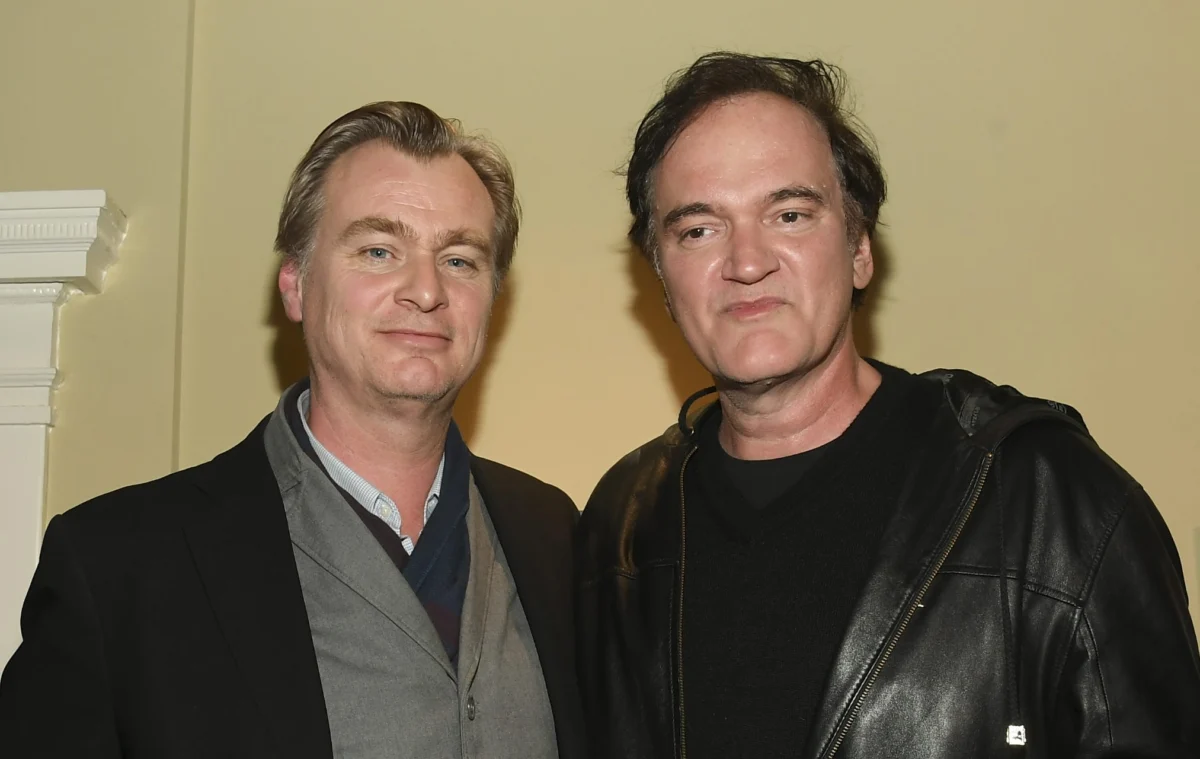
For decades, the name Quentin Tarantino has been synonymous with the reinvention of American cinema. From the sharp, needle-drop-heavy dialogue of Reservoir Dogs to the revisionist historical violence of Inglourious Basterds, Tarantino has carved out a body of work that is as distinct as it is influential. However, as the director approaches his self-imposed deadline—a ten-film retirement plan—the industry finds itself at a crossroads. While Tarantino views this exit strategy as the ultimate act of artistic integrity, his peers, most notably Christopher Nolan, are publicly urging him to reconsider, sparking a broader debate about the nature of a director’s legacy.
The Ten-Film Ultimatum: A Chronology of Intent
Tarantino’s plan to retire after his tenth feature has been a recurring theme in his interviews for over a decade. He has long maintained that directors, like athletes, have a "peak" window. In his view, the quality of a filmmaker’s work tends to decline as they age, and he wishes to exit the stage while his output remains "pure" and unblemished by the potential mediocrity of later years.
To understand the scope of this "ten-film" rule, one must first understand Tarantino’s internal arithmetic. He famously counts the two Kill Bill volumes as a single film, having written and directed them as a unified vision. Following this logic, the director has spent his career meticulously curating a filmography that he hopes will be remembered for its consistency rather than its longevity.
The timeline of his career has been a slow, deliberate march toward this final chapter:
- The Early Years (1992–1997): Reservoir Dogs, Pulp Fiction, and Jackie Brown established him as the voice of independent cinema.
- The Stylistic Peak (2003–2009): The Kill Bill saga and Death Proof showed a shift toward genre-bending experiments.
- The Historical Reimagining (2009–2019): Inglourious Basterds, Django Unchained, and The Hateful Eight saw him tackling expansive, period-specific narratives.
- The Final Act (2019–Present): Once Upon a Time in Hollywood served as a love letter to the industry. Since then, the anticipation for the "final" film has reached a fever pitch, only to be complicated by the recent abandonment of his planned project, The Movie Critic.
Christopher Nolan: The Case for the "Everything" Approach
Among the most vocal proponents of the "keep going" philosophy is Christopher Nolan. Fresh off the massive success of Oppenheimer, Nolan has used recent interviews, including a candid conversation with The Telegraph, to push back against the concept of a finite career path.
"I think it’s dangerous to look at it that specifically," Nolan stated, emphasizing that he views every project as potentially his last. "I mean, Quentin has his reasons, and I respect those enormously. But I’m hoping that he won’t stay true to them… I view every film that I do as the last I’ll ever make, and one day I will be right. So every time I want to put everything into the project at hand."
Nolan’s philosophy is rooted in the belief that a filmmaker should not "save" ideas for later, nor should they fear the decline of their own reputation. He argues that even films that fail to fully capture a director’s vision possess unique "performances, structural elements, or scenes" that make them worthy of existing. For Nolan, the "purist" desire to maintain a perfect batting average is a noble but potentially restrictive philosophy that risks depriving the world of art that, while imperfect, is still worth experiencing.
The Contrasting Views: Paul Thomas Anderson’s Blunt Assessment
While Nolan’s disagreement is framed with deep respect for Tarantino’s process, other contemporaries have been far more skeptical of the retirement narrative. Paul Thomas Anderson, another titan of the modern era, famously dismissed the idea of a fixed retirement date during an interview in 2018.
"I know Quentin likes to say, ‘I’m making 10 movies and then I’m quitting.’ But I could never do that," Anderson remarked. "I don’t know how he could say that, or how he could take himself seriously when he says that."
Anderson’s perspective highlights the inherent tension between the "auteur" as a brand and the "auteur" as a craftsman. For Anderson, filmmaking is an endurance sport, not a curated exhibition. He expressed concern that the obsession with retirement might be a reaction to the fear of "not acting one’s age" or "trying to keep up with the kids." By setting a hard limit, Anderson suggests, a filmmaker might be reacting to external pressures rather than the internal drive to create, which he believes should last as long as the director is physically and mentally capable.
The Implications: Is a Perfect Filmography Possible?
The debate touches on a fundamental question in art history: Is a creator’s legacy defined by their worst work, or their best?
Tarantino is operating under the assumption that the public and critics are unforgiving. He believes that by retiring early, he ensures that the conversation surrounding his work remains focused on his triumphs rather than a hypothetical "decline." This is a defensive strategy—a way to exert total control over his artistic narrative from beyond the grave, so to speak.
However, film history is littered with examples that contradict the "early exit" theory. Filmmakers like Akira Kurosawa, Martin Scorsese, and Steven Spielberg have all faced periods of critical reappraisal in their later years, yet their late-career work often contains some of their most profound, introspective, and technically masterful achievements. By setting a hard deadline, Tarantino may be inadvertently cutting himself off from the "late style"—the period where artists often discard the stylistic flourishes of their youth to embrace a more direct, existential honesty.
Beyond the Big Screen: Tarantino’s Future
Regardless of whether the tenth film is truly the end of his cinematic journey, Tarantino has already begun to signal a shift in his creative output. The move away from The Movie Critic—a project that was widely rumored to be his swan song—indicates that he is not bound by the industry’s expectations of his retirement.
Furthermore, his pivot to other media is already well underway. Tarantino has established himself as a successful author with his novelization of Once Upon a Time in Hollywood and his non-fiction work, Cinema Speculation. Perhaps most telling is his upcoming play, The Popinjay Cavalier, scheduled to debut on London’s West End in 2027.
This suggests that Tarantino’s retirement may not be a cessation of creativity, but rather a migration of his storytelling to different platforms. The stage and the page offer a different kind of freedom—one that is arguably less bound by the massive financial pressures and studio interference that come with high-budget feature filmmaking.
The Industry’s Silent Consensus
The broader Hollywood community remains divided, reflecting the very nature of the creative process. Studios, naturally, would prefer Tarantino to continue indefinitely; his name alone is a guarantor of cultural relevance and box office performance. Critics, meanwhile, are split between those who admire the "purist" integrity of his plan and those who are desperate to see what a 70-year-old Tarantino might have to say about the world.
Nolan’s point remains the most poignant for the future of cinema: if a director stops working, the world loses the chance to see how they evolve. The "dangerous" nature of the ten-film plan, as Nolan puts it, is that it assumes we already know what a filmmaker is capable of, closing the door on the possibility of late-stage growth.
As the industry waits for news of what the final project will be, the debate serves as a reminder of the stature Tarantino has achieved. Whether he stops at ten, eleven, or continues until he can no longer hold a camera, his influence is already cemented. The question of his retirement is less about the number of films he leaves behind and more about the fear of the unknown—the fear that even the greatest storytellers might eventually run out of things to say.
For now, the audience waits. Whether the final chapter is a masterpiece of precision or a final, defiant act of creative expression, the world of film will be watching, waiting to see if the auteur remains true to his word, or if the lure of the screen proves too strong to resist.










