

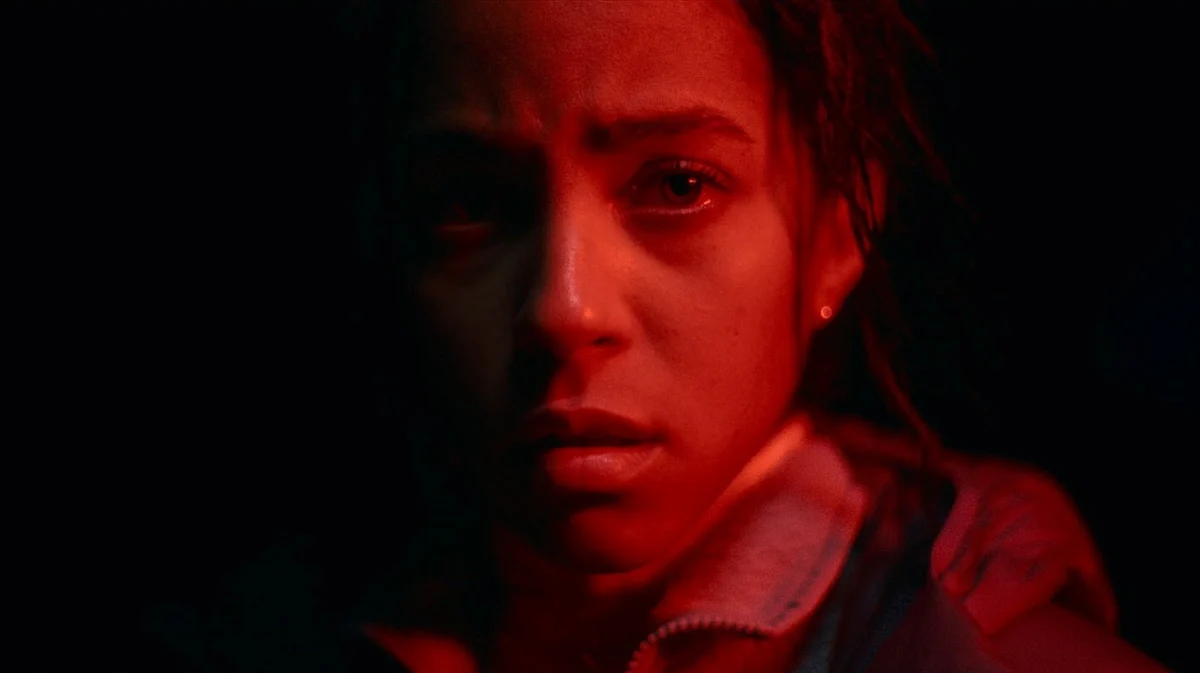
In the crowded landscape of contemporary horror, where jump scares are often manufactured in post-production via digital trickery, Paramount Pictures’ Passenger arrives as a refreshing, tactile anomaly. Directed by the visionary behind The Autopsy of Jane Doe and Scary Stories to Tell in the Dark, André Øvredal, the film takes the quintessential American nightmare—the cross-country road trip—and warps it into a claustrophobic masterclass of suspense.
At the heart of the film is a standout sequence that has already garnered significant critical attention: a nightmarish encounter in a dark forest where a simple outdoor movie screening transforms into a deadly game of cat and mouse. As the film hits theaters, the technical ingenuity behind this sequence serves as a case study in how practical filmmaking can still eclipse the capabilities of modern CGI.
The Core Premise: A Road Trip Into Darkness
Passenger follows a young couple, Maddie (played by Foundation’s Lou Llobell) and Tyler (Jacob Scipio), as they embark on a journey out of New York City. What begins as a seemingly idyllic travelogue quickly devolves when they inadvertently invite a malevolent, enigmatic entity—the titular "Passenger"—into their vehicle.
The film thrives on the vulnerability of its protagonists. By stripping away the comfort of the modern world and placing the characters on the open road, Øvredal exploits the universal fear of isolation. The "Passenger" doesn’t just stalk them; it latches onto their reality, turning the mundane tools of their journey—a car, a flashlight, and a projector—into potential instruments of their demise.
Chronology of a Technical Nightmare
The film’s most inventive sequence occurs when Maddie and Tyler, attempting to find a moment of respite, set up a portable projector in a dense, dark forest to watch Roman Holiday. The scene is designed to lull the audience into a false sense of security before abruptly shattering it.
Phase 1: The Setup
The sequence begins with the gentle glow of the projector against a translucent screen. For the audience, this provides a brief visual reprieve. However, the atmosphere shifts as the light from the projector begins to interact with the environment in uncanny ways. The shadow of the screen itself, combined with the swaying trees, creates a canvas of shifting shapes that keep the viewer guessing what is real and what is a trick of the light.
![Passenger Director Breaks Down The Horror Movie's Biggest Scare [Exclusive]](https://www.slashfilm.com/img/gallery/passenger-director-breaks-down-the-horror-movies-biggest-and-most-inventive-scare-exclusive/l-intro-1779302666.jpg)
Phase 2: The Escalation
Once the couple realizes they are not alone, the projector becomes the focal point of the scene. Rather than relying on a traditional monster reveal, Øvredal weaponizes the light source. Maddie uses the beam of the projector to scan the forest, creating a frantic, rhythmic strobe effect that mirrors her own panic. This forced the production team to balance high-intensity lighting with the need for a handheld, organic aesthetic.
Phase 3: The Climax
The sequence culminates in a visceral confrontation where the light source is used to "reveal" the entity hiding among the trees. By projecting the images of Roman Holiday onto the actual foliage, the crew created a visual layering effect that made the Passenger appear as if he were emerging from the film itself. The scene is a masterclass in blocking, requiring precise choreography between Llobell, the stunt performer playing the entity (Joseph Lopez), and the camera crew.
Supporting Data: The Logistics of Practical Scares
The brilliance of this scene lies in its adherence to "in-camera" effects. In an era where even the most basic environmental details are often rendered in post-production, Øvredal insisted on a back-to-basics approach.
The Lighting Challenge
According to Øvredal, the primary hurdle was the physical limitations of the projector. To make the sequence believable, the device needed to be lightweight enough for Llobell to wield as a weapon, yet powerful enough to throw a beam of light deep into the forest canopy.
The production team conducted extensive field tests, experimenting with over ten different screen materials to find the perfect translucency. "We had to go out into the forest in the middle of the night and test this out again and again," Øvredal shared in an exclusive interview. "How strong is the light source? How big is the projector? It had to be very lightweight, in a way, for it not to become cumbersome on screen."
The "Real" Projection
Perhaps the most impressive technical feat was the decision to project real footage onto the trees. This meant the light hitting the actors was not added later; it was reacting to their skin, their clothing, and the natural textures of the bark and leaves. This level of authenticity is exactly what gives the scene its unnerving, "uncanny valley" quality.
![Passenger Director Breaks Down The Horror Movie's Biggest Scare [Exclusive]](https://www.slashfilm.com/img/gallery/passenger-director-breaks-down-the-horror-movies-biggest-and-most-inventive-scare-exclusive/intro-1779302666.jpg)
Official Responses and Creative Vision
Director André Øvredal has been vocal about his philosophy regarding the film’s production. He rejects the trend of relying on "fix-it-in-post" visual effects, arguing that the tension felt by the audience is a direct result of the tension felt by the actors on set.
"That’s what I loved about making the movie," Øvredal explained. "It’s all real. We all did everything for real. There’s no special effects in that sequence. It’s all real projection onto the trees and onto the characters and onto everything. That was something I was insisting on, and we were all collectively, in a way, all in agreement on: that that’s the way we’re going to make this movie."
By keeping the effects physical, Øvredal forced his cast to engage with their environment. Llobell’s performance during the scene is particularly noted for its grounded, visceral panic—a reaction that might have been less authentic if she were reacting to a green screen rather than a flickering, ghost-like image on a tree in the middle of the night.
Implications for the Horror Genre
The success of Passenger and its centerpiece sequence highlights a growing appetite among audiences for "analog" horror—films that feel tangible and grounded. As high-budget franchises continue to struggle with the "weightlessness" of CGI, filmmakers like Øvredal are proving that a modest budget and a high level of technical discipline can produce far more terrifying results.
The Return to Atmosphere
The implications for the industry are clear: audiences are becoming increasingly sophisticated at spotting digital manipulation. When a director chooses to project real film onto real trees, it creates a tactile quality that the human brain recognizes as "real." This psychological anchor makes the horror significantly more effective.
The "Modest Budget" Model
Passenger serves as a model for how to maximize a modest budget. By focusing on a single, well-executed set piece rather than a series of expensive, explosive sequences, the production was able to allocate resources toward perfecting the lighting, the location, and the practical performance of the monster. This is a blueprint that many independent studios are likely to follow as the genre continues to evolve.
![Passenger Director Breaks Down The Horror Movie's Biggest Scare [Exclusive]](https://www.slashfilm.com/img/gallery/passenger-director-breaks-down-the-horror-movies-biggest-and-most-inventive-scare-exclusive/passenger-director-andr-vredal-explains-how-he-pulled-off-the-films-biggest-technical-challenge-1779302667.jpg)
Conclusion: A New Standard
As Passenger begins its theatrical run, it stands as a testament to the power of practical, immersive filmmaking. The forest sequence is not just a scare; it is a demonstration of how a director can manipulate light, shadow, and environment to tell a story without saying a word.
For horror fans, Passenger offers more than just a series of jumps; it provides a masterclass in how to build a world that feels dangerous, unpredictable, and, above all, real. As the genre continues to shift away from the spectacle-heavy blockbusters of the past decade, André Øvredal’s commitment to the "real" ensures that Passenger will be remembered as one of the most inventive and technically daring horror films of the year.
Whether you are a fan of psychological thrillers or visceral, creature-driven horror, the film’s meticulous attention to detail makes it a mandatory viewing experience. Passenger is currently playing in theaters nationwide, offering a rare opportunity to see a filmmaker at the peak of his craft, turning a simple projector into a doorway to our deepest fears.









No comments yet. Be the first to join the conversation!