Layla Zulfa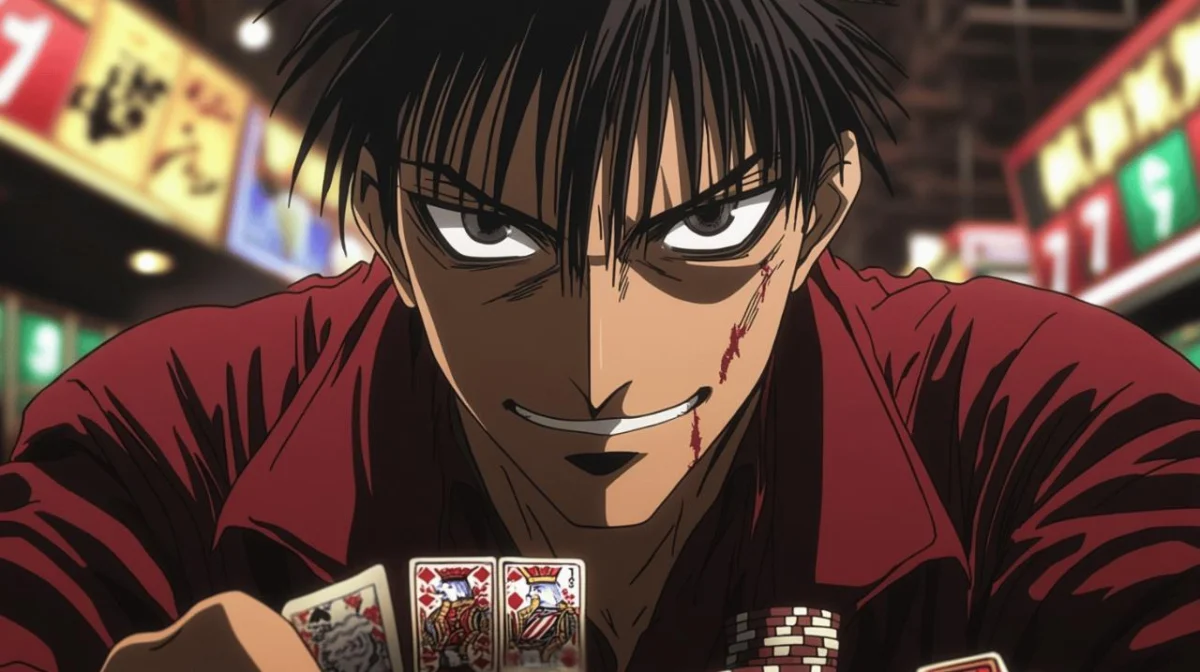
In the landscape of Japanese seinen manga, few works have managed to capture the visceral, crushing weight of human desperation as effectively as Nobuyuki Fukumoto’s Kaiji. Since its inception in the pages of Young Magazine in 1996, Kaiji has evolved from a niche gambling thriller into a cultural phenomenon, selling over 21.5 million copies and spawning a sprawling franchise of anime series, live-action films, and spin-offs. At its core, the series is not merely a tale about high-stakes betting; it is a harrowing sociological examination of a man pushed to the brink by a predatory economic system, serving as a cautionary mirror to modern society.
Main Facts: The Anatomy of a Descent
The premise of Kaiji is deceptively simple, yet it serves as a powerful engine for psychological horror. The story follows Kaiji Itou, an aimless young man drifting through the streets of Tokyo. Without stable employment or a clear sense of purpose, Kaiji represents a generation of Japanese youth marginalized by the "Lost Decade" and its lingering aftermath. His life unravels when he is coerced into assuming the massive debt of a former colleague—a staggering 3,850,000 yen (approximately 28,705 euros).
This debt acts as the catalyst for his descent into the underworld. To clear his obligations, Kaiji is lured onto the Espoir, a cruise ship where the elite gather to watch the destitute compete in rigged, life-altering games. From "Restricted Rock-Paper-Scissors" to the infamous "Human Derby," the games are designed not just to test luck, but to strip away the participants’ dignity, morality, and sanity. The series, fundamentally, is an exploration of the thin line between survival and total annihilation.
Chronology of a Cult Classic
The trajectory of Kaiji from a manga serial to an international touchstone is a testament to its narrative endurance.
- 1996: The original manga, Tobaku Mokushiroku Kaiji (Gambling Apocalypse Kaiji), begins serialization in Kodansha’s Young Magazine.
- 1998: The series gains critical acclaim, winning the prestigious Kodansha Manga Award in the General category, cementing its status as a serious literary work in the seinen demographic.
- 2007–2008: The first anime adaptation, Kaiji: Ultimate Survivor, is produced by Madhouse, introducing a new generation to the frantic, high-tension world of the series.
- 2011: A second season, Kaiji: Against All Rules, is released, covering the grueling "Underground Chinchiro" and the legendary "Pachinko SWAMP" arcs.
- 2009–2020: The franchise expands into the realm of live-action cinema with the release of Kaiji: The Ultimate Gambler (2009), Kaiji 2 (2011), and the final chapter, Kaiji: Final Game (2020), which brought the cinematic saga to a close.
Supporting Data: The Economics of the Underground
To understand Kaiji, one must understand the math of the misery it depicts. Fukumoto does not rely on simple tropes; he grounds his horror in concrete figures. The Pachinko "SWAMP" arc, perhaps the most iconic sequence in the series, serves as a masterclass in tension. With each ball costing 4,000 yen, the potential win of 700 million yen is a siren song that highlights the disparity between the desperate and the ultra-wealthy.
The financial pressure depicted is not abstract. The 3.85 million yen debt represents a "sunk cost" that keeps victims trapped within the Yakuza’s orbit. By forcing characters to participate in games like the E-Card or the "Tissue Box Lottery," the narrative illustrates how the system thrives on the internal conflict of the debtor. These figures aren’t just numbers; they are the bars of a cage. The sheer volume of sales—over 21.5 million copies—highlights that this narrative of economic anxiety resonates far beyond the borders of Japan, touching on universal fears regarding class mobility and institutional predation.
The Role of the Yakuza: Predatory Systems
In the world of Kaiji, the Yakuza are not merely gangsters; they are the architects of a shadow economy. They represent the ultimate manifestation of a system that views human life as a depreciating asset. By controlling the games, the loans, and the very air the debtors breathe, they simulate a dark, capitalist dystopia.
The manipulation is systematic. It begins with the illusion of a "fair chance." The creditors allow their victims to believe that if they just play one more game, if they just take one more risk, they can win back their freedom. This psychological trap is the hallmark of the series. The Yakuza understand that the most effective way to control a person is not through physical chains, but through the gambling addiction and the hope for a "lucky break" that keeps the victim returning to the table.
Implications: A Mirror to Modern Society
The cultural impact of Kaiji is undeniable, particularly when viewed through the lens of modern survival-based media. The most prominent example of this influence is the global sensation Squid Game. Both series share a core DNA: a protagonist drowning in debt, a clandestine organization that exploits the desperate for the entertainment of the wealthy, and a series of "childhood" games turned deadly.
However, the implications of Kaiji go deeper than mere entertainment. The series serves as a biting critique of the modern workplace and the social safety nets that fail to protect the vulnerable. The "Human Derby"—where contestants must walk across high-tension steel beams—is a literal metaphor for the precariousness of the modern professional ladder. If you slip, you fall; if you survive, you are expected to keep moving forward without pause.
Furthermore, the art style of Nobuyuki Fukumoto is integral to this critique. His use of angular, sharp, and often grotesquely expressive faces acts as a visual representation of the internal decay of his characters. When a character’s face contorts in terror or greed, the reader is not looking at a caricature; they are looking at the raw, unfiltered truth of human desperation. This aesthetic choice ensures that the reader remains uncomfortably close to the characters’ psychological suffering.
Psychological Tension and Narrative Mastery
What sets Kaiji apart from other thrillers is its relentless focus on the "internal monologue." The reader is trapped inside Kaiji’s head as he calculates odds, doubts his allies, and battles his own paranoia. The series forces the audience to participate in the game alongside him. When Kaiji is at the table, the reader is also calculating the probability of the next card, feeling the weight of the 4,000-yen Pachinko ball, and sensing the cold, calculated gaze of the villain, Tonegawa.
This immersion is why the series remains relevant. It taps into the primal fear of losing control over one’s own destiny. In an era where economic instability is increasingly common, the struggles of Kaiji Itou feel less like a work of fiction and more like an urgent warning.
Conclusion: The Legacy of a Survivor
Kaiji: Ultimate Survivor stands as a monumental work in the seinen genre. It is a bleak, uncompromising, and deeply intelligent exploration of the human condition under extreme pressure. By blending high-stakes gambling with profound social commentary, Fukumoto has created a narrative that refuses to offer easy answers or comfort.
Kaiji is not a traditional hero. He is flawed, impulsive, and often terrified. Yet, his refusal to be fully consumed by the system—his capacity for cunning and his flashes of genuine altruism in a world designed to extinguish both—makes him one of the most compelling protagonists in manga history. As long as there are systems that thrive on the debt and desperation of the individual, the story of Kaiji will remain a vital, chilling, and essential piece of cultural critique. It reminds us that while the house may always win, the true battle is not against the cards, but against the dehumanizing forces that turn life into a game of chance.


 Siti Muinah
 Azzam Bilal Chamdy