Published July 16, 2026, 8:00 AM EDT
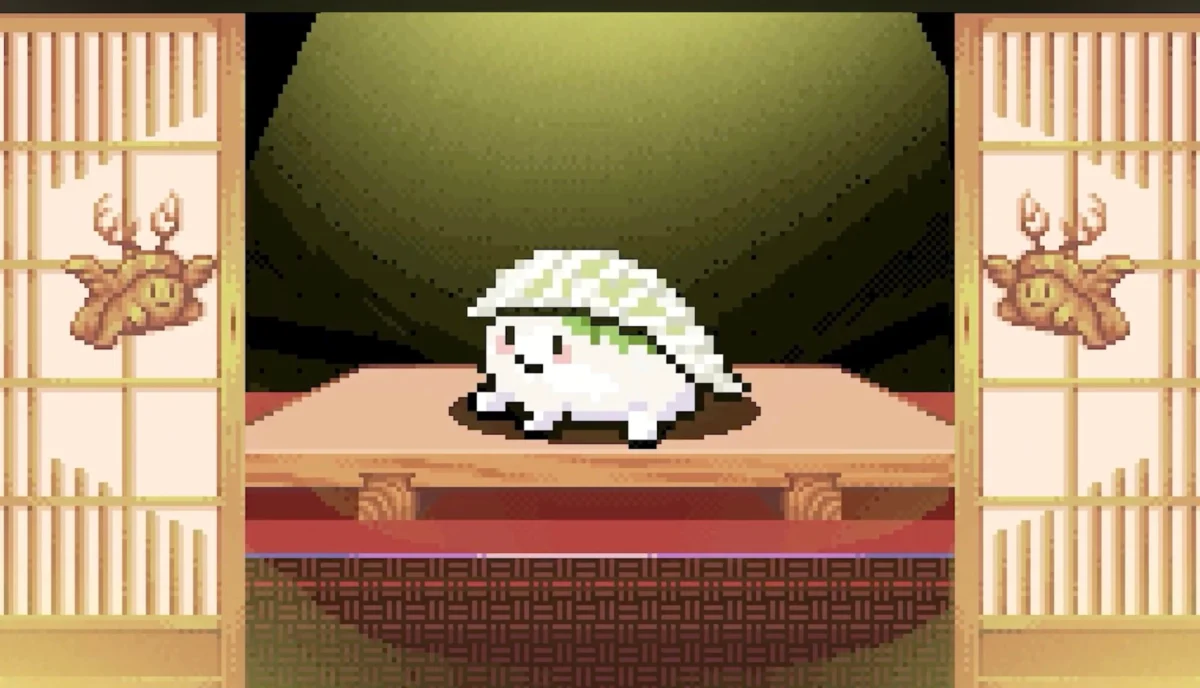
In a delightful collision of culinary artistry and competitive sport, a new independent title is carving out a unique niche in the gaming landscape. Wabisabi SushiDerby, developed by ITAMAE Studio and published by Kodansha Ltd., presents a charming and unexpectedly strategic casual racing simulator where the competitors aren’t thoroughbreds or anime-inspired horse girls, but rather smiling, pixel-art pieces of sushi. Launched on both Steam and Nintendo Switch for an accessible price of just $5, this quirky game offers a refreshing, gacha-free alternative to the popular Umamusume: Pretty Derby, promising all the fun of a deep simulation without the financial commitment often associated with its genre counterparts.
The game’s premise is as whimsical as it is engaging: players take on the role of a sushi chef and trainer, nurturing various sushi types to compete in high-stakes races across an array of restaurant-themed tracks. From bustling conveyor-belt sushi bars to serene traditional Japanese eateries and lively casual cafeterias, the environments are meticulously detailed, providing a vibrant backdrop for the fast-paced, albeit miniature, contests. Wabisabi SushiDerby successfully marries the strategic depth of a racing management sim with an endearing aesthetic, making it a standout entry in the burgeoning subgenre of simulation games that prioritize charm and accessibility.
Main Facts: A Culinary Race to Glory
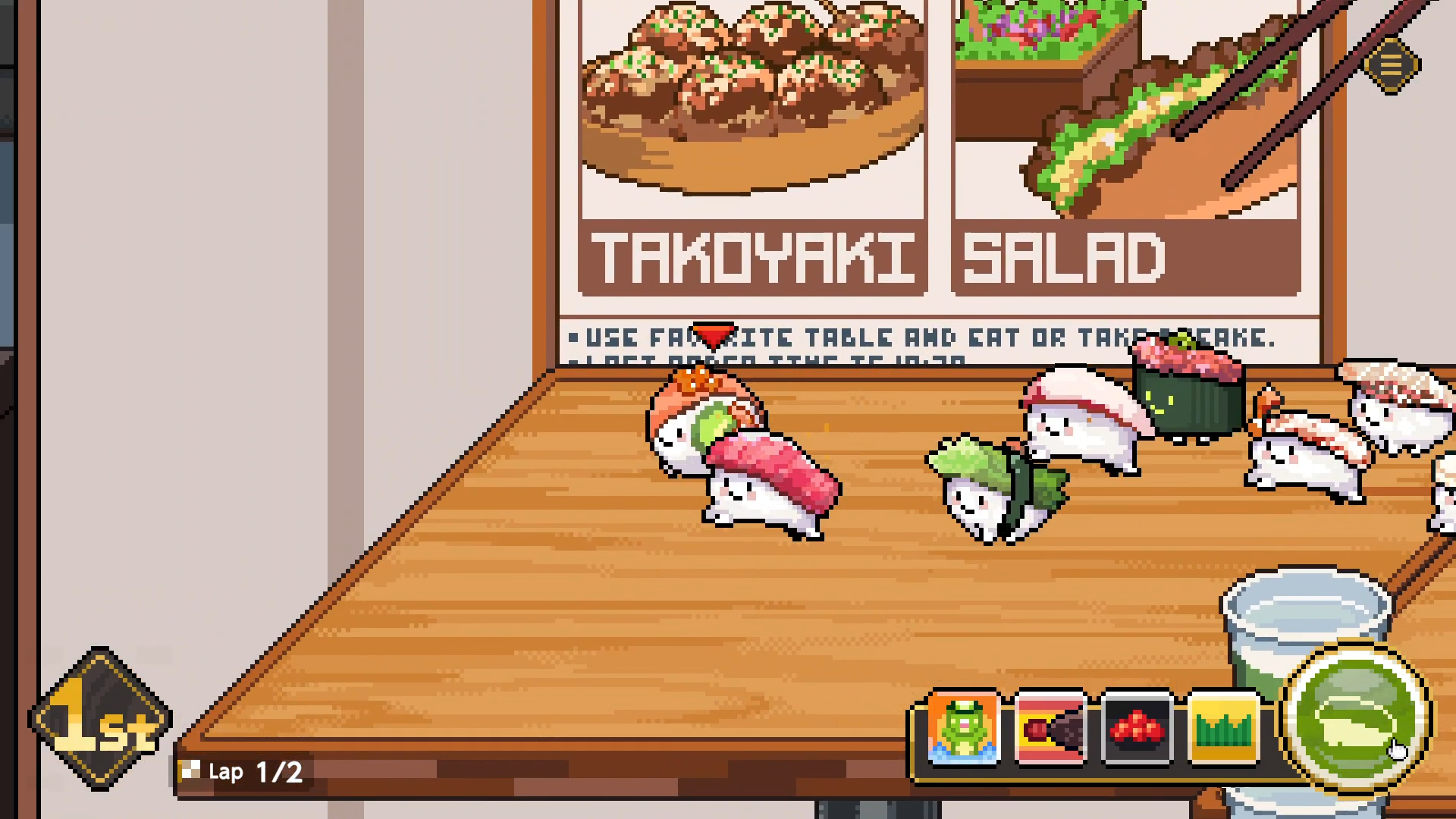
Wabisabi SushiDerby is a testament to the innovative spirit of indie game development, taking a beloved but often complex genre – horse racing simulation – and infusing it with an entirely fresh, universally appealing theme. At its core, it is a casual racing sim that tasks players with training various types of sushi, each rendered with distinct pixel-art charm, to compete in races held within diverse culinary settings. These aren’t just aesthetic backdrops; the tracks are dynamic, featuring environmental hazards such as treacherous soy sauce spills, explosive salmon roe bubbles, and even the looming threat of customer chopsticks.
The game’s appeal is multi-faceted. Firstly, its unique concept of "sushi racing" immediately grabs attention, offering a lighthearted and imaginative twist on a historically serious genre. Secondly, it positions itself as a direct, yet distinct, competitor to the widely successful Umamusume: Pretty Derby. While Umamusume captivated audiences with its deep character development and intricate gacha mechanics, Wabisabi SushiDerby deliberately eschews the latter, offering a complete experience for a one-time purchase. This $5 price point on both Steam and Switch is a critical component of its strategy, making high-quality simulation gameplay accessible to a broader audience without the pressure of in-app purchases.

Players will find themselves engrossed in a surprisingly deep progression system. Each sushi racer, despite its short "shelf life" of just four races, contributes to unlocking more advanced and powerful sushi types. This encourages experimentation and strategic team building, as players must cultivate a diverse roster of racers to conquer increasingly difficult challenges and ascend through five distinct racing ranks. The ultimate goal, the coveted S1 Galaxy Cup, offers a clear and satisfying long-term objective. Developed by ITAMAE Studio and published by Kodansha Ltd., the game demonstrates a clear vision for a fun, engaging, and player-friendly simulation experience.
Chronology: From Pixelated Pastures to Plated Tracks
The journey to Wabisabi SushiDerby‘s unique blend of racing and gastronomy is paved with a rich history of simulation games, particularly those focused on the often-overlooked subgenre of horse racing. Understanding this lineage is crucial to appreciating the game’s innovative position in the current market.
The Legacy of Racing Sims: A Niche Genre’s Ascent
For decades, horse racing simulation games have held a strong, albeit niche, appeal, particularly within Japan. Titles like Koei Tecmo’s Winning Post series, which debuted in the early 1990s, established a loyal following by offering intricate management simulations. These games delved deep into the complexities of horse breeding, training, stable management, and strategic race planning, providing a level of detail that appealed to dedicated enthusiasts. The author’s personal experience with Winning Post on the Sega Saturn underscores the enduring charm and strategic depth these titles offered, even to international players who stumbled upon them.
Despite their complexity and satisfying gameplay loops, most traditional horse racing sims struggled to gain widespread traction with overseas audiences. Barriers included language differences, the niche appeal of the sport itself outside of specific regions, and a general lack of marketing efforts aimed at a global market. These games were often text-heavy, demanding significant time investment and a willingness to learn intricate systems, which further limited their mainstream appeal. For many years, the genre remained a beloved, yet somewhat insular, segment of the Japanese gaming industry.
The Umamusume Phenomenon of 2025
The landscape of racing simulation underwent a seismic shift with the release of Umamusume: Pretty Derby in 2025. Developed by Cygames, this mobile and PC title reimagined horse racing by anthropomorphizing famous racehorses into "horse girls"—charismatic anime characters with unique personalities and backstories. Umamusume transcended the traditional boundaries of the genre, blending idol-raising simulation, deep character progression, and strategic racing mechanics with a compelling narrative.

Its success was unprecedented. Umamusume not only garnered critical acclaim but also became a massive commercial hit, particularly in Asia, generating billions in revenue. It introduced the core concepts of horse training, stat management, and strategic race participation to a global audience, many of whom had never engaged with a racing sim before. The game’s vibrant art style, engaging story, and extensive cast of characters proved incredibly appealing. However, a significant part of its monetization strategy revolved around gacha mechanics, where players spent real money to acquire new characters and support cards. While this model fueled its financial success, it also created a "free-to-play progress wall" for many players, where advancing without spending money became increasingly challenging. Umamusume undeniably brought the racing sim genre into the mainstream, but it also highlighted the potential pitfalls of gacha-centric design for player retention and accessibility.
The Emergence of Wabisabi SushiDerby
In the wake of Umamusume‘s immense popularity and its subsequent discussions around gacha mechanics, Wabisabi SushiDerby emerges as a timely and thoughtful response. Released in 2026, it cleverly leverages the newfound global interest in racing simulation, while offering a distinct and player-friendly alternative. ITAMAE Studio and Kodansha Ltd. recognized the appetite for engaging simulation gameplay but also understood the desire for a less financially demanding experience.
Wabisabi SushiDerby positions itself not as a direct competitor in terms of scope or narrative depth to Umamusume, but as a charming spiritual successor in gameplay philosophy. It embraces the core loop of training, strategizing, and racing, but strips away the gacha system, opting instead for a straightforward, upfront purchase model. This strategic move allows it to capture a segment of players who enjoyed Umamusume‘s gameplay but were deterred by its monetization, or those simply seeking a more relaxed, "chill indie" experience. Its release timing capitalizes on a market now educated and receptive to the intricacies of racing sims, but also increasingly discerning about value and monetization practices.
Supporting Data: Diving Deeper into the Gameplay Mechanics
The success of Wabisabi SushiDerby lies not just in its novel concept, but in the intelligent design of its gameplay mechanics, which balance simplicity with strategic depth.
The Art of Sushi Training and Strategy
Unlike traditional racing sims where players might manage stables of horses, Wabisabi SushiDerby streamlines the training process for its culinary athletes. The "training" aspect primarily involves unlocking skills and stat boosts between rounds. This pre-race preparation is paramount, determining the sushi’s performance on the track. Players must make informed decisions about which skills to invest in, considering the upcoming race’s environment and potential hazards. This emphasis on preparation rather than direct, moment-to-moment control during the race is a deliberate design choice, mirroring the "set it and watch" appeal of many successful simulation titles. It allows players to feel the impact of their strategic choices without requiring high-level reflexes.

A unique twist is the "short shelf life" of each sushi racer, lasting only four races. This mechanic, while seemingly restrictive, is a brilliant design choice that actively encourages player engagement with the entire roster of sushi types. It prevents players from simply sticking to one overpowered racer and forces them to experiment with different ingredients, stats, and skill combinations. This constant rotation ensures variety, keeps the gameplay fresh, and pushes players to explore the full breadth of the game’s progression system.
Navigating the Culinary Gauntlet
The racing environments in Wabisabi SushiDerby are far more than just visual backdrops; they are interactive arenas filled with both charm and peril. Players race their smiling sushi across a variety of restaurant settings, from the mesmerizing loops of a conveyor-belt sushi bar to the serene wooden counters of a traditional Japanese eatery and the bustling tables of a casual cafeteria. The "detailed environments" aren’t merely decorative; they are integral to the gameplay experience.
Each track is populated with an array of "hazards" that challenge the racers and demand player attention. Soy sauce spills can obscure the screen, temporarily hindering a racer’s vision and potentially causing them to miss crucial speed boost opportunities or fall prey to other dangers. Bursting bubbles of salmon roe can bring a racer to a halt, costing precious time and track position. Most ominously, a deadly pair of chopsticks looms, representing the ultimate threat: being "gobbled up" by a customer. These hazards introduce an element of unpredictability and risk, ensuring that no two races feel exactly the same and requiring players to adapt their strategies on the fly, even with limited direct control.
The "Cheer" Mechanic and Tactical Boosts
While direct control over the sushi during a race is minimal, players are not entirely passive observers. A crucial interactive element is the "cheer" mechanic. As races unfold, an "order tracker" in the top left corner displays customer requests. If the player’s specific type of sushi racer is on the menu, a simple button press allows them to "cheer" their racer on, activating a temporary speed boost.
This mechanic adds a layer of tactical decision-making. The speed boosts are not limitless; Wabisabi SushiDerby‘s system incorporates a "cooldown timer." Spamming cheers recklessly can leave a racer vulnerable, as they might be waiting for the gauge to refill just when a pair of chopsticks approaches, leading to an untimely demise. Players must carefully manage their boost usage, deploying them strategically to gain an advantage, navigate hazards, or escape danger. This delicate balance between risk and reward adds a surprising amount of tension and engagement to the seemingly simple races, transforming what could be a purely observational experience into an interactive challenge.

A Menu of Progression: Unlocking Culinary Racers
The progression system in Wabisabi SushiDerby is both intuitive and deeply satisfying, offering a clear path for players to advance without relying on random draws or microtransactions. Players start with basic sushi types, but as they accumulate wins and complete challenges, they unlock "more luxurious types of fish, meat, and veggies." This tiered unlocking system is designed to provide a continuous sense of achievement and to gradually introduce more powerful and versatile racers.
For instance, initial victories with a simple Salmon sushi might unlock Fire-Grilled Salmon, which then leads to Salmon Roe, and so forth. Each successive unlock represents a "better ingredient," which translates directly into "higher base stats and splashier skills" for the new racer. This direct correlation between player effort and tangible upgrades is a cornerstone of the game’s appeal. As players ascend through the five racing ranks, the complexity and power of the sushi types they can create grow exponentially, culminating in the ultimate objective: winning the "coveted S1 Galaxy Cup." This clear, linear progression system, tied to in-game achievements rather than external purchases, reinforces the game’s commitment to a player-friendly experience.
Official Responses: A Glimpse Behind the Conveyor Belt
While specific developer quotes are not readily available, the design philosophy and strategic choices embedded within Wabisabi SushiDerby speak volumes about the intentions of ITAMAE Studio and Kodansha Ltd. Their approach signifies a keen understanding of the current gaming market and player desires.
Developer Philosophy: Accessibility and Innovation
The very concept of Wabisabi SushiDerby suggests a development team deeply committed to creative innovation. ITAMAE Studio’s decision to fuse horse racing simulation with Japanese sushi culture is a bold one, indicative of a willingness to experiment beyond conventional genre boundaries. This imaginative leap is not merely for novelty; it serves a purpose. By divorcing the genre from its traditional equestrian setting, they’ve opened it up to a broader audience who might be intimidated by the realistic complexities or specific cultural references of conventional racing sims.
Furthermore, the game’s pricing strategy and complete absence of gacha mechanics are strong indicators of a philosophy centered on player value and accessibility. Representatives from ITAMAE Studio, if they were to speak on record, would likely emphasize their desire to "capture the essence of strategic management and racing excitement without the financial gamble." This approach directly addresses common player frustrations with free-to-play models, aiming to build trust and foster a community based on the enjoyment of the game itself, rather than continuous monetary investment. Kodansha Ltd.’s role as publisher further solidifies this vision, suggesting a strategic move to diversify their portfolio with unique, high-quality indie titles that offer compelling value propositions. Their support for such an unconventional concept highlights a forward-thinking perspective on what constitutes a successful game in today’s crowded market.

Implications: The Future of Niche Simulation Gaming
Wabisabi SushiDerby is more than just a charming indie game; it carries significant implications for the broader gaming industry, particularly for niche simulation genres and the evolving relationship between developers, publishers, and players.
Redefining the Racing Sim Landscape
By replacing horses with sushi, Wabisabi SushiDerby dares to ask: what else can race? This audacious reimagining challenges the very definition of a "racing sim." It demonstrates that the core mechanics of training, strategizing, and managing competitors can be applied to virtually any theme, opening doors for countless creative variations. This could inspire other developers to take beloved but niche genres and infuse them with unexpected, culturally resonant, or humorously absurd elements, thereby broadening their appeal. The game serves as a proof-of-concept that innovation in game design doesn’t always mean groundbreaking new mechanics, but often a fresh perspective on existing ones.
The Indie Success Story: Value Proposition and Player Trust
The game’s $5 price point is a powerful statement in an industry increasingly dominated by free-to-play models with aggressive monetization. In a post-Umamusume world where players are acutely aware of the "progress wall" in gacha games, Wabisabi SushiDerby‘s upfront, affordable cost is a massive draw. It fosters a sense of trust and goodwill, assuring players that their enjoyment is the primary objective, not their continuous spending. This model could serve as a blueprint for other indie developers looking to carve out a sustainable niche, proving that a compelling, complete experience at a fair price can be a more effective long-term strategy than chasing short-term gacha revenue. It highlights the growing importance of a strong "value proposition" in attracting and retaining players in a highly competitive market.
A Culinary Crossover: Bridging Cultures and Genres
The game’s brilliant fusion of Japanese food culture with racing mechanics creates a unique cultural crossover appeal. Sushi is a globally recognized and beloved culinary art form, making the game instantly relatable and intriguing to a vast international audience, regardless of their prior interest in racing sims. This blending of cultural elements with gameplay mechanics can serve as a powerful tool for bridging cultural divides and introducing players to new aspects of different traditions through an engaging medium. It suggests a future where games can leverage specific cultural touchstones to create universally appealing experiences, attracting players who might otherwise never touch a "sports sim." The success of Wabisabi SushiDerby on platforms like Steam and Switch, known for their diverse indie libraries, further underscores the appetite for such unique, genre-bending experiences.
The Enduring Appeal of Charm and Simplicity
Finally, Wabisabi SushiDerby reinforces the timeless appeal of charm, simplicity, and well-executed design. Its "endearing art style" and "cheerful character designs" contribute significantly to its "chill indie" vibe, offering a relaxing yet engaging experience. In an era of hyper-realistic graphics and complex narratives, the game proves that pixel art and a straightforward premise, when paired with solid mechanics and a clear vision, can still captivate players. The "quick little races" and "satisfying yet simple progression system" cater to players looking for digestible, fun gaming sessions without overwhelming commitments. It’s a reminder that sometimes, less is indeed more, especially when that "less" is packed with personality and thoughtful design.
Conclusion: A Bite-Sized Delight with Grand Ambitions
Wabisabi SushiDerby stands as a delightful and strategically astute entry into the gaming world. It takes the established framework of a niche simulation genre, injects it with an unexpected dose of culinary whimsy, and presents it in an accessible, player-friendly package. By skillfully navigating the waters charted by its gacha-laden predecessors, ITAMAE Studio and Kodansha Ltd. have delivered a game that is not only charming and addictive but also a powerful statement on game design and monetization.
For just $5, players can dive into a world where strategic training, tactical race management, and the simple joy of watching pixelated sushi sprint across conveyor belts coalesce into a genuinely satisfying experience. It’s a game that offers the depth of a beloved simulation without the financial barriers, proving that innovation, charm, and a commitment to player value can indeed yield a winning recipe. As the gaming landscape continues to evolve, Wabisabi SushiDerby serves as a vibrant reminder that some of the most impactful experiences can come in the most unexpected, and deliciously simple, forms. It’s truly less than the price of a California roll, but offers far more enduring flavor.