For decades, the journey to a professional brand identity was a laborious, multi-week process. It required hiring a skilled graphic designer, engaging in lengthy discovery calls, waiting for initial sketches, managing feedback rounds, and navigating the back-and-forth of file transfers. In 2026, the landscape of visual identity has been fundamentally reshaped. AI-powered logo generators have democratized the design process, allowing entrepreneurs and startups to move from an abstract concept to a polished, professional-grade logo in mere minutes.
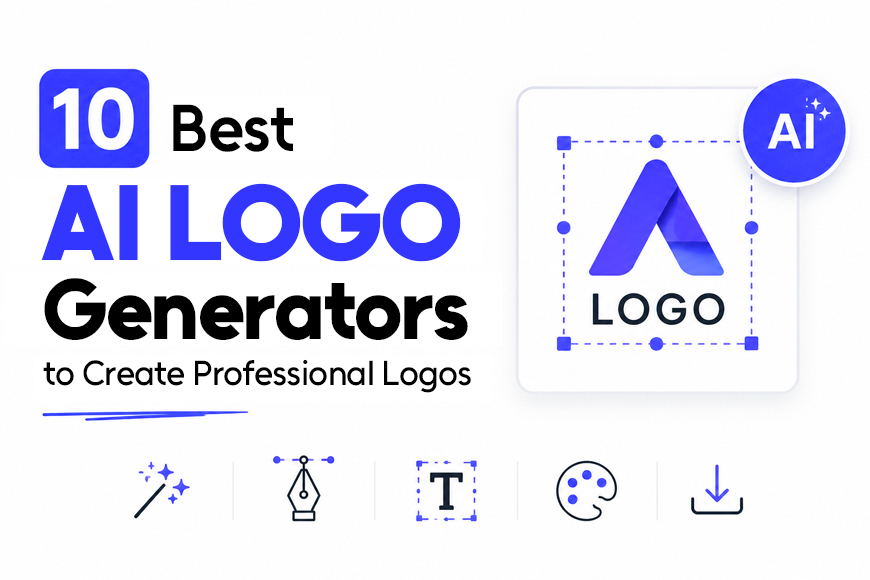
However, the rapid influx of generative AI tools has created a new challenge: quality control. Not all AI generators are created equal. Some excel at creative, modern aesthetics, while others produce generic, derivative, or outdated designs. To help you navigate this crowded market, I have spent weeks testing the most popular AI logo tools, using identical prompts across four distinct business categories to provide a transparent, hands-on comparison.
The Evolution of Logo Design: From Manual Labor to Algorithmic Precision
The history of logo design has always been tied to the technology of the era. From hand-drawn sketches in the mid-20th century to the rise of vector software like Adobe Illustrator in the 90s, tools have consistently aimed to speed up the creative process.
The current "AI wave" represents the most significant shift since the advent of digital design. By training models on millions of high-quality design assets, these platforms can now understand principles of balance, typography, and color theory. The result is a shift from "designing from scratch" to "curating and refining."

Methodology: How I Put These Tools to the Test
To ensure this comparison is grounded in reality rather than marketing hype, I established a rigorous testing framework. I evaluated each platform based on its performance in four specific business archetypes:
- The Local Coffee Shop: Requiring a warm, welcoming, and artisanal aesthetic.
- The Real Estate Agency: Requiring a clean, trustworthy, and authoritative professional look.
- The Fitness Brand: Requiring bold typography, energetic color palettes, and dynamic iconography.
- The Tech Startup: Requiring a minimalist, futuristic, and scalable visual identity.
My goal was not just to find the "best" tool, but to evaluate them based on logo quality, creative versatility, customization depth, ease of use, and export capabilities.

The Top 10 AI Logo Generators: A Detailed Analysis
1. Figma AI: The Professional’s Choice
Figma has long been the gold standard for UI/UX teams, and its integration of AI has cemented its position as a powerhouse. Unlike one-click generators, Figma AI functions as a creative collaborator. It allows for advanced vector manipulation, meaning your logo is never "finalized" by an algorithm; it is merely started by one.
- Best for: Professional designers and agencies.
- Key Advantage: Unmatched customization and native vector support.
2. Adobe Express AI: Precision Meets Creativity
Leveraging Adobe’s proprietary Firefly technology, Adobe Express brings enterprise-grade design intelligence to the masses. It is arguably the best tool for those who want a polished, corporate-ready aesthetic without needing to master complex software like Illustrator.

- Best for: Creative professionals and marketers.
- Key Advantage: Seamless integration with the broader Adobe Creative Cloud ecosystem.
3. Freepik AI Logo Maker: The Asset Library Advantage
Freepik has evolved from a repository of stock vectors into a comprehensive AI design studio. Its logo maker is particularly strong because it draws from an unparalleled library of high-quality icons and graphic assets, ensuring the output feels unique rather than "AI-generated."
- Best for: Startups looking for diverse, high-quality visual options.
4. Canva Magic Design: The Beginner’s Champion
Canva remains the most user-friendly platform in existence. Magic Design takes the stress out of composition, offering layouts that are aesthetically sound. Its greatest strength is its drag-and-drop editor, which allows users to build an entire brand identity—social media headers, business cards, and presentations—around their new logo.

5. Microsoft Designer: The Conversational Creator
Microsoft’s entry into this space is remarkably intuitive. It treats logo creation like a conversation. You describe your business, and it provides a series of high-quality iterations. It is perfect for those who want results in seconds and aren’t looking to perform deep manual edits.
6. VistaPrint AI Logo Maker: The Print-Ready Solution
For small businesses that operate in the physical world, VistaPrint offers a unique value proposition. Because they are a printing giant, their AI tool is optimized to ensure that the logos generated will look sharp on everything from business cards and apparel to large-format banners.

7. Hostinger AI Logo Maker: The Web-First Approach
Hostinger is a natural fit for those building their first website. By integrating their logo maker into their hosting ecosystem, they allow users to generate a brand mark and immediately deploy it onto their site, maintaining consistency throughout the web development process.
8. Shopify Hatchful: The Free Ecommerce Standard
Shopify’s tool is a testament to the power of simplicity. While the customization is limited, it is free and specifically tailored to the needs of online retailers. If you are launching a dropshipping store or an e-commerce brand, Hatchful is the most efficient, zero-cost starting point.

9. Squarespace Logo Maker: The Minimalist Aesthetic
Squarespace has always prioritized design, and their logo tool follows suit. The results are clean, modern, and highly legible. It is the perfect choice for portfolios, personal blogs, or agencies that lean toward high-end minimalism.
10. Namecheap Logo Maker: The Budget-Friendly Workhorse
Don’t let the name fool you—this is a surprisingly capable tool. Namecheap provides high-resolution, professional-looking logos for free, making it an excellent resource for bootstrapping entrepreneurs who need to save their budget for marketing and development.

Comparative Performance Metrics
| Tool | Quality | Customization | Best For |
|---|---|---|---|
| Figma AI | ***** | ***** | Pro Design |
| Adobe Express | ***** | ***** | Corporate Branding |
| Freepik AI | ***** | **** | Creative Assets |
| Canva Magic | **** | **** | Beginners |
| Shopify Hatchful | *** | *** | E-commerce |
Implications for the Design Industry
The rise of AI logo generators raises critical questions about the future of branding. Are human designers becoming obsolete? The consensus among industry experts is "no."
AI is incredibly efficient at the ideation and execution phases of simple design. However, a brand is more than a logo; it is a strategy. Human designers provide context, cultural awareness, and strategic thinking that AI currently lacks. The implication is that the design industry will shift from "production" to "creative direction." Designers will increasingly act as curators of AI-generated assets, guiding the algorithms to ensure the final output aligns with a brand’s long-term mission.

Official Responses and Ethics
Major platforms have been proactive in addressing copyright concerns. Most, including Adobe and Figma, have implemented "commercial use" policies, though they often stipulate that the user is responsible for ensuring the output does not infringe on existing trademarks.
Pro-Tip: Before finalizing an AI-generated logo, perform a reverse-image search and a trademark registry search in your specific jurisdiction. AI models are trained on existing data, and while they create new combinations, there is always a non-zero risk of "hallucinated" similarities to existing intellectual property.

Final Recommendations for Your Project
Choosing the right tool depends entirely on your current stage of business:
- If you are a professional: Use Figma AI or Adobe Express. The level of granular control is essential for long-term brand equity.
- If you are a student or hobbyist: Canva Magic Design provides the best learning curve and the most helpful resources.
- If you are on a zero-dollar budget: Namecheap or Shopify Hatchful will give you a professional start without the financial barrier.
Conclusion: Treating AI as a Creative Partner
We have reached a turning point where high-quality branding is no longer a luxury reserved for those with large budgets. However, as these tools become more powerful, the value of the "human touch" increases. Use AI to generate twenty variations in twenty minutes, but take the time to refine the typography, adjust the kerning, and ensure the color palette resonates with your target audience.

An AI-generated logo is a tool, not a finished product. By combining the speed of machine learning with the intent and strategy of a human owner, you can create a brand identity that not only looks professional but feels authentic. As we look toward the remainder of 2026, those who successfully navigate this hybrid approach—leveraging AI for speed while maintaining human oversight for strategy—will undoubtedly lead the market.