

For the better part of the last decade, the narrative surrounding the retail media revolution has been dominated by a single, potent currency: first-party shopper data. Retailers like Walmart, Amazon, and Albertsons effectively reinvented themselves as ad-tech powerhouses, leveraging the immense wealth of purchase history and consumer behavior data to help CPG (Consumer Packaged Goods) brands achieve surgical precision in their advertising.
However, the industry is currently undergoing a subtle but seismic shift. While data remains the backbone of these ecosystems, the "pitch" to advertisers is evolving. Retailers are moving beyond simply providing the plumbing for targeted ads; they are increasingly positioning themselves as full-service creative agencies. By marrying their unique, closed-loop insights with high-end creative services, branded content, and proprietary ad formats, retail media networks (RMNs) are attempting to solve a perennial problem for brands: how to make ads that are not just targeted, but truly resonant.
The Chronology of a Transformation
The evolution of retail media can be categorized into three distinct eras, each building upon the last to arrive at the current "Creative-First" landscape.
Phase 1: The Search and Display Era (2015–2019)
In the early days, retail media was largely utilitarian. It was defined by Sponsored Products and search-based advertising. The primary value proposition was simple: "We know what they are searching for, and we can put your product at the top of the list." It was a performance-marketing play, focused strictly on conversion rates and ROAS (Return on Ad Spend).
Phase 2: The Data Enrichment Era (2020–2022)
As the industry matured, the focus shifted toward "Full-Funnel" retail media. Retailers began utilizing their loyalty program data to help brands target consumers across the open web—not just on the retailer’s own site. This was the era of the "Walled Garden," where companies like Walmart Connect and Amazon Ads sold the promise of attribution.
Phase 3: The Creative Services Era (2023–Present)
We have now entered the third act. Retailers realized that even the most perfectly targeted ad fails if the creative execution is dull or ill-suited to the environment. The focus has pivoted toward "Retail Media 2.0," where the retailer acts as a creative partner.
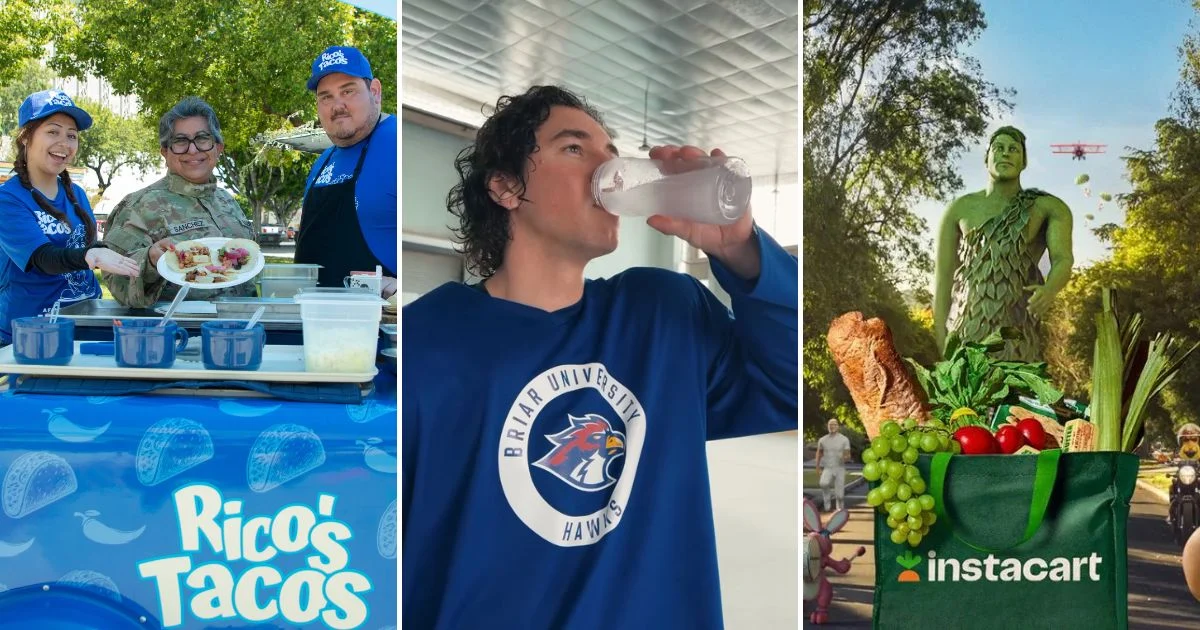
- June 2024: Albertsons signals a major shift by launching its first branded content series, Rico’s Tacos, a 22-episode production in collaboration with Procter & Gamble. This marked a departure from standard ad units, signaling that retailers are now interested in long-form storytelling.
- Late 2024: Instacart formalizes its creative ambition by launching "Instacart Ads Studio," a dedicated arm meant to co-create high-performing assets with CPG partners, explicitly acknowledging that brands often struggle to translate their TV-style ads into effective retail-digital assets.
Supporting Data: Why Content is the New King
The pivot toward creative services is not arbitrary; it is driven by hard data regarding consumer attention spans and ad fatigue. According to industry benchmarks, the "retail media tax"—the cost of advertising on these platforms—is rising. As more brands crowd the digital aisles, the competition for the top-of-search spot has reached a breaking point.
Recent surveys of ad buyers indicate that:
- Creative Resonance: Ads that incorporate brand-specific storytelling within the retail environment see a 30% higher engagement rate compared to standard static product banners.
- The "Format" Gap: Approximately 65% of CPG marketers report that their creative teams struggle to optimize assets specifically for the mobile-first, high-intent environment of apps like Walmart or Instacart.
- Conversion Velocity: Brands that utilize custom creative formats—such as interactive shoppable video—experience a 15% faster path to purchase than those relying on traditional "Add to Cart" buttons alone.
This data highlights a growing disconnect: brands have the data, but they lack the localized creative expertise to deploy it effectively. Retailers are stepping in to fill this vacuum, transforming their platforms into content hubs.
Official Responses and Strategic Rationales
The industry leaders are transparent about why they are investing millions into creative production capabilities.
Albertsons: The Content-Led Approach
For Albertsons, the Rico’s Tacos series was a test case for "Entertainment Commerce." By creating a long-form series that integrates P&G products naturally into the narrative, Albertsons moved away from the "disruption" model of advertising toward an "integration" model. An Albertsons media executive noted in a recent briefing, "Our goal is to be a partner in the consumer’s journey, not just a billboard on their path to checkout. When we use our data to inform the content itself, we create a more seamless brand experience that builds affinity, not just sales."
Instacart: Co-Creation as a Service
Instacart’s launch of the "Ads Studio" is a direct response to the "creative bottleneck" described by many of their smaller CPG partners. An Instacart spokesperson remarked, "Our CPG partners are experts in their products, but they aren’t always experts in how to showcase those products within our specific interface. Ads Studio is about democratizing high-end creative. We provide the data-backed insights on what works on our platform, and we help brands build that creative from the ground up."
Walmart and Amazon: The Format Race
While Amazon is less vocal about "creative services" in the agency sense, they are aggressively pushing proprietary ad formats like "Shoppable Fire TV" ads and custom brand stores. Walmart, through Walmart Connect, has been heavily investing in "Live Shopping" events, which act as a hybrid of QVC-style entertainment and real-time retail media. Buyers report that these formats are increasingly becoming the "anchor" of their annual media plans.
Implications for the Industry
The shift toward creative-led retail media carries significant implications for both brands and the agency ecosystem.
1. The Disruption of the Agency Model
Historically, a CPG brand would hire a creative agency for the "big idea" and a media agency for the distribution. If retailers start acting as the creative agency, the lines of demarcation blur. Creative agencies may find themselves fighting to remain relevant in the retail media space, as retailers possess the "secret sauce"—the data—that informs what creative will actually move the needle.
2. The Rise of "Contextual Commerce"
We are moving toward an era where the content is the store. By integrating products into branded content series or interactive videos, the distinction between "watching" and "shopping" disappears. This is the ultimate goal of retail media: to make the shopping experience so immersive that the purchase feels like an organic conclusion to a piece of content, rather than a forced transaction.
3. Increased Barriers to Entry
While this shift benefits large incumbents like P&G, Unilever, and Nestlé, it poses a challenge for smaller brands. If the "entry price" for success on a retail media platform is no longer just the ad spend, but also the investment in high-end, data-informed creative production, smaller players may find it increasingly difficult to compete. This could lead to a "creative divide" where only the largest corporations have the resources to fully capitalize on the new RMN offerings.
4. Privacy and Creative Ethics
As retailers use their data to influence the creative content of an ad, questions will inevitably arise regarding consumer privacy. If an ad is hyper-personalized based on a user’s purchase history to the point of being "tailored creative," does it cross the line from helpful to invasive? Regulators are already keeping a close eye on how retail media networks use data for targeting; it is only a matter of time before they turn their attention to how that data is used to inform creative storytelling.
Conclusion: The Path Forward
The retail media landscape is maturing. The days of simply buying a banner ad and hoping for the best are drawing to a close. We are witnessing the birth of a hybrid industry where the retailer is no longer just a storefront, but a studio.
For brands, the message is clear: data is the foundation, but creative is the structure. To succeed in the coming years, marketers must look for RMN partners who can provide more than just audience segments. They must seek out platforms that offer the creative tools, content production capabilities, and iterative testing environments necessary to turn shoppers into loyal customers.
As Albertsons, Instacart, Walmart, and Amazon continue to refine their creative offerings, the industry will likely see a surge in innovation. The retailers that win will be those that strike the perfect balance—using data to fuel creativity, while ensuring that the consumer experience remains authentic, engaging, and, above all, useful. The "creative pivot" is not merely a trend; it is the next essential phase of the digital commerce revolution.











