

In a development that blurs the line between speculative science fiction and engineering reality, a California-based startup has secured a landmark regulatory victory. Reflect Orbital, an ambitious space-tech firm, has received official approval from the Federal Communications Commission (FCC) to begin testing satellite technology designed to reflect sunlight onto the Earth’s surface. While proponents champion the project as a revolutionary leap for global infrastructure and emergency response, the scientific community is sounding the alarm, warning that the "Icarus" style of orbital engineering could irrevocably alter our night sky and the delicate biological rhythms of our planet.
The Mechanics of Illumination: How Eärendil-1 Works
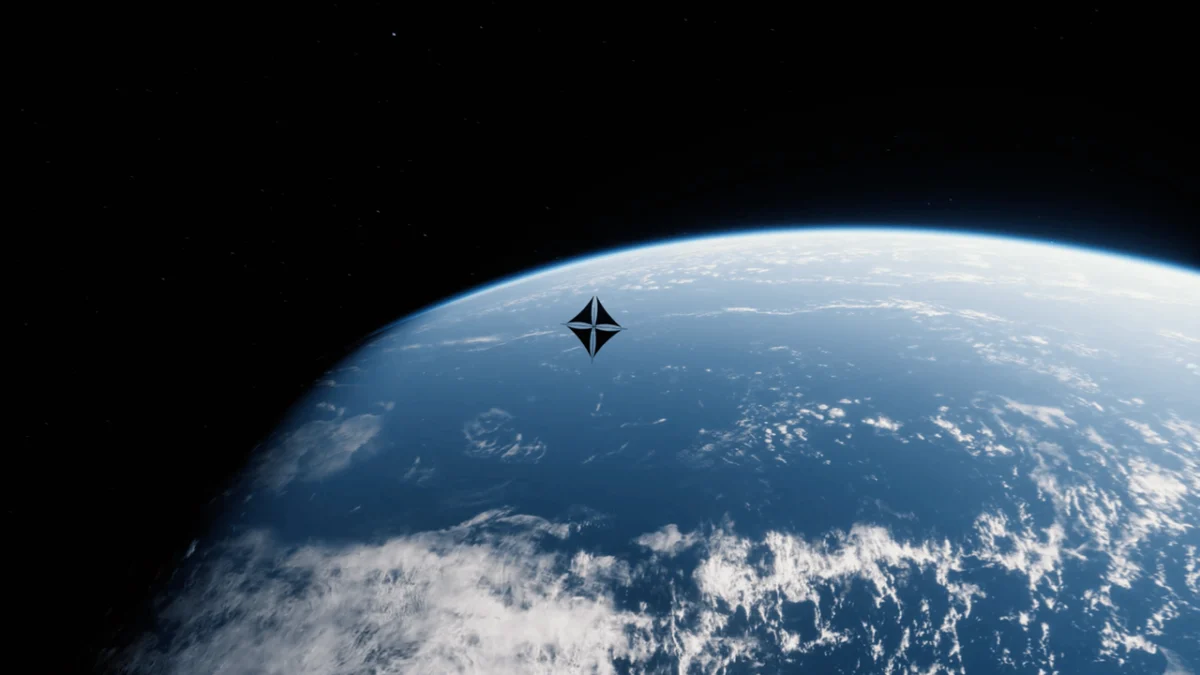
The core of this ambitious project is the Eärendil-1 spacecraft, a satellite currently in development that is designed to operate in low Earth orbit (LEO). Unlike traditional satellites that focus on telecommunications or Earth observation, Eärendil-1 is equipped with an array of four sophisticated, thin-film reflectors. Each of these mirrors measures approximately 18 meters—roughly 60 feet—in diameter.
These reflectors are designed to be deployed with precision, catching the Sun’s rays from positions where the Earth is currently experiencing night and angling them toward specific, pre-determined locations on the ground. Reflect Orbital’s stated goal is to provide a "on-demand" light source. In peak operation, the system is designed to deliver up to 36,000 lux—an intensity roughly comparable to the daylight experienced outdoors on a clear day. For continuous, lower-intensity needs, the company suggests the mirrors could provide a steady 100 lux, a level of illumination consistent with standard indoor office environments, maintained around the clock.
A Chronology of Ambition: From Concept to FCC Approval
The trajectory of Reflect Orbital’s project has been one of rapid, albeit controversial, acceleration.
- Conceptual Foundation: For decades, the idea of orbital mirrors has been a staple of science fiction, famously appearing as the "Icarus" satellite in the 2002 James Bond film Die Another Day. While the film depicted the technology as a weapon, real-world engineers have long explored it for its potential to illuminate dark polar regions or provide power to remote areas.
- Engineering Phase: Over the last few years, Reflect Orbital moved from theoretical modeling to hardware prototyping, focusing on the material science required to create ultra-lightweight, high-reflectivity film capable of surviving the harsh environment of space.
- Regulatory Submission: The company submitted its proposal to the FCC, framing the project as a breakthrough in communications and infrastructure utility.
- The FCC Ruling: In a decision that highlights the agency’s shift toward supporting commercial space innovation, the FCC granted the necessary licenses for testing. The agency justified the decision by noting that its mandate is to foster economic development and technological progress within the satellite and communications sector.
- The Upcoming Launch: With the license in hand, the company is now preparing for the deployment of the Eärendil-1, marking the first time such an expansive, sunlight-reflecting system will be tested in orbit.
The Promise: Infrastructure, Rescue, and Energy
Reflect Orbital’s leadership argues that the utility of this technology is vast. Ben Nowack, the company’s Chief Executive, has been vocal about the potential benefits, emphasizing that the project is a testament to the importance of testing novel, high-impact technologies in space.
The primary applications touted by the company include:
- Extended Construction Shifts: In remote or high-latitude regions where daylight hours are severely limited, orbital mirrors could allow construction projects to continue safely through the night, potentially shortening project timelines and reducing costs.
- Emergency Response: In the aftermath of natural disasters where electrical grids have been decimated, "artificial daylight" could provide critical illumination for search and rescue operations, allowing teams to work through the night with the visibility of daytime.
- Solar Energy Generation: By extending the hours of sunlight in specific locations, the company suggests that utility-scale solar farms could potentially generate power for longer periods, increasing the efficiency and stability of renewable energy grids.
The Skeptics: Astronomers and Environmentalists Weigh In
Despite the technical ingenuity, the project has ignited a firestorm of opposition. Astronomers are perhaps the most vocal critics, arguing that the reflection of sunlight, even if targeted, will inevitably cause light pollution that disrupts the study of the cosmos.
Tony Tyson, chief scientist at the Vera C. Rubin Observatory, has been particularly blunt, characterizing the proposal as "even crazier" than the existing challenges posed by the massive growth of satellite constellations like Starlink. The concern is that as the number of these reflectors increases, the night sky will be crisscrossed with flashes of reflected light, creating significant noise in data collected by sensitive ground-based telescopes.

The European Southern Observatory (ESO) has added to the warnings, suggesting that a full-scale deployment of such technology could increase sky brightness at astronomical sites by three to four times. Such an increase would render many of the world’s most sophisticated telescopes ineffective, as they struggle to differentiate between deep-space signals and the artificial glare of orbital mirrors.
Beyond the impact on science, environmentalists point to the biological consequences. Many species, including migratory birds, sea turtles, and various insects, rely on the natural cycles of darkness to navigate and hunt. Introducing artificial light—especially light that can be directed anywhere on the globe—could have cascading effects on ecosystems that have evolved over millions of years to expect the dark.
Regulatory Limitations and the Call for Oversight
A significant point of contention in the current debate is the role of the FCC. The agency has clarified that its primary jurisdiction covers communications services, and it does not see the broader environmental or ecological impact of orbital mirrors as falling under its regulatory scope.
This has led to a legal and ethical vacuum. Critics argue that if the FCC is only focused on technical compliance, there is no government body currently tasked with evaluating the "planetary cost" of such projects. Experts are now calling for a more interdisciplinary review process, suggesting that agencies such as NASA or the Environmental Protection Agency (EPA) should be involved in assessing the long-term impact of space-based environmental modifications.
Looking Forward: The Future of Orbital Mirrors
As Reflect Orbital moves toward its inaugural test, the project stands as a litmus test for the future of commercial space activity. The company’s success in obtaining FCC approval signals a new era in which space is increasingly viewed as an extension of the terrestrial economy, rather than a domain solely for scientific exploration or state-sponsored activity.
However, the opposition highlights a growing awareness that our actions in orbit have immediate, tangible consequences on Earth. Whether these orbital mirrors will eventually be viewed as a vital tool for human progress or an example of technological hubris will likely be decided by the outcome of these initial tests.
If the technology proves effective, the industry may see a surge in similar projects. This, in turn, will likely force a global conversation on the governance of the night sky and the potential for "orbital pollution." For now, the world waits to see if the Eärendil-1 will truly bring a new dawn for industry, or simply cast a long, unwanted shadow over our view of the universe.
The path forward will require a delicate balance: fostering the spirit of innovation that drives startups like Reflect Orbital while ensuring that the sanctity of the night sky and the integrity of our biological ecosystems are preserved for generations to come. The test flight of the Eärendil-1 is not merely a technical milestone; it is the opening chapter of a much larger, and far more complex, debate about our responsibility as architects of the space above us.











