

In the hyper-accelerated digital economy, brand reputation is no longer built over decades; it is earned—or lost—in a single afternoon. For marketing teams, social media sentiment is far more than a vanity metric; it is an early warning system, a strategic compass, and a real-time pulse on global culture. If your organization is still relying on manual tracking or outdated, rule-based keyword tools, you are no longer listening to your audience—you are guessing.
The emergence of sophisticated Artificial Intelligence (AI) and Machine Learning (ML) has fundamentally altered the landscape of consumer intelligence. Modern AI is quietly mastering human language—including its complexities, regional dialects, and unspoken subtexts—in ways that older technologies never could. For brands, this capability represents the difference between reactive damage control and proactive market leadership.
The Evolution of Sentiment Analysis: From Keywords to Context
At its core, AI sentiment analysis is the application of Natural Language Processing (NLP) to interpret the emotional undertones of text data. Historically, sentiment analysis was a crude, rule-based exercise. Teams would manually curate lists of "positive" and "negative" keywords. If a comment contained "excellent," it was logged as positive; if it contained "bad," it was logged as negative.
This binary approach failed to account for the nuance of human speech. Consider the phrase: "That concert was sick!" A rule-based system, identifying the word "sick," would incorrectly categorize the sentiment as negative. Conversely, an AI-powered system—trained on Large Language Models (LLMs)—analyzes the syntax, context, and emotional weight of the sentence, correctly identifying the slang as a marker of high praise.

The Shift to Aspect-Based Analysis
The industry is currently moving toward "Aspect-Based Sentiment Analysis." This advanced methodology does not merely classify a post as "happy" or "unhappy." Instead, it dissects the feedback to attribute sentiment to specific features. For example, a retailer can now distinguish between a customer who "loves the design of the shirt" but "hates the fabric quality." This granularity transforms raw, unstructured data into actionable intelligence for product development, supply chain management, and marketing strategy.
Chronology of Adoption: The Digital Transformation of Feedback
The journey toward AI-driven sentiment analysis has evolved in three distinct phases:
- The Manual Era (Pre-2010s): Brands relied on surveys, focus groups, and manual monitoring of forums. Feedback was slow, expensive, and limited by sample size.
- The Keyword Era (2010–2018): Tools began scraping social media for brand mentions. Sentiment was tracked using basic keyword dictionaries. While scalable, these tools suffered from extreme inaccuracy due to sarcasm and slang.
- The AI/LLM Era (2019–Present): With the rise of deep learning and transformer models, AI began to understand context. We are now in the age of "Agentic AI," where tools don’t just categorize data but trigger automated workflows, alerts, and strategic recommendations based on detected shifts in public mood.
Supporting Data: Why Accuracy Matters
The necessity of AI-powered sentiment analysis is supported by the sheer volume of modern social interaction. According to industry benchmarks, the average brand receives thousands of mentions across multiple platforms daily. It is humanly impossible for a social media team to analyze this volume manually.
AI-driven platforms, such as Sprout Social, have demonstrated that when brands leverage AI for sentiment classification, they experience a significantly higher "Precision-Recall" ratio. In a 2023 study, AI-integrated platforms reduced the time spent on manual social monitoring by approximately 65%, while simultaneously increasing the accuracy of sentiment identification by nearly 40% compared to legacy keyword-based tools.

The Strategic Implications for Brand Health
Brand health is the aggregate measure of reputation, trust, and emotional connection. Because this perception shifts in real-time, it requires a "live dashboard" approach.
Replacing Guesswork with Data-Driven Confidence
When decision-makers rely on "gut feeling," they often miss the subtle signals that precede a crisis. AI-powered tools provide a factual baseline for marketing investments. If a campaign is receiving lukewarm reception, AI can pinpoint the exact messaging elements causing confusion, allowing for a pivot before the campaign budget is exhausted.
Scalability and Global Reach
For multinational corporations, the challenge is multiplied by language barriers. Legacy tools often struggle with idioms or regional slang. Modern AI models, trained on massive, diverse datasets, can now interpret sentiment in dozens of languages simultaneously. This allows a global brand to ensure that their message is resonating in the same way in Tokyo as it is in New York.
Early Crisis Detection
Perhaps the most critical implication is the ability to detect "micro-trends." Sentiment analysis can identify a surge in negative conversation around a specific topic before it makes the news cycle. By using "Spike Alerts," social media managers can address a disgruntled customer or a manufacturing defect in its infancy, potentially preventing a full-scale PR disaster.

Official Industry Responses and Use Cases
Leading organizations have already integrated these tools into their core operational workflows.
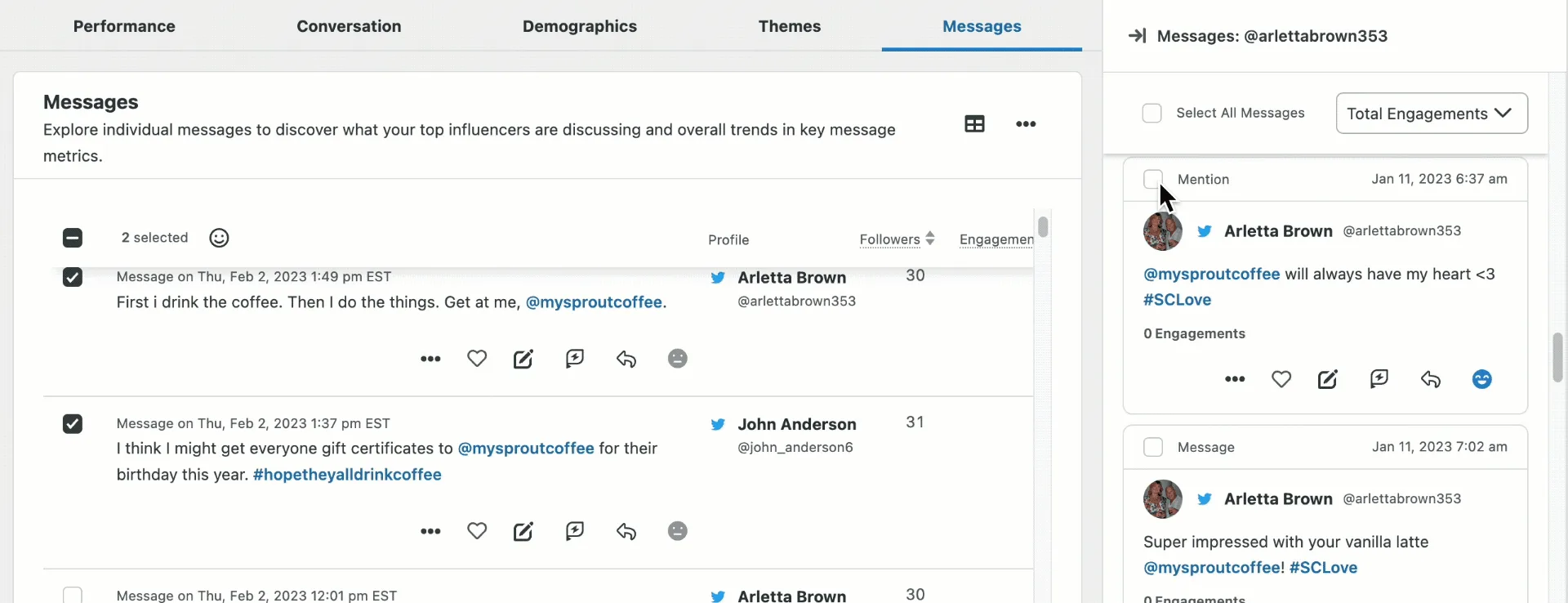
- Healthcare Proactivity: Penn State Health utilized AI-driven social listening to manage patient sentiment, allowing their team to address health-related concerns in the "Smart Inbox" with full context. By viewing the sentiment behind every message, they transformed a standard support queue into a high-touch patient experience platform.
- Retail and Product Launch Optimization: The Atlanta Hawks leveraged real-time sentiment analysis during the launch of their Nike City Edition jerseys. By monitoring the "Topic Insights" in real-time, they were able to confirm 99% positive sentiment, providing stakeholders with immediate, quantifiable proof of the campaign’s success.
- Crisis Management: Indiana University utilized sentiment tracking to manage the fallout from a controversial public statement. By centralizing all related social chatter into one dashboard, they were able to provide leadership with an accurate pulse on the situation, resulting in a public response within 24 hours that successfully stabilized the institution’s reputation.
Addressing the Challenges: How to Overcome AI Limitations
While AI is transformative, it is not infallible. Even advanced models face hurdles:
- Sarcasm and Subtext: A comment like "Great, another delayed shipment!" is a classic trap. Advanced tools, such as those integrated into Sprout Social, combat this by training on contextual signals rather than isolated words.
- Biased Training Data: If an AI is trained on an outdated dataset, it will fail to recognize modern slang. Top-tier tools utilize diverse, continuously updated datasets that reflect how actual communities communicate across different subcultures.
- Multilingual Accuracy: Global brands must avoid tools that treat non-English languages as literal translations. Effective sentiment analysis requires models that understand the cultural idiom—the "flavor" of the language—to ensure that global perception is measured accurately.
Conclusion: The Competitive Advantage of "Listening"
In an era where social media is the most direct, unfiltered source of consumer truth, companies that fail to adopt AI sentiment analysis are choosing to operate in the dark.
The transition from passive monitoring to active, AI-driven intelligence is not merely a technical upgrade; it is a strategic necessity. By turning raw, chaotic social data into a structured stream of actionable insights, brands can move from chasing the narrative to leading it. As the technology matures, the gap between those who "guess" and those who "know" will only continue to widen. The question for your brand is no longer whether you can afford to invest in these tools, but whether you can afford the cost of not knowing what your customers are actually saying.











No comments yet. Be the first to join the conversation!