Rifan Muazin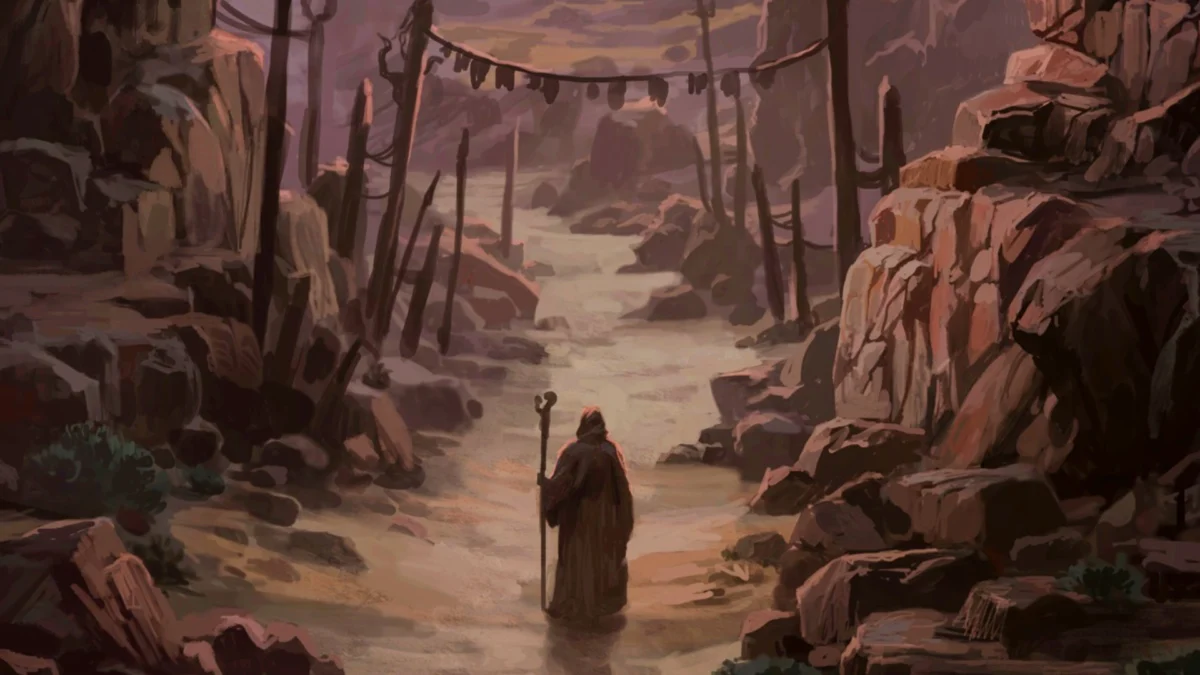
In an era dominated by the frantic, service-driven cycles of Diablo 4 and the hyper-complex, procedurally generated labyrinths of Path of Exile 2, the Action RPG (ARPG) genre often feels like it is sprinting toward a future of endless seasonal grinds. Yet, nestled within this landscape is Titan Quest 2, a sequel that is daring to look backward to move forward. Developed by Grimlore Games, the title has just entered its most ambitious phase yet with the release of the "Chapter 4: Wild Lands" update, a content drop that reinforces the game’s identity as a deliberate, hand-crafted, and deeply rewarding throwback to the golden age of the genre.
For those who cut their teeth on the isometric masterpieces of the late 90s and early 2000s, Titan Quest 2 is not just another hack-and-slash; it is a vital preservation of a design philosophy that many feared was being lost to time.
Main Facts: The Scope of the Wild Lands Expansion
The "Wild Lands" update is, by all metrics, the most significant expansion to Titan Quest 2 since it entered Early Access. It pushes the boundaries of the game’s map into uncharted territories—a desolate, untamed wilderness described by Grimlore as a place "few mortals have dared tread."
The sheer density of the content provided in this update is staggering:
- Five Fated Quests: These anchor the main narrative, pushing the player deeper into the mythological corruption of the Greek landscape.
- 13 World Quests: Including four major featured side quests that offer deep-dives into the lore of the region.
- 18 New Dungeons: Ranging from claustrophobic subterranean ruins to vast, sprawling temples.
- Secrets and Encounters: Over 20 hidden events and 20+ randomized encounters ensure that the world feels alive and unpredictable, even in a hand-crafted environment.
Beyond the content density, the mechanical ceiling has been raised. Players can now push their characters five levels higher, unlocking the fifth and final tier of passive abilities for all mastery classes. This represents a significant shift in build diversity, allowing players to solidify their character archetypes with high-level synergies that were previously unattainable.
Chronology: A Steady March Toward 1.0
Since the announcement of Titan Quest 2, Grimlore Games has maintained a remarkably consistent cadence. Unlike many Early Access titles that suffer from feature creep and prolonged periods of radio silence, the team has treated the development process as a structured, iterative dialogue with their player base.
- The Announcement: Building upon the legacy of the original 2006 title, Grimlore set out to capture the "feel" of the original while leveraging modern engine capabilities.
- Early Access Launch: The game debuted with a solid foundation of combat mechanics and the core mastery system, focusing on stability and the "traditional" ARPG feel.
- The Content Sprints: Throughout the last several months, the team has systematically rolled out chapters, each introducing new biomes and enemy types.
- The Current Milestone: With the arrival of Chapter 4, the game has transitioned from a proof-of-concept into a robust, mid-to-late-game experience. The integration of community-requested features—such as the loot filter and UI overhauls—signals that the game is moving from its foundational phase into its final polish phase.
Supporting Data: The Craft of the Hand-Made World
One of the most defining characteristics of Titan Quest 2 is its refusal to rely solely on procedural generation. While procedural maps offer infinite replayability in titles like Path of Exile, they often lack a sense of place or environmental storytelling.

Grimlore’s "Wild Lands" update leans heavily into "open-world freedom," but keeps the environments entirely hand-crafted. This design choice pays dividends in immersion. When a player wanders into a dungeon, they aren’t looking at a random collection of assets; they are exploring a space that was designed to guide their eye, challenge their positioning, and tell a story through architecture.
The Enemy Roster Expansion
The update also expands the bestiary with an eye toward tactical variety:
- Three Full-Scale Bosses: Including a highly anticipated, iconic mythological figure.
- Ten Mini-Bosses: These serve as gear-checks and difficulty spikes within the world.
- Four Hero Monsters: These are not just damage sponges; they are intelligent threats with unique, identifiable mechanics. The inclusion of the "Dung Thrower," a Boarman with a penchant for high-risk/high-reward combat, is indicative of the team’s willingness to introduce personality into their enemy design.
Quality of Life Improvements
The technical polish in this update is as vital as the new landmass. The introduction of the first iteration of a Loot Filter addresses the primary complaint of the ARPG genre: screen clutter. While the team notes this is a "simple version," it provides the necessary utility for players to focus on high-tier items. Coupled with the ‘junk’ and ‘favorite’ tagging systems, the inventory management loop is now significantly more efficient.
Official Responses: Grimlore’s Design Philosophy
In their official communications accompanying the update, Grimlore Games has been transparent about their long-term vision. They have explicitly stated that Titan Quest 2 is not intended to be a "live-service" game in the modern sense. There will be no predatory seasonal battle passes or temporary FOMO-driven (fear of missing out) content.
"We just wanted to give you something simple to start out with," the developers stated regarding the new loot filter, promising that the system would grow into a much more powerful tool in future patches.
This philosophy extends to the pricing model. The team has been clear that as the game grows in size and scope, the price of entry will rise. This is a direct incentive for early adopters to support the game during its development, ensuring that the final 1.0 release is a complete, polished product rather than a service that requires a roadmap to "fix" it post-launch.
Implications: The ARPG Landscape in 2026
The release of the Wild Lands update has profound implications for the state of the genre. We are currently witnessing a bifurcation in the market. On one side, we have the "Mega-ARPGs," which demand hundreds of hours of seasonal commitment and thrive on complex, ever-shifting meta-game economies. On the other side, Titan Quest 2 is staking its claim as the "Classicist’s ARPG."

The "Single-Player" Value Proposition
For the player who enjoys the power fantasy of an ARPG but doesn’t want the obligation of a second job, Titan Quest 2 is becoming the premier choice. By focusing on a structured, campaign-focused experience, Grimlore is filling a gap that has been left wide open by larger studios.
The Impact of Early Access Pricing
The current discount—bringing the game down to $24.49 until June 25—is a strategic move to lower the barrier to entry. However, the underlying implication is clear: the window to purchase the game at a "discounted" early access rate is closing. As the game nears its full release, the value proposition shifts from "investing in a vision" to "purchasing a finished product."
A Sustainable Future?
The question remains: can a traditional, non-live-service ARPG thrive in a market obsessed with engagement metrics? If the early feedback on Chapter 4 is any indication, the answer is a resounding yes. Players are clearly hungry for experiences that respect their time, offer hand-crafted worlds to explore, and don’t rely on constant, internet-dependent seasonal resets to stay relevant.
Conclusion
Titan Quest 2 is proving that there is still a massive, underserved audience for high-fidelity, classic-style action RPGs. With the "Wild Lands" update, Grimlore Games has not only expanded the map but has also refined the core loops that make this genre so addictive.
Whether you are a fan of the original game looking for a nostalgic return, or a newcomer tired of the grind in Diablo 4 or Path of Exile, the current state of Titan Quest 2 is compelling. It is a game that knows exactly what it wants to be: a beautiful, challenging, and rewarding journey through the heart of Greek mythology. As the game marches toward its 1.0 release, it is becoming increasingly clear that the return of the Titans is not just a tribute—it is a new standard for the genre.
If you have been waiting on the sidelines, now is the time to step into the Wild Lands. The adventure is waiting, and for those who appreciate the art of the traditional ARPG, it is an opportunity that should not be missed.

 Reynand Wu
 Pevita Pearce