

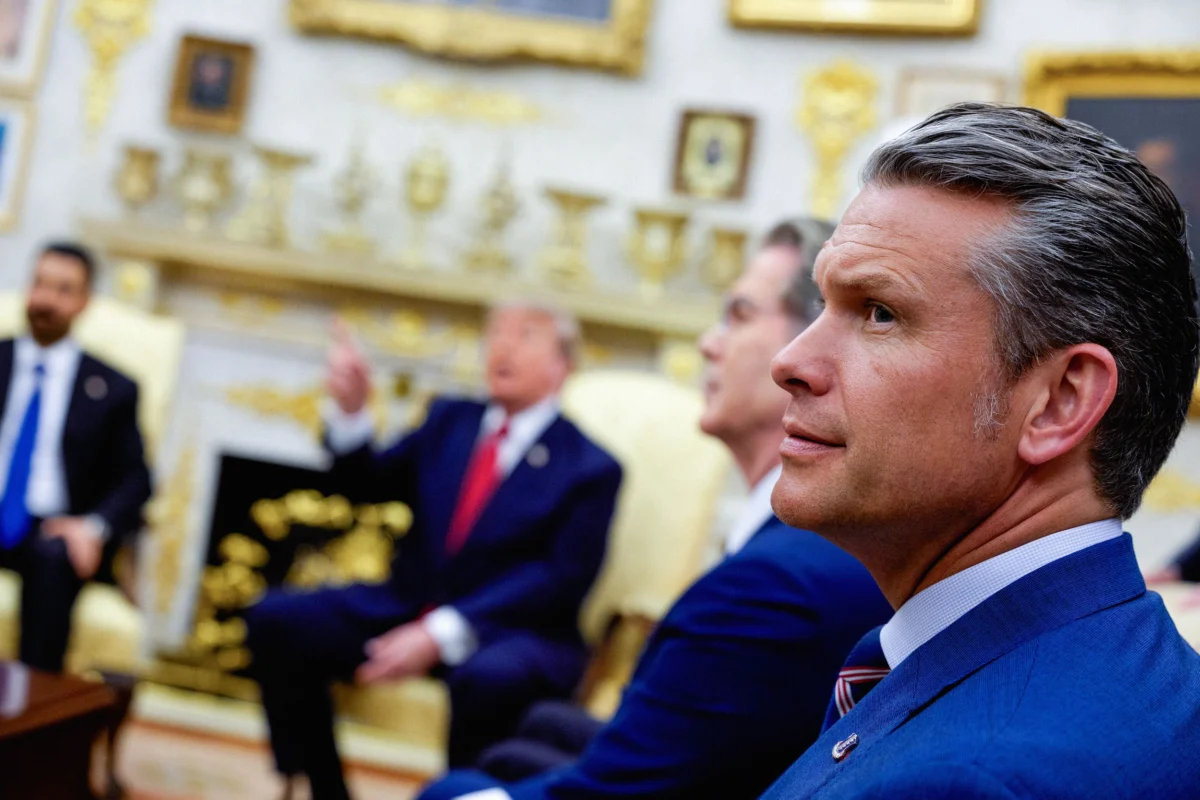
US Defense Secretary Pete Hegseth has embarked on a campaign to fundamentally redefine the American military experience, pivoting away from the inclusivity-focused policies of the previous decade toward a vision centered on a self-described "warrior ethos." At the heart of this ideological shift is a controversial new directive: the implementation of annual testosterone screenings for service members, with the option for voluntary hormone replacement therapy (TRT) for those diagnosed with deficiencies.
The policy, announced via a short video on the Secretary’s social media channels, signals a radical departure from standard military medical practice. While Hegseth frames the initiative as a "restoration" of the biological foundations necessary to "sustain the fight," the proposal has ignited a firestorm of criticism from medical experts, civil rights advocates, and veteran service organizations who question both the scientific validity of the program and its underlying motivations.
A New Paradigm: The "Warrior Ethos" Initiative
The core of the Defense Department’s current agenda is the pursuit of a "manlier" military. Hegseth has consistently argued that the integration of women and the adoption of modern diversity, equity, and inclusion (DEI) standards have diluted the combat readiness of the US Armed Forces. Through a series of high-profile photo opportunities featuring physical training with troops, Hegseth has sought to project an image of hyper-masculinity as the primary metric of military competence.
The new testosterone policy is the most tangible extension of this philosophy. According to the directive, all service members aged 30 and older will undergo annual testosterone testing as part of their periodic health assessments. Younger personnel will be permitted to opt into the screenings. Hegseth asserts that for those found to be deficient, "voluntary" hormone therapy will be offered under the supervision of medical professionals.
"It’s about restoring and optimizing your natural capabilities, protecting your longevity, and ensuring you have the biological foundation required to sustain the fight," Hegseth stated in his address to the force. He explicitly rejected the notion that the program constitutes "artificial enhancement," positioning it instead as a corrective measure for a demographic he claims has been weakened by modern life.
Chronology of a Shifting Pentagon
The push for testosterone-centered policies did not happen in a vacuum. It is the latest move in a broader, systematic dismantling of the institutional norms established over the past decade.
- Early 2025: Following his confirmation, Hegseth began a series of high-level purges, removing top female officers and officials of color, often without public explanation. These reassignments were frequently accompanied by rhetoric condemning what he characterized as "DEI woke shit" within the leadership ranks.
- Late 2025: The Pentagon issued a blanket ban on shaving waivers, a move that disproportionately impacted Black service members, nearly half of whom suffer from conditions like pseudofolliculitis barbae.
- Mid-2026: The Navy moved to enforce a strict "clean-shaven" mandate, threatening to remove sailors who could not resolve shaving-related health issues within a one-year medical grace period.
- Present Day: The introduction of the testosterone screening program marks the transition from administrative purges to physiological intervention.
This chronology illustrates a concerted effort to homogenize the force, prioritizing a singular, rigid aesthetic and biological standard over the diverse, skills-based recruitment strategies that have defined the modern military.
Scientific Skepticism and Medical Realities
The medical community has reacted with profound concern, characterizing the initiative as a gross oversimplification of complex endocrinology. Dr. Adrian Dobs, a leading researcher of endocrine gonadal function at Johns Hopkins University, notes that diagnosing male hypogonadism—the condition for which TRT is typically prescribed—is a nuanced clinical process, not a simple test-and-treat protocol.
The Complexity of Diagnosis
Dr. Dobs points out that testosterone levels are highly volatile. They fluctuate based on the time of day due to circadian rhythms, peaking in the morning and dipping in the afternoon. Furthermore, the military environment itself introduces variables that can artificially lower test results.
"If you test a healthy person who sits at a desk, that is one thing," Dobs explains. "It is entirely another to test a person returning from basic training or a grueling overseas deployment, where they have lost weight and endured significant physical and psychological stress. Chronic stress is well-documented to inhibit testosterone production."
The "Wonder Drug" Fallacy
Perhaps most contentious is the claim that testosterone will improve resilience or general health. Dr. Dobs emphasizes that there is a total lack of clinical data to support the idea that testosterone levels above a healthy baseline make a soldier "smarter" or extend their lifespan.
"Testosterone is an important hormone, certainly, but it is not a magic bullet," she says. "There is simply no evidence to suggest it enhances cognitive function or longevity."
Furthermore, the risks of unnecessary hormone therapy are significant. Exogenous testosterone can cause the testes to atrophy, leading to a permanent drop in sperm count and fertility—a critical issue for service members in their twenties and thirties. Additionally, the hormone can thicken the blood, increasing the risk of cardiovascular strain.
Official Responses and the "Vibe" Doctrine
Despite the scientific pushback, the Pentagon has maintained a wall of silence regarding the specific medical expertise or peer-reviewed studies that informed the policy. When pressed for comment, the Defense Department has deferred to Hegseth’s initial announcement, offering no additional data on how "success" will be measured or whether women will be subject to similar hormonal assessments.
This lack of transparency has fueled speculation that the policy is less about clinical health and more about political branding. The influence of the "Manosphere"—a loose collection of online subcultures obsessed with "high T" lifestyles—is evident. Proponents like Joe Rogan and Health Secretary Robert F. Kennedy Jr. have long championed the idea of TRT as a panacea for modern male dissatisfaction. Kennedy’s push to remove FDA warning labels regarding cardiovascular risks associated with TRT suggests an administration-wide effort to normalize the therapy, regardless of established medical consensus.
Implications for the Future of the Armed Forces
The long-term implications of this policy are profound. By tying career progression and military identity to a "warrior ethos" defined by hormone levels, the Department of Defense is creating a culture where biological "optimization" may become a prerequisite for advancement.
Erosion of Diversity and Inclusion
The correlation between the current administration’s anti-DEI rhetoric and these new physical requirements is difficult to ignore. When leaders are removed for their perceived role in "woke" initiatives and replaced by those who align with a specific, rigid, and historically narrow definition of masculinity, the force loses the cognitive diversity that has historically been an American military strength.
The Recruitment Crisis
There is a tangible risk that these policies will alienate a large swath of the potential recruiting pool. By signaling that the military is primarily interested in a specific type of male, the institution risks narrowing its appeal, potentially exacerbating recruitment shortfalls. When combined with the removal of shaving waivers—which disproportionately targets Black service members—the message to prospective recruits is one of exclusion rather than service.
The "Vibe" Governance
Perhaps the most worrying aspect of this policy is its lack of clear objectives. As Dr. Dobs aptly asks, "What is the function that people are looking at? Is it strength? Is it cognitive processing? That is a very difficult thing to study, and it doesn’t appear that they have even defined what they are trying to fix."
In the absence of a stated medical goal, the testosterone mandate feels increasingly like "vibe-based" policy. It is a performance of power designed to appeal to a specific political base, utilizing the bodies of service members as the canvas for an ideological project.
Conclusion
The US military is currently undergoing an unprecedented transformation. By prioritizing an abstract, hyper-masculine ideal over established medical science and inclusive personnel policies, the current leadership is gambling with the health and effectiveness of the force.
As the Pentagon moves forward with these screenings, the questions remain: Will this actually improve combat effectiveness, or will it merely create a culture of anxiety and medical dependency? For now, the Defense Department remains committed to its course, seemingly unbothered by the chorus of experts warning that in the quest to build a "warrior" image, they may be undermining the very health and diversity that make the American military the most capable fighting force in the world.
Whether this shift results in a more lethal force or a hollowed-out institution remains the central, unanswered question of the Hegseth era. For the service members on the front lines, however, the change is no longer abstract—it is a new, intrusive reality that they are now expected to navigate in the name of a "warrior ethos" that looks suspiciously like a political crusade.











