As the global race for quantum supremacy intensifies, the industry is moving beyond the initial hype cycle toward a phase defined by engineering rigor and architectural diversification. While early narratives were dominated by the heavyweights of superconducting circuits—such as IBM and Google—and the precision of trapped-ion systems championed by IonQ and Quantinuum, a new contender has emerged as the most significant technical riser of 2025 and early 2026: neutral atom quantum computing.
This article serves as the third installment in our ongoing series exploring the diverse technological modalities of quantum hardware. Having previously dissected the superconducting and trapped-ion landscapes, and analyzed the high-speed, light-based architectures of Xanadu and PsiQuantum, we now turn our focus to the neutral atom approach. By utilizing optical tweezers to trap and manipulate individual atoms, companies like QuEra, Atom Computing, and Pasqal are fundamentally changing the roadmap of quantum information science.
Understanding the Neutral Atom Paradigm
To understand why neutral atoms have become the "darling" of the quantum investment and research community, one must understand the unique physics they offer. Unlike superconducting qubits, which require massive, energy-intensive dilution refrigerators to maintain near-absolute zero temperatures, neutral atom systems rely on lasers—specifically, "optical tweezers"—to hold atoms in place.
These atoms, typically isotopes of rubidium, strontium, or cesium, are cooled to micro-Kelvin temperatures and arranged into highly precise, dynamic 2D or 3D arrays. The key advantage here is scalability. Because these atoms are neutral (they have no electrical charge), they do not experience the same strong Coulomb repulsion that limits the density of trapped-ion systems. This allows for the creation of massive arrays of qubits that can be reconfigured on the fly, providing a level of architectural flexibility that is difficult to achieve in fixed-circuitry hardware.
A Chronology of the Neutral Atom Surge
The transition of neutral atom computing from a laboratory curiosity to a viable commercial roadmap has been rapid.
- 2020–2022: The Academic Foundation. Research institutions, particularly those affiliated with Harvard and MIT, began demonstrating the ability to manipulate large-scale arrays of neutral atoms with high fidelity. The "Rydberg blockade" effect—where one atom’s excitation prevents neighbors from being excited—was successfully harnessed to create entanglement.
- 2023: The Commercial Pivot. Companies like QuEra and Pasqal began announcing milestones involving hundreds of qubits, signaling that they could bypass the "small-scale" bottleneck that plagued early superconducting devices.
- 2024: The Error-Correction Breakthrough. A pivotal moment occurred when researchers demonstrated the ability to perform logical quantum operations using neutral atom arrays, proving that they were not just good for simulation, but viable for fault-tolerant, universal quantum computing.
- 2025–Early 2026: Scaling and Industrial Integration. We are currently in the era of "Quantum Utility." Industry players have shifted focus toward error-mitigated processors and the integration of quantum hardware into high-performance computing (HPC) centers.
Key Players and Their Strategic Roadmaps
The current landscape is dominated by three primary entities, each with a distinct engineering philosophy.
1. QuEra: The Reconfigurable Powerhouse
QuEra, with deep roots in the Harvard-MIT ecosystem, has positioned itself as the leader in "analog-to-digital" versatility. Their roadmap emphasizes the ability to switch between analog quantum simulation—ideal for material science and optimization—and digital gate-based computing. By utilizing their "Aquila" processor, they have demonstrated the ability to scale to hundreds of physical qubits with high connectivity, a crucial factor for complex quantum algorithms.
2. Atom Computing: The Spin-Coherent Disruptor
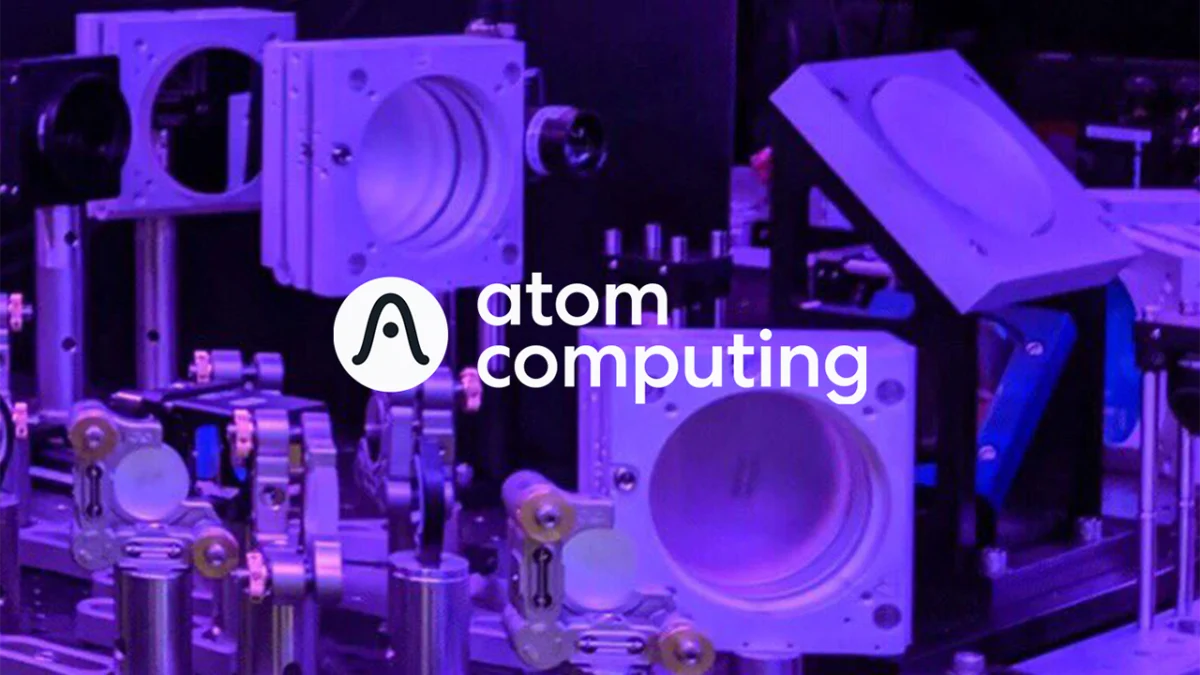
Atom Computing has taken a different route, focusing on nuclear spin states. By utilizing long-lived coherence times inherent in neutral isotopes, they aim to maximize the time available for complex gate operations. Their recent roadmap highlights a trajectory toward "logical qubits," where multiple physical qubits are grouped to form a single, error-corrected unit. Their progress in keeping qubits coherent for seconds—a lifetime in the quantum world—has made them a top contender for long-running calculations.
3. Pasqal: The Industrial Integrator
Based in France, Pasqal has focused heavily on the software-hardware stack. Their strategy is to act as a bridge between quantum hardware and real-world industrial applications, such as logistics, finance, and drug discovery. Their roadmap involves modular hardware designs that can be deployed in existing data centers, making them a key partner for European industrial giants looking to integrate quantum capabilities into their workflows.
Supporting Data: The Metric of Success
Why are neutral atoms outperforming expectations? The data points to three critical metrics:
- Qubit Count: While superconducting systems have struggled with the "wiring bottleneck" (where every qubit requires a physical connection that introduces noise), neutral atom systems scale through optical systems. Current roadmaps suggest the ability to reach 1,000+ qubits within the next 24 months, a significant jump from the current 100–300 range.
- Connectivity: In many quantum architectures, qubits are only connected to their immediate neighbors. Neutral atoms, however, can be rearranged via laser beams. This "dynamic connectivity" means that any atom can potentially interact with any other, significantly reducing the depth of quantum circuits and improving gate fidelity.
- Fidelity and Coherence: While trapped ions still hold the lead in raw gate fidelity, neutral atoms have seen the most rapid improvement in coherence times, effectively closing the gap between the theoretical potential and actual laboratory performance.
Official Responses and Industry Outlook
The industry sentiment is currently one of cautious optimism. Dr. Mikhail Lukin, a co-founder of QuEra, has frequently noted that "the goal is not just to build a bigger machine, but a more useful one." This sentiment is echoed by leaders at Pasqal, who argue that the future of the industry lies in the "hybrid" era—where quantum processors function as co-processors alongside classical supercomputers.
Industry analysts have noted that the shift toward neutral atoms has forced major players like IBM to rethink their own roadmaps. While IBM remains committed to superconducting transmon qubits, the rapid progress of neutral atoms has accelerated the industry-wide focus on modularity and error correction.
Implications for the Future of Computing
The maturation of neutral atom technology has profound implications for the global technology ecosystem:
- Lowering the Barrier to Entry: Because neutral atom systems are less constrained by the extreme cryogenic requirements of superconducting systems, they are theoretically more portable. This could lead to a democratization of quantum access, where medium-sized enterprises could house their own quantum units.
- The Acceleration of Material Science: The unique way neutral atoms interact makes them perfectly suited for "quantum simulation." This has massive implications for battery technology, fertilizer production, and drug discovery—areas where simulating molecular interactions is currently impossible for classical computers.
- The Race for Logical Qubits: The immediate future will not be measured by the number of "physical" qubits, but by the number of "logical" qubits. As QuEra, Atom Computing, and Pasqal push toward the first stable, error-corrected logical qubits, we are likely to see the first instances of "Quantum Advantage"—where a quantum computer performs a task that is definitively impossible for any classical supercomputer.
Conclusion
As we move through 2026, the neutral atom modality has moved from the periphery to the center stage of the quantum race. By leveraging the elegance of light-matter interaction, companies like QuEra, Atom Computing, and Pasqal have demonstrated that scalability and fidelity are not mutually exclusive. While challenges remain—specifically in the realms of automated control software and industrial-grade laser stability—the roadmap for neutral atoms is currently the most dynamic in the field.
As this technology continues to evolve, the distinction between a laboratory experiment and a productive industrial tool will continue to blur. For investors, researchers, and technology enthusiasts alike, the neutral atom roadmap is not just a chapter in the history of quantum computing—it is the blueprint for the next decade of computational progress. Whether this approach ultimately achieves the elusive "universal fault-tolerant quantum computer" remains to be seen, but the pace of development suggests we are closer than we have ever been.