

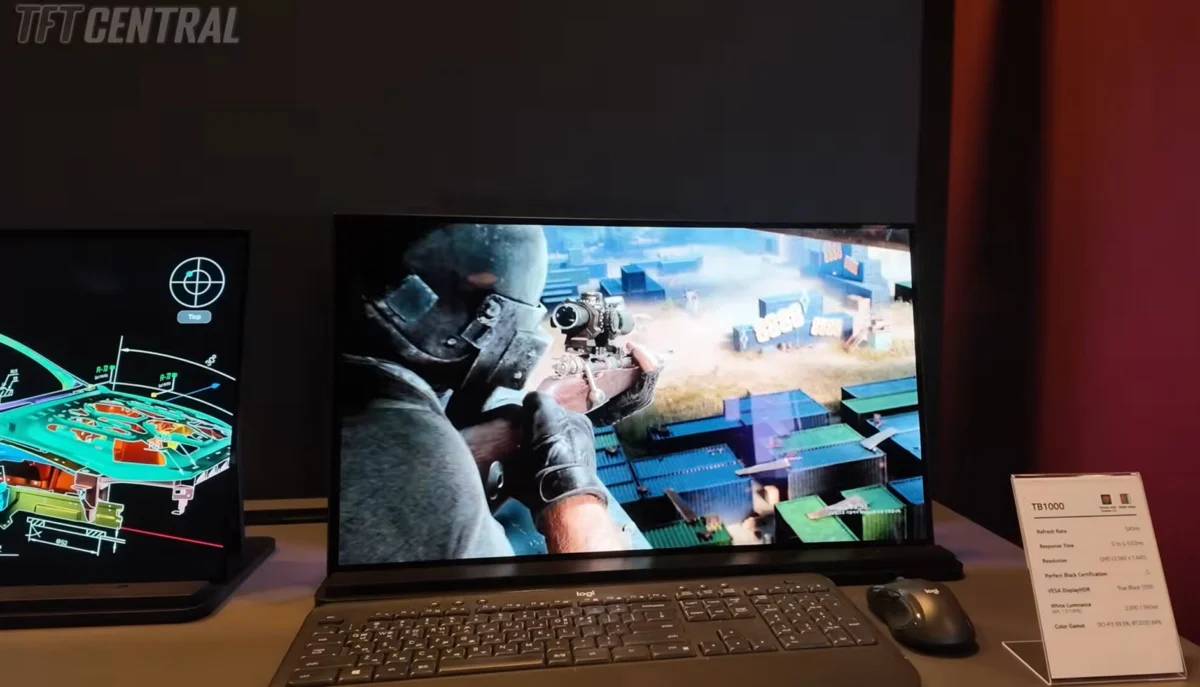
The landscape of visual fidelity is undergoing a seismic shift. At this year’s Computex in Taipei, LG Display unveiled a technological milestone that promises to redefine the boundaries of desktop gaming and professional color grading: the world’s first OLED monitor panel capable of meeting the stringent VESA DisplayHDR True Black 1000 certification. Until now, this coveted tier of luminance performance had been largely restricted to high-end notebook displays. With the introduction of the "TB1000" prototype, LG is signaling that the era of compromises—where users had to choose between the perfect contrast of OLED and the searing brightness of premium LCDs—is rapidly drawing to a close.
The Core Innovation: Breaking the 1000-Nit Barrier
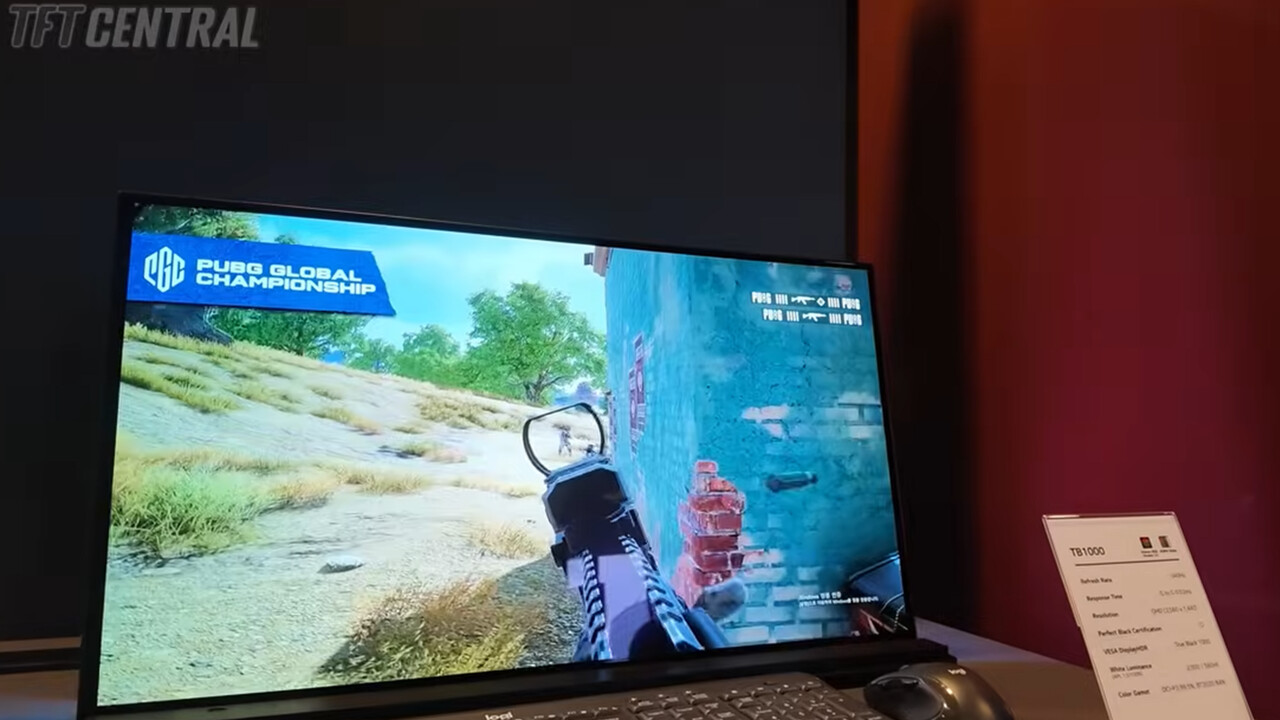
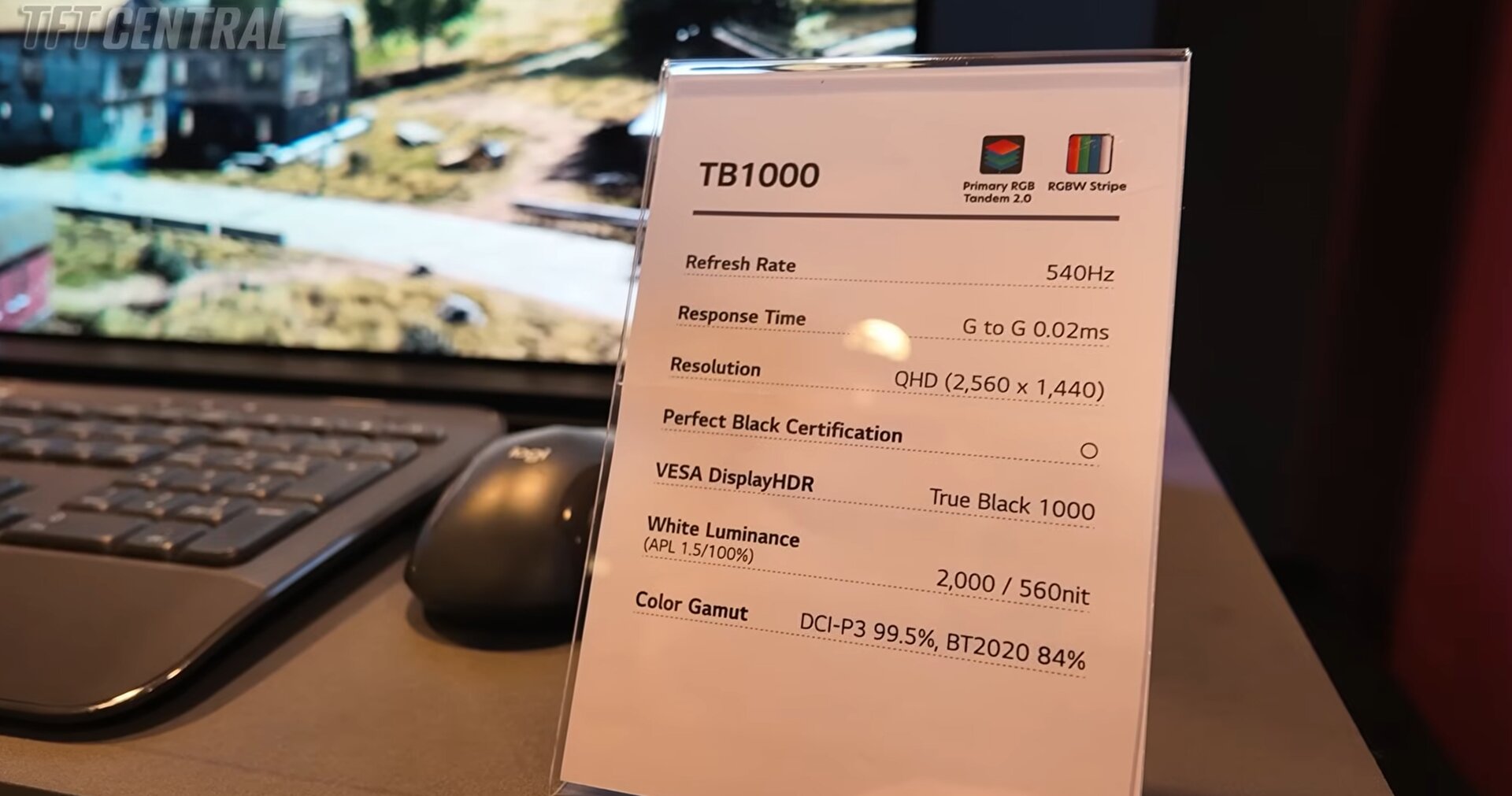
The prototype, currently designated under the project name TB1000, is a 27-inch panel that boasts a resolution of 2,560 x 1,440 pixels. While the resolution may seem standard for the current high-end gaming market, the engineering underneath the glass represents a massive leap forward.
According to technical analysis provided by TFT Central, the panel utilizes a Tandem-WOLED (Primary RGB Tandem 2.0) structure, incorporating an RGBW (Red, Green, Blue, White) subpixel matrix. The inclusion of the white subpixel is a calculated strategic move; it allows the panel to achieve significantly higher luminance levels without forcing the individual colored subpixels to operate at dangerous power levels that might otherwise accelerate screen burn-in or thermal degradation.
Performance Benchmarks
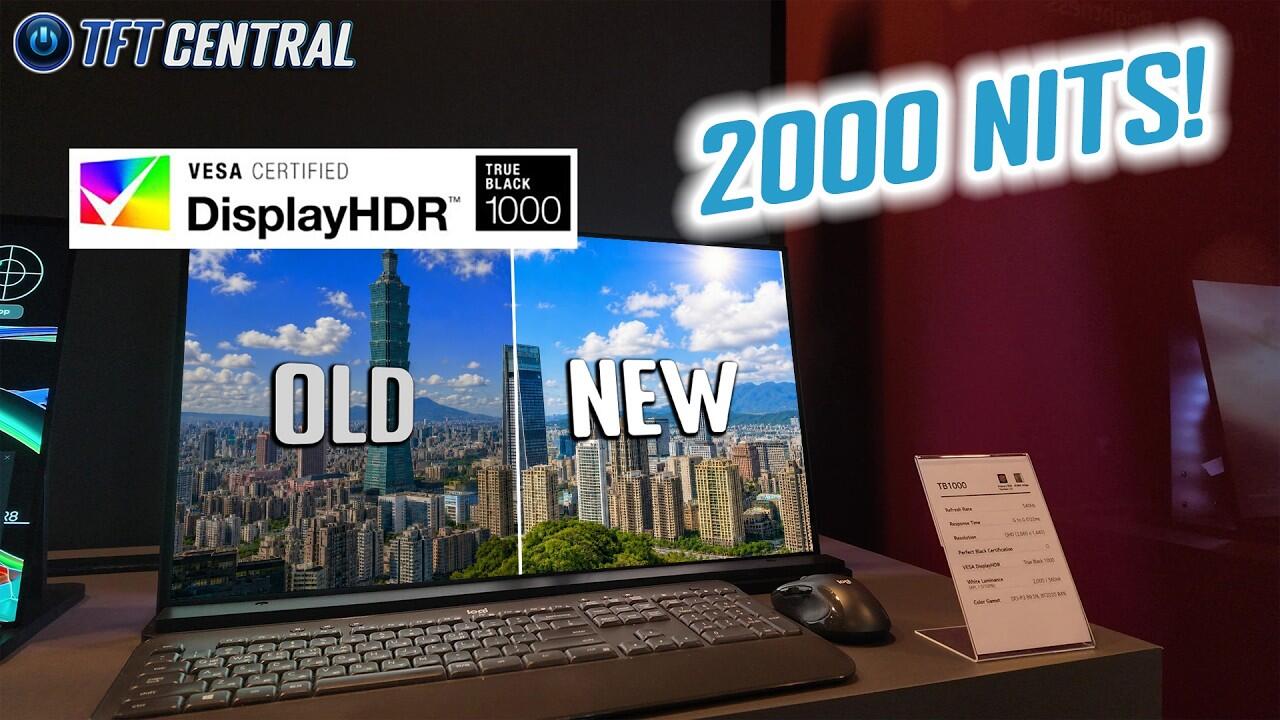
- True Black 1000 Compliance: To earn the VESA DisplayHDR True Black 1000 label, a monitor must maintain at least 500 cd/m² (nits) of brightness across 100% of the screen area (Average Picture Level – APL). The TB1000 comfortably clears this with 560 cd/m².
- Peak Luminance: In localized highlights—specifically occupying 1.5% of the total screen area—the display is capable of hitting a staggering 2,000 nits. This capability allows for specular highlights (like sunlight glinting off metal or explosions in a dark environment) to appear with a realism previously unseen on OLED hardware.
- Refresh Rate: Complementing the brightness is a blistering 540 Hz refresh rate, positioning the panel as a potential endgame device for the professional eSports sector.
Chronology of OLED Luminance Evolution
To understand the magnitude of this achievement, one must look at the rapid maturation of OLED display technology over the last 24 months.
The Early Stages: True Black 400
Initially, the adoption of OLED in the monitor space was defined by the True Black 400 standard. While the ink-black levels were revolutionary, the sustained full-screen brightness was often lackluster, hovering around 250–300 nits. This made these monitors excellent for dark-room gaming but difficult to use in well-lit offices.
The Mid-Term Progression: True Black 600
The industry pushed forward with the True Black 600 certification. This required 350 nits of full-screen brightness and 600 nits of peak brightness. While this was an improvement, it still felt like a compromise compared to Mini-LED monitors, which could reach 1,000+ nits easily.
The Present: The "True Black 1000" Milestone
LG’s announcement at Computex marks the first time a desktop-sized OLED panel has reached the same peak and sustained brightness tiers as top-tier Mini-LED displays. This move effectively neutralizes the primary argument against OLED adoption in professional color-accurate workflows: the inability to achieve high-intensity highlights while maintaining perfect black levels.
The Landscape of Competitive Display Technology
LG Display is not operating in a vacuum. The industry is currently bifurcated between two primary schools of thought regarding OLED pixel architecture.
The RGB-Stripe Movement
Alongside the TB1000, LG showcased advancements in "standard" RGB-Stripe layouts, which eschew the white subpixel in favor of a traditional red-green-blue configuration. This approach is highly favored by text-heavy users because it eliminates the fringing effects sometimes caused by the RGBW subpixel structure.
Key monitors currently leading this charge include:
- Dell Alienware AW3926QW: A 39-inch ultra-wide 5K powerhouse.
- Asus ROG Swift OLED PG27UCWM and PG32UCWM: These models have become the gold standard for high-end gaming, utilizing GaN (Gallium Nitride) technology to manage heat more effectively, allowing for higher brightness levels without the need for aggressive ABL (Auto Brightness Limiter) algorithms.
The eSports Frontier
Asus, in particular, is aggressively pushing the limits of LG’s panel technology. The introduction of the ROG Strix OLED XG259QWPG Ace, a 24.5-inch panel capable of 540 Hz, demonstrates that LG’s panels are being segmented into clear categories: high-brightness "True Black" displays for enthusiasts and high-frequency "eSports" panels for competitive professionals.
Technical Implications: DFR 2.0 and the Road to 1,000 Hz
One of the most intriguing reveals from the Computex showcase is the development of DFR 2.0 (Dual Frequency Resolution). This technology suggests a future where monitor behavior is dynamic to an extreme degree.
The Mechanism
DFR 2.0 aims to quadruple the refresh rate of a panel when the resolution is halved. In theory, a 540 Hz monitor could eventually be "overclocked" to 1,000 Hz by reducing the pixel density output. TFT Central notes that while this sounds like science fiction, the fundamental architecture to support this is already being prototyped in LG’s labs.
Black Frame Insertion (BFI)
The re-emergence of advanced BFI in the OLED conversation is equally significant. By inserting black frames between active image frames, motion blur can be virtually eliminated. Traditionally, this has been difficult on OLEDs because it reduces perceived brightness, but with the massive headroom provided by the new 2,000-nit peak capability, LG can finally implement BFI without making the image appear dim or "flickery" to the human eye.
Official Responses and Market Impact
While LG Display has remained cautious about a specific mass-production timeline, industry analysts suggest that the "TB1000" technology is likely to appear in consumer-grade peripherals within the next 18 to 24 months.
Industry feedback has been overwhelmingly positive, particularly from the content creation sector. "The ability to finally monitor HDR content at 1,000 nits on an OLED is the final piece of the puzzle," says a representative from a leading post-production house. "We no longer have to switch between an OLED for shadow detail and a Mini-LED for peak highlight verification."
However, challenges remain. The cost of Tandem-WOLED production is significantly higher than traditional single-layer OLEDs. Consumers should expect a substantial price premium when these monitors hit the retail market. Furthermore, the power consumption requirements of such high-brightness panels will necessitate more robust thermal management solutions, potentially leading to thicker, heavier monitor chassis than the "paper-thin" OLEDs of the past.
Future Outlook: The Convergence of Technologies
The trajectory of display technology is converging. We are witnessing the fusion of three distinct fields:
- Luminance (HDR 1000): Providing the dynamic range required for modern high-bitrate media.
- Frequency (540 Hz – 1000 Hz): Providing the temporal resolution required for the next generation of professional gaming.
- Pixel Architecture (RGB-Stripe vs. RGBW): Refining the text clarity and color accuracy for professional productivity.
LG Display’s Computex presentation proves that the company is not merely iterating on existing hardware but is actively solving the fundamental physical limitations of OLED technology. As the TB1000 moves from the prototype phase to the factory floor, the gap between "gaming" monitors and "reference" monitors will continue to narrow.
For the average consumer, this means that the displays of the near future will not only be brighter and faster but also more versatile. Whether you are a professional colorist requiring 1,000-nit peaks for mastering or a competitive gamer needing the lowest possible motion blur, the advancements showcased by LG suggest that the ideal monitor—a device that does everything perfectly—is finally within our reach.
As we look toward the next generation of hardware, the combination of DFR 2.0, increased peak luminance, and refined subpixel structures signals a turning point. We are leaving the era of "good enough" displays and entering an age of uncompromising visual fidelity. The monitor is no longer just a window into your computer; with these advancements, it is becoming a true, high-performance instrument.










No comments yet. Be the first to join the conversation!