

By Global Affairs Correspondent
In a move that has sent shockwaves through the corridors of international diplomacy, President Donald Trump has reignited his long-standing allegations that China is actively meddling in American electoral processes. The accusations, delivered during a rare prime-time address from the White House East Room, have cast a shadow of uncertainty over the fragile diplomatic truce established between Washington and Beijing. With a high-stakes summit in Washington scheduled for September 24 and the looming shadow of November’s congressional elections, the President’s rhetoric threatens to dismantle months of careful, behind-the-scenes de-escalation between the world’s two largest economies.
The Core Allegations: A Security “Nightmare”
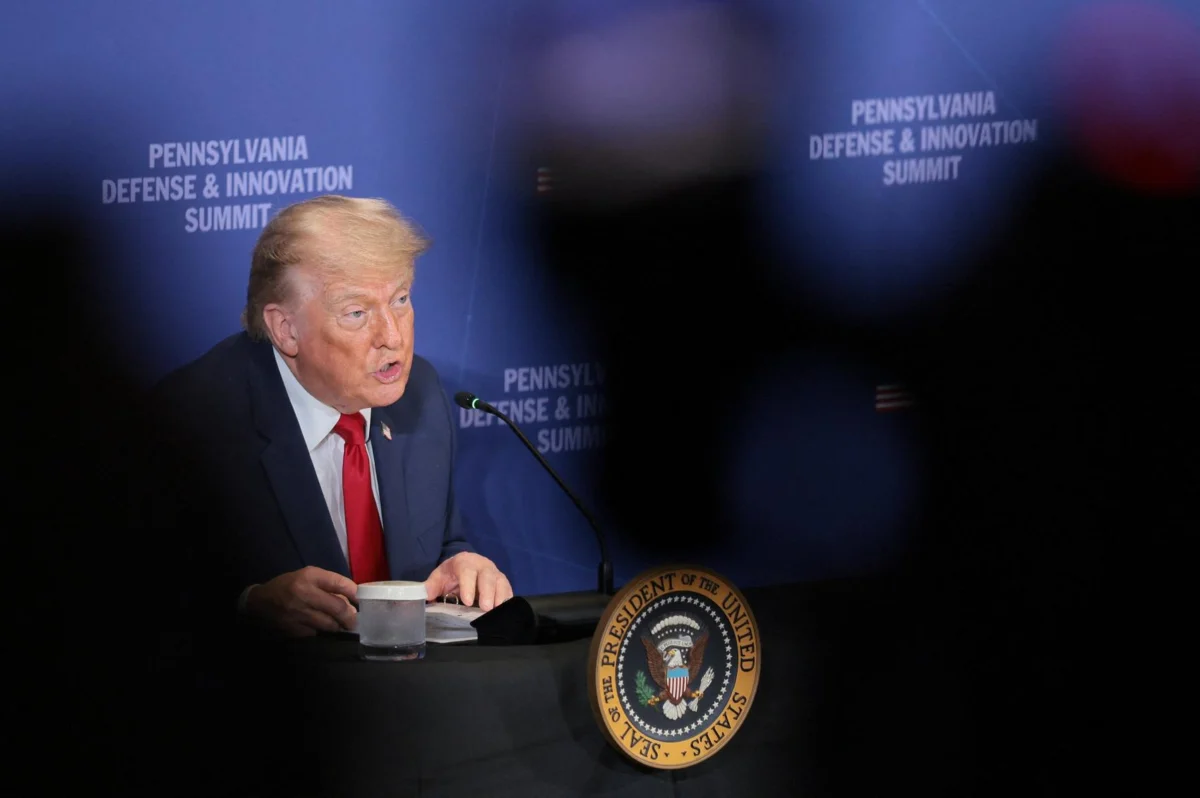
During his 25-minute televised address, President Trump painted a grim picture of American democratic integrity, labeling the current state of election security an "unprecedented nightmare." Central to his argument was the claim that the Chinese government has engaged in the unauthorized acquisition of data belonging to millions of U.S. voters.
Trump, who has often balanced a combative public persona with claims of a close personal rapport with Chinese President Xi Jinping, adopted a tone of personal grievance. "The Chinese government wanted the U.S. president to lose the next election," Trump stated, asserting that Beijing’s hostility stems from his administration’s refusal to be intimidated. "They wanted me to lose because they knew I was wise to them."
These remarks represent a stark pivot from the conciliatory tone the White House has maintained toward Beijing for the better part of the year. While the President frequently characterizes China as the United States’ primary international rival, the recent push toward "positive relations" had suggested a shift in strategy. The sudden escalation has left observers questioning whether this is a genuine shift in national security policy or a calculated political maneuver aimed at galvanizing the Republican base ahead of the November midterms.
Chronology of a Shifting Relationship
The current diplomatic climate is the result of a tumultuous two-year period defined by volatile trade disputes and occasional, high-profile reconciliations.
- 2025: The Trade War Apex: Following a period of aggressive posturing, the Trump administration imposed triple-digit tariffs on a wide array of Chinese goods, triggering a retaliatory cycle that threatened global supply chains.
- October 2025: The Rare-Earth Pivot: Facing internal pressure and the threat of a Chinese ban on the export of rare-earth metals—essential for U.S. manufacturing—the administration abruptly softened its stance.
- May 2026: The Lavish Summit: The relationship reached a high point when President Xi hosted Trump for a state visit. During the trip, the President notably downplayed ongoing disputes regarding Taiwan, referring to the Chinese leader as a "friend."
- Present Day: The September 24 invitation for Xi to visit Washington hangs in the balance, with observers noting that the current rhetoric may force Beijing to reconsider its participation.
The Domestic Strategy: Analyzing the Rhetoric
Analysts suggest that the President’s speech was designed less to reorient foreign policy and more to influence the domestic political landscape. By framing election security as a national crisis linked to foreign interference, the White House appears to be providing a rationale for stricter federal voting regulations.
"President Trump is using a false claim about Chinese interference to push Congress to pass legislation to restrict access to voting," argues Mira Rapp-Hooper, a former senior director for East Asia at the White House National Security Council. "He must believe that his rapprochement with Xi Jinping will withstand this, but he is playing a dangerous game with one of the most important bilateral relationships in the world."
Indeed, the President’s speech conspicuously lacked any call for immediate, tangible retaliation against Beijing. This omission has been interpreted by those familiar with Beijing’s diplomatic circles as a signal that the remarks are primarily intended for a domestic audience. Despite this, the repetition of debunked claims regarding the 2020 election—in which Trump asserted widespread fraud—has reignited concerns that the administration is leveraging national security narratives to undermine faith in the electoral process itself.
Supporting Data: Intelligence and Reality
The President’s allegations stand in stark contrast to official findings from the U.S. intelligence community. A comprehensive 2021 assessment found no evidence that any foreign actor, including China, successfully altered any technical aspect of the 2020 presidential election, including voter registrations, ballot tabulations, or final results.
Furthermore, while the Trump administration has previously pointed to Chinese hackers targeting election infrastructure, there remains a lack of public, verified evidence to support the claim that millions of voter records were compromised in the manner described by the President. Trump, however, laid the blame at the feet of what he termed "Deep State" bureaucrats, alleging that these officials failed to adequately warn him of existing vulnerabilities.
Official Responses and Diplomatic Fallout
Beijing has been characteristically measured in its initial response. While the Chinese Foreign Ministry did not immediately provide a formal rebuttal to the specific claims made on Thursday, the Chinese embassy in Washington had preemptively addressed the narrative.
"China has never and will never interfere in the presidential elections of the U.S.," stated Liu Chang, a spokesperson for the embassy, prior to the speech.
Sources familiar with Beijing’s internal assessments suggest that the Chinese government is closely monitoring the situation, weighing the President’s rhetoric against the potential benefits of the upcoming Washington summit. Beijing has privately signaled to the Trump administration that future cooperation is strictly contingent upon the maintenance of "positive relations." Whether the current rhetoric crosses that threshold remains the subject of intense debate within the White House.
Implications for Future Ties
The potential for this rhetoric to derail the September 24 summit is significant. While the White House has not issued a formal comment on the impact of the speech on U.S.-China ties, internal reports suggest a divided administration. On one hand, the President has directed law enforcement to pursue any and all instances of foreign wrongdoing. On the other, the White House has spent recent months actively discouraging executive-branch agencies from pursuing new policies that could provoke Beijing.
The stakes are immense. Beyond the bilateral trade implications, the President is considering attending the Asia-Pacific Economic Cooperation (APEC) summit in Shenzhen, China, later this year. A diplomatic rupture now would not only cancel the Washington visit but could isolate the U.S. from key economic forums in the Asia-Pacific region.
For now, the world waits to see if the President’s rhetoric will settle into a manageable diplomatic dispute or if it will spark a new, more dangerous phase of geopolitical instability. As the November elections approach, the intersection of national security, electoral integrity, and international diplomacy will remain the defining feature of the Trump administration’s final year.
© Thomson Reuters 2026.











