

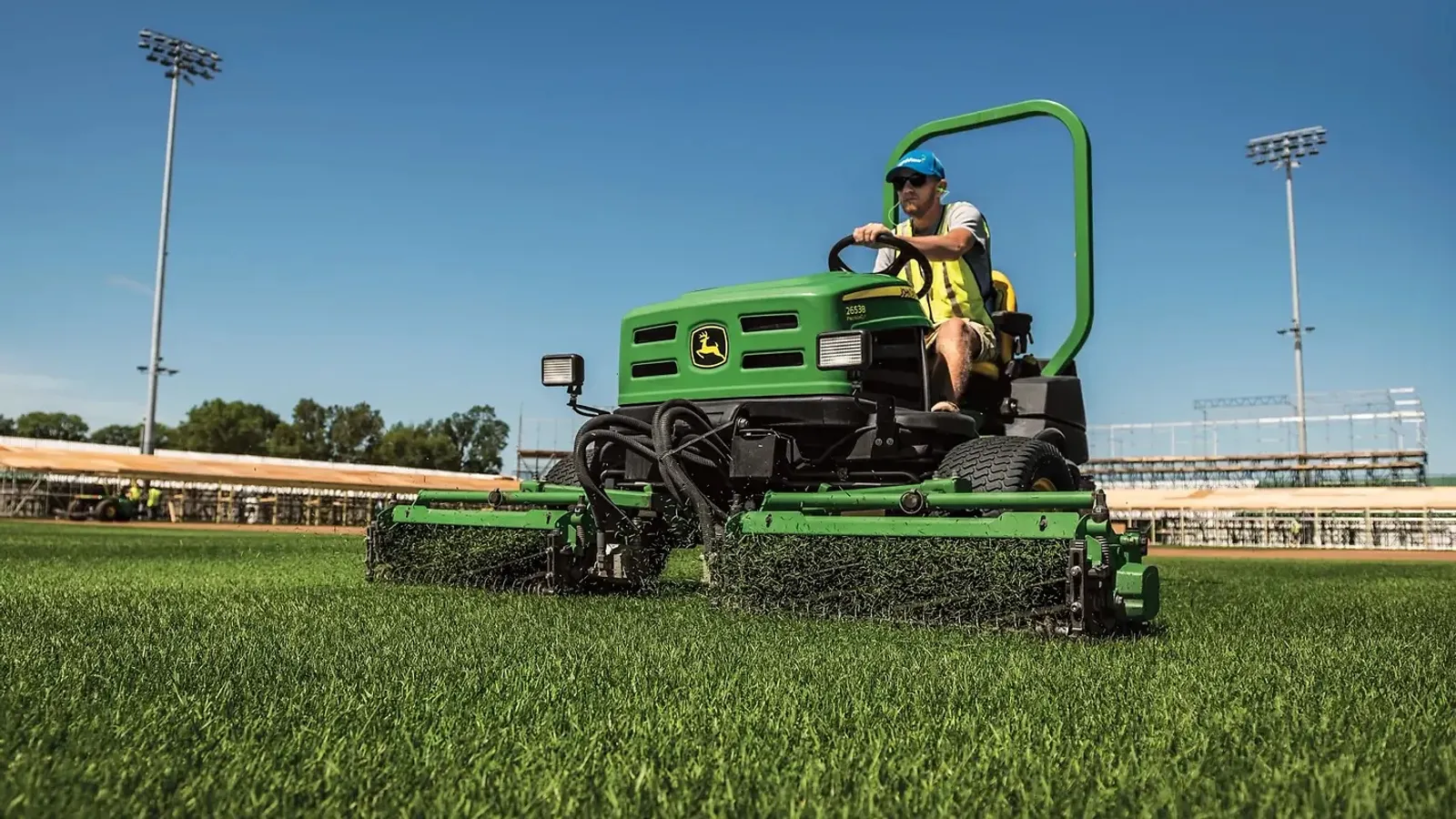
In the vast landscape of American industrial history, few icons possess the cultural resonance of John Deere. With its signature "John Deere Green" and yellow accents, the company stands alongside titans like Coca-Cola and Levi’s as a visual shorthand for American manufacturing. Yet, as the nation approaches its semiquincentennial—the 250th anniversary of its founding—the agricultural giant finds itself navigating a delicate balancing act: how to honor nearly two centuries of tradition while remaining relevant to a digital-native generation that is increasingly disconnected from the farm.
As the oldest consumer brand to serve as an official sponsor of the nonpartisan America250 commission, John Deere is positioning its legacy not as a relic of the past, but as a foundation for future innovation.
The Evolution of an Icon: Main Facts
Founded in 1837, John Deere has evolved from a single blacksmith’s shop in Grand Detour, Illinois, into a global behemoth of agricultural, construction, and forestry machinery. Today, the company is leveraging its deep-rooted history to address modern challenges: the flight of younger generations from rural areas, a shifting global labor market, and the rapid integration of artificial intelligence and robotics into the "traditional" work of farming.
The company’s strategy is twofold. First, it is doubling down on its "all-American" identity through high-profile partnerships with organizations like Major League Baseball (MLB). Second, it is aggressively capturing the attention of Gen Z and younger audiences through platforms like TikTok, moving away from corporate broadcasting and toward authentic, personality-driven storytelling.
A Chronological Perspective: From Steel Plows to Autonomous Tractors
To understand the current branding pivot, one must look at the company’s trajectory:
- 1837: John Deere invents the self-scouring steel plow, effectively launching the company and changing the trajectory of American agriculture.
- 1918: Deere enters the tractor business, solidifying its role as the backbone of food production.
- 2022: At the Consumer Electronics Show (CES), John Deere unveils its first fully autonomous tractor, signaling a pivot toward technology as its primary differentiator.
- 2024: The company officially launches a TikTok profile, hiring a "Chief Tractor Officer" to engage younger users directly, eschewing traditional polished advertising in favor of organic social media presence.
- 2025–2026: As a primary partner for the America250 celebrations, John Deere is set to activate massive experiential displays, including the "Field of Dreams" games and the Freedom 250 event on the National Mall.
Supporting Data: The Marketing Pivot
The necessity for this change is rooted in data. Internal research and broader industry trends show that younger consumers are less brand-loyal than their predecessors. Furthermore, as the demographics of the workforce shift, the traditional "farm-to-family" lineage—where children naturally inherit the family operation—is thinning.
Jen Hartmann, global director of corporate reputation and brand marketing, has spent two decades navigating this evolution. Her tenure, which includes the last six years as the head of marketing, has seen the company shift its narrative focus.
"We know that younger generations are moving away from the farm," Hartmann noted. "They are not as brand loyal, and for us, we know it’s important to remind people that our history is something that differentiates us from our competitors. It’s as much about celebrating our history as it is about strengthening trust people have in the brand."
The engagement metrics support this. Before John Deere even created an official TikTok page, it was one of the most mentioned brands on the platform—a testament to the organic, grassroots enthusiasm surrounding its equipment. By hiring Rex Curtiss as the "Chief Tractor Officer," the brand moved from being a passive subject of user-generated content to an active participant in digital discourse.
Official Responses and Strategic Alliances
The partnership with Major League Baseball is perhaps the most significant strategic maneuver in this campaign. Timing the multi-year deal with the lead-up to America’s 250th birthday, the brand is positioning itself as an essential element of the American experience.
"Baseball, John Deere, America’s 250th—all we needed was an apple pie partnership," Hartmann said. "It just felt so iconically American."
The partnership goes beyond mere logo placement. It includes a launch video voiced by Kevin Costner—a cultural figure synonymous with the American heartland—and experiential activations at the 2026 MLB Field of Dreams game. These initiatives are designed to highlight the "invisible" work that goes into maintaining the fields and backyards of the nation, reinforcing the idea that Deere equipment is the silent partner behind the American dream.
Furthermore, the brand’s involvement with the "Freedom 250" organization on the National Mall represents a calculated effort to maintain a presence in the national conversation. By showcasing a vintage Model D heritage tractor alongside a modern, ethanol-powered prototype, the company is bridging the gap between its origins and its future.
Implications: Navigating the Political Fray
In an era where corporate branding is often scrutinized through a political lens, John Deere is taking a deliberate approach to avoid the "political fray." Having previously been targeted by political figures regarding trade tariffs and domestic production, the company is acutely aware of the risks involved in participating in nationalistic celebrations.
The solution? Radical customer-centricity.
"We’ve made a concerted effort to keep the story customer-centric," Hartmann explained. "If we are at an event for America’s 250th, it is not about celebrating Deere. We are doing everything we can to make sure this is really about how the builders, farmers, maintenance workers, manufacturing facilities, and factory workers are actually the ones helping build America."
This strategy serves two purposes. First, it shields the brand from being painted as a partisan entity. By highlighting the workers rather than the corporation, John Deere aligns itself with the universal, non-controversial appreciation for labor and industry. Second, it deepens the "emotional connection" that Hartmann identifies as the company’s greatest asset.
The Future of the Brand: Authenticity over polish
The success of the "Chief Tractor Officer" program serves as a template for other legacy brands looking to connect with a skeptical youth demographic. Rex Curtiss’s role is not that of a scripted spokesperson; rather, he is a genuine enthusiast who travels to farms, interviews operators, and creates content that explains the complexities of modern agriculture to a lay audience.
Coupled with the appointment of 10-year-old Jackson Laux as "Chief Tractor Kid," the company is building a multi-generational digital ecosystem. These ambassadors do not feel like marketing stunts; they feel like extensions of the farming community itself.
Conclusion: A Legacy Reimagined
As John Deere looks toward the next century, it faces the same challenge as the country it serves: how to integrate its storied past with an unpredictable, high-tech future. By successfully blending the nostalgic charm of baseball and historical tractors with the cutting-edge, personality-driven world of TikTok, the company is demonstrating that "heritage" is not about stagnation.
The strategy is clear: John Deere is betting that if it can keep the focus on the people who use its machines—the farmers, the landscapers, and the builders—it will remain as relevant in 2076 as it was in 1837. In doing so, the company is not just selling tractors; it is curating an American story that emphasizes innovation, labor, and the enduring power of a brand that has grown alongside the nation it helps to feed.











