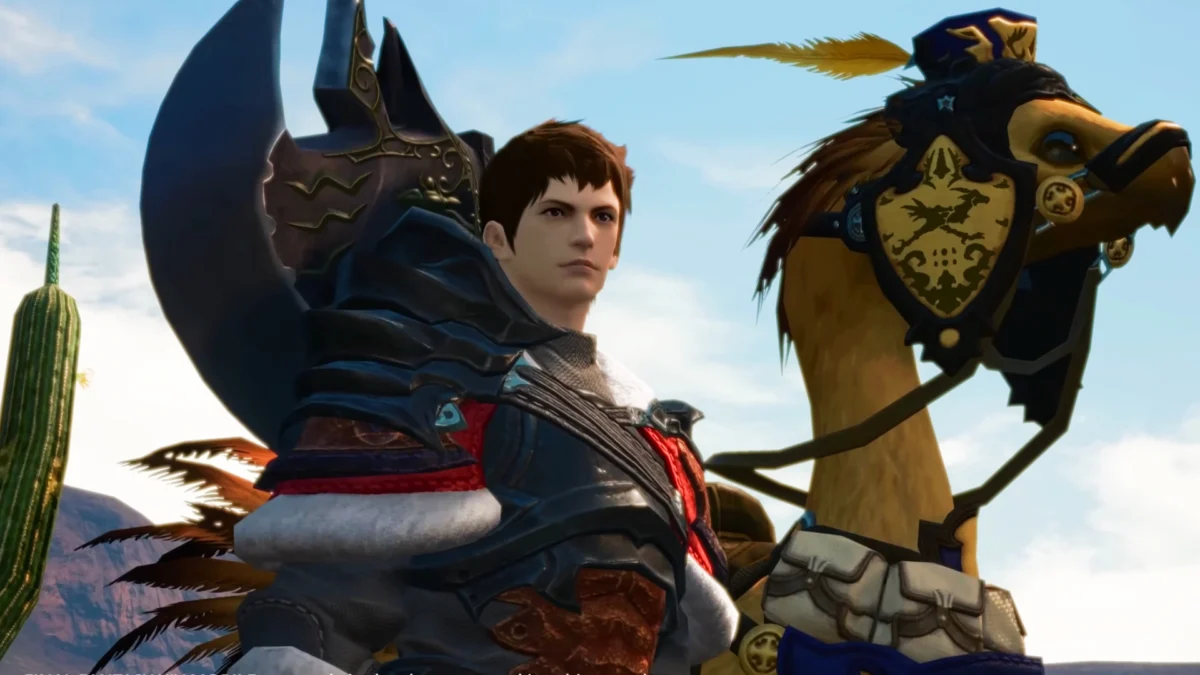
The ambitious endeavor to shrink the sprawling world of Eorzea into the palm of one’s hand has officially come to an end. Square Enix and Tencent-owned Lightspeed Studios have confirmed that Final Fantasy 14 Mobile, a standalone adaptation of the iconic MMORPG, will cease operations in China on September 30, 2026. The abrupt termination of the project, which was originally intended to serve as a mobile gateway to the A Realm Reborn experience, also signals the permanent cancellation of the title’s planned global release.
The announcement brings a definitive close to a project that was once heralded as the bridge between the hardcore PC/console MMO audience and the burgeoning mobile gaming market. With licensing agreements terminated through what both parties described as "amicable negotiation," the industry is now left to grapple with the complexities of adapting monolithic live-service titles to the mobile ecosystem.
A Chronology of a Short-Lived Odyssey
The journey of Final Fantasy 14 Mobile was marked by high anticipation, rapid development, and a quiet, somber conclusion.
- November 2024: Square Enix and Lightspeed Studios officially announce the development of Final Fantasy 14 Mobile. The project is framed as a faithful, standalone reconstruction of the core A Realm Reborn experience, designed specifically for mobile hardware.
- June 2025: The game launches in the Chinese market. It is greeted with significant curiosity, as players flock to experience the classic FF14 narrative and mechanics on handheld devices.
- Late 2025 – Early 2026: Throughout the months following launch, the game becomes a focal point of discussion within the broader Final Fantasy 14 community. While players praise certain quality-of-life additions, the momentum begins to plateau.
- Mid-2026: Reports emerge of a stagnation in updates. Community members note that the official website experiences technical inconsistencies, and communication from the developers begins to dwindle, fueling rumors of internal project struggles.
- July 17, 2026: The inevitable confirmation arrives. Square Enix and Tencent announce the immediate cessation of new account registrations and in-game microtransaction top-ups.
- September 30, 2026: The scheduled date for the final shutdown of servers.
- October 15, 2026: The final sunset for all associated community forums and dedicated customer support channels.
The "Mobile Eorzea" Experiment: What Went Right and What Went Wrong
The existence of Final Fantasy 14 Mobile was never just about portability; it was an experiment in user experience. For many, the mobile version provided a unique lens through which to view the main game.
The Innovation Factor
During its brief lifespan, the mobile iteration introduced features that, ironically, made main-game veterans jealous. These included highly intuitive, streamlined menus, localized quality-of-life adjustments that made inventory management feel less cumbersome, and a suite of exclusive cosmetic items. These features sparked consistent dialogue on official forums and social media, with PC and console players frequently petitioning the development team in Tokyo to "port the port’s" design choices back to the mainline game.
The Market Realities
Despite these successes, the project faced insurmountable headwinds. The transition from a keyboard-and-mouse or controller-heavy MMO to a touch-screen interface is notoriously difficult. While Lightspeed Studios managed to capture the aesthetic and narrative essence of A Realm Reborn, the sheer density of FF14’s combat and social systems often felt constrained by the limitations of the mobile platform.
Furthermore, "adjustments in business operations" and a shifting market environment—likely referring to the highly competitive nature of the Chinese mobile gaming sector—made the project’s long-term profitability questionable. In a market where high-fidelity, live-service games are increasingly expensive to maintain and update, the ROI on a "faithful reconstruction" of a decade-old game became increasingly difficult to justify.
Official Responses: A Gracious Exit
In their final correspondence to the player base, the development team at Lightspeed Studios struck a tone of profound gratitude mixed with professional regret.
"At the launch day in the Chinese mainland, we said, ‘Resonate with the Light, and blaze as one,’ and promised that the adventure had just begun," the official statement read. "Over this time, it is you who have truly brought ‘Mobile Eorzea’ to life."

The statement further clarified the reasoning behind the closure: "Due to adjustments in business operations and changes in the market environment, Tencent and Square Enix have, through amicable negotiation, decided to terminate the licensing agreement for Final Fantasy 14 Mobile (Chinese Edition)."
The developers did not shy away from the disappointment felt by those who were waiting for a global release. "To everyone who has been looking forward to the global version, we also offer our sincere apologies for being unable to meet your expectations. We sincerely apologize that we must end this service without being able to fully live up to your expectations."
The Broader Implications for Square Enix and the MMO Genre
The cancellation of Final Fantasy 14 Mobile serves as a sobering reminder of the volatility inherent in cross-platform adaptations of legacy MMOs.
The "Mainline" Integrity
Square Enix has always been protective of the Final Fantasy 14 brand. By ensuring that the mobile version remained a "standalone" sister project rather than a direct client-link to the main servers, the company successfully avoided the "fragmentation" of the player base. However, this also meant that the mobile version had to stand entirely on its own merits—a difficult feat when the original game is so deeply tied to a massive, long-term subscription model and a PC/Console-focused community.
The Future of Mobile MMORPGs
The industry is currently witnessing a trend where developers attempt to squeeze high-end experiences into mobile shells. Titles like Genshin Impact or Wuthering Waves succeed because they are "mobile-first" designs. Final Fantasy 14, by contrast, is a game built for deep-seated immersion. The failure of the mobile adaptation suggests that there is a fundamental mismatch between the deliberate, slow-burn nature of a traditional MMORPG and the quick-session, high-turnover nature of the mobile gaming market.
What Happens to the Assets?
A major question looming over the community is whether the innovations seen in the mobile version—the UI overhauls, the convenient menus, and the refined quality-of-life adjustments—will be salvaged. With the project being shuttered, it is possible that the design documents and technical work conducted by Lightspeed Studios could be integrated into the main game’s ongoing updates, particularly as Square Enix looks to modernize the FF14 experience for future expansions.
Conclusion: A Farewell to the Pocket-Sized Crystal
The end of Final Fantasy 14 Mobile is a quiet conclusion to what was once a highly anticipated bridge between two worlds. For the players in China who spent the last year navigating Eorzea via their smartphones, the shutdown represents the loss of a unique, if ephemeral, community.
For the wider global audience, the news comes as a relief to some who feared a "diluted" experience, but a disappointment to those who hoped for a truly accessible version of one of the world’s greatest MMOs. As the servers go dark on September 30, the legacy of the project will likely be defined not by its failure to scale, but by the valuable lessons it provided regarding the limits of platform adaptation.
The light may have dimmed on this specific venture, but the main Final Fantasy 14 experience remains, as it always has, firmly rooted in the PC and console experience. Square Enix now turns its full attention back to the mainline title, having learned that while Eorzea is a world of infinite potential, some adventures are best kept on the big screen.