

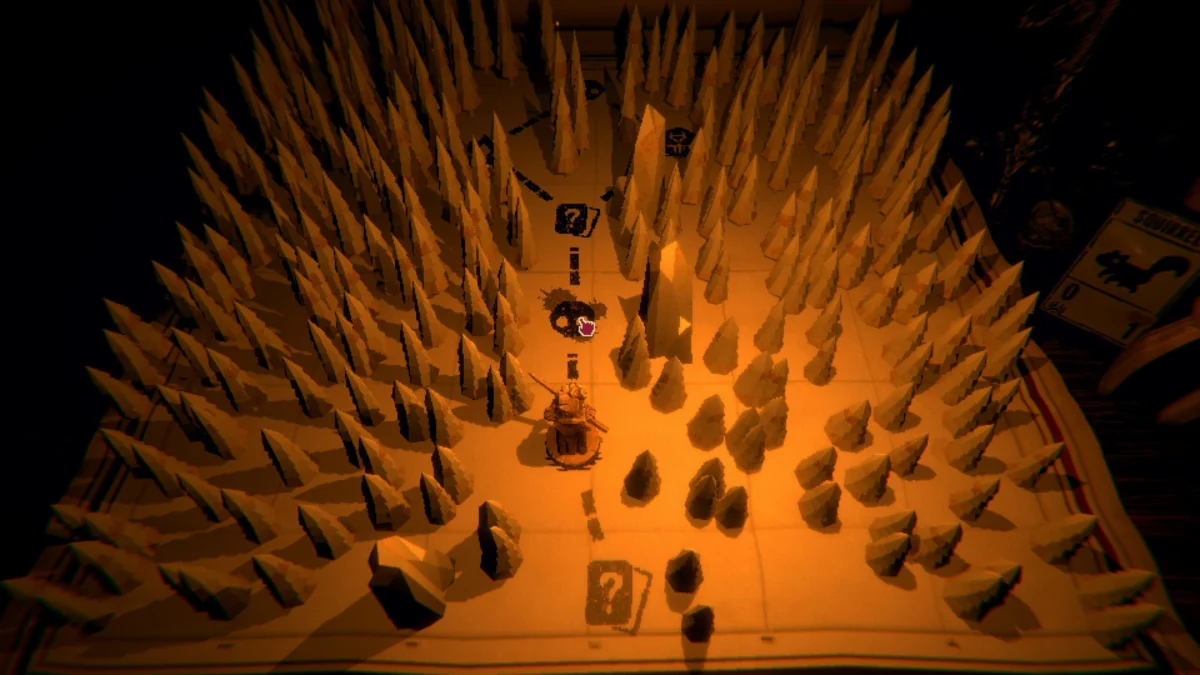
Price: £16.79 | Developer: Daniel Mullins Games | Publisher: Devolver Digital | Platform: PC
In the saturated landscape of modern indie gaming, few titles manage to subvert player expectations with the surgical precision of Inscryption. Developed by the visionary Daniel Mullins—the mind behind meta-narrative experiments like Pony Island and The Hex—Inscryption is not merely a card game; it is an immersive, psychological descent into a cabin where the walls are as much a part of the game as the cards themselves. Published by the champions of the avant-garde, Devolver Digital, Inscryption challenges the very foundation of the "New Game" interface, effectively trapping the player in a web of ritual sacrifice, woodland horrors, and digital haunting.
The Mechanics of Dread: A Chronology of Play
The experience begins the moment you boot up the software. In a subversion of standard UI conventions, you are greeted not with the choice to start fresh, but with a greyed-out "New Game" button. You are forced to "Continue"—a narrative hook that implies you have already been a participant in this dark ritual for far longer than you realize.
The Shack and the Shadow
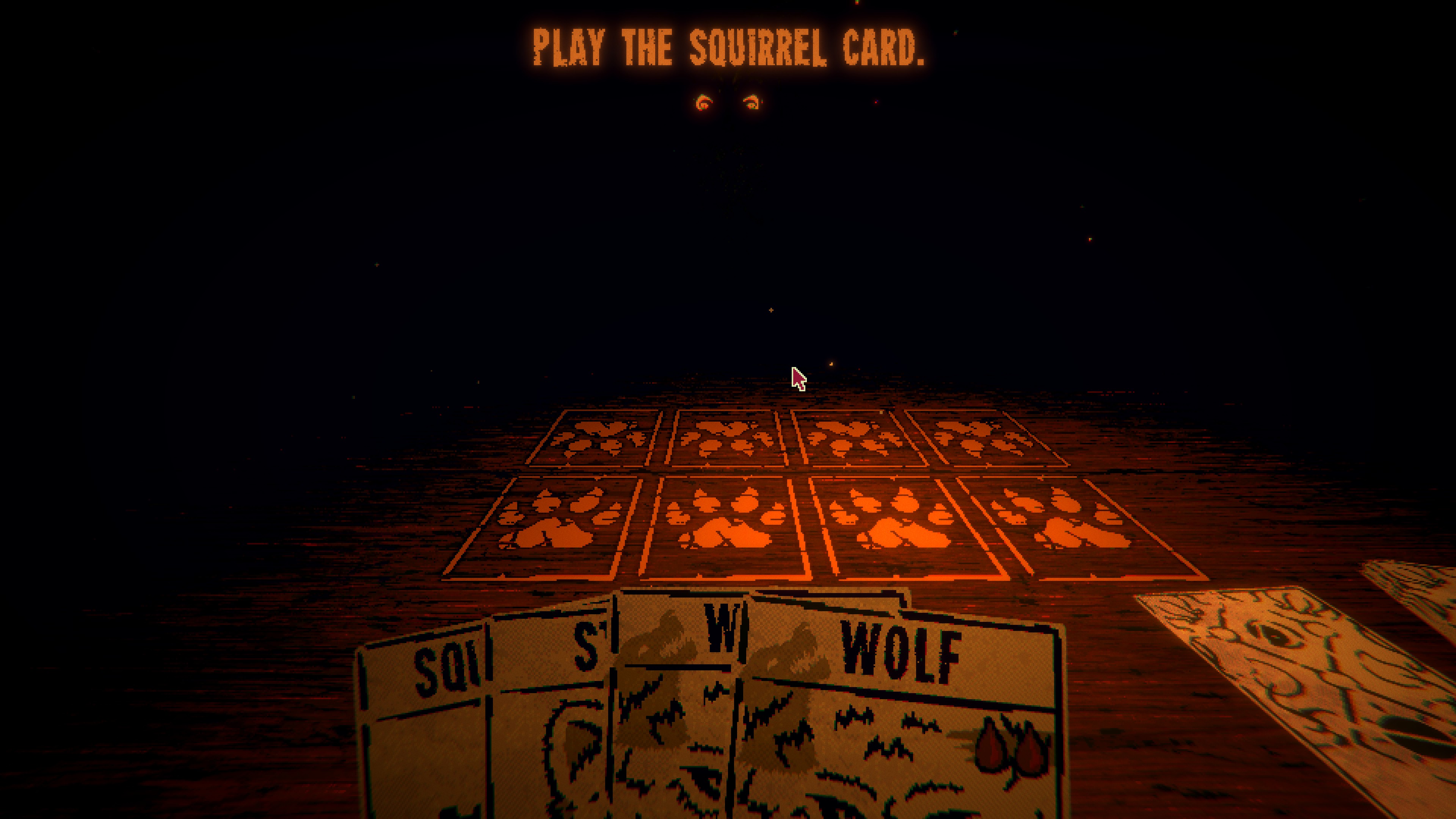
You find yourself seated on a stool in a dilapidated backwoods cabin. Across from you sits a figure shrouded in impenetrable shadow, their eyes glowing with a malevolent, rhythmic pulse. The air is thick with the scent of pine and decay, and the atmosphere is punctuated by the sound of withered hands tapping impatiently on the wooden table.
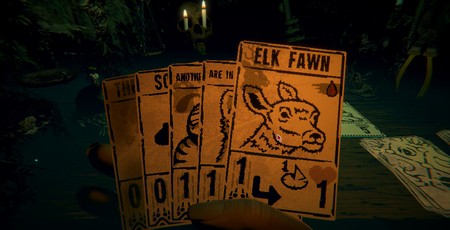
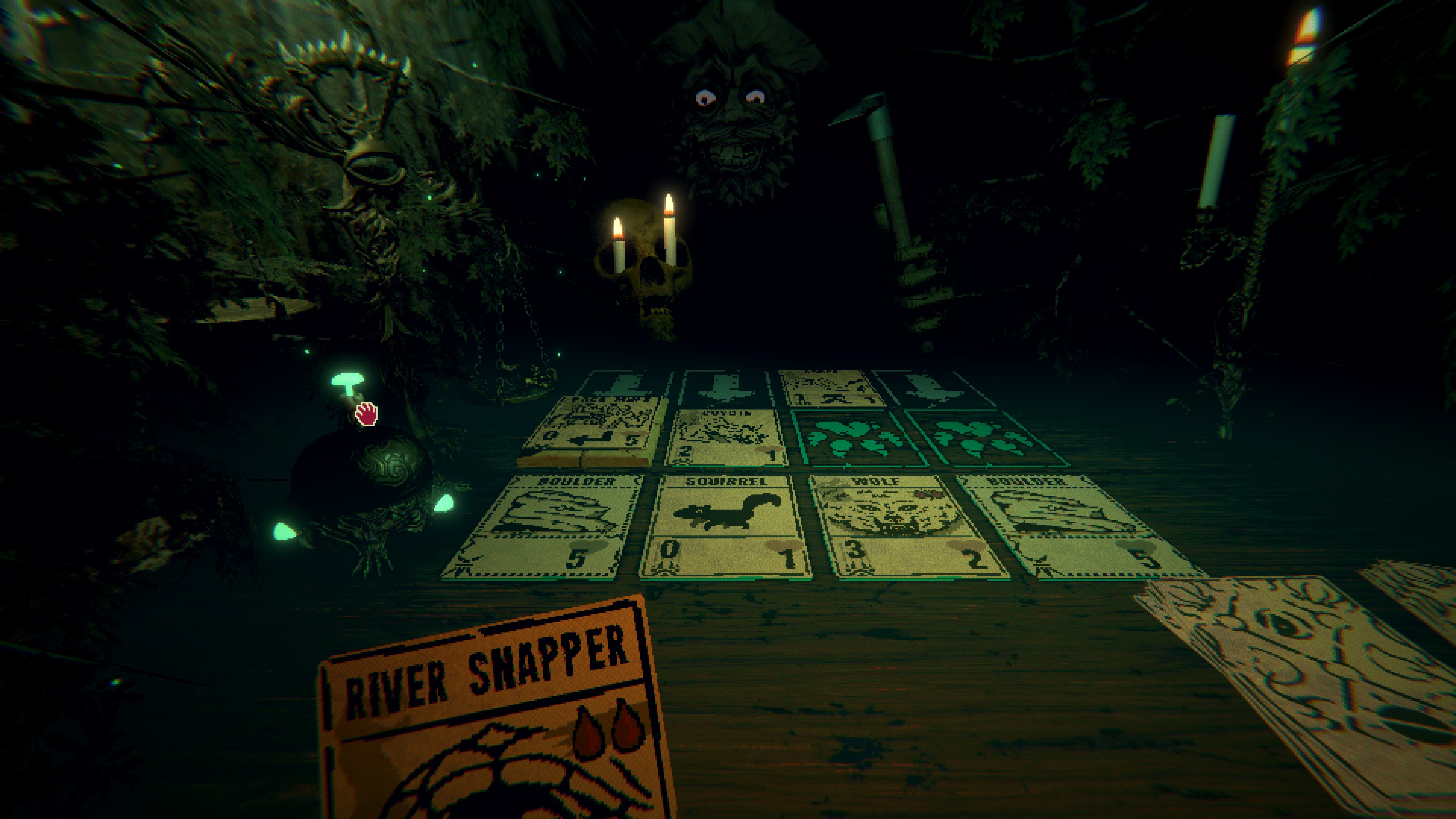
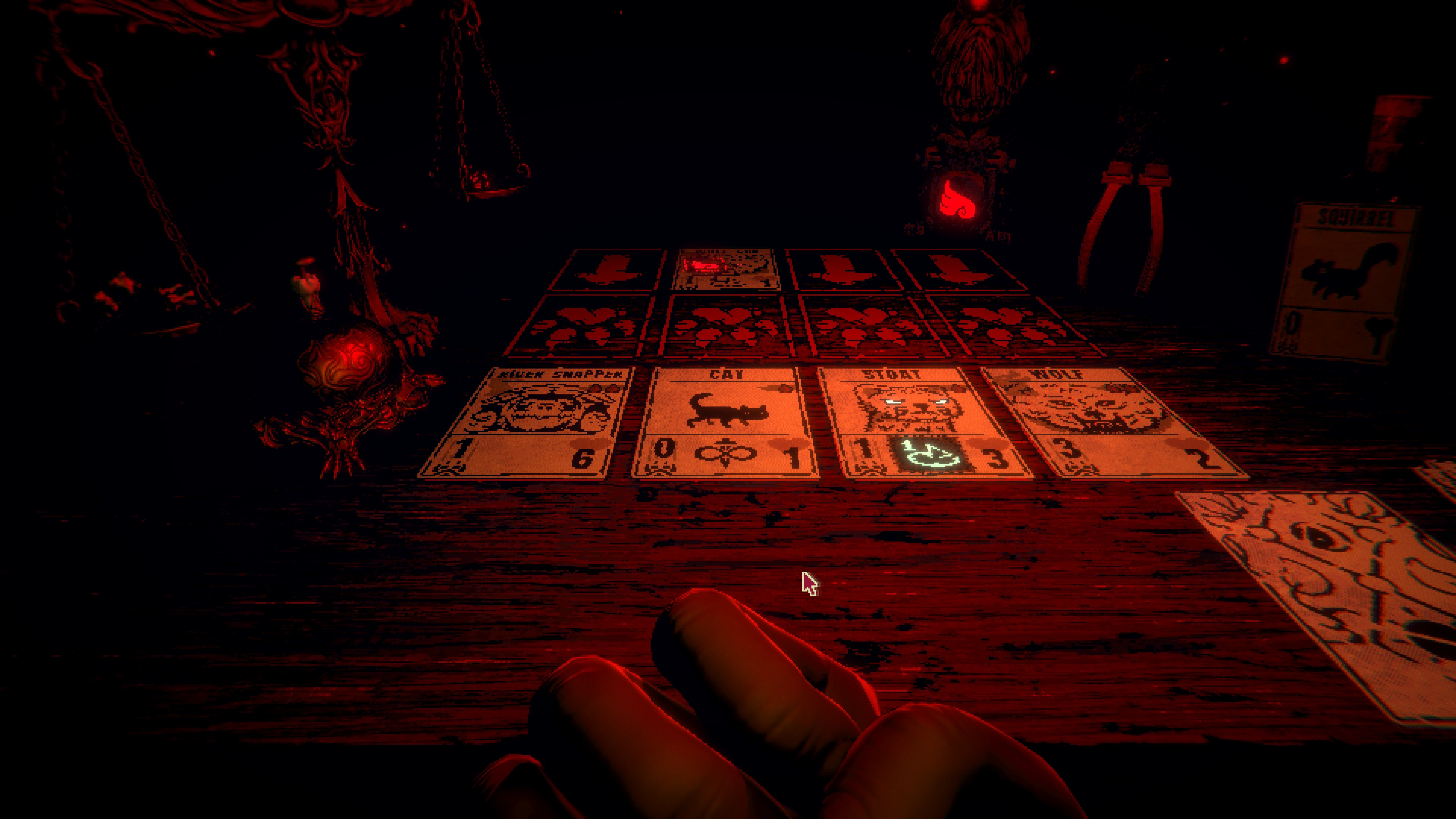
The core gameplay loop centers on a deck-building roguelike structure. You start with a fan of cards representing woodland creatures. The primary resource is blood—obtained by sacrificing your own weaker cards—which allows you to play more powerful entities. A squirrel, essentially a "throwaway" unit, serves as the primary currency for the blood sacrifice. From there, you might summon a stoat, which—chillingly—possesses the ability to speak, offering snide, cryptic guidance as you navigate the board.
The Scales of Fate
The objective is simple but brutal: manage your cards to tip a set of physical scales on the table. By dealing direct damage to your opponent or the creatures they place in your path, you aim to overcome their damage threshold. However, the game is heavily weighted against you. If you lose, the consequences are immediate and permanent. The "death" of your deck is not a simple reset; it is a narrative beat that integrates into the overarching mystery of the cabin.
Supporting Data: The Convergence of Genre
Inscryption thrives on its hybrid nature. It is not just a CCG (Collectible Card Game); it is an escape-room simulator.
The Cabin as a Board
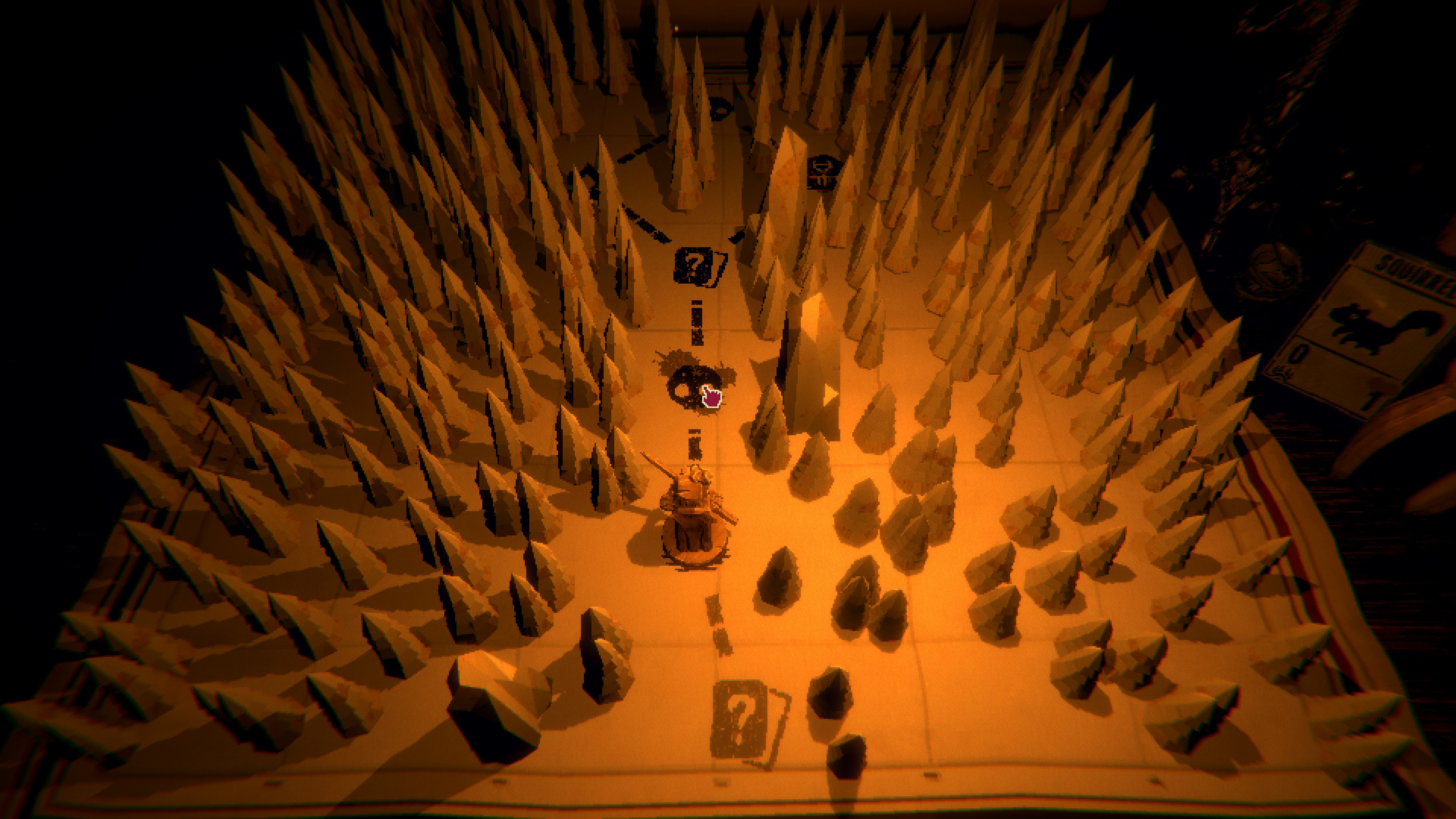
Between matches, the game shifts perspective. You are encouraged to stand up from the table and explore the cabin. This is where the game’s true depth is revealed. By interacting with the environment—solving the riddle of a safe, winding the hands of a cuckoo clock, or studying a grimoire of rules—you uncover clues that directly impact your deck’s capabilities.
The game’s design philosophy relies on this "rabbit hole" effect. You aren’t just playing cards; you are uncovering a conspiracy embedded within the very code of the game. You might discover an "ant" card that grows more lethal with every other ant in your hand, or acquire a pair of scissors that allows you to physically mutilate an opponent’s card. The synergy between the room and the table creates a feedback loop that rewards curiosity and rewards players who treat the cabin as a living, breathing antagonist.
Resource Management and Complexity
As you progress, the complexity deepens. Beyond blood, you encounter:
- Bones: Accumulated when your creatures die, these act as a secondary resource for undead-themed cards.
- Stone Altars: Risky locations where you can fuse cards, sacrificing one to imbue another with permanent power buffs.
- The Trader: A merchant who accepts pelts (useless cards gathered from the Trapper) in exchange for rare, high-tier cards.
This layering of mechanics ensures that while the game remains accessible, the skill ceiling is immense. The transition from a simple squirrel-sacrifice strategy to managing complex economies of bones and pelts keeps the tension at a breaking point.
Developer Insight and Official Responses
Daniel Mullins has remained characteristically enigmatic regarding the deeper lore of Inscryption. In early press statements, the developer noted that the project was intended to capture the "unsettling feeling of playing a game you weren’t supposed to find."
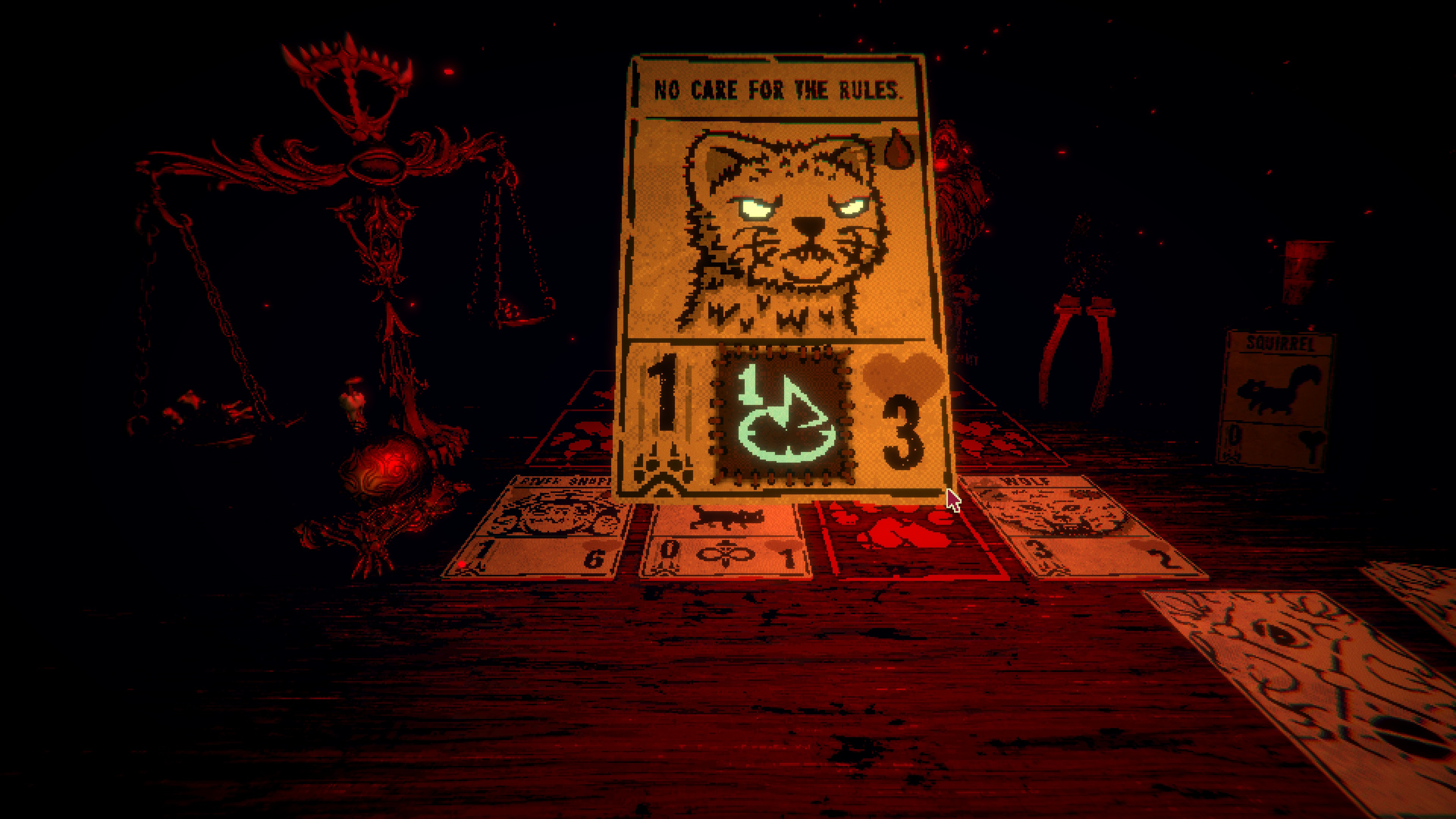
Devolver Digital, known for their hands-off approach to creative developers, has championed the game as a "black-box experience." They have consistently urged reviewers and players to avoid spoilers, emphasizing that the game’s greatest strength is its ability to mutate. "It’s not just about winning the match," a representative noted during the game’s launch window. "It’s about discovering why the stoat is talking to you, and what happens when the cabin decides it has had enough of your presence."
The critical reception has been overwhelmingly positive, with many outlets highlighting the game’s "meta-fictional audacity." Unlike traditional card games that remain static, Inscryption constantly resets the rules, forcing players to adapt or suffer the consequences of the cabin’s growing frustration.
Implications: The Evolution of the Roguelike
Inscryption sets a dangerous precedent for the genre. It suggests that a card game is no longer a collection of math problems, but a narrative vessel. By linking the game’s physical space (the cabin) with the digital space (the cards), Mullins has created a sense of place that makes standard deck-builders feel sterile by comparison.
A Psychological Trap
The game’s most impressive feat is its ability to induce a sense of Stockholm Syndrome. Even when the odds are stacked against you, and the shadowy opponent across the table begins to reveal truly horrific, reality-bending powers, you feel compelled to continue. The "thrill of the table" overrides the fear of the unknown. The game is essentially a commentary on our relationship with digital media—the way we blindly click "Accept," the way we obsess over mechanics, and the way we willingly submit to the rules of a system, even when that system is clearly malevolent.
Longevity and Replayability
While the initial playthrough is a tightly scripted, narrative-heavy journey, the game’s underlying systems are robust enough to support endless iterations. The procedural generation of the map and the variety of "death cards"—which allow you to carry over the attributes of your fallen creatures into your next attempt—ensure that no two runs feel identical.
However, the real implication lies in the genre-blurring. By incorporating elements of horror, puzzle-solving, and meta-commentary into a card game, Inscryption effectively demands that future developers look beyond the "battle" and consider the "experience."
Final Verdict: Why You Must Step Inside
If you have a penchant for the macabre or a love for games that demand you think outside the screen, Inscryption is an essential addition to your library. It is a rare work of art that feels like it is watching you as much as you are watching it.
It is a game of bones, blood, and bad intentions. It is a game that breaks the fourth wall not just to surprise you, but to consume you. As the stoat would say: "Keep playing. It’s the only way to find out if you’re the hunter or the hunted."
So, pull up your stool, silence your conscience, and deal the cards. The cabin is waiting, and the shadows are hungry. There is, truly, nothing else like it on the market today.











