
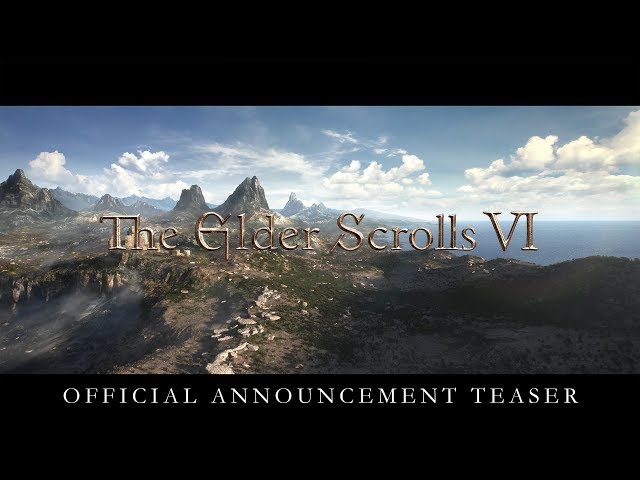
In a move that has sent shockwaves through the gaming industry, Bethesda Game Studios (BGS) has opted to break its long-standing tradition of silence. After years of speculation and the relative quiet that followed the initial reveal of The Elder Scrolls 6—a moment Todd Howard has famously described as a premature announcement—the developer has finally pulled back the curtain. In an expansive update, Bethesda has provided a roadmap that not only seeks to solidify its future pipeline but also serves as a critical morale boost amid the broader turbulence currently affecting the Xbox ecosystem and its internal studios.
The Main Facts: A Staggering Slate of Projects
Bethesda’s latest communication is less of a trickle and more of a deluge. The studio has confirmed the existence of several long-rumored titles, effectively laying out a roadmap that spans the next decade. The primary pillars of this announcement are as follows:
- The Elder Scrolls 6: Reconfirmed as the studio’s primary development focus, now eight years post-announcement.
- Fallout 5: Officially confirmed to be in pre-production, described as the “long-range destination” for the franchise.
- Fallout Remasters: Both Fallout 3 and Fallout: New Vegas are receiving full-scale remasters.
- Obsidian Collaboration: A new, distinct Fallout project is currently in development at Obsidian Entertainment.
- Fallout 76 Expansion: A major prequel expansion titled Raven Rock is slated for a 2027 release.
- Starfield’s Future: Continued support for Starfield is confirmed, including upcoming Starborn-related content.
- Technological Standardization: All future flagship titles, including The Elder Scrolls 6 and Fallout 5, will utilize the newly finalized Creation Engine 3 (CE3).
Chronology of Development: Building for the Future
The shift in Bethesda’s strategy appears to be rooted in the finalization of the Creation Engine 3. Following the release of Starfield, the studio shifted its internal resources toward creating a shared technology platform. Bethesda describes CE3 as a modular environment that allows for better rendering, advanced systems, and, crucially, the ability to support multiple projects simultaneously.
This technological backbone is the reason why the studio now feels confident enough to discuss projects in varying stages of development. While The Elder Scrolls 6 occupies the front of the queue, the studio is simultaneously nurturing Fallout 5 in its early, formative years. The timeline for these releases remains intentionally vague; by labeling Fallout 5 the “long-range destination,” Bethesda is managing expectations, ensuring that the community understands that while the game is coming, it is not the next item on the menu.

The 2027 milestone serves as the anchor for this chronology. With the 30th anniversary of the Fallout franchise approaching, Bethesda has signaled that this year will be the focal point for major revelations. The live event planned for Washington, D.C., will likely serve as the stage where the vague promises of today are transformed into concrete release windows.
Supporting Data: Examining the Ecosystem
To understand why Bethesda is making these announcements now, one must look at the state of the industry. The ongoing layoffs at Microsoft-owned studios have cast a shadow of uncertainty over the future of many legacy franchises. By explicitly naming its three core pillars—Fallout, The Elder Scrolls, and Starfield—as the focal points of the new Xbox strategy, Bethesda is signaling stability.
The data suggests a shift toward a "franchise-first" model. By bringing ZeniMax Online Studios (ZOS) into closer alignment with BGS, the company is aiming to maximize the utility of its IP. This synergy will likely see The Elder Scrolls Online becoming a more integral part of the overarching Elder Scrolls brand, potentially acting as a bridge between the long gaps between mainline single-player titles.
Furthermore, the decision to outsource a new Fallout project to Obsidian Entertainment—the studio responsible for the fan-favorite New Vegas—is a calculated move to satisfy a vocal and hungry fanbase. By keeping the main studio focused on TES 6 and Fallout 5, and delegating a secondary project to a studio with deep, historical knowledge of the Fallout lore, Bethesda is effectively diversifying its output without overextending its primary production team.
Official Responses and Strategic Intent
In an official statement via the Bethesda blog, the studio emphasized that its teams are being brought "closer together." This is a significant cultural shift for a company that has traditionally operated in distinct silos. The integration of technology and staff between BGS and ZOS is intended to allow for more rapid development cycles—or at the very least, more consistent updates for live-service titles like Fallout 76 and Starfield.
Regarding Starfield, the message is clear: the game is not being abandoned. Despite a polarized reception at launch, the studio views the Settled Systems as a long-term asset. The promise of "new Starborn content" indicates that the narrative threads established in the base game will be expanded upon, likely addressing some of the common critiques regarding the game’s depth and exploration mechanics.
The Implications: A Double-Edged Sword
While the announcement is undoubtedly exciting, it raises questions about the long-term impact of "over-communicating." Todd Howard’s previous caution regarding The Elder Scrolls 6 was born of the realization that announcing a game too early can lead to years of fatigue and resentment. By announcing both Fallout 5 and multiple remasters, Bethesda is potentially walking into the same trap.
The Pressure of Expectation
The primary implication of this disclosure is the sheer volume of pressure now resting on the development teams. When a studio announces a roadmap that spans years, the audience immediately begins a countdown. If these projects face delays—which is common in modern AAA development—the public reaction can be significantly more vitriolic than if the projects had remained under wraps until closer to completion.

The Lack of Specifics
For all the fanfare, the announcement is notably light on details. We have no release dates, no trailers for the remasters, and no confirmation of what the new Obsidian Fallout project actually entails. For the pragmatic observer, these are "whispers on the wind." The only project with a tangible sense of urgency is the Fallout 76: Raven Rock expansion. For fans, this is the only "real" product they can expect to play in the near term.
The Missing Pieces
Perhaps most telling is what was not mentioned. The absence of a Skyrim or Morrowind remake suggests that Bethesda is not looking to revisit every entry in its back catalog. The success of the Oblivion remake seems to have been an isolated case, or perhaps a trial balloon that the studio is not yet ready to repeat across the board. This signals a strategic choice to focus on future-facing projects rather than turning the studio into a "remake factory."
Conclusion: A Measured Optimism
Bethesda’s latest update is a necessary response to a rapidly changing market. By asserting its presence and outlining a clear, if distant, future, the studio is attempting to stabilize its brand and reassure its shareholders and fans alike.
However, the path forward is fraught with the dangers of over-promising. While the promise of Fallout 5 and The Elder Scrolls 6 is a tantalizing prospect for the millions of players who have grown up with these series, the long wait remains. For now, the community must content itself with the knowledge that these worlds are being built, even if they are still a long way from being played. The 2027 anniversary in Washington, D.C., will likely be the true litmus test for whether this bold strategy has paid off, or if it has simply provided more fuel for the fires of anticipation.