

By Editorial Staff
Published 2 days ago | General Tech
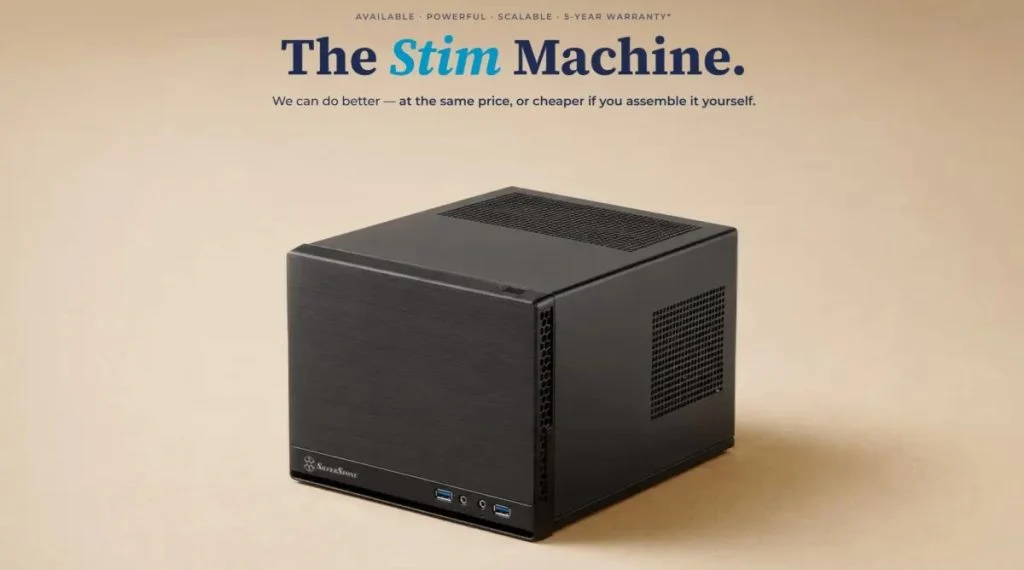
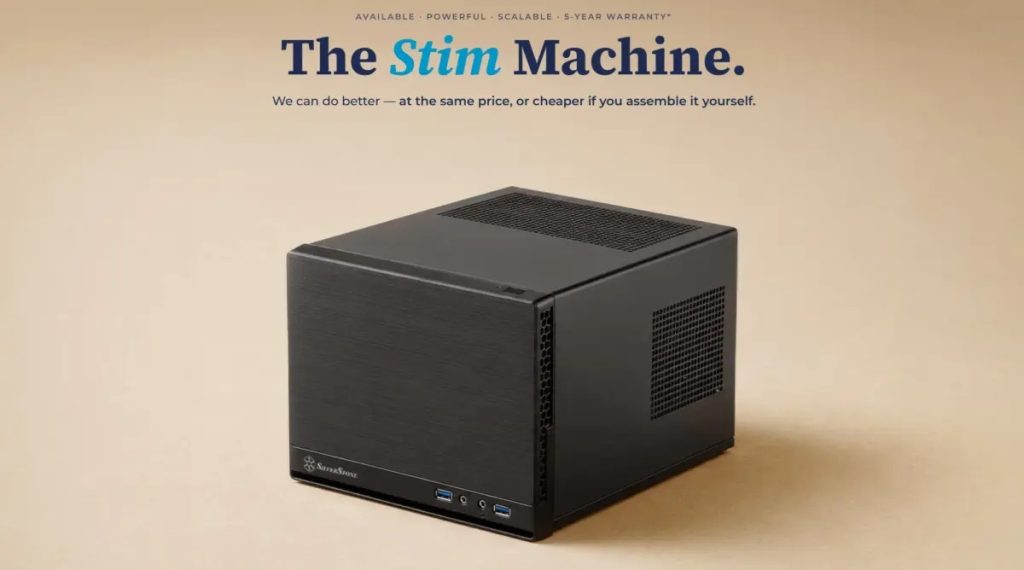
In the rapidly evolving landscape of compact gaming hardware, a new rivalry has emerged. French retailer LDLC has officially thrown its hat into the ring, positioning its new "PC STIM"—or "Stim Machine"—as a direct, value-oriented rival to Valve’s highly anticipated, yet controversial, Steam Machine. Priced at a competitive €999, the Stim Machine is not just another pre-built PC; it is a calculated critique of the pricing and hardware philosophy currently championed by Valve.
While Valve has focused on creating a bespoke, ultra-compact ecosystem, LDLC is betting on the classic enthusiast appeal of standard components, raw power, and modular flexibility. As gamers weigh their options between these two philosophies, the market is witnessing a fascinating clash between proprietary convenience and open-platform performance.
Main Facts: A Clash of Philosophies
The core of the debate lies in the divergence of hardware strategies. Valve’s Steam Machine relies on custom-engineered silicon and a chassis designed for the smallest possible footprint. This design language prioritizes aesthetic integration and the "console-like" experience, where the user expects a plug-and-play environment without the overhead of traditional PC management.
Conversely, the LDLC PC STIM is built on a standard Mini-ITX platform. By utilizing the AMD Radeon RX 9060 XT, LDLC has managed to secure a significant performance lead over Valve’s custom-tuned hardware. While the Stim Machine is admittedly larger than the Steam Machine, it remains compact enough for living room consoles or minimalist desk setups.
The pricing strategy is perhaps the most aggressive element of LDLC’s campaign. At €999, the Stim Machine offers a price-to-performance ratio that directly challenges the Steam Machine’s €1,039 price tag. Furthermore, LDLC offers a comprehensive 5-year warranty, signaling high confidence in the longevity of their component selection. For those who prefer a hands-on approach, the system can be purchased as a kit, saving the user an additional €41 in assembly fees.
Chronology of the Dispute
The saga of the Steam Machine and its challengers has unfolded over several months, marked by supply chain struggles and shifting consumer expectations:
- Early 2026: Valve announces the Steam Machine, promising a revolution in the living room gaming space. Early marketing focuses on the device’s compact footprint and the integration of SteamOS.
- Spring 2026: Reports begin to surface regarding supply chain constraints. Analysts note that Valve is struggling to secure consistent access to high-end memory and storage components, leading to potential price hikes and launch delays.
- Mid-2026: As the Steam Machine reaches retail, public discourse turns toward its price point. Critics argue that the performance-per-euro ratio is skewed by the focus on proprietary, ultra-small form factors.
- Current Week: LDLC launches the "Stim Machine," explicitly positioning it as a response to the Steam Machine’s shortcomings. Market analysts view this as a pivotal moment, as a major retailer openly mocks a hardware giant’s pricing strategy in its own marketing material.
Supporting Data: Performance vs. Form Factor
To understand why the Stim Machine has captured the attention of the tech community, one must look at the underlying architecture. The Steam Machine was built with specific constraints in mind: cooling, power efficiency, and size. These constraints necessitated the use of custom CPU/GPU configurations that, while efficient, lack the ceiling of a standard desktop-grade GPU.
The RX 9060 XT inside the LDLC system is a powerhouse in the current mid-to-high-tier market. By opting for a standard Mini-ITX enclosure, LDLC avoids the thermal throttling issues that often plague ultra-compact proprietary designs.
Comparative Specifications
| Feature | Steam Machine | LDLC PC STIM |
|---|---|---|
| GPU | Custom Valve Silicon | AMD Radeon RX 9060 XT |
| Form Factor | Ultra-Small (Proprietary) | Mini-ITX (Standard) |
| OS | SteamOS (Pre-installed) | Compatible (User-installed) |
| Warranty | Standard | 5-Year Extended |
| Price | €1,039 | €999 |
The data indicates a clear trade-off. The consumer is essentially choosing between the convenience of a fully optimized, turn-key console experience (Valve) and the raw, upgradeable, and high-performance potential of a traditional desktop platform (LDLC).
Official Responses and Industry Context
Valve has maintained a relatively transparent stance regarding the pricing of the Steam Machine. In recent briefings, company spokespeople have pointed to global supply chain volatility as the primary culprit for the higher-than-anticipated costs. The company notes that the cost of high-density memory and fast NVMe storage has spiked, directly impacting the bill-of-materials (BOM) for the Steam Machine.
Valve’s focus remains on the experience. Their argument is that by controlling the hardware-software stack, they can ensure a level of stability and performance consistency that DIY builds—even those as well-made as the Stim Machine—cannot guarantee without user intervention.
LDLC, however, has leaned into the "value-first" narrative. Their marketing materials suggest that the "Stim Machine" is the answer for those who find the Steam Machine’s price tag prohibitive and its hardware overly restrictive. By utilizing open-source compatibility with SteamOS, they argue that the user can replicate the Valve experience while keeping the extra performance and the ability to repair or upgrade the machine down the line.
Implications: The Future of the Living Room PC
The launch of the PC STIM raises broader questions about the future of the "console-killer" PC market.
1. The Death of the "Proprietary" Premium
The consumer appetite for proprietary, non-upgradeable gaming devices is waning. As gamers become more tech-savvy, the allure of being able to swap a GPU or increase RAM in three years’ time is becoming a stronger selling point than a smaller, sleek chassis. LDLC’s move suggests that retailers are ready to move away from the "black box" model of console gaming.
2. The Linux and SteamOS Factor
One of the most interesting aspects of this rivalry is that both machines run on the same software foundation. Because the Stim Machine is built on standard AMD hardware, it is fully compatible with SteamOS. This creates a fascinating scenario where the consumer can buy a "better" machine from a third party and essentially "sideload" the exact experience Valve intended. This democratization of the living room gaming experience could put pressure on Valve to lower prices or offer more compelling hardware tiers.
3. DIY vs. Pre-built Ecosystems
The option for the user to assemble the Stim Machine themselves or have it built by an expert highlights a shifting trend in the PC industry. Retailers are increasingly acting as facilitators rather than gatekeepers. By offering a "kit" version, LDLC is acknowledging that the DIY community is a significant demographic that should not be ignored.
Conclusion: A Win for the Consumer
While the Stim Machine lacks the sleek, monolithic design language of Valve’s offering, its value proposition is undeniable. It provides a bridge for users who want the living-room convenience of a console but refuse to compromise on the performance and longevity expected of a high-end desktop PC.
As Valve navigates the challenges of supply chains and market perception, the existence of the PC STIM serves as a vital reality check. Whether you choose the refined, proprietary experience of the Steam Machine or the raw, modular power of the LDLC Stim Machine, one thing is clear: the competition for the space under your TV has never been more intense. For the consumer, this competition is the ultimate catalyst for better hardware, lower prices, and a more diverse range of options.
Ultimately, the choice comes down to a simple question: do you value the elegance of a closed ecosystem, or the freedom of an open-platform powerhouse? For many, the answer lies in the Stim Machine’s promise of performance, durability, and value.











