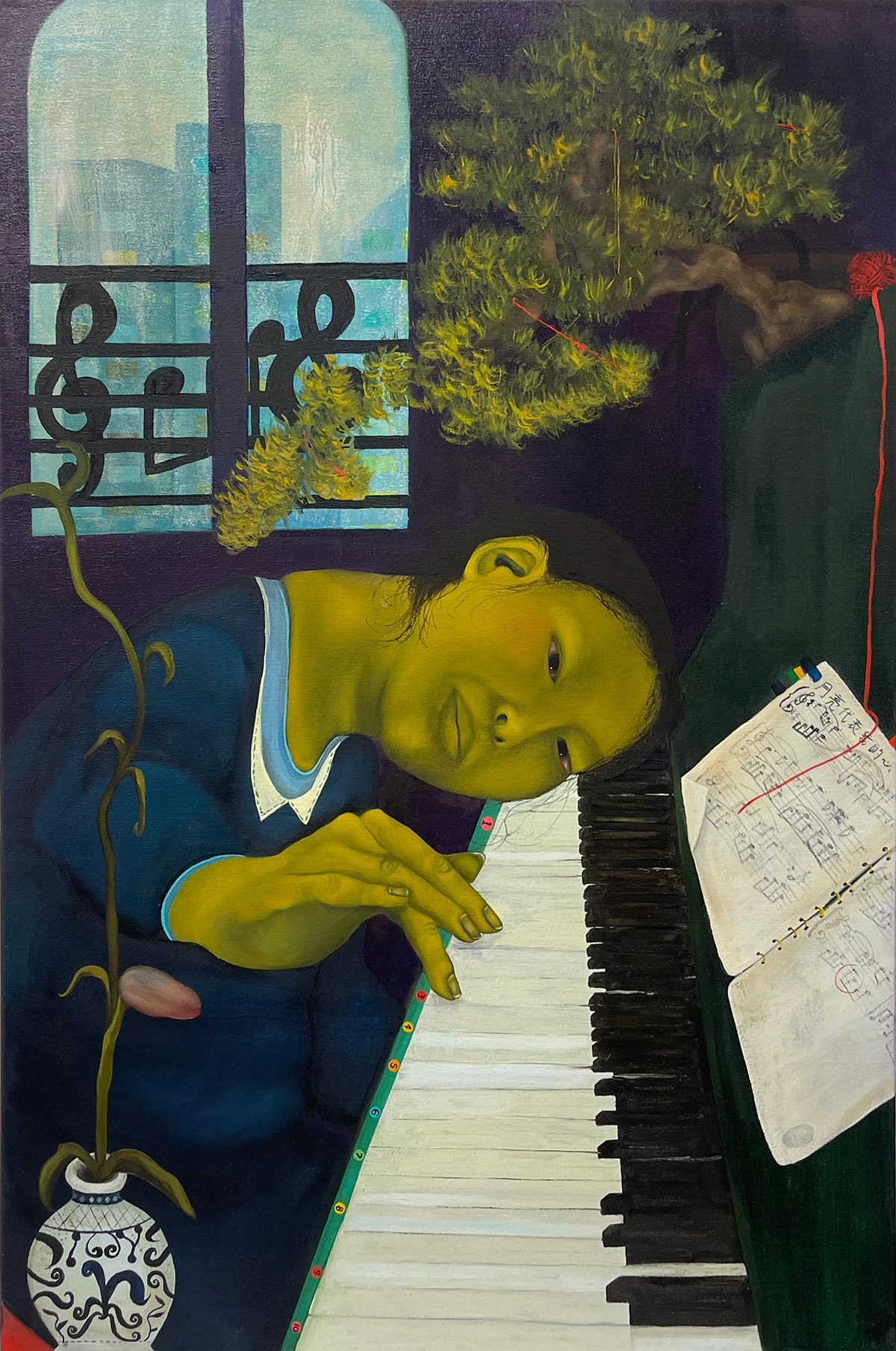
In the dense, hyper-modern sprawl of Singapore, where the skyline is a meticulously engineered testament to efficiency and progress, artist Claudia Koh finds her muse. Her latest series of paintings is not merely an aesthetic observation of the urban environment but a profound investigation into the psychological weight of the spaces we inhabit. Through a delicate interplay of domestic architecture and organic form, Koh captures the silent, often invisible, tensions of contemporary life—a world where technological connectivity ironically mirrors our deepening sense of social isolation.
The Architecture of the Human Experience
At the core of Koh’s practice is a fundamental question: How do we, as individuals, navigate structures that are designed simultaneously to facilitate our survival and to constrain our agency? Her canvases present imagined scenes that act as a liminal space between the built environment—the cold, hard lines of concrete and steel—and the organic world.
Koh’s work is deeply rooted in the specific sociopolitical context of Singapore, an island nation that serves as a global archetype for "cultivated environments." By drawing from domestic spaces and public urban landscapes, she highlights the systems of care and control that govern our everyday existence. Her paintings often feature architectural elements that feel both protective and suffocating, mirroring the dual nature of modern infrastructure.
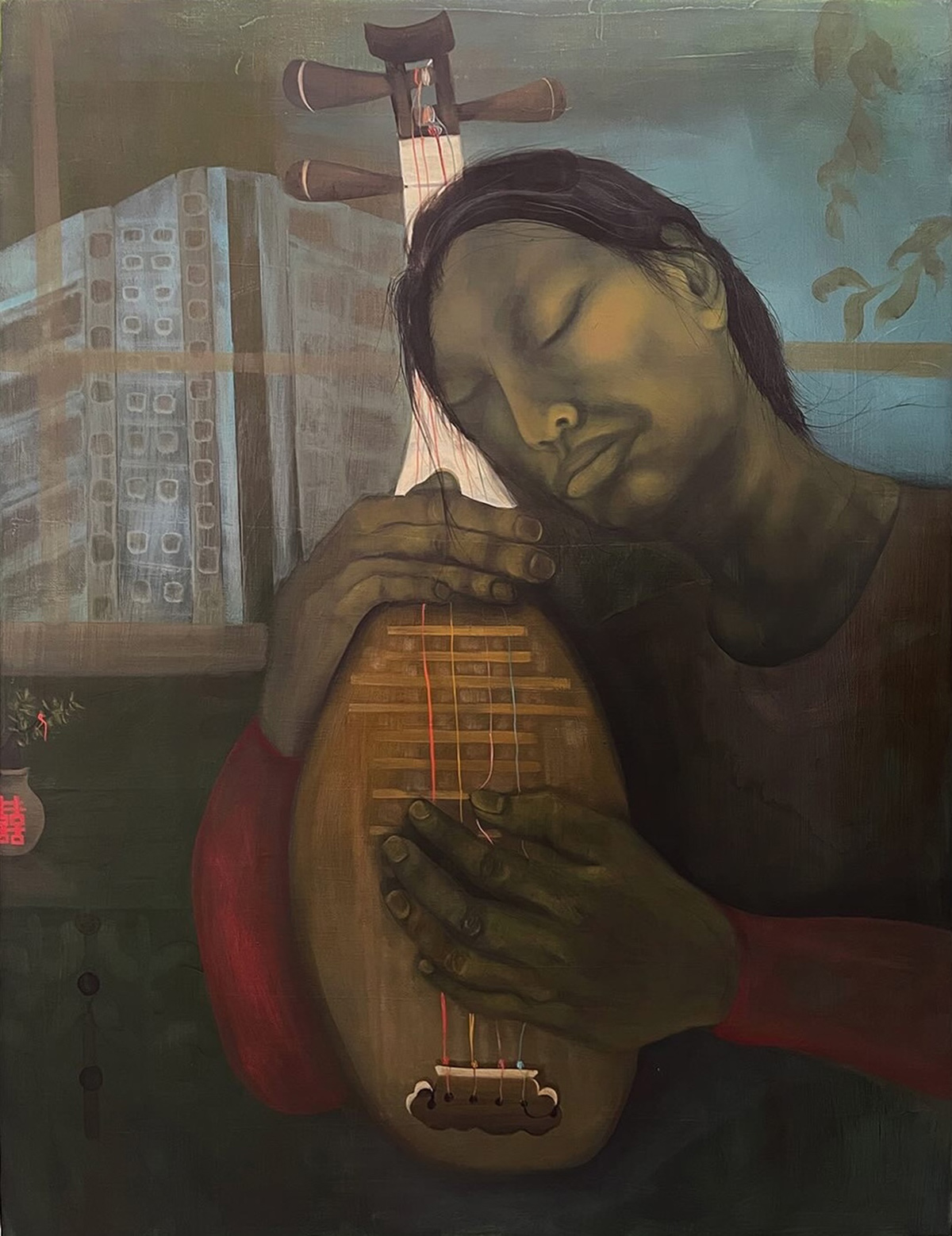
For Koh, the architecture is never just a backdrop. It is a participant in the narrative, a character that dictates the rhythm of the inhabitants’ lives. Her brushwork oscillates between the rigid geometry of urban planning and the fluid, unpredictable nature of the human spirit, forcing the viewer to confront the fragility of belonging in an increasingly fragmented world.
Chronology of a Visionary Practice
To understand the depth of Koh’s current body of work, one must trace the evolution of her artistic journey, which has been defined by a consistent preoccupation with the intersection of space and psyche.
Early Foundations: The Domestic Landscape
In the early stages of her career, Koh focused heavily on the private interior. Her early work scrutinized the domestic sphere, looking at how the design of a home can mirror the emotional state of its occupant. During this period, she began experimenting with the boundaries between personal sanctuary and the broader societal expectations of "home."
The Urban Expansion
As her practice matured, Koh transitioned from the interior to the exterior. Influenced by the rapid transformation of Singapore’s skyline, she began incorporating larger structural motifs. This was a critical shift; the "walls" of her paintings moved from being dividers of rooms to dividers of communities. This phase marked her exploration of resilience—how people maintain a sense of self when faced with the relentless pace of urban development.
The Contemporary Synthesis
Currently, Koh is working at the intersection of technological advancement and human alienation. Her latest series serves as a synthesis of her previous inquiries, placing the individual in a state of suspended animation within high-tech, high-density environments. This current trajectory reflects a broader global anxiety, capturing the paradox of being "connected" via digital infrastructure while feeling increasingly adrift in physical space.
Supporting Data: The Sociology of Space
While Koh’s work is artistic, it is anchored in sociological realities that resonate well beyond the borders of Singapore.
- Urban Density and Mental Health: Numerous studies in architectural psychology suggest that high-density living, while efficient, often correlates with increased levels of social fragmentation. Koh’s paintings visualize the "anxiety of proximity"—the sensation of being surrounded by thousands of people while feeling completely alone.
- The Built Environment as a Constraint: Urban planning research often discusses the "nudge" theory, where physical spaces are designed to encourage certain behaviors. Koh’s work effectively depicts the inverse: the ways in which these spaces fail to account for the complexities of human emotion, leading to a disconnect between the architecture’s intent and the inhabitant’s reality.
- Technological Isolation: Data consistently shows that as digital connectivity has increased over the last decade, self-reported feelings of loneliness have also risen. Koh’s visual language uses "tech-aesthetic" lines—neon hues, clinical lighting, and grid-like compositions—to signify this digital overlay on the physical world.
Official Perspectives and Critical Discourse
The art world has responded with significant enthusiasm to Koh’s nuanced critique. Curators and critics alike have noted that her ability to imbue inanimate structures with emotional weight is a rare talent.

"Claudia Koh is doing something quite courageous," says Dr. Elena Vance, a scholar of contemporary Southeast Asian art. "She is documenting the ‘invisible architecture’ of our lives. Her work is not just a reflection of Singapore; it is a blueprint for understanding how, globally, we are losing our ability to coexist organically within the structures we have built to serve us."
In interviews, Koh herself has been careful not to present her work as a political manifesto. Instead, she frames it as an invitation to look closer. "The goal isn’t to critique the city for the sake of it," Koh noted in a recent artist statement. "It is to ask if these spaces—these grand, efficient, beautiful structures—are actually holding us, or if they are simply keeping us in place. There is a resilience in the way people find ways to exist within these cracks, and that is what I want to paint."
Implications for the Future of Artistic Urbanism
The implications of Koh’s work are far-reaching. As cities continue to densify globally, the questions she raises regarding "belonging" and "social fragmentation" are becoming central to the urban planning debate.
Bridging the Gap Between Design and Humanity
Koh’s paintings serve as a visual critique that architects and urban planners would do well to consider. By prioritizing efficiency and connectivity, developers often overlook the "soft" human requirements of spaces—the need for serendipity, for solitude, and for organic growth. Her work acts as a reminder that a city is not just a machine for living, but a landscape of human experience.
The Role of Art in Shaping Policy
Art has the unique capacity to distill complex, abstract societal issues into visceral, emotional experiences. By documenting the tension between technological advancement and human fragility, Koh’s work provides a necessary counter-narrative to the utopian promises of "Smart Cities." It forces a public conversation about what we are willing to sacrifice in the name of progress.
A Global Resonance
While the visual vocabulary of Koh’s work is drawn from Singapore, its themes are universal. From the megalopolises of Tokyo and New York to the rapidly growing hubs of Dubai and Lagos, the struggle to find one’s place within the grid is a defining feature of the 21st century. Koh’s contribution is the articulation of this struggle—a reminder that, despite the glass and the steel, the human element remains the most vital, and the most fragile, component of any environment.
In conclusion, Claudia Koh’s paintings stand as a significant intervention in contemporary art. They challenge us to look at the walls that surround us not as static boundaries, but as active participants in our emotional lives. As we move further into a future defined by rapid urbanization and digital ubiquity, her work provides the essential, often uncomfortable, reflection we need to ensure that our environments—and our souls—remain intact. Her art is not just a mirror of the present; it is a lens through which we might begin to redesign a more human future.