Wix has long held the title of the "Swiss Army Knife" of the website-building world. With its expansive feature set, intuitive drag-and-drop interface, and massive template library, it has become the default starting point for millions of small business owners, creatives, and entrepreneurs. Yet, as the digital landscape matures, many users are finding that the very things that make Wix versatile can also make it cumbersome.
The platform’s "infinite freedom"—the ability to place any element anywhere on a canvas—is a double-edged sword. For users without a formal background in design, this often leads to cluttered, unoptimized layouts that lack professional cohesion. Furthermore, once a site is published, the user is effectively "locked in"; switching templates later is not a seamless process, often requiring a total rebuild. If your business has outgrown the Wix ecosystem, or if you simply crave a more structured, performative approach to web design, it is time to look at the top-tier alternatives.
1. Squarespace: The Architect of Aesthetic Polish
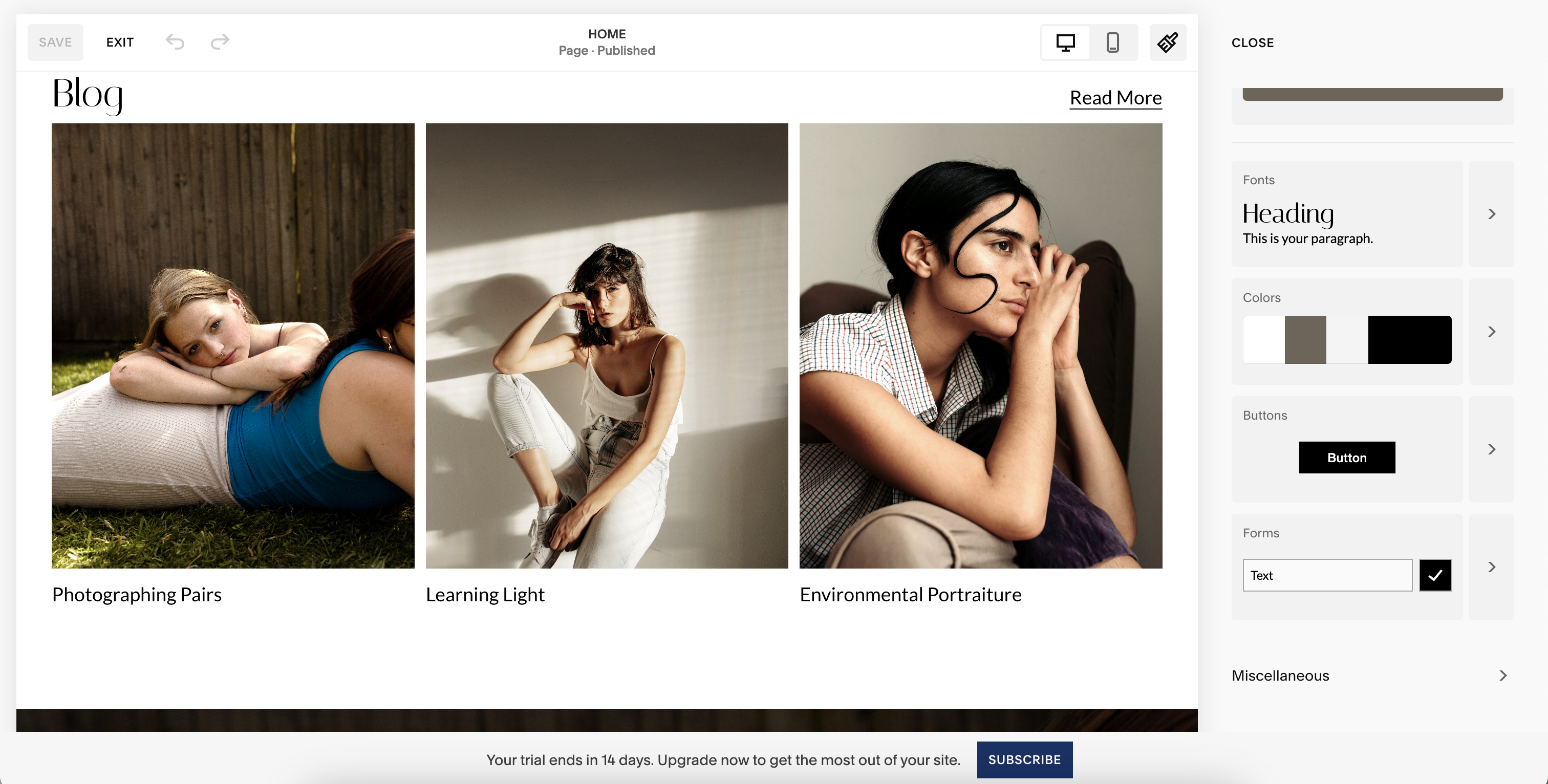
For those who view their website as a digital storefront or a high-end portfolio, Squarespace represents the antithesis of Wix’s "anything-goes" philosophy.
The Philosophy of Constraint
Squarespace operates on a structured, grid-based system. While this may feel restrictive to some, it is the secret behind the platform’s consistently professional look. By limiting where elements can be placed, the system ensures that every site maintains proper padding, alignment, and visual hierarchy. You don’t need to be a designer to make a Squarespace site look like it was crafted by one.
Performance and Ecommerce Capabilities
Beyond aesthetics, Squarespace has made significant strides in functionality. Its in-house design team crafts every template, ensuring that mobile responsiveness and SEO best practices are baked into the core code. For ecommerce, it offers a robust suite of tools—including native inventory management, abandoned cart recovery, and integrated email marketing—that do not rely on third-party plugins.
- Pros: Unmatched visual consistency, superior template library, and all-in-one marketing tools.
- Cons: Higher price point than budget competitors; slightly steeper learning curve for beginners.
- Pricing: Ranging from $16/month for basic portfolios to $99/month for advanced, high-volume retail operations.
2. Shopify: The Gold Standard for Scaling Commerce
If your website exists primarily to sell products, comparing Wix to Shopify is akin to comparing a home kitchen to a professional culinary suite. Wix is a generalist; Shopify is a specialist.
Why Merchants Migrate to Shopify
The primary driver for moving from Wix to Shopify is scalability. When a business reaches a certain volume, general-purpose builders often buckle under the weight of complex inventory, multi-channel selling, and international shipping requirements. Shopify’s architecture is designed from the ground up for high-traffic, transaction-heavy environments.
The Ecosystem Advantage
Shopify’s App Store is arguably its greatest asset. Whether you need advanced SEO automation, complex loyalty programs, or niche shipping integrations, the ecosystem offers a plug-and-play solution. Additionally, features like Shopify Magic (an AI-driven copywriting tool) and native integrations with social media marketplaces make it the premier choice for brands that need to sell everywhere—online, in-person via POS, and across social channels.
- Pros: Unrivaled ecommerce power, deep integrations, and advanced business analytics.
- Cons: Less focus on "creative" site design; can become expensive once you add multiple premium apps.
- Pricing: Plans start at $39/month for core operations and scale to $399/month for enterprise-level merchants.
3. Weebly: The Path of Least Resistance
For the absolute beginner—the small business owner who needs a functional, reliable, and clean presence online without the "sprawl" of modern design tools—Weebly remains a formidable contender.
Simplicity as a Feature
Weebly is the most straightforward of the three alternatives. It does not attempt to compete with the complex, design-heavy capabilities of Wix or the deep analytical toolkits of Shopify. Instead, it offers a simplified drag-and-drop experience that allows users to get a site live in hours rather than days.
The Value Proposition
One of Weebly’s most enduring appeals is its generous free tier, which allows users to sell physical products without the immediate barrier of a monthly subscription. While its template library is significantly smaller than its rivals (approx. 40 themes), this limitation actually serves as a benefit for users who find too many choices overwhelming.
- Pros: Extremely intuitive, faster setup time, generous free tier.
- Cons: Limited design flexibility, smaller selection of themes.
- Pricing: Starts at $13/month for custom domains, with professional tiers reaching $16/month.
Chronology of the Modern Web Builder
The evolution of these platforms mirrors the maturation of the internet itself. In the early 2010s, the "Web 2.0" movement demanded democratization—Wix and Weebly answered that call by giving anyone the ability to build a page.
However, as businesses shifted from "having a website" to "operating an online brand," the industry diverged:
- The "Designer-First" Era (2015–2018): Squarespace gained dominance by proving that site aesthetics were a primary driver of conversion.
- The "Ecommerce-First" Era (2019–2022): With the explosion of D2C (Direct-to-Consumer) brands, Shopify cemented itself as the backbone of the digital economy.
- The "AI-Integrated" Era (2023–Present): All platforms are now pivoting toward AI, using generative prompts to build site skeletons, write product descriptions, and optimize SEO in real-time.
Supporting Data: Comparative Breakdown
| Feature | Wix | Squarespace | Shopify | Weebly |
|---|---|---|---|---|
| Primary Focus | General Purpose | Visual/Design | Ecommerce | Ease of Use |
| Ease of Learning | Moderate | Moderate/Hard | Moderate/Hard | Very Easy |
| Design Control | Total (Unlimited) | Controlled | Moderate | Limited |
| Ecommerce Depth | Medium | High | Elite | Basic |
Implications: Which One Should You Choose?
The decision to migrate or choose a platform should be dictated by your long-term business goals:
- Choose Squarespace if: You are a freelancer, photographer, restaurant owner, or creative professional whose business success depends on brand image and visual storytelling. The "disciplined" nature of the editor will protect your brand from accidental clutter.
- Choose Shopify if: Your revenue is primarily driven by online sales. If you are managing inventory, multiple variants, or complex shipping, the time and money invested in learning the Shopify interface will pay dividends in administrative efficiency.
- Choose Weebly if: You are a local service provider or a small hobbyist shop that needs a digital "business card" with simple, integrated selling capabilities. It is the lowest-friction route to establishing a credible web presence.
Final Thoughts: The Cost of Flexibility
It is vital to remember that "flexibility" is not always a virtue. In web design, too much freedom often leads to indecision and poor user experience. As the digital landscape becomes more crowded, the ability to present a clean, fast, and functional site is more valuable than having a thousand design options. Whether you opt for the aesthetic rigor of Squarespace, the commerce dominance of Shopify, or the simplicity of Weebly, the best platform is the one that allows you to focus on your business, not the technicalities of building your site.
About the Author: Tom May is an award-winning journalist specializing in art, design, photography, and technology. He is the author of "The 50 Greatest Designers" (Arcturus) and "Great TED Talks: Creativity" (Pavilion). Formerly the editor of Professional Photography magazine, Tom brings deep technical insight to the evolving world of web development.