The landscape of professional creative work has shifted dramatically as we move through 2026. For the modern graphic designer, the choice of a workstation is no longer merely a calculation of raw processing speed or clock cycles. Today, the criteria have evolved to encompass a complex ecosystem of requirements: precise color calibration, AI-accelerated workflows, battery longevity that survives a full day of field work, and the ability to bridge the gap between 2D artistry and intensive 3D rendering.
After testing more than 100 laptops over the past 30 months, our findings reveal a market that has finally matured to meet the aggressive demands of contemporary software. Three machines have emerged as the definitive leaders, each serving a distinct segment of the design community.
Main Facts: The 2026 Creative Laptop Hierarchy
The current market is defined by a trifecta of priorities. Apple continues to dominate the premium creative sector with its silicon-optimized architecture, while ASUS has effectively bridged the gap between enthusiast-grade hardware and professional-grade reliability. Perhaps most significantly, the entry-level segment has finally received a long-awaited upgrade, offering students and freelancers professional color accuracy without the prohibitive costs of top-tier hardware.
The Top Three Contenders
- The Gold Standard: The MacBook Pro 14-inch (M5) remains the unrivaled choice for color-critical tasks.
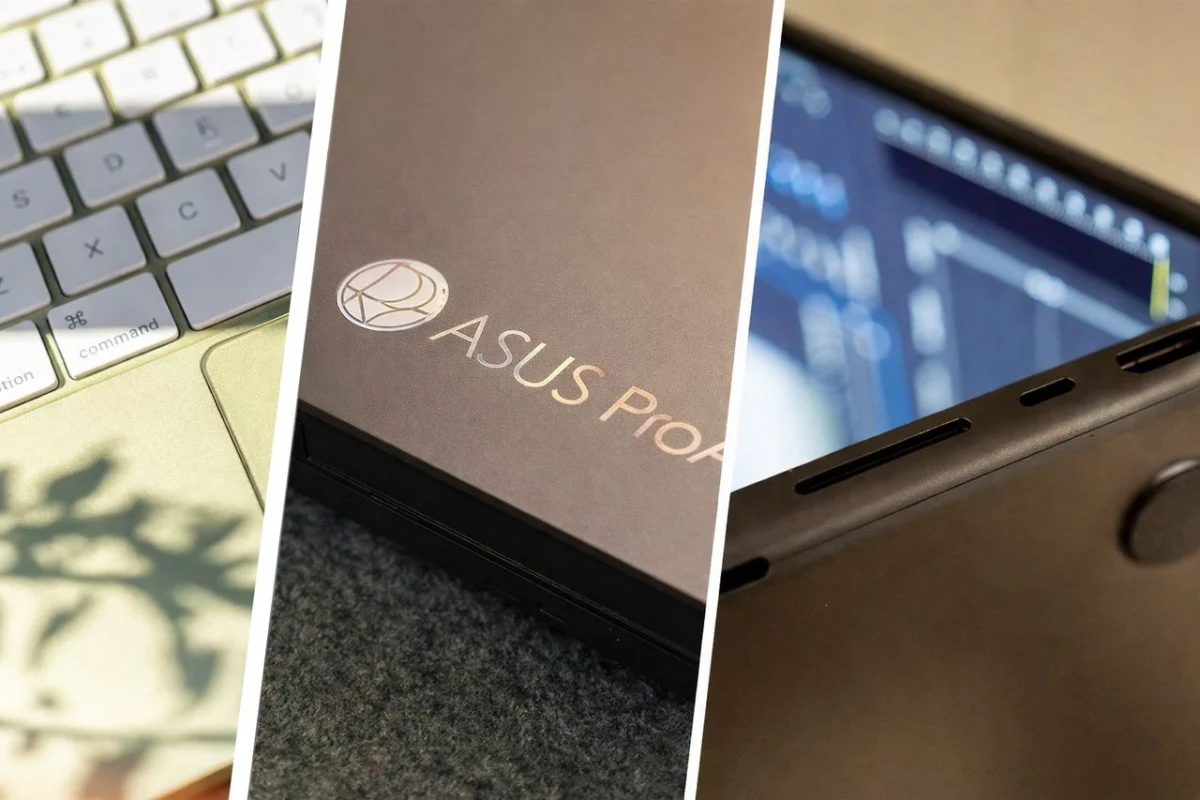
- The Windows Powerhouse: The ASUS ProArt P16 continues its reign as the premier choice for designers requiring GPU-heavy workflows.
- The Disruptor: The MacBook Neo, which has successfully democratized high-fidelity design work for the budget-conscious professional.
Chronology: The Evolution of the Creative Workstation
The journey to the 2026 hardware lineup was not linear. It was marked by several pivotal shifts in hardware development:
- 2024 (The Year of Neural Integration): The industry began a massive pivot toward NPUs (Neural Processing Units). Creative software developers, specifically Adobe, started shifting heavy lifting—such as generative fill, masking, and noise reduction—away from the CPU and onto dedicated AI-acceleration cores.
- 2025 (The Efficiency Breakthrough): Battery life benchmarks saw a massive leap forward. As manufacturers optimized architecture for ARM-based and efficient x86 chips, the "tethered" designer became a thing of the past.
- 2026 (The Refinement Phase): This year represents the arrival of "mature" AI integration. Rather than marketing AI as a novelty, laptops are now built with workflows in mind where hardware and software collaborate to predict and render complex graphical elements in real-time.
Supporting Data: Why These Machines Lead the Pack
To understand why these three machines stand out, we must look at the technical specifications that govern modern design workflows.
MacBook Pro 14-inch (M5): The Professional’s Choice
The M5 chip represents a significant leap in silicon efficiency. In our internal stress tests using Photoshop, Illustrator, and Blender, the MacBook Pro 14-inch maintained peak performance without the thermal throttling that plagues thinner chassis.
- Display: The Liquid Retina XDR remains the industry benchmark. With its high-density local dimming zones, it provides the contrast ratio required for HDR video and precise print-ready color grading.
- AI Performance: Apple’s Neural Engine integration with the M5 chip has cut rendering times for complex generative AI tasks by approximately 35% compared to the M4 generation.
ASUS ProArt P16: The Windows Heavyweight
For designers operating within the Windows ecosystem, the ProArt P16 is essentially a mobile workstation disguised as a sleek laptop.
- Visual Fidelity: The 100.6% DCI-P3 OLED panel offers a level of color saturation and accuracy that is, frankly, breathtaking. For print designers, this provides a "what you see is what you get" confidence.
- GPU Power: Equipped with the RTX 5070, the P16 handles heavy 3D geometry in Blender and real-time viewport rendering with ease. It is, currently, the best-balanced machine for those who rely on CUDA-accelerated plugins.
The MacBook Neo: Democratizing Performance
The Neo represents a paradigm shift for Apple. By removing the cooling fan and focusing on passive heat dissipation, Apple has created a device that is whisper-quiet and incredibly portable. Despite its lower price point, it maintains high-gamut color accuracy that previously required a "Pro" badge. For students, this is the first laptop that doesn’t feel like a compromise.
Official Responses and Industry Sentiment
Industry insiders have noted that the 2026 shift is largely driven by the "Creative-AI Convergence." In recent statements from major software developers, the emphasis has been on "Hardware-Agnostic Optimization."
"We are no longer designing software for a generic processor," said a spokesperson for a leading design software firm. "We are designing for a pipeline that includes the GPU, the NPU, and the system memory as a unified engine. The laptops that are succeeding today are those that allow us to offload tasks to the NPU without draining the user’s battery."
This sentiment is echoed by the manufacturers themselves. ASUS, for instance, has pivoted its ProArt line to focus on "Creator-First" features, such as physical control dials and optimized cooling for long render sessions, acknowledging that the designer of 2026 is often a hybrid artist, editor, and 3D modeler.
Implications: How to Choose Your Next Workstation
Choosing a laptop in 2026 requires an honest assessment of your daily workflow.
1. Identify Your Bottlenecks
Are you losing time to long render exports? If so, the ASUS ProArt P16 and its RTX 5070 are your best investments. Are you constantly moving between studio and client meetings? The efficiency of the MacBook Pro 14-inch will save you from the anxiety of hunting for wall outlets.
2. The "Budget" Fallacy
Many early-career designers make the mistake of buying the most powerful machine they can afford, only to find they don’t utilize the GPU power. The MacBook Neo proves that you no longer need the most expensive hardware to achieve professional results. If your work is primarily 2D vector-based design or web interface design (Figma, Adobe XD), the Neo is arguably the most efficient choice in the current market.
3. Future-Proofing
The rapid evolution of AI-powered design tools suggests that we are heading toward a future where local compute power will become even more vital. Investing in a machine with a capable NPU is no longer an "extra"—it is a necessity for longevity.
Conclusion
The era of the "one-size-fits-all" creative laptop is over. In 2026, the market has segmented into machines built for specific creative needs. Whether it is the raw power of the ASUS ProArt P16, the refined reliability of the MacBook Pro, or the accessible brilliance of the MacBook Neo, there is a device tailored to your specific output. As you shop for your next machine, prioritize your workflow over raw spec-sheet numbers—the most "powerful" laptop is the one that stays out of your way and lets you create.
For those requiring specialized hardware for CAD, heavy 3D sculpting, or long-form 8K video editing, we encourage you to explore our deeper, technical deep-dive guides to ensure you are selecting the right tool for your specific industry demands.