Welcome to Seeds of Story, a dedicated space for exploring the intersection of non-fiction research and the boundless possibilities of speculative fiction. Every fortnight, we dismantle a work of non-fiction—a book, an article, or a scientific report—to unearth the ideas currently shaping our world and the untapped potential they hold for future storytelling.
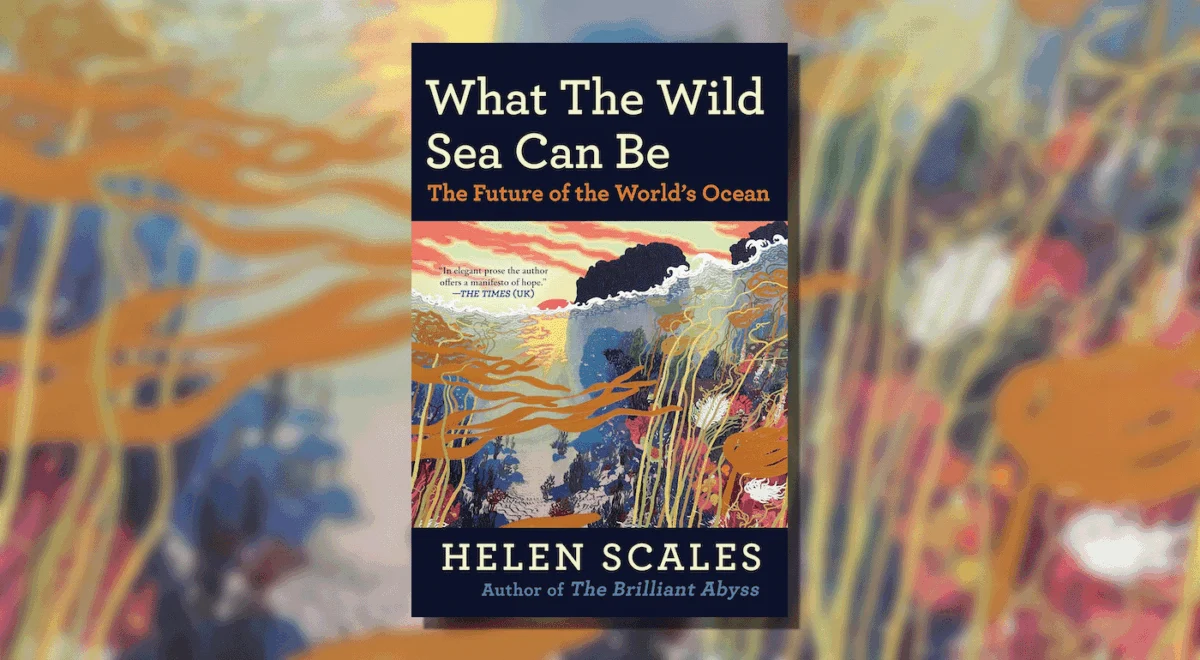
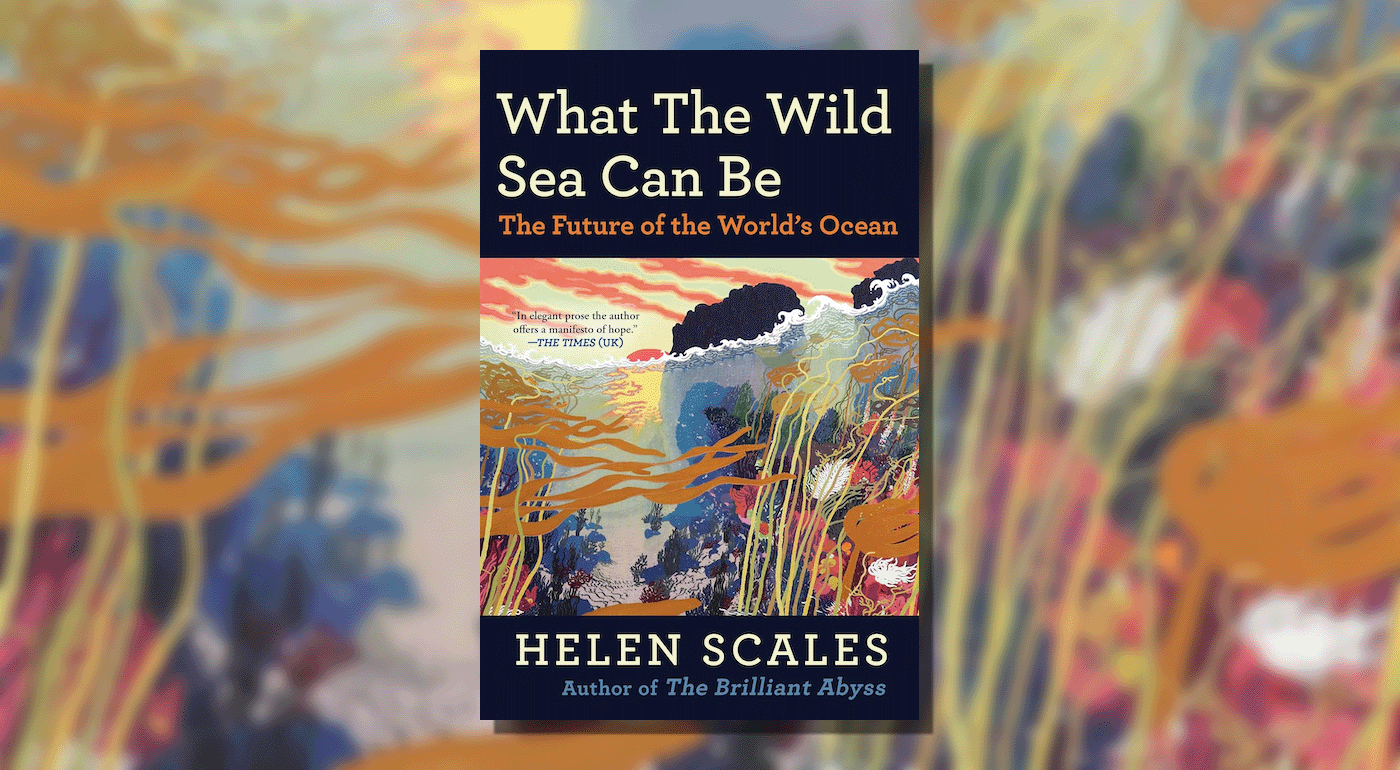
This week, we turn our attention to marine biologist Dr. Helen Scales’ latest work, What the Wild Sea Can Be: The Future of the World’s Oceans. Part ecological census, part travelogue through hidden ecosystems, and part bold conjecture, Scales’ book serves as a vital blueprint for understanding how our oceans are being reshaped by the Anthropocene—and what those transformations might mean for the planet’s future.
Main Facts: The Ocean at a Crossroads
Dr. Helen Scales has long been a voice for the submerged world, with a bibliography spanning the delicate lives of seahorses to the profound mysteries of the deep sea. In What the Wild Sea Can Be, she shifts her lens from individual species to the broader systemic shifts caused by human activity. The book is organized as a series of thematic dives, each examining a specific anthropogenic pressure—climate change, plastic pollution, overfishing, and habitat destruction—while concurrently analyzing the resilience and adaptability of marine life.
The central thesis is clear: the ocean is not a static backdrop, but a dynamic, evolving entity. Scales argues that our current trajectory is not merely damaging; it is fundamentally altering the biological makeup of the sea. Whether through the northward migration of predator species due to warming currents or the physiological stresses placed on cetaceans by chemical pollutants, the ocean is rewriting its own rules. The book provides a harrowing look at how we have pushed these systems to the brink, yet it stops short of nihilism, offering instead a roadmap for potential restoration.
A Chronology of Oceanic Collapse and Adaptation
To understand where we are going, Scales insists we must look at where we have been. The book opens with an exploration of "deep time," reminding readers that the ocean has weathered mass extinctions before. She points to the Cambrian and Ordovician periods, where 25,000 species of trilobites flourished, building crystalline eyes and complex exoskeletons from the minerals washing off the nascent landmasses.
This historical perspective is essential. Trilobites were eventually undone by the end-Permian extinction, but their decline began long before, triggered by shifts in sea levels and the evolution of predatory fish. Scales uses this as a cautionary tale: oceanic stability is an illusion. Ecosystems that appear robust can collapse with startling speed when environmental conditions shift. In the modern era, the timeline of decline has accelerated. We have moved from the slow, geologic pace of evolutionary change to the near-instantaneous impact of industrial-scale extraction and carbon-driven warming.
Supporting Data: The Anthropocene Impact
Scales provides a wealth of data to quantify the human footprint on the sea. The threat to marine life is multi-faceted, and often compounding.
- Thermal Migration: Climate change is not merely warming the water; it is forcing entire ecosystems to migrate. However, this is not a synchronized movement. Predators may track their prey into new latitudes, but their food sources—or the nursery habitats required for their offspring—may not follow, leading to fractured food webs.
- The Chemical Burden: Microplastics and persistent organic pollutants are now ubiquitous. Scales highlights the plight of orcas, which serve as "bio-accumulators." Because they are apex predators, they ingest the toxins stored in their prey, which are then sequestered in their own thick layers of blubber. As the climate warms, these fats are metabolized, releasing concentrated doses of toxins back into their systems during periods of stress.
- Industrial Extraction: The author debunks the "straws-only" narrative of ocean pollution, noting that 80% of marine plastic originates from land-based industrial sources. Furthermore, modern fishing methods—such as longlines extending for miles and bottom trawlers that scour the seafloor—are causing collateral damage that dwarfs the impact of individual consumer waste.
Official Responses and Strategic Interventions
The book transitions from diagnosing the disease to prescribing potential cures. Scales examines the successes and failures of current conservation efforts, emphasizing that enforcement is as important as the legislation itself.
She highlights the International Convention for the Conservation of Atlantic Tunas—an organization that has historically struggled with its mandate, once derided by critics as an "International Conspiracy to Catch All Tunas." Yet, the recent recovery of the bluefin tuna population serves as a rare beacon of hope, proving that with sufficiently aggressive regulation, marine populations can rebound.
Scales also champions the "rewilding" of the seas. A prime example is the resurgence of sea otters in coastal kelp forests. By controlling urchin populations, these otters allow kelp to thrive, which in turn acts as a massive carbon sink, drawing down 18 megatons of CO2 annually. It is a elegant, nature-led solution that offers a stark contrast to the high-tech, often experimental, geoengineering proposals currently being pitched to investors.
Implications: A Future of High-Tech or High-Wild?
As the book approaches its conclusion, the tone shifts from retrospective to speculative. We are introduced to the emerging "blue economy"—a world of saline-based batteries, blockchain-tracked seafood, and, more controversially, the industrial mining of polymetallic nodules from the deep-sea floor.
These developments carry significant implications. The quest for "green" minerals for our batteries may lead us to destroy the very deep-sea ecosystems we have only just begun to understand. Similarly, the drive to "clean" the Great Pacific Garbage Patch with massive filtration systems risks becoming a new form of industrial bycatch, ensnaring marine life along with the plastic.
The Missing Perspective: Rights of Nature
While Scales provides an excellent synthesis of marine biology and environmental policy, the book faces one significant critique: its reliance on a "human-centric" management model. For a book titled What the Wild Sea Can Be, it lacks a deep engagement with the "Rights of Nature" movement. It treats the ocean as a resource to be managed rather than a legal or sentient subject to be honored. Furthermore, the exclusion of Indigenous knowledge—beyond a cursory mention of names and traditions—is a missed opportunity. The work of scholars like Robin Wall Kimmerer or the long-standing successes of Indigenous marine-tending practices offer a more sustainable, relational model of conservation than the "no-take" zones favored by Western bureaucracies.
The Best Seeds for Speculative Fiction
For the speculative writer, this book is a goldmine. If you are crafting a world of high-seas adventure, or contemplating a post-geoengineered future, here are three "seeds" to plant in your next draft:
- Beyond "Cat Aliens": Why settle for humanoid tropes? The ocean provides a blueprint for truly alien intelligence. Consider a species modeled on the cannibalistic life cycle of the sand tiger shark, or a society evolved around the ephemeral stability of hydrothermal vents. We have had enough space whales; let’s see the space-faring octopodes, the interstellar coral reefs, and the sentient currents.
- The Fluidity of Borders: In a future where climate change dictates the movement of habitats, the static "marine reserve" becomes obsolete. Imagine a profession centered on "Border Wardens" or "Ecosystem Shepherds"—individuals tasked with the high-stakes, real-time negotiation of moving habitats. These characters wouldn’t just be park rangers; they would be the architects of a shifting, volatile geography.
- Techno-Optimism vs. Ecological Reality: Scales suggests that reef restoration may soon require an industrialization similar to modern agriculture. What does a "factory farm" for coral look like? What are the political, economic, and moral consequences of "tailored" reefs built by AI-driven drones? The conflict between those who believe we can "engineer" our way out of this and those who believe we must simply get out of the way provides a perfect, high-tension narrative backbone.
What the Wild Sea Can Be is, ultimately, an invitation. It asks us to look at the problems with clear eyes and to recognize that the future of the ocean is not a predetermined fate. Whether that future is a sterile, managed machine or a flourishing, unpredictable wild is entirely up to us.
Have you read a book that changed your perspective on the natural world? Do you have recommendations for aquatic fiction that breaks the mold? Share your thoughts and suggestions in the comments below.