Siti Muinah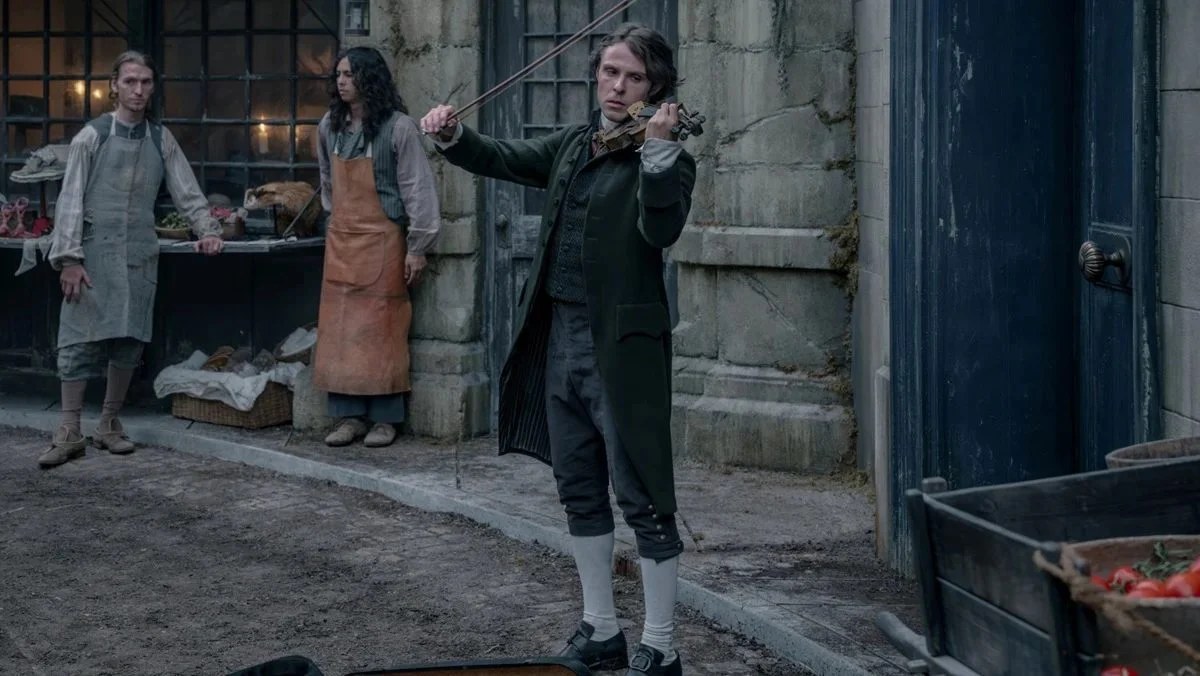
The third episode of AMC’s The Vampire Lestat, titled “Toronto,” serves as a pivotal character study, finally placing the spotlight on Nicholas de Lenfent—a figure who looms over the Vampire Chronicles as both a ghost and a cautionary tale. Reprising his role from the Interview with the Vampire season two flashbacks, Joseph Potter delivers a haunting performance that anchors the emotional stakes of Lestat’s early immortality. While characters like Claudia or Louis often dominate the discourse surrounding Lestat’s complex web of relationships, it is Nicholas who represents the original fracture in Lestat’s soul. In the sprawling canon of Anne Rice’s universe, Nicholas is the quintessential “what could have been”—a mortal tether to a humanity that Lestat consistently struggles to reconcile with his predatory nature.
The Foundations of an Obsession: A Chronology of Loss
To understand the weight of Nicholas de Lenfent, one must look at the trajectory of his and Lestat’s bond, which began long before the fangs and the dark gift.
Childhood Roots and the French Countryside
The origins of their connection are rooted in the stark realities of 18th-century France. Lestat and Nicholas were childhood companions, sharing a formative, traumatic experience when they were taken by a local priest to witness the burning of "witches"—an event that set a grim, atmospheric tone for their intertwined destinies.
Their paths diverged and converged in the French countryside. Lestat, ever the seeker of excitement, found his path blocked by the mundane expectations of his aristocratic upbringing, while Nicholas, the son of a tailor, sought artistic validation. When they reunited as adults, the dynamic had shifted. Lestat had become a savior of sorts, protecting their village from a pack of wolves, a heroic act that cemented his status as a local legend. In a gesture of profound intimacy, Nicholas’s father gifted Lestat a red cloak lined with the fur of those very wolves.

The Parisian Dream and the Failure of Ambition
The narrative arc of their early adulthood is defined by their migration to Paris. Nicholas had attempted to find his place as a violin pupil of Mozart, only to return home in shame, convinced of his own mediocrity. This failure became the bedrock of his cynicism. When Lestat finally decided to abandon his provincial life, he invited Nicholas to join him. It was a partnership of convenience and comfort, but also a collision of two vastly different philosophies: Lestat’s inherent, irrepressible desire to “rise to the light” and succeed as an actor, and Nicholas’s nihilistic desire to “go down and down and down” in a self-destructive spiral meant to spite his parents.
The Dark Gift: A Catalyst for Despair
The most controversial decision in their shared history is Lestat’s choice to turn Nicholas into a vampire. Lestat, despite his own transition, recognized the fragility of Nicholas’s psyche. He knew that Nicholas suffered from deep-seated, likely undiagnosed, mental health struggles and a pervasive sense of hopelessness.
Lestat resisted the urge to grant the Dark Gift, fearing that immortality would only amplify the darkness already present in Nicholas. However, the intervention of Armand’s coven—which kidnapped and drained Nicholas—forced Lestat’s hand. He turned Nicholas to save him from death, ignoring the warnings of his own mother, Gabrielle, who sensed the impending disaster.
The aftermath was catastrophic. Rather than finding liberation in immortality, Nicholas retreated into a months-long catatonic state. When he eventually emerged, his resentment toward Lestat was absolute. He blamed Lestat not only for the forced immortality but for the success that Lestat had managed to carve out for himself in Paris. To Nicholas, Lestat’s ability to thrive as a vampire was a betrayal of the shared misery he felt they were destined for.

Supporting Data: Comparative Analysis of Source Material
For fans of Anne Rice’s Vampire Chronicles, the television adaptation offers a nuanced departure from the page. While the core emotional trajectory remains faithful to the text, the pacing and specific catalysts differ.
- The Meeting: In the novels, Nicholas was already established in Paris when they reunited, whereas the show depicts their exodus from the countryside as a shared journey.
- The Final Act: In the original text, Nicholas’s descent into madness is more protracted. The television series, however, provides a visceral, immediate conclusion to his arc. The show depicts his final moments with a heightened sense of tragedy, as he mutilates himself—chopping off his own hands—before succumbing to the flames, a sequence that leaves a lasting scar on Lestat’s psyche.
- Armand’s Influence: The show leans heavily into the administrative burden Armand places on Lestat. In the canon, the correspondence between Armand and Lestat serves as a ticking clock, documenting Nicholas’s deterioration as he creates new, unstable vampires and endangers the sanctity of the Theater of the Vampires.
Implications for the Series: A Legacy of Guilt
The death of Nicholas de Lenfent is not merely an end; it is the genesis of Lestat’s long-standing struggle with his own morality. The guilt associated with Nicholas’s suicide—the act of throwing himself into the fire—drove Lestat into a deep, meditative depression. He famously buried himself in the earth, attempting to cease his own existence until he was eventually discovered by the ancient vampire Marius.
The implications for the current series are clear: Lestat views his subsequent relationships, particularly his complex and often toxic dynamic with Louis de Pointe du Lac, as a direct consequence of his failures with Nicholas. Lestat often refers to Louis as a “spiritual twin” to Nicholas, suggesting that his obsession with Louis is a subconscious attempt to “fix” the mistakes he made with his first love. This adds a layer of tragic irony to the narrative; Lestat is doomed to repeat the cycle of love and destruction because he has never fully processed the trauma of the violin-playing man from his past.
Official Perspectives and Creative Vision
Showrunners and the creative team behind AMC’s The Vampire Lestat have emphasized that Nicholas is the emotional key to understanding why Lestat is so desperate to be loved yet so prone to sabotage. Joseph Potter’s portrayal is intentionally designed to be “cynical, yet alluring.”

In interviews, the production team has noted that they wanted to ensure the audience felt the weight of Nicholas’s absence. By keeping him as a recurring memory, the show effectively illustrates that for an immortal like Lestat, time does not heal all wounds—it merely preserves them. The show’s willingness to depict the brutality of the theater coven and Nicholas’s eventual self-destruction highlights the show’s commitment to exploring the darker, more introspective corners of Rice’s world, moving beyond the romanticized tropes of the vampire genre into something far more visceral and psychologically taxing.
Conclusion: Will the Ghost of Nicholas Persist?
While the current narrative arc of The Vampire Lestat has seemingly brought a definitive end to Nicholas’s physical presence, the structure of the show suggests that he remains a permanent fixture in the series’ DNA. With the story frequently utilizing flashbacks and subjective memories, the possibility of seeing more of their early days in France remains high.
Ultimately, Nicholas de Lenfent is the shadow that defines Lestat’s light. As the series continues to unfold on Sunday nights, the audience is reminded that even for the most powerful of creatures, the past is never truly dead—it is simply waiting in the wings, holding a violin, and reminding the protagonist of the cost of his immortality. Through the lens of this tragic figure, The Vampire Lestat elevates its narrative from a simple tale of blood and power into a profound exploration of grief, the burden of potential, and the destructive nature of eternal love.


 Azzam Bilal Chamdy