

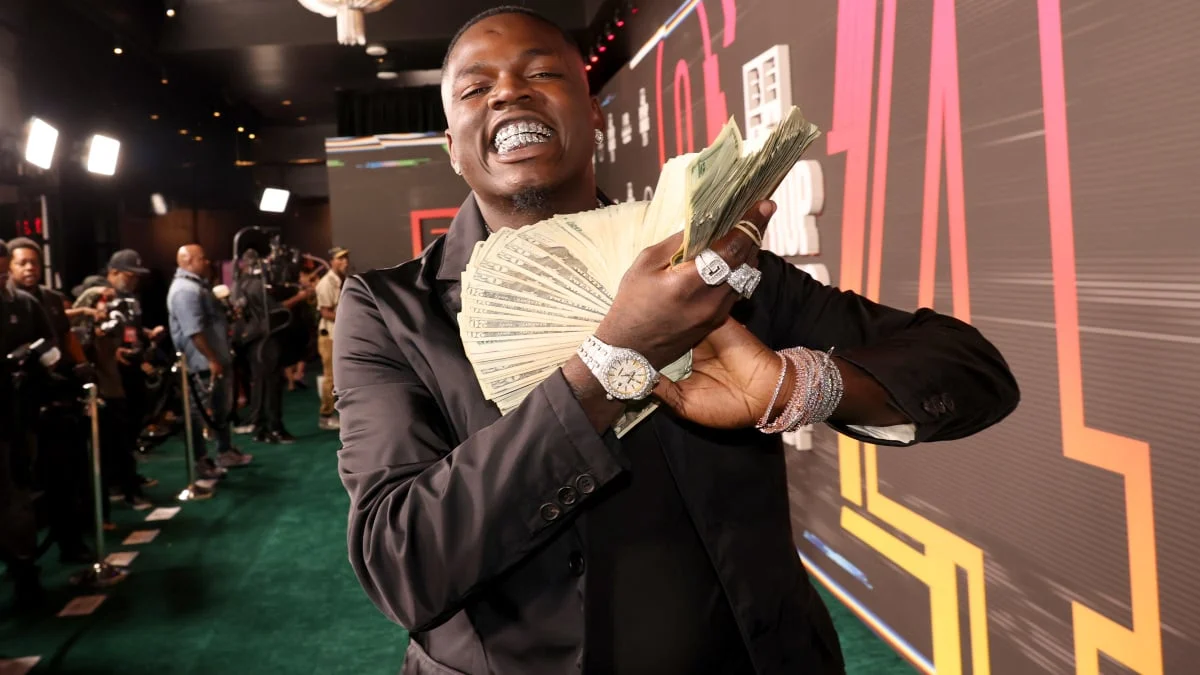
In the high-stakes world of hip-hop, the line between reality and mythology is often blurred. Artists have long cultivated personas rooted in "street cred," using hyperbole to construct a narrative of success, struggle, and larger-than-life experiences. It is a tradition as old as the genre itself. However, there is a distinct difference between artistic embellishment and the kind of brazen, illogical fabrication that defies all scrutiny.
Enter Memphis rapper Big Boogie. During a 2023 appearance on the Bootleg Kev podcast, the artist delivered a performance of storytelling so audacious that it has transcended its original context, morphing into a viral cultural artifact that continues to baffle and amuse the internet three years later.
The Genesis of the Myth: A Podcast Appearance Gone Wrong
On February 17, 2023, Big Boogie sat down for an interview on the Bootleg Kev podcast. Within the first three minutes of the 40-minute recording, the conversation took a turn into the realm of the absurd. Boogie asserted that he had been scouted by a "big college in Jacksonville" to serve as their lead drum major.
For the uninitiated, a drum major is the student leader who conducts the marching band, maintaining tempo and choreographing field movements. They are distinct from the percussionists—the drummers—a nuance that seemed to elude both the guest and the host during their circular exchange.
The centerpiece of Boogie’s claim, however, was not his musical prowess, but the astronomical financial package he allegedly turned down to pursue a rap career. He initially claimed the university offered him a $15 million scholarship. When faced with the visible skepticism of host Bootleg Kev, Boogie immediately recalibrated, dropping the figure to $5 million. Under further pressure, he retreated to a vague "somewhere in the millions." To add another layer of absurdity, he claimed the institution wanted him to occupy this role for a full decade—a timeline that ignores the standard four-year undergraduate curriculum.
Chronology of the "Big Band" Phenomenon
The clip remained a niche curiosity among hip-hop enthusiasts for a time, but in late 2024 and 2025, it underwent a bizarre renaissance. Social media algorithms, driven by clip farms and reaction channels, began pushing the footage into the feeds of millions who had never heard of the rapper.
The Lifecycle of the Meme
- February 2023: The original interview airs. The claim is met with immediate, though localized, ridicule.
- 2023–2024: The clip lingers in the ecosystem of hip-hop commentary channels, serving as a cautionary tale of "flexing" gone wrong.
- Late 2024: The video experiences a second life. It becomes a template for "shitposting." Accounts begin uploading the clip daily, while others use the audio as a script for skits.
- 2025: The "Big Band in Jacksonville" cinematic universe emerges. Dedicated accounts spring up, role-playing as university social media interns desperately trying to validate the rapper’s claim, further satirizing the original lie.
The irony is not lost on observers: in an era where digital content is often manufactured for engagement, Big Boogie’s failure to tell a believable lie has ironically generated more engagement than a truthful story ever could have.
Supporting Data: The Logistics of a Logical Fallacy
To understand why the public was so quick to debunk Boogie’s story, one only needs to look at the intersection of collegiate athletics and performing arts financing.
The Financial Reality of NIL and Endowments
The "Name, Image, and Likeness" (NIL) landscape has changed the face of college sports, allowing top-tier student-athletes to earn millions. However, the highest-paid NIL athletes in the nation, such as marquee college football quarterbacks, rarely exceed the $5–$6 million threshold for a full, high-performing season. Suggesting that a university would pay a drum major—a non-revenue-generating role—a sum that rivals the salary of a top-tier quarterback is economically impossible.
Furthermore, university band programs operate on endowment funds. For context, the powerhouse marching band at The Ohio State University, one of the most well-funded programs in the United States, operated on an endowment of approximately $15 million as of 2019. To suggest that a single university would dedicate a third of its entire band endowment to one student’s scholarship is a fundamental misunderstanding of institutional finance.
The Academic and Operational Logistics
Beyond the money, the claim collapses under the weight of basic university procedures:
- The School: The largest educational institution in Jacksonville, Florida State College at Jacksonville (FSCJ), does not even maintain a competitive marching band program.
- The Hierarchy: Becoming a drum major is a meritocratic process that usually requires years of apprenticeship. At major programs, students are rarely eligible for lead positions until their junior or senior year. The idea of a freshman walking onto campus to secure a ten-year drum major contract is fundamentally at odds with the structure of collegiate music programs.
Official Responses and the "Clear-Up"
In 2024, likely sensing that the narrative had become a recurring joke at his expense, Big Boogie returned to the Bootleg Kev podcast. The objective was clear: perform damage control.
During this follow-up, Boogie attempted to walk back the specific numbers while maintaining the spirit of the claim. He conceded that the offer to "play the drums" was, in his view, legitimate, but admitted that the $5 million to $15 million figures were, in fact, fabrications. His motivation was as candid as it was cynical: he wanted the clip to go viral.
He essentially admitted to a form of "engagement baiting," where the intentional inclusion of an absurd detail acts as a hook to ensure the clip travels across social platforms. By "lying for the algorithm," Boogie successfully ensured that his name remained in the public discourse, even if the discourse was centered on his lack of veracity.
The Implications: Why We Can’t Look Away
The longevity of the "Big Boogie Lie" speaks to a broader phenomenon in modern media: our collective fascination with the "bad liar."
The Relatability of the "Middle School" Lie
Psychologically, the clip is relatable because it mimics the behavior of a childhood friend who, in a desperate bid for attention, creates a story that is obviously untrue but told with absolute conviction. There is a strange, endearing audacity in someone who stares into a camera and tells a lie that they know will be checked, simply because they prefer the chaos of the lie to the mundanity of the truth.
The Death of Nuance in Hip-Hop Marketing
The implication for the industry is more sobering. As artists feel the pressure to compete with the 24/7 content cycle, the temptation to create "viral moments" often overrides the need for genuine narrative building. When a rapper makes a claim as wild as a $15 million scholarship, they aren’t just selling a story; they are participating in a gamified version of celebrity where the truth is merely a variable that can be adjusted for maximum reach.
Ultimately, Big Boogie’s story has become a cultural touchstone not because it was believed, but because it was so spectacularly, undeniably false. It serves as a reminder that in the age of the internet, sometimes the most successful marketing strategy isn’t to be talented or even to be truthful—it is to be the most persistent, ridiculous version of yourself, regardless of the facts.
As we look at the hundreds of reaction videos and satirical sketches, the moral of the story is clear: Big Boogie may not have landed that scholarship, but he successfully graduated from the school of viral marketing, proving that in the digital age, a lie told with enough confidence can live forever.











