

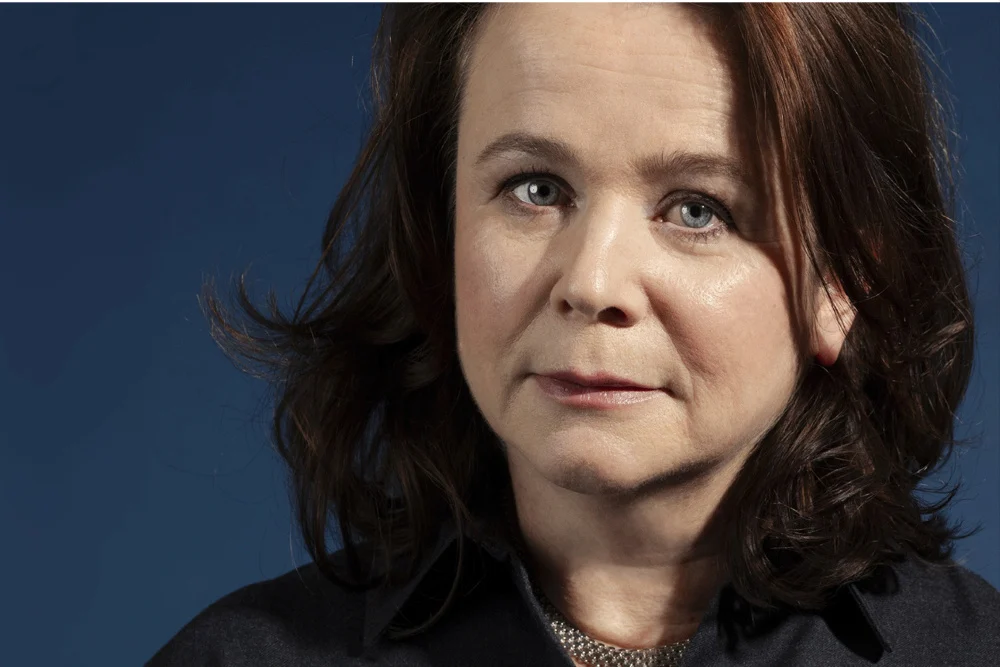
The Sarajevo Film Festival (SFF), a beacon of cinematic excellence in Southeast Europe and a vital platform for regional storytelling, has officially unveiled the jury panel for its prestigious main feature competition. As the festival prepares for its 32nd iteration, scheduled to run from August 14 to August 21, the caliber of the appointed jury underscores the event’s growing influence on the global stage. Presided over by the celebrated British actress Emily Watson, the panel brings together a diverse assembly of industry titans, ranging from avant-garde directors and acclaimed actors to high-level institutional leaders.
The announcement marks a pivotal moment for the festival, which has spent over three decades positioning itself as a bridge between the vibrant, often turbulent histories of the Balkans and the broader international film community. With the winners set to be unveiled on the final day of the festival, August 21, the industry is already turning its attention to Sarajevo, waiting to see which narratives will capture the attention of this formidable panel.
The Jury: A Convergence of Global Cinematic Perspectives
The jury, headed by Academy Award-nominated actress Emily Watson—a luminary whose career spans the gritty realism of Breaking the Waves to the harrowing historical precision of Chernobyl—is designed to offer a multifaceted critique of the competition entries. Watson, known for her ability to navigate complex emotional landscapes, will lead a group of four other industry heavyweights, each representing a different facet of the filmmaking ecosystem.
Athina Rachel Tsangari: The Architect of the Greek New Wave
Joining the jury is Athina Rachel Tsangari, a pivotal figure in contemporary European cinema. As a leading light of the "Greek New Wave," Tsangari’s filmography is a testament to the power of the unconventional. Her breakthrough 2010 feature, Attenberg, remains a masterclass in deadpan social commentary, earning the Coppa Volpi for best actress at the Venice Film Festival. Her subsequent work, Chevalier (2015), solidified her status as a director capable of dissecting the absurdity of social hierarchies, earning top honors at the London Film Festival and an Independent Spirit Award nomination. Most recently, her neo-western Harvest, featuring Caleb Landry Jones and Harry Melling, made significant waves at the 2024 Venice Film Festival, cementing her reputation as a filmmaker who is consistently evolving.
Igor Bezinović: The Documentary Visionary
Representing the regional powerhouse of Croatian cinema is director Igor Bezinović. His inclusion in the jury highlights the festival’s commitment to documentary realism and sociopolitical critique. Bezinović gained widespread acclaim for Fiume o morte! (2025), which secured the European Film Award for best documentary—a triumph that solidified his position among Europe’s most compelling nonfiction storytellers. His earlier work, including The Blockade (2012) and Veruda – A Film About Bojan (2015), showcases a relentless curiosity about the intersection of individual lives and systemic political pressure.
Sara Klimoska: The Rising Star of Balkan Cinema
Rounding out the creative contingent is North Macedonian actress Sara Klimoska. A formidable talent of the younger generation, Klimoska’s career is marked by her willingness to tackle physically and emotionally demanding roles. Her upcoming leading performance in Milcho Manchevski’s Sister Brother Manhole Cover is among the most anticipated premieres of the year. Audiences will also recognize her from her breakthrough work in Goran Stolevski’s You Won’t Be Alone (Sundance) and the Venice-screened Housekeeping for Beginners. Her presence on the jury provides a crucial voice for the emerging generation of actors currently reshaping the aesthetic of Balkan cinema.
Matthijs Wouter Knol: The Institutional Architect
Finally, the jury is anchored by Matthijs Wouter Knol, the CEO of the European Film Academy. Knol represents the institutional backbone of the industry. His career trajectory—from his tenure as the head of programming for Berlinale Talents (2008–2014) to his strategic leadership as the director of the European Film Market (2014–2020)—gives him an unparalleled bird’s-eye view of the global film market. His role on the jury serves to bridge the gap between creative excellence and the realities of global distribution, a perspective that is essential for any film festival hoping to launch international careers.
Chronology of the 32nd Edition
The road to the 32nd Sarajevo Film Festival has been one of rigorous curation and strategic planning. The festival, which originated as a defiant act of cultural survival during the 1990s, has evolved into a sophisticated commercial and artistic nexus.
- Mid-2024: The festival began its selection process, reviewing hundreds of submissions from across the globe, with a specific focus on films that reflect the complexity of post-conflict societies and the evolution of European identity.
- Late Spring 2025: The festival management solidified its jury panel, selecting figures who represent both the artistic pedigree of the Balkan region and the global reach of the European Film Academy.
- August 14, 2025: The opening of the festival, featuring a series of high-profile galas, masterclasses, and screenings.
- August 14–20, 2025: The core competition week, during which the five-member jury will screen, debate, and analyze the feature film entries.
- August 21, 2025: The closing ceremony, where the Heart of Sarajevo awards will be bestowed upon the winners, marking the conclusion of the event.
Supporting Data: The Impact of the Sarajevo Film Festival
The festival’s importance cannot be overstated. According to industry metrics, Sarajevo has become the premier hub for Southeast European film professionals, acting as a "launchpad" for titles that go on to have successful runs at the Oscars, the Berlinale, and Cannes.
The jury selection process is specifically calibrated to foster this growth. By balancing institutional power (Knol), directorial innovation (Tsangari, Bezinović), and performative talent (Watson, Klimoska), the festival ensures that its awards are viewed as a hallmark of quality that carries weight in both the art-house circuit and the commercial market. The inclusion of figures like Tsangari and Bezinović, whose work is inherently tied to the European festival circuit, reinforces the SFF’s status as a critical gateway for regional directors entering the international arena.
Official Responses and Industry Sentiment
While official statements from the festival board emphasize the "unifying power of cinema," the industry response to the jury announcement has been overwhelmingly positive. Critics have praised the diversity of the panel, noting that it avoids the common pitfall of being too insular.
"By bringing together a leader like Emily Watson with institutional veterans like Matthijs Wouter Knol, the Sarajevo Film Festival is signaling that it is not just a regional event, but a global player," noted one industry analyst. "The mix of established icons and those currently in the vanguard of Balkan cinema ensures that the jury will be able to balance commercial viability with artistic risk-taking."
For the jury members themselves, the opportunity to judge in Sarajevo is seen as a distinct honor. Many previous jurors have commented on the unique atmosphere of the festival, where the proximity between the audience and the filmmakers creates a level of engagement rarely found at larger, more impersonal festivals like Venice or Cannes.
Implications for the Future of Balkan Cinema
The implications of this year’s jury composition are significant. As the European film industry grapples with the dual pressures of streaming platforms and the need for more diverse narratives, festivals like Sarajevo play an essential role in keeping traditional cinematic storytelling alive.
The SFF serves as a vital barometer for the health of regional filmmaking. With the competition set to showcase films that often deal with the heavy legacy of the past while simultaneously experimenting with genre and form, the jury’s decision will ultimately set the tone for the regional film industry for the next twelve months.
Furthermore, the involvement of the European Film Academy (via Knol) suggests a tightening of the bond between Sarajevo and the broader European cinematic ecosystem. This is a strategic move that will likely lead to increased funding opportunities, wider distribution networks, and more robust co-production agreements for the filmmakers featured in this year’s competition.
As the countdown to August 14 begins, the eyes of the film world are firmly fixed on Sarajevo. In an era of rapid technological change and shifting cultural narratives, the 32nd Sarajevo Film Festival stands as a testament to the enduring power of the moving image—and the importance of those tasked with recognizing its most profound expressions.










