Nana Wu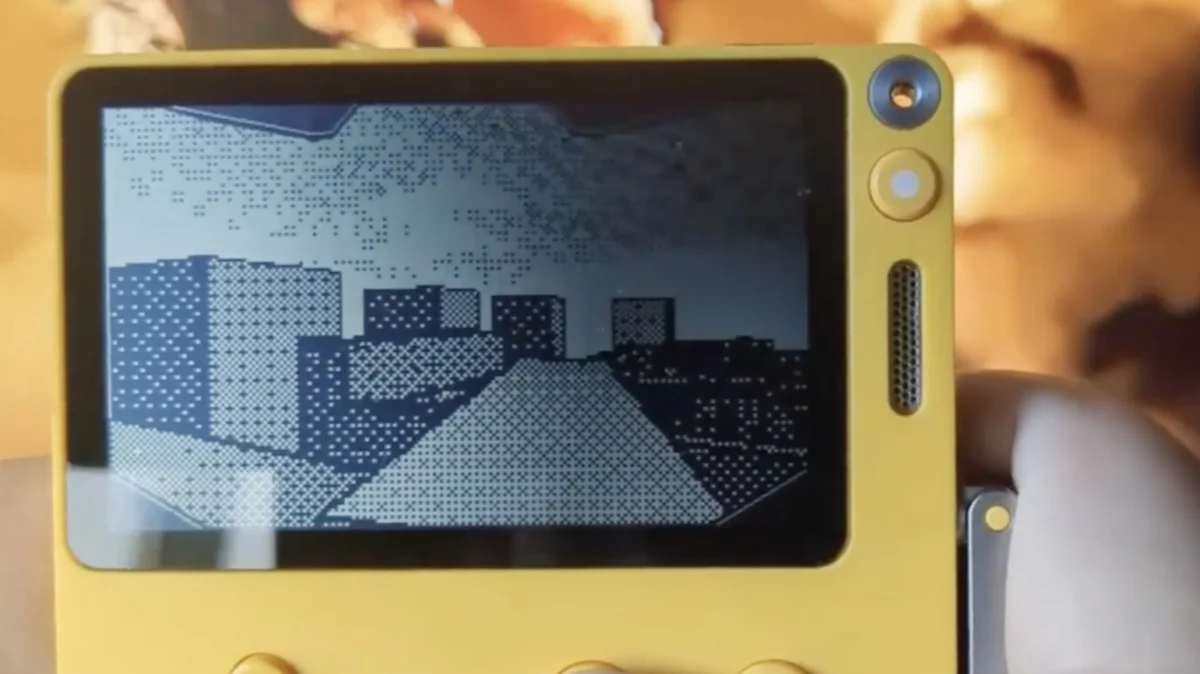
The Panic Playdate, with its iconic crank and vibrant yellow aesthetic, has long been celebrated for its commitment to the charm of 1-bit, 2D gaming. Since its inception, the device has been viewed as a love letter to the early days of handheld gaming—a platform defined by its constraints rather than its raw horsepower. However, the boundaries of what is possible on this diminutive hardware are being aggressively redrawn.
In a striking display of technical ingenuity, game developer Cristina Ramos has unveiled a prototype that introduces fully realized 3D environments to the Playdate. This breakthrough challenges the long-standing consensus that the handheld was strictly a two-dimensional domain, proving that with enough technical finesse, even the most constrained hardware can host modern, depth-oriented experiences.
The Technical Defiance: A 3D Paradigm Shift
For years, the Playdate’s community and even some developers operated under the assumption that the console’s processor and display limitations rendered 3D rendering—at least in a fluid, interactive capacity—either impossible or prohibitively difficult. The device’s 1-bit screen, while sharp and aesthetically distinct, lacks the grayscale or color depth typically associated with 3D polygon rendering.
Cristina Ramos’s recent demonstration, however, shatters this narrative. The footage, shared widely across social media platforms, shows a character navigating a complex, 3D-modeled interior space before transitioning seamlessly to an exterior rooftop environment. The gameplay is reminiscent of high-octane parkour titles like Mirror’s Edge, featuring smooth camera movement, perspective-shifting platforming, and a sense of scale that seems at odds with the Playdate’s modest specifications.
The "Impossible" Proven Possible
Ramos, who has gained significant attention for the project, posted a defiant message alongside the demo: "I was told you couldn’t do 3D on the Playdate, so I did it. Then I was told there was no way I could create exterior levels like those in Mirror’s Edge, so I proved them wrong again."
This project is more than just a technical curiosity; it is a statement on the power of optimization. By bypassing traditional 3D engines and leveraging custom, low-level rendering techniques, Ramos has unlocked a layer of performance that the hardware’s creators likely never anticipated.
Chronology of Innovation: From Novelty to Necessity
The evolution of the Playdate from a niche curiosity to a serious development platform has been a multi-year journey of discovery. To understand the significance of Ramos’s work, one must look at the timeline of the device’s lifespan.
Phase 1: The Honeymoon Period (2022)
When the Playdate first reached the hands of early adopters, the focus was almost entirely on the novelty of the crank. Developers were tasked with finding creative ways to incorporate physical movement into 2D game loops. The initial library was dominated by titles that leaned into the constraints of the 1-bit screen, prioritizing clean art and responsive, simple controls.
Phase 2: The Expansion (2023–2024)
As the SDK matured, developers began to push for more complex interactions. We saw the rise of sophisticated audio synthesis, procedural generation, and more complex sprite-based physics. During this period, the "Playdate Season" model helped build a loyal fanbase, proving that the device wasn’t just a toy, but a viable platform for indie innovation.
Phase 3: The Breaking Point (2025–Present)
We are currently in a new era of "extreme optimization." Recent developments have shown the Playdate being used for everything from real-world utility tools to complex simulations. The shift from 2D pixel art to 3D rendering represents the current peak of this progression. Developers are no longer asking "what can this console do?" but rather "how can I force this console to do what I want?"
Supporting Data: Understanding the Hardware Constraints
To appreciate the gravity of this 3D demonstration, one must consider the hardware specifications that make such a feat so remarkable. The Playdate runs on a 180MHz Cortex M7 processor with 16MB of RAM. By modern standards—even compared to low-end smartphones—this is an incredibly lean architecture.
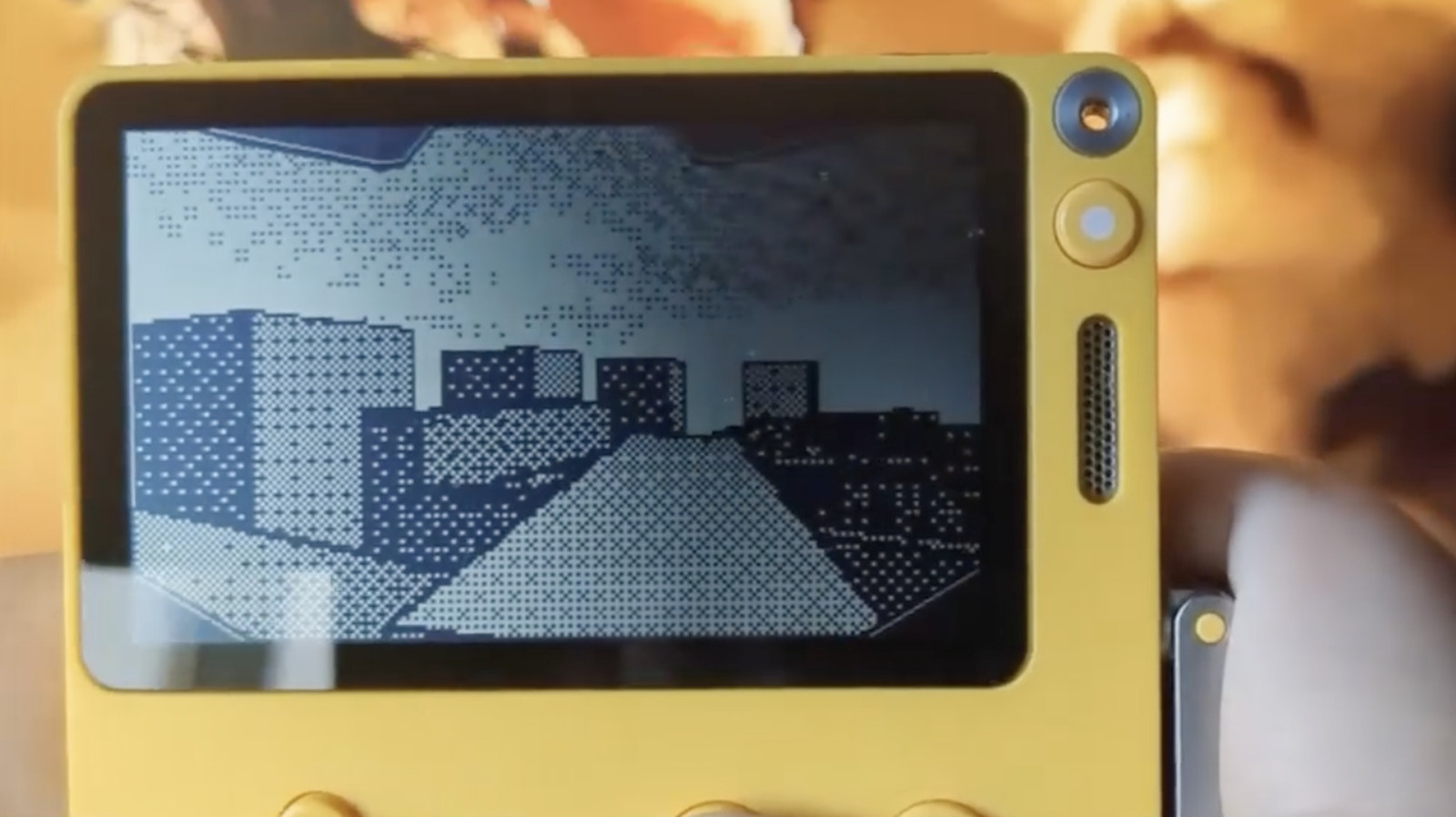
- Display Resolution: 400×240 pixels (1-bit).
- Memory Limitations: The RAM constraints require developers to be surgical with their asset management. Every polygon rendered, every texture mapped, and every frame calculated must be hyper-optimized.
- Rendering Pipeline: Unlike modern consoles that rely on GPU-accelerated pipelines, the Playdate requires the CPU to do the heavy lifting for almost every visual calculation.
Ramos’s demo suggests that she has likely implemented a custom software-based renderer capable of handling z-buffering or polygon projection without crashing the system’s limited memory buffer. This is a level of programming artistry that is increasingly rare in an era of abundant computing resources.
Official Responses and Industry Impact
The response from the developer community and the broader gaming industry has been one of collective astonishment. Panic, the company behind the Playdate, has consistently fostered an environment where experimentation is encouraged. While official spokespeople have remained humble, the implicit approval of such projects highlights the company’s vision: the Playdate is meant to be a canvas for the unconventional.
Other developers in the Playdate space have pointed out that this demo could lead to a "3D renaissance" on the platform. If a stable framework for 3D rendering can be abstracted and shared, we could see a wave of retro-styled, low-poly games hitting the Playdate store by next year.
Furthermore, this development has sparked conversations about the "Death of Hardware Limits." In an industry where developers are often told that high-fidelity gaming requires the latest GPU and massive amounts of RAM, seeing a 3D parkour game running on a handheld the size of a deck of cards serves as a potent reminder that software architecture and creative ingenuity often matter more than raw hardware overhead.
The Broader Implications: The Future of Niche Platforms
What does this mean for the future of the Playdate and similar niche handhelds?
1. The Death of Conventional Wisdom
The most immediate implication is the collapse of the "2D-only" stigma. If 3D is possible, the entire genre landscape for the Playdate is effectively doubled. Adventure games with 3D exploration, first-person dungeon crawlers, and physics-based puzzle games that rely on depth perception are now entirely within the realm of possibility.
2. A Call to Education
The technical documentation required to replicate Ramos’s feat will likely become a cornerstone of the Playdate developer community. We expect to see tutorials, open-source libraries, and forums dedicated specifically to "3D on 1-bit" programming. This will raise the bar for the entire platform, turning the Playdate into a destination for high-level technical developers looking to prove their skills.
3. Big Ben and Beyond: Utility vs. Gaming
The versatility of the Playdate has recently been highlighted by its use in auxiliary projects—such as the news that the device is being used to assist in the maintenance of Big Ben’s clock mechanisms. This shows that the Playdate is becoming a "Swiss Army Knife" of computing. Whether it is keeping time for a national landmark or rendering 3D landscapes, the device is proving that it is far more capable than its size suggests.
Conclusion: Pushing the Envelope
The work of Cristina Ramos is a testament to the enduring spirit of the independent development scene. When presented with a box—no matter how small or yellow that box might be—the human instinct is to see how much we can fit inside it.
The Playdate was designed to be a simple, nostalgic handheld. Through the effort of developers like Ramos, it is becoming something much more: a laboratory for technical innovation. As we look toward the future of the platform, the question is no longer whether it can support a particular genre or technical feat, but what the next developer will do to surprise us. The 3D demo is not the end of the road for the Playdate; it is merely the beginning of a much deeper, more complex, and infinitely more exciting chapter for this tiny machine.

 Ali Ikhwan
 Asep Darmawan