In a world increasingly dominated by ephemeral digital communication, a fragile, glass-encased relic from the summer of 1973 has surfaced to bridge a half-century gap. A message in a bottle, cast into the Atlantic Ocean by two young sisters, has been recovered, offering a poignant and unexpected connection to a childhood that has long since passed into history. The discovery serves as a reminder of the enduring nature of human connection and the mysterious, often poetic way in which the past can reassert itself in the present.
The Genesis of a Childhood Myth
In August 1973, the world was a vastly different place. The Cold War was in full swing, Watergate was dominating the American consciousness, and the digital revolution was still decades away. For nine-year-old Laurie Blair and her 16-year-old sister, Allison Spencer, however, the world was defined by the simple, sun-drenched expanse of Second Street Beach in Ocean City, New Jersey.
On a day that would otherwise have been forgotten to time, the sisters engaged in a creative exercise that would eventually become a cross-generational headline. Laurie, possessing a vivid, restless imagination, began spinning a tale of high-stakes intrigue: a fictional kidnapping. As the narrative took shape, Allison—ever the accomplice to her younger sister’s whims—decided to commit the story to paper.
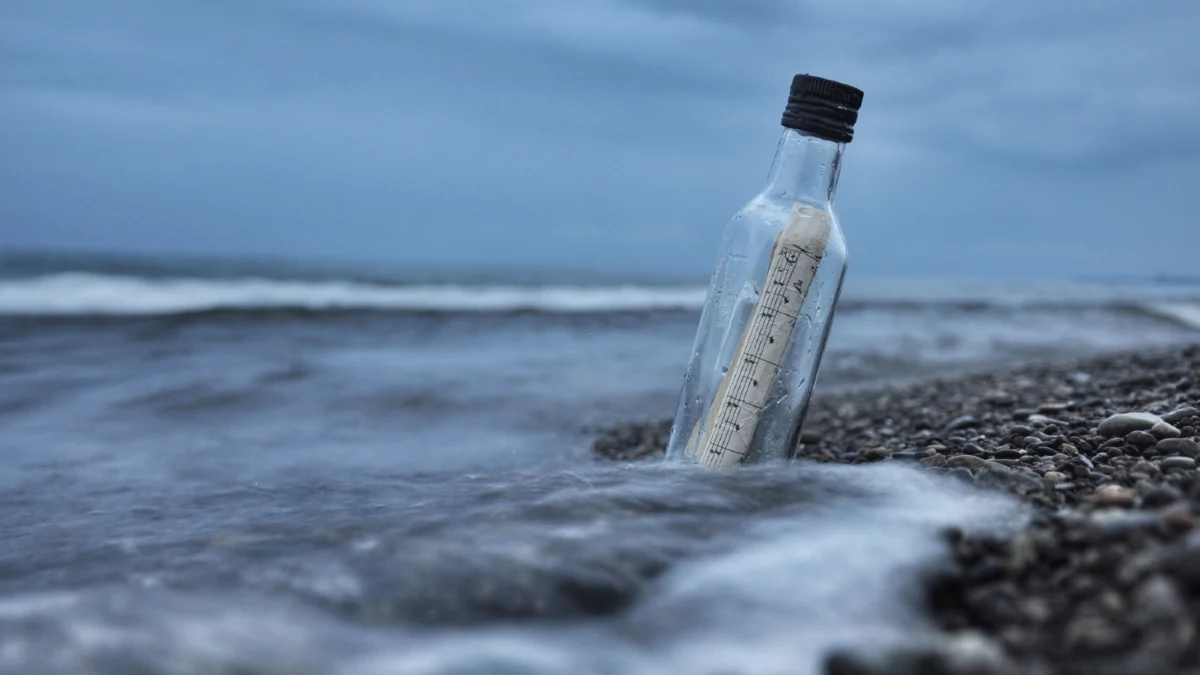
They secured a glass Coca-Cola bottle, inserted the handwritten plea, and cast it into the surf. They likely expected the bottle to sink or wash up a few miles down the coast, never imagining that their playful deception would survive the corrosive power of the Atlantic for over five decades.
The Plea from the Atlantic: A Chronology of Discovery
The contents of the note, now recovered, read like a pulp-fiction thriller written by a child. It stated: "This bottle was set adrift on August 20th, 1973, on Second Street Beach, Ocean City, as my captors were transporting me to an island offshore in the Atlantic. Please notify my family that a band of ruthless sponge fishermen are forcing me to dive for them in shark-infested waters. Please return this note to my home. You may have saved my life! Thank you! Laurie Blair."
For 53 years, the bottle remained a silent traveler. It survived tropical storms, the shifting sands of the continental shelf, and the slow, grinding process of coastal erosion. It remained hidden until it was retrieved by John Kauterman, a dedicated conservationist and co-founder of the nonprofit organization Tidelands Initiative. Kauterman, who spends much of his time scouring the New Jersey coastline for debris and plastic waste, stumbled upon the bottle during a routine cleanup.
"I was like, ‘Wow… the bottle’s old,’" Kauterman recounted in an interview with People. "I peeked into it and… I was like, ‘Oh my gosh, yeah, we got a good one here.’"
Recognizing the historical significance of the find, Kauterman began the process of tracking down the author. Through a combination of archival research and social media outreach, he managed to locate Allison Spencer, now a biology teacher residing in Ann Arbor, Michigan. When the bottle finally reached her hands, the weight of the moment was profound.
Supporting Data: The Persistence of Glass in Coastal Ecosystems
The survival of the Coca-Cola bottle for 53 years is a testament to both the durability of glass and the unpredictable nature of ocean currents. While plastic pollution is the primary concern for environmental groups like the Tidelands Initiative, glass remains one of the most resilient materials found in marine environments.
According to oceanographic studies, items cast into the Atlantic along the Eastern Seaboard can circulate within the North Atlantic Gyre for years, or they can be trapped in near-shore eddies that periodically deposit debris back onto beaches. The "message in a bottle" phenomenon, while romanticized, is scientifically rare. The vast majority of such notes are destroyed by moisture, UV radiation, or the physical trauma of colliding with rocks and jetties.

Kauterman’s discovery highlights the critical role of grassroots environmental organizations. By cleaning the beaches, these volunteers not only protect marine life but also act as curators of human history, salvaging artifacts that would otherwise be buried in the sand or broken into sea glass. The "Tidelands Initiative" approach—combining ecological stewardship with a reverence for the stories found within the waste—has turned a simple cleaning task into a medium for emotional reclamation.
Official Responses and Personal Reflection
For Allison Spencer, the return of the note was not just a historical curiosity; it was a visceral emotional event. Her sister, Laurie, passed away nine years ago due to complications from breast cancer at the age of 54. The reappearance of the note, written in Laurie’s own spirit of adventure, felt to Spencer like a message from beyond.
"Laurie’s the one with the imagination and always coming up with crazy stories," Spencer said, reflecting on the childhood dynamic that led to the note. "My sister passed away nine years ago. She had breast cancer, and she died only in her 50s and I really miss her a lot, so it’s really a wonderful, special thing to me that the note came back."
Spencer’s reaction underscores the psychological power of physical mementos. In an era where digital footprints are easily deleted or lost in server migrations, a physical object—a piece of paper inside a glass bottle—provides a tangible anchor to a loved one. The "miraculous" nature of the recovery, as Spencer describes it, is bolstered by the sheer statistical improbability of the bottle surviving intact for 53 years.
"It seems very miraculous to me that this note came back to me," she added. "She would be wildly entertained by these events."
The Broader Implications: Legacy and the "Message"
The story of the Blair-Spencer bottle invites us to consider the legacy we leave behind. While we live in a culture that emphasizes instant communication, there is a profound, slow-burn satisfaction in the "message in a bottle." It represents a hope that our thoughts, our stories, and our identities will persist beyond our immediate circumstances.
The Role of Technology in Historical Recovery
This event also highlights how modern technology assists in connecting the past with the present. Had this bottle been found in 1980 or 1990, the chances of locating the authors would have been slim. Today, however, the interconnectedness of global databases, social media, and digital archives allowed Kauterman to turn a piece of ocean trash into a bridge across time.
Environmental Stewardship
Furthermore, the narrative brings positive attention to the ongoing struggle against coastal pollution. By highlighting the human stories attached to the items found on our beaches, activists can foster a deeper connection between the public and the health of the oceans. When a piece of trash is revealed to be a piece of human history, it transforms from a nuisance into a treasure, encouraging more people to participate in the preservation of our coastlines.
Conclusion: A Final Note from the Sea
As the sun sets on the story of the 1973 bottle, we are left with a quiet, lingering sense of wonder. The "ruthless sponge fishermen" and the "shark-infested waters" described by a nine-year-old girl never existed, yet the fear and excitement of that day were real enough to endure for over half a century.
The bottle, now a family heirloom, sits as a testament to the bond between two sisters—one who remained in the world to tell the tale, and one who left behind a legacy that traveled the Atlantic to reach her. In a world that often feels fragmented and transient, the return of this message serves as a reminder that some things, once cast out into the unknown, have a way of finding their way home.