Raul Delapena Setiawan
In a sweeping effort to reconcile the nation’s aggressive pursuit of artificial intelligence supremacy with the mounting anxiety over domestic utility bills, the Trump administration has secured a "ratepayer protection pledge" from 23 state governors and 187 utility companies and data center developers. This initiative represents Washington’s most significant attempt to date to mitigate the economic shockwaves caused by the insatiable power demands of the modern AI revolution.
As hyperscale data centers—the massive facilities housing the servers that power everything from ChatGPT to advanced cloud computing—proliferate across the American landscape, they have placed an unprecedented strain on the national power grid. The resulting surge in electricity costs has sparked a fierce debate over who should foot the bill for necessary infrastructure upgrades: the tech giants driving the demand, or the American families already struggling with inflationary pressures.
The Chronology of a Power Crisis
The administration’s intervention follows a series of escalating tensions between the tech sector and local communities. The roots of this issue can be traced back to the rapid scaling of generative AI models, which require massive, round-the-clock power consumption.
The White House Pivot
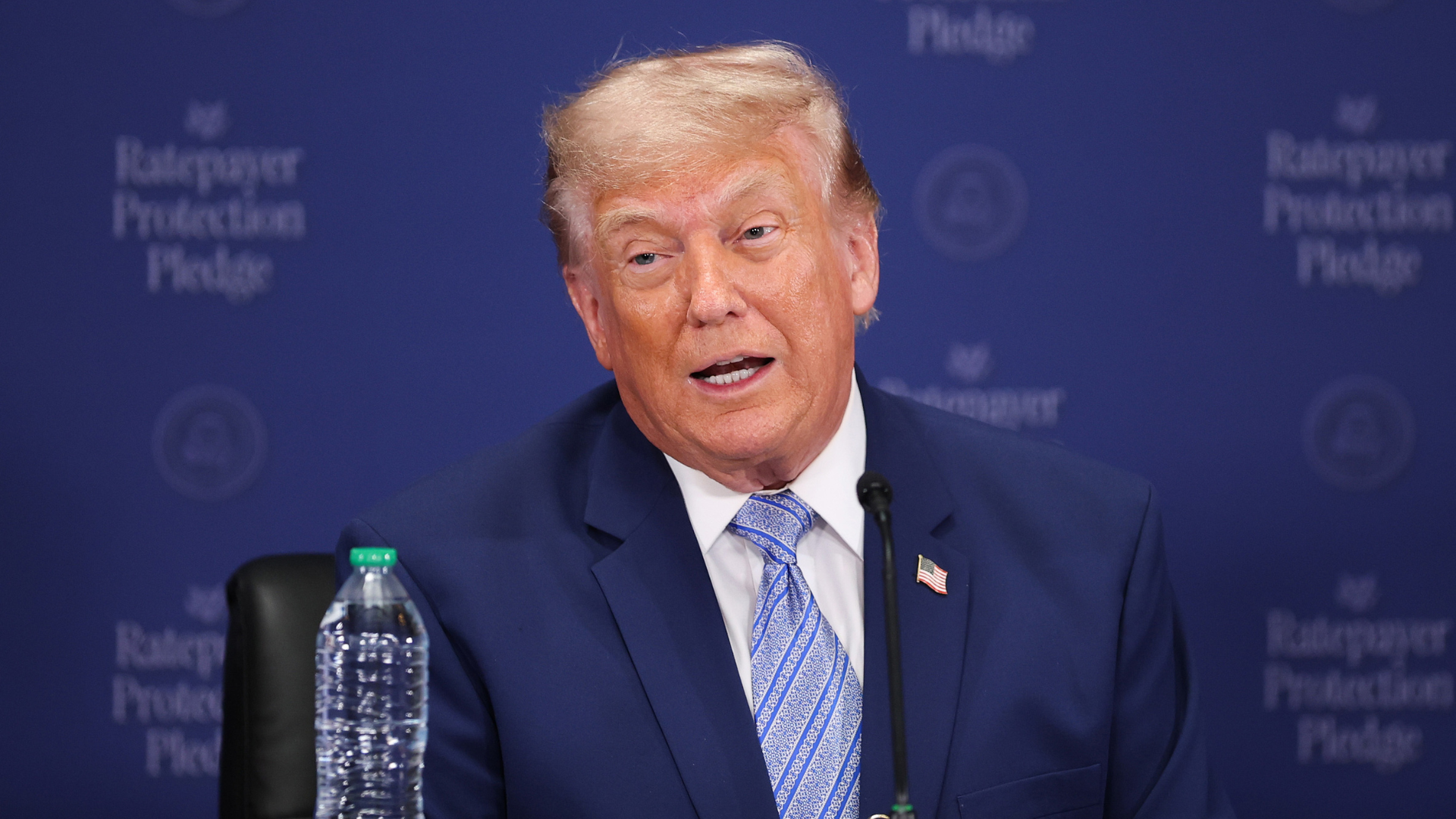
The "ratepayer protection pledge" was first introduced by President Donald Trump during his late February State of the Union address. Recognizing the political liability of rising energy costs, the administration moved quickly to bring the architects of the tech boom to the table. In early March, a high-level summit was held at the White House, featuring leaders from AI hyperscalers such as Meta, Amazon, and OpenAI.
The administration’s message was clear: if tech companies wish to lead the global AI race, they must take responsibility for their own power requirements. During the meeting, President Trump emphasized a vision where private investment in energy infrastructure would lead to a surplus, theoretically driving down costs for the average household. "Electricity bills for American families will actually come down," the President stated. "They’re going to have a lot of electricity left over, and they’ll put that into the grid."
The Reality Check
Despite the optimism surrounding the March summit, the immediate impact on utility rates has been negligible, if not contradictory to the administration’s promises. Critics point to the PJM Interconnection—the nation’s largest regional power grid operator—as a case study in the current crisis. Maryland, for instance, was recently hit with a staggering $2-billion bill for grid upgrades necessitated by out-of-state AI data centers.
Independent watchdogs, including Monitoring Analytics, have reported that a 75.5% increase in power costs within the PJM region is directly attributable to the rapid influx of data center infrastructure. This suggests that the "ratepayer protection" language is currently more aspirational than functional, as the physical infrastructure costs are being passed down to local residents long before any "surplus" energy can be realized.
Supporting Data and the Cost of Infrastructure
The fundamental friction stems from the mismatch between the speed of AI deployment and the slow pace of grid modernization. When a data center with a multi-gigawatt load is brought online, it doesn’t just draw power; it requires massive transmission line expansions, substation upgrades, and, in some cases, the commissioning of new power plants.
The Oregon Precedent: The POWER Act
While the federal government pushes for a national consensus, some states have already taken legislative action. Oregon serves as the lone current pioneer with its "POWER Act," passed in April 2025. This legislation mandates that high-load users—defined as entities consuming more than 20 megawatts—must pay the "true cost" of their electrical service.
The results in Oregon have been immediate and revealing. Portland General Electric (PGE) successfully implemented a 30% increase on data center power bills while simultaneously reducing residential rates by 1.3%. This model provides a concrete framework for how the "ratepayer protection" concept could function in practice, yet it highlights the difficulty of achieving such results without firm, legally binding mandates.
The Public Backlash
The public’s patience is wearing thin. Across 42 states, over 140 protests have been staged by community organizers who view the rapid, largely unaccountable buildout of AI facilities as an infringement on local resources. Concerns extend beyond electricity pricing to include:
- Water Consumption: Data centers require millions of gallons of water for cooling, often straining local municipal supplies.
- Noise Pollution: The constant roar of massive HVAC systems has become a point of contention in suburban and rural areas where these facilities are increasingly situated.
- Land Use: Concerns over the permanent alteration of landscapes and the disruption of local ecosystems.
In response, local jurisdictions have begun to push back. Seattle has implemented a one-year moratorium on new data center builds to study the community impact, and New York state has enacted a similar ban on projects exceeding 50 megawatts, while simultaneously discussing the repeal of tax exemptions that previously incentivized these developments.
Official Responses and Political Strategy
The administration remains steadfast in its belief that AI is a critical theatre of modern geopolitical competition. With China investing heavily in its own AI infrastructure, the U.S. government views the rapid expansion of domestic data centers as a matter of national security.
The "All-In" Approach
President Trump has urged state leaders to embrace this growth rather than fear it. "You have to convince your community. You can’t fight it. You have to go with it," the President stated in a recent address. "If you don’t take all that money, somebody else is going to take it. You might as well do it yourselves."
This rhetoric highlights the administration’s focus on economic competition. However, the disconnect remains: how to prevent the "money" generated by AI development from being eroded by the rising costs of the electricity needed to fuel it.
The Regulatory Dilemma
Federal energy regulators are currently under pressure to expedite applications for new data centers to maintain the momentum of the AI boom. Yet, the same regulators are being asked to ensure that these applications do not burden the public. This creates a regulatory paradox: how can you accelerate development while simultaneously imposing the rigorous, cost-intensive requirements necessary to protect the ratepayer?

Critics argue that the current "pledge" is unenforceable, functioning more as a political signal than a policy tool.
Long-Term Implications for the American Grid
The path forward is fraught with uncertainty. As the U.S. grid undergoes what is arguably its most significant transition since the post-war era, the competition between residential needs and industrial demand will define energy policy for the next decade.
Towards Codification
In California, lawmakers are exploring legislation that would move beyond the "pledge" model and codify ratepayer protections into state law. If successful, this could create a patchwork of regulations where tech companies are forced to negotiate "discrete payment structures" for their electricity usage—essentially decoupling their power costs from those of the general public.
The Future of AI Infrastructure
For the AI industry, the challenge is clear: it must move toward energy independence. This means investing in micro-grids, small modular reactors (SMRs), and onsite renewable storage. If the industry can solve the problem of generating its own power, the friction between AI growth and residential utility costs may eventually subside.
However, until such technology reaches maturity and scale, the tension will likely continue to manifest in the form of local protests, legislative moratoriums, and state-level legal battles. The "ratepayer protection pledge" is the first step in a much larger, complex negotiation between the digital future and the basic utility needs of the American public. Whether this pledge serves as a lasting foundation for sustainable growth or merely a temporary stopgap remains to be seen.
As it stands, the nation remains at a crossroads: sacrifice the pace of the AI race to ensure grid stability and affordability, or double down on growth and risk the volatility of an over-taxed energy market. The administration has chosen the latter, betting that private investment and market-driven solutions will eventually yield the surplus promised to the American people. For now, the electricity bill in the average mailbox serves as the most accurate metric of whether that bet is paying off.


 Rifan Muazin
 Iffa Jayyana