Sagoh
Sagoh
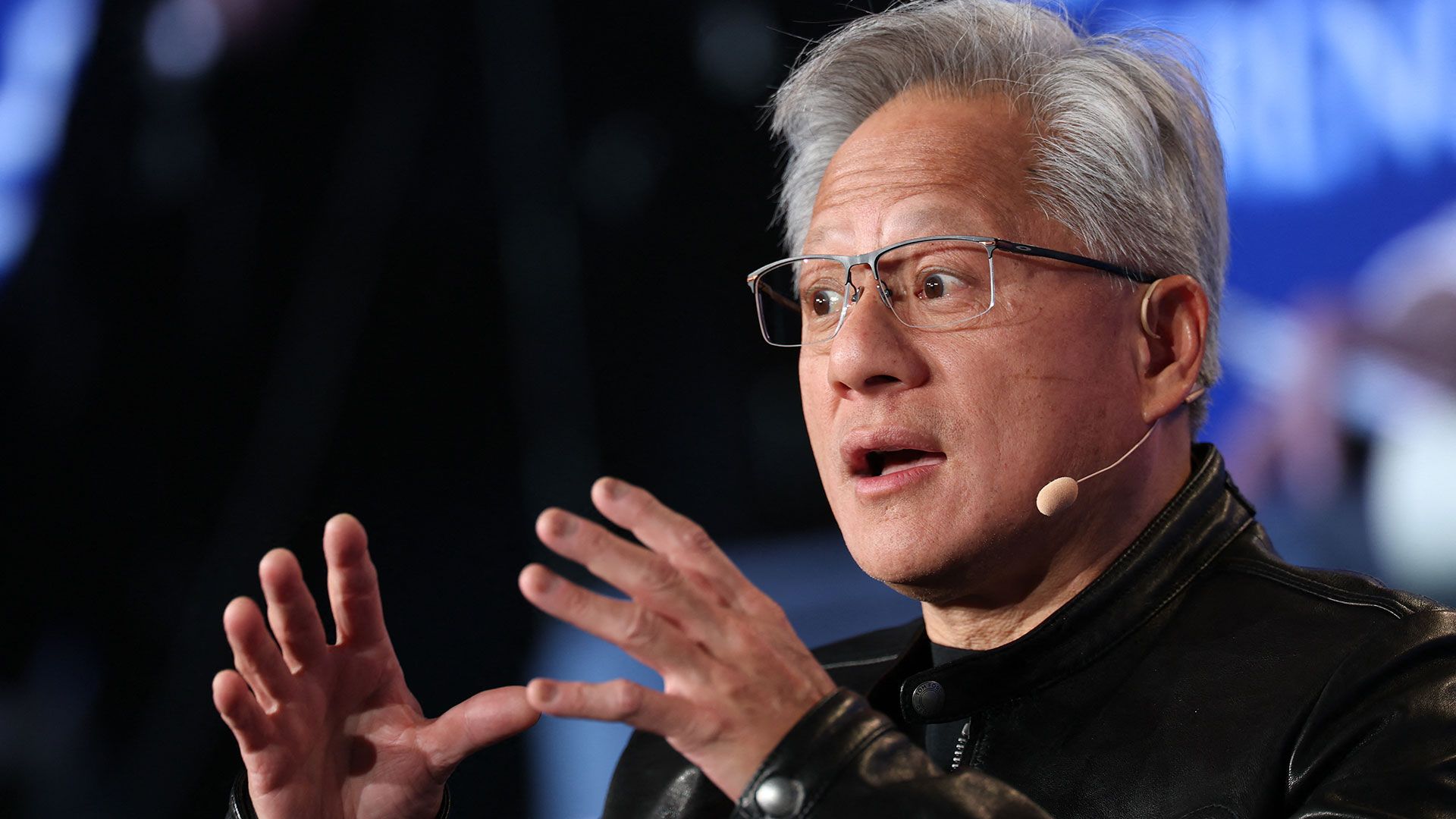
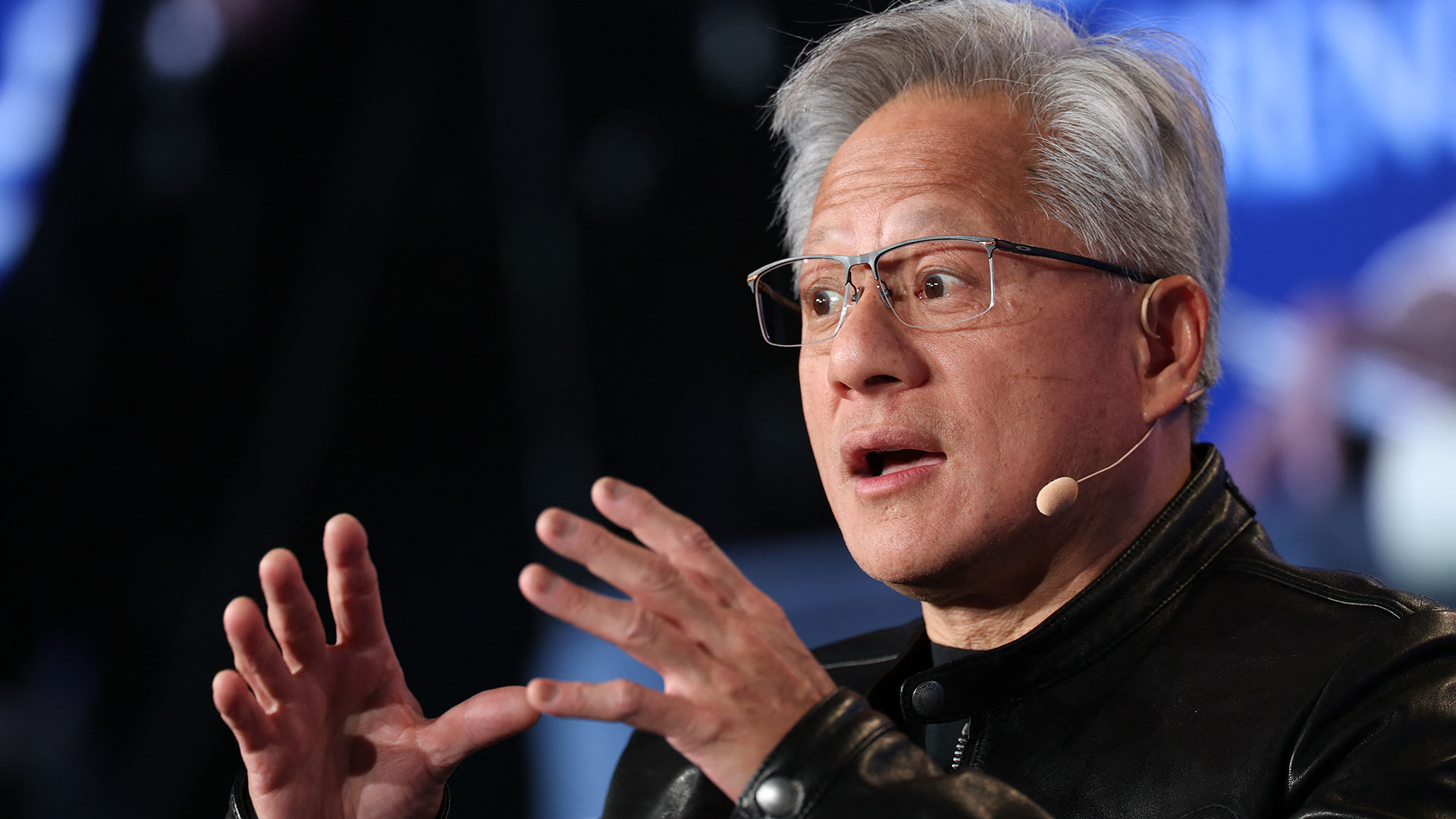
In a significant debut on the social media platform X (formerly Twitter), Nvidia CEO Jensen Huang utilized his inaugural post to advocate for a cause that could fundamentally alter the landscape of global artificial intelligence development. Huang threw his weight behind a three-page policy document titled “Open Weights and American AI Leadership,” an industry manifesto co-signed by 25 influential technology companies and organizations.
The letter represents a concerted effort by a broad coalition—ranging from hardware giants like Nvidia and Dell to software innovators like Hugging Face and Meta—to urge the U.S. government to resist what they term “premature restrictions” on downloadable, open-weight AI models. As the regulatory temperature rises in Washington regarding national security and the potential for foreign-developed models to infiltrate American infrastructure, this coalition is attempting to frame open-source AI not as a liability, but as a cornerstone of U.S. competitive advantage.
A Chronology of Escalation: From Policy Debate to Public Stance
The publication of this letter did not occur in a vacuum; it arrived at a pivotal moment in the geopolitical chess match surrounding artificial intelligence.
Just four days prior to the release of the manifesto, reports surfaced that the U.S. administration was preparing a renewed crackdown on Chinese AI models. This followed the high-profile launch of the Kimi K3 model by Moonshot AI, which reignited concerns in Washington about intellectual property theft, potential cybersecurity backdoors, and the rapid pace of international AI development.
While the industry letter avoids naming specific Chinese entities or models, its timing is unmistakable. By positioning open-weights development as a vital component of American technological sovereignty, the signatories are effectively attempting to decouple the concept of “open-source AI” from the broader, more aggressive trade restrictions targeting Chinese technology.
The debate intensified further when Treasury Secretary Scott Bessent appeared on Fox Business, signaling that the administration was actively investigating Chinese open-source models for potential intellectual property theft. Bessent cited findings of watermarks from U.S. models embedded within Chinese systems, a claim that underscores the complexity of modern AI development where models are often trained on massive, global datasets.
The Coalition: Who is Leading the Charge?
The list of 25 signatories reveals a diverse ecosystem of stakeholders, each with a vested interest in the democratization of AI compute and model deployment. The group includes:
- Chipmakers and Infrastructure Providers: Nvidia, Dell Technologies, and IBM.
- Cloud and Enterprise Software: Microsoft, Box, ServiceNow, and Palantir.
- Open-Model Pioneers: Meta, Mistral, Black Forest Labs, Arcee AI, and Reflection.
- Venture Capital and Research: Andreessen Horowitz, Y Combinator, Emergence Capital, and the Linux Foundation.
Notably, the absence of industry titans like OpenAI, Anthropic, and Google from this list speaks volumes. These companies—often referred to as the “frontier model” labs—have historically advocated for more stringent safety protocols and, in some cases, greater control over their proprietary, closed-source models. The rift between the signatories and the non-signatories highlights a growing ideological divide in Silicon Valley: those who believe AI should be a “walled garden” for safety reasons, and those who believe it must be an open-source utility to ensure global innovation and democratic access.
Supporting Data: The Case for Openness
Jensen Huang’s argument, both in the letter and his recent public appearances, is rooted in the practical reality of how the current AI market is evolving. During Nvidia’s CES 2026 Q&A session, Huang noted that approximately one in every four tokens generated by AI today originates from an open model. This statistic is critical for the hardware ecosystem; when models are open and downloadable, they are deployed on enterprise clusters, regional clouds, and on-premises server racks.
This model of deployment avoids the “hyperscaler bottleneck.” When companies host models locally rather than relying on a handful of centralized API endpoints, they are less tethered to the proprietary hardware ecosystems of Google (TPUs) or Amazon (Trainium). For a company like Nvidia, the proliferation of open models is a strategic imperative that sustains demand for their GPUs across a wider array of enterprise buyers.
Furthermore, the Linux Foundation’s involvement—the steward of the OpenMDW-1.1 license used for Nvidia’s Nemotron 3 Ultra—provides a legal and technical framework that the coalition hopes will satisfy security concerns. Nemotron 3 Ultra, a 550-billion-parameter model, stands as a testament to the power of open-weight systems, performing competitively against proprietary models like Moonshot’s Kimi K2.6. The coalition argues that by fostering these shared datasets and evaluation frameworks, the U.S. can maintain its lead without resorting to protectionist policies that might stifle domestic developers.
Official Responses and the Distillation Dispute
A particularly contentious section of the industry letter addresses the practice of “distillation”—the process of training a smaller model using the outputs of a larger, more powerful model. Regulators have expressed concern that this process amounts to the misappropriation of intellectual property, effectively “stealing” the capabilities of high-end closed models.
The coalition argues that such a characterization is a misunderstanding of how AI learns. They assert that:
- Distillation is a legitimate technical methodology for optimizing AI efficiency.
- Any illegal extraction of proprietary data should be handled through existing, targeted legal frameworks rather than broad-spectrum bans on the practice.
This is a direct challenge to the current regulatory trajectory. The industry is essentially telling Washington: “If you have a problem with IP theft, sue the specific actors for theft; do not ban the mathematical techniques that make AI accessible to the average enterprise.”
Meanwhile, the executive branch remains focused on national security. The rhetoric from the Treasury Department suggests that the government views the permeability of open models as a vulnerability. If an American company releases a model that is subsequently “distilled” or fine-tuned by a foreign actor to create a military-grade tool, the U.S. administration fears it will have lost control over its own intellectual assets.
Future Implications: Sovereignty vs. Safety
The conflict between the “open-weights” coalition and the regulatory hawks in Washington is about more than just software—it is about the future of global power.
If the U.S. imposes strict bans on downloadable models, the coalition warns that it will not stop the development of AI in other nations; rather, it will simply force that development into a different regulatory orbit. By contrast, by embracing open-weights, the coalition believes the U.S. can ensure that the standards, security protocols, and benchmarks for AI remain aligned with American values.
For the enterprise sector, the implications are profound. If companies are restricted to using only “closed” APIs, they lose the ability to maintain data privacy within their own private clouds. The push for “sovereign AI”—the ability for countries and companies to own and control their own models—is a central pillar of the coalition’s argument.
As the debate moves forward, the tech industry is clearly signaling that it is no longer willing to be a silent bystander in the drafting of AI policy. With Jensen Huang taking to the public stage, the battle for the future of open-source AI has entered a new, high-stakes phase. The question remains whether Washington will prioritize the potential for total control over proprietary models, or whether it will heed the call to foster an open, competitive ecosystem that leverages the collective innovation of the entire global research community.
For now, the industry is waiting for a response from the White House. But one thing is clear: the era of quiet lobbying is over. The open-weights movement is now a public, front-and-center campaign that defines the most important tech-policy struggle of the decade.


 Iffa Jayyana
 Pevita Pearce