Evan Lee Salim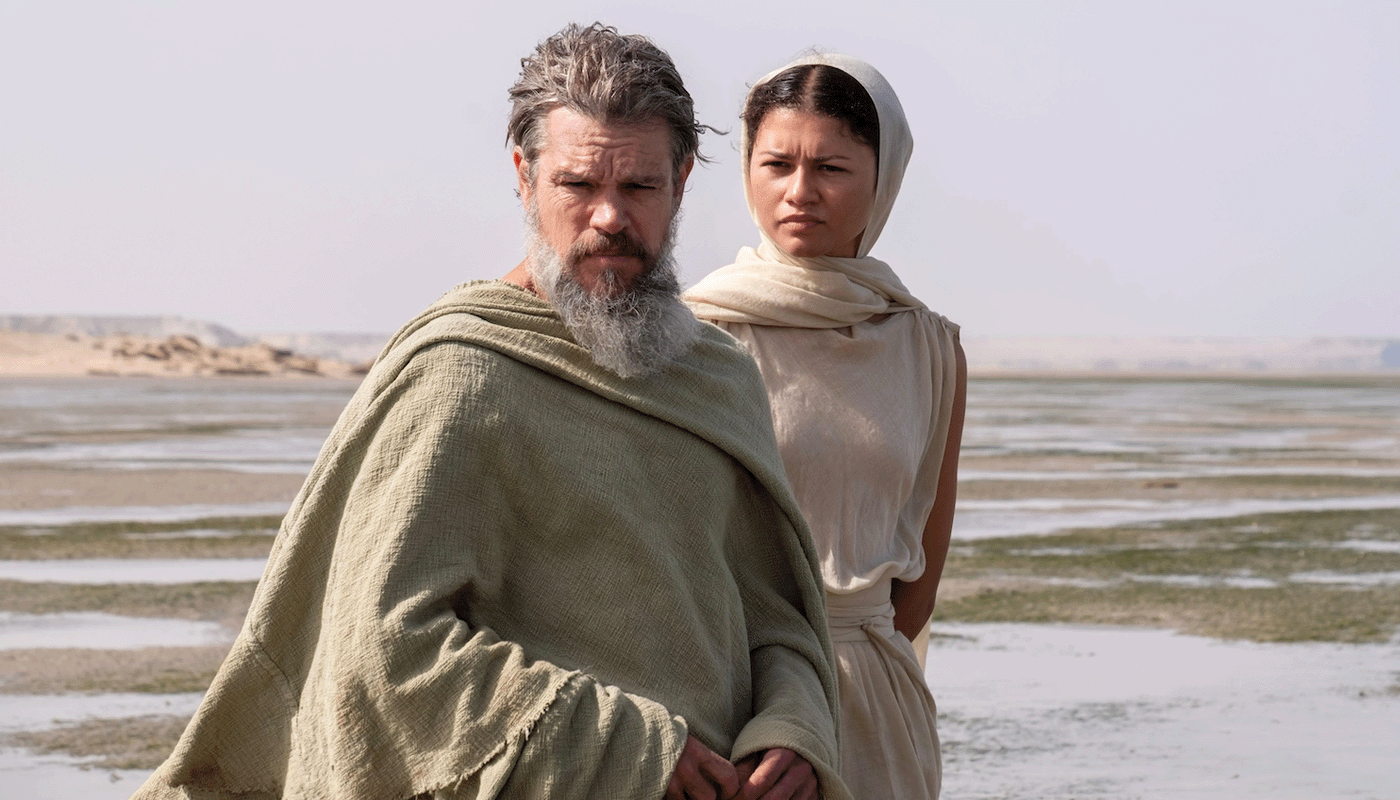
In the landscape of modern blockbuster filmmaking, few figures command the singular, polarized attention of Christopher Nolan. To his detractors, he is a sterile architect of convoluted puzzles; to his acolytes, he is the last true auteur of the multiplex. Yet, with the release of his latest film—a radical, three-hour adaptation of Homer’s The Odyssey—the conversation surrounding the director has shifted from his technical quirks to a profound, thematic exploration of morality, memory, and the collapse of civil society.
For audiences and critics alike, this film represents more than just another entry in a storied filmography. It is a bold, challenging, and deeply melancholic meditation on what it means to be a hero in an age of total war. By stripping away the mythological veneer of the ancient text and replacing it with the jagged edges of human frailty, Nolan has delivered his most significant work since Oppenheimer.
Chronology: From the Beaches of Dunkirk to the Walls of Troy
To understand the trajectory of this new epic, one must look at the path Nolan has carved over the last decade. His obsession with the subjective nature of time, first masterfully articulated in Dunkirk—where the differing temporal rates of land, sea, and air operations dictated the narrative structure—has found its logical conclusion here.
Following the global cultural phenomenon of Oppenheimer, which transformed a historical biopic into an existential thriller about the invention of humanity’s doom, the expectations for his next project were insurmountable. When news broke that Nolan was turning his gaze toward the Odyssey, skepticism was rampant. How could one condense an epic of such scope into a single cinematic experience without losing the nuances of Homer’s narrative?
The answer, it seems, lies in the structural choice to anchor the film in the subjective experience of its protagonist. Much like the Trinity Test served as the gravitational center of Oppenheimer, the Sack of Troy serves as the haunting, traumatic epicenter of this film. By prioritizing the internal collapse of Odysseus—played with a haunting, weary gravity by Matt Damon—Nolan avoids the pitfalls of standard historical adaptation.
Supporting Data: The Anatomy of a Modern Epic
While box office numbers are currently in flux, early reports indicate a robust performance that defies the "blockbuster fatigue" narrative. Screenings across major metropolitan hubs, from 70mm prints in New York to standard digital runs in London, have been characterized by an almost eerie, reverent silence.
The film’s technical specifications remain uncompromising. Eschewing the digital gloss common in contemporary fantasy, Nolan leans into practical effects, capturing the Cyclops and Circe sequences with a grounded, visceral texture that borders on horror. Ludwig Göransson’s score, a pervasive, pulsing soundscape, has already begun to dominate streaming charts, signaling a film that is as much an auditory experience as a visual one.
However, the film is not without its detractors. Critics have noted the pervasive "Nolan-esque" color palette—a relentless study in steel grey and ice blue that threatens to wash out the Mediterranean sun. For those seeking the lush, vibrant hues of a classical Greek epic, the film’s muted, industrial aesthetic may feel like a stylistic overcorrection. Furthermore, the recurring emphasis on "Zeus’s Law" as a central thematic motif has been criticized as heavy-handed, with some viewers noting that the phrase is repeated with such frequency it threatens to undermine the film’s subtler emotional beats.
Thematic Implications: A Mirror to Our Times
The core of the film’s brilliance—and its most controversial aspect—is its deliberate anachronism. Nolan has not made a museum piece; he has made a film about the 21st century.
The Weaponization of Faith
In this adaptation, Odysseus is not merely a clever trickster; he is a man who weaponizes the religious devotion of his enemies. The film posits a chilling question: What happens to a society when its "holy" symbols are used as instruments of destruction? By framing the Trojan Horse as an offering to Athena that ultimately desecrates her temple, Nolan invites us to view Odysseus not as a hero, but as a man who has "taken the magic out of the world."
The "Oppenheimer" Connection
The thematic parallels to Oppenheimer are striking. Just as the Manhattan Project scientists were seduced by the "Great Man" narrative of ending the war, Odysseus is driven by a singular purpose that justifies any atrocity. The film’s most devastating sequence, told from the perspective of those trapped inside the horse, forces the audience to confront the human cost of "victory." We are made to root for the gate to open, only to be confronted with the immediate, bloody reality of the sack. It is a masterful, if cynical, subversion of cinematic tropes.
The Failure of Hospitality
Nolan’s version of the Odyssey is fundamentally about the collapse of xenia (guest-friendship). In a world defined by the "Sea People"—displaced refugees fleeing the fallout of war—Odysseus’s journey home is mirrored by his growing realization that he and his men are the very agents of the chaos they seek to escape. The film suggests that civilization’s survival rests on the simple, often ignored act of welcoming the stranger. In a climate where borders are debated and humanity is often defined by nationalistic loyalty, this message carries a sharp, contemporary sting.
Performance and Perspective: The Cast as Moral Compass
The acting ensemble, largely a collection of Nolan regulars and newcomers, brings a groundedness to the mythic proceedings. Elliot Page’s performance as Sinon is particularly noteworthy. By conflating elements of Virgil’s Aeneid into the narrative, Nolan allows Page to embody the existential dread of a soldier caught in the machinery of greater powers.
Matt Damon, conversely, offers a masterclass in restraint. His Odysseus is not a swaggering king, but a man eroded by his own choices. The scene between him and Anne Hathaway’s Penelope is perhaps the most human moment in the film. Hathaway, given the challenging task of playing a character whose subtext is constantly being brought to the surface, delivers a performance of quiet, burning intensity.
Official Responses and the "Culture War"
Predictably, the film has become a lightning rod for online discourse. A vocal minority, operating within the familiar parameters of "anti-woke" digital activism, has attempted to frame the film’s diverse casting and thematic focus on immigration as a departure from the "source material."
However, these critiques have largely failed to find traction with the general public. Audiences are flocking to the theater, suggesting that the desire for challenging, "big" cinema outweighs the noise of online echo chambers. Nolan’s own silence on these controversies speaks volumes; he remains focused on the craft, seemingly content to let the film’s immense, overstuffed ambition speak for itself.
Conclusion: Why You Must See It on the Big Screen
There is an argument to be made that The Odyssey is a flawed masterpiece. It is overlong, occasionally repetitive in its dialogue, and visually monochromatic. Yet, in an era of content-driven streaming services and algorithmically generated blockbusters, it is a miracle that such a film exists at all.
It is a movie that demands to be seen in a theater filled with people. There is a palpable, almost electric energy in the lobby after the credits roll—a testament to the power of a 3,000-year-old story to still stir the blood and provoke the mind. Whether or not one identifies as a "Nolan bro," it is impossible to deny that the director has achieved something rare: he has taken a foundational myth and forced us to look at it, and by extension ourselves, with fresh, uncomfortable eyes.
If Christopher Nolan has not healed the collective despair of our current moment, he has at least provided a venue for us to discuss it. As the lights go down and the screen fills with the wine-dark sea—or, perhaps more accurately, the industrial-grey sea of Nolan’s vision—we are reminded that storytelling is not just about escapism. It is about accountability, memory, and the persistent, stubborn hope that we might yet find our way home.


 Nana Muazin
 Raul Delapena Setiawan