

WASHINGTON — A deepening fissure within the Republican Party has stalled a critical $70 billion immigration enforcement package, as GOP senators openly revolt against a controversial $1 billion security proposal attached to the bill. The package, which includes funding for U.S. Immigration and Customs Enforcement (ICE) and the Border Patrol, has become a lightning rod for internal party tensions, pitting a defiant White House against a skeptical, increasingly frustrated Senate caucus.
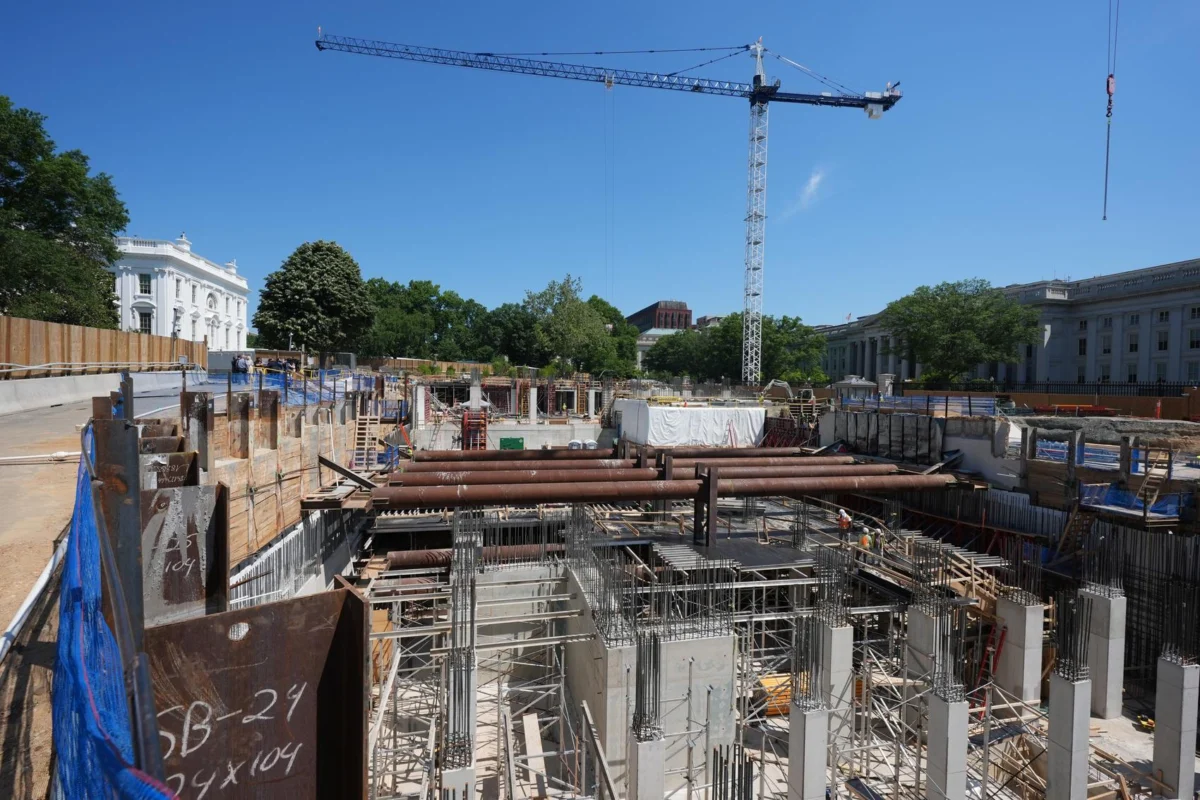
At the heart of the deadlock is a $1 billion request from the Secret Service, approximately $220 million of which is earmarked for security upgrades surrounding a ballroom at the White House complex. While the administration argues these measures are essential for presidential protection, the optics of such an expenditure—amidst national economic anxiety—have triggered a significant backlash from Republican lawmakers.
The Legislative Impasse: Back to Square One
The legislative effort to bundle the security funding into the broader border bill appears to be faltering. Senate Majority Leader John Thune (R-S.D.) acknowledged this week that leadership is grappling with "ongoing vote issues" as they struggle to secure a whip count that would satisfy the chamber’s strict procedural requirements.
"We are back to square one," said Sen. John Kennedy (R-La.) on Wednesday, candidly admitting that the votes required to pass the security package simply do not exist. Sen. Thom Tillis (R-N.C.) went further, labeling the inclusion of the ballroom funding in a national security bill as a "bad idea," warning that even if the figure were reduced, the political appetite for the project is virtually non-existent.
The frustration is compounded by technical hurdles. The Senate parliamentarian, Elizabeth MacDonough, has signaled that large portions of the $1 billion proposal may violate the chamber’s rules for inclusion in the specific budget reconciliation process currently being employed to fast-track the immigration legislation. In response, President Trump has taken to social media, launching a blistering attack on the parliamentarian and demanding her termination, while simultaneously pressuring GOP lawmakers to abolish the filibuster to clear his agenda.
Chronology of a Growing Conflict
The current standoff is not an isolated event but the culmination of several weeks of escalating friction between the legislative and executive branches.
- Mid-February: The White House proposes a $1 billion security enhancement package, citing a need for a new visitor screening center and infrastructure at the White House complex, including the ballroom.
- Late February: Initial briefings with the Secret Service leave many senators unsatisfied. Lawmakers describe the presentations as lacking sufficient detail, leaving them unable to justify the high price tag to their constituents.
- Early March: President Trump endorses Texas Attorney General Ken Paxton in the primary runoff against incumbent Sen. John Cornyn. The move sparks outrage among GOP senators, who view it as a direct threat to the party’s cohesion and electoral prospects in November.
- Last Week: Sen. Bill Cassidy (R-La.) loses his primary election following a presidential endorsement of his opponent, signaling to many in the chamber that the President is willing to target his own party members to enforce loyalty.
- Monday: The Senate parliamentarian issues a ruling suggesting that the security funding package, in its current form, is ineligible for the immigration bill’s legislative vehicle.
- Tuesday-Wednesday: Tensions boil over as GOP senators openly critique the administration’s $1.776 billion settlement fund and the "ballroom" funding, while the President threatens those who do not fall in line with job loss.
The Ballroom and the Burden of Optics
The core of the controversy remains the "billion-dollar ballroom." The Secret Service has requested $220 million for upgrades to the facility, with the remainder of the $1 billion going toward a new visitor screening center and training initiatives.
For many Republicans, the timing could not be worse. Sen. Bill Cassidy, reflecting on the political reality of his colleagues, asked, "People can’t afford groceries and gasoline and healthcare, and we’re going to do a billion dollars for a ballroom?"
The optics are particularly damaging given that the project was originally marketed to the public as one that would be funded by private contributions. Sen. Tillis emphasized this point, noting, "They need to explain to me why we need this," specifically referencing the President’s past assurances that taxpayers would not foot the bill.
While Sen. Jim Justice (R-W.Va.) expressed support for the security measures as a matter of principle, he admitted that the communication strategy has been abysmal. "We’ve got people out there who are worried about how in the world they’re going to have enough gas to get home," Justice noted, acknowledging that the message is failing to land with a public struggling with the cost of living.
Implications: The Settlement Fund and the Jan. 6th Question
Beyond the ballroom, the Senate is also preparing for a showdown over a separate $1.776 billion settlement fund created by the administration to resolve a lawsuit regarding the leak of the President’s tax returns. Democrats, led by Senate Minority Leader Chuck Schumer, have identified this as a strategic opening.
Because the immigration bill is being moved through a complex budget reconciliation process, the floor is open for a series of amendment votes. Democrats intend to force votes on the settlement fund, specifically aiming to ban any payments to participants in the January 6, 2021, attack on the Capitol.
The potential for this fund to be used to compensate rioters—some of whom have been pardoned by the President—has caused visible discomfort within the GOP. Acting Attorney General Todd Blanche declined to rule out such eligibility during recent testimony, heightening the risk for Republicans. Sen. Tillis summarized the mood, calling the possibility "absurd" and a "real risk" to the party’s credibility.
The Strategic Fallout
The President’s increasingly aggressive rhetoric toward the Senate leadership suggests a fundamental disagreement over party strategy. By demanding the end of the filibuster and threatening senators who oppose him, Trump is challenging the institutional norms of the upper chamber.
"There’s always a consequence with taking on United States senators," Majority Leader Thune observed. While he acknowledged the President’s prerogative to endorse his favorites, he warned that the current level of discord makes the "business of moving the agenda" significantly more complicated.
As the primary season continues and the midterm elections approach, the divide between the populist wing of the party and the traditional Senate establishment is widening. The "soft game" that Trump accuses Republicans of playing stands in stark contrast to the "hardball" politics currently being exerted from the White House.
With the immigration bill stalled and the party’s leadership scrambling to maintain a facade of unity, the coming weeks will serve as a critical test. The outcome will likely determine whether the GOP can reconcile its internal differences or whether the current friction will lead to a broader fracturing of the party’s power base on Capitol Hill.
For now, the $1 billion ballroom funding remains the most visible symbol of this impasse—a project that, while intended to secure the President’s home, has instead become a lightning rod for the growing legislative and ideological storm within the Republican Party.












No comments yet. Be the first to join the conversation!