
 Reynand Wu
The alternate history of Apple TV+’s For All Mankind has always functioned as a high-stakes chess match played on a cosmic board. Since its inception, the series has posited a reality where the Soviet Union claimed the first moon landing, effectively fueling a perpetual, hyper-accelerated space race that bypassed the geopolitical stagnation of our own timeline. As the show enters the high-octane drama of Season 5, Episode 8, titled "Brave New World," the series has reached a pivotal juncture: the emergence of an unexpected, clandestine alliance that threatens to upend the delicate balance of power between Earth and its Martian colonies.
For viewers accustomed to the show’s nuanced exploration of geopolitical tension, this latest development marks the most significant shift since the show’s inception. The fragile cooperation between the United States and the Soviet Union—the bedrock of the Mars-6 Alliance—is fracturing, giving way to a dangerous new paradigm where the future of humanity rests not on diplomacy, but on the cold, hard reality of resource scarcity.
The Foundations of Conflict: The Iridium Crisis
To understand the gravity of the current situation, one must look at the economic engine driving this conflict: Iridium. In the For All Mankind universe, this rare, precious metal has become the "oil" of the 21st century. As Earth’s own resources have dwindled or become strategically insufficient, the global economy has tethered itself to the steady flow of iridium shipments from the Goldilocks asteroid, which is currently being mined by the inhabitants of the Happy Valley base on Mars.
This dependence has created a catastrophic bottleneck. The Martian revolution, a movement born out of years of grueling labor and systemic neglect, has responded to Earth’s heavy-handed governance by seizing control of the asteroid and blockading shipments. The consequences have been immediate and devastating: without a steady supply of iridium, Earth’s major powers—most notably the U.S. and the Soviet Union—have plummeted into an economic free fall. Nations unable to secure the metal are facing total systemic collapse, leading to rising paranoia and internal unrest that rivals the darkest days of the 20th-century Cold War.
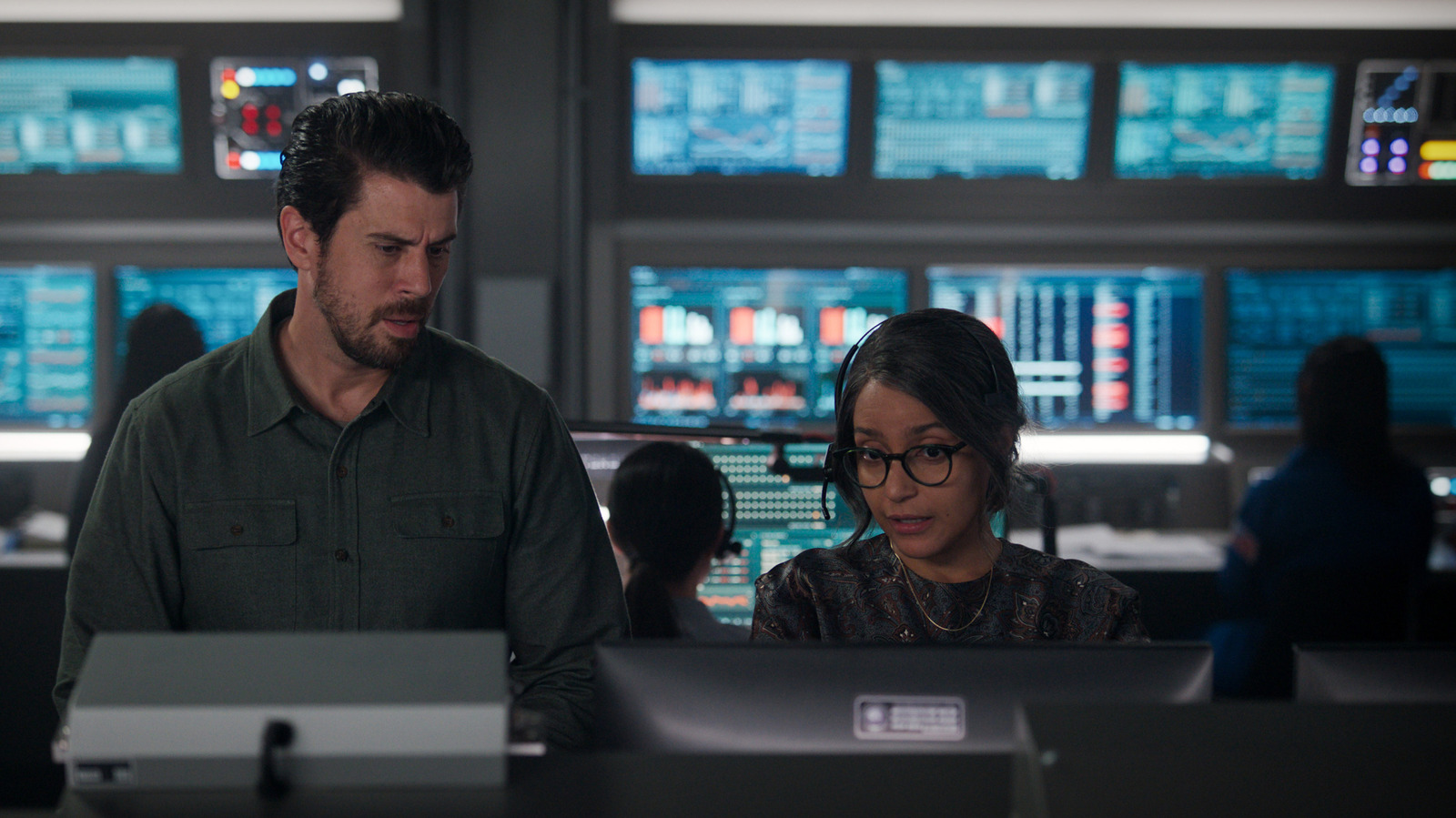
Chronology of the Brink: From Cooperation to Coup
The trajectory toward this "Brave New World" did not happen overnight. It is the culmination of decades of suppressed tension.
- The Early 2000s: The Mars-6 Alliance is formed as a multinational effort to colonize the Red Planet. While officially a collaborative scientific endeavor, it masks the underlying distrust between the superpowers.
- The Revolution Ignites: Frustrated by the "company town" atmosphere of Happy Valley and the lack of autonomy, the Martian settlers organize. Led by figures like Miles (Toby Kebbell), the workers transition from dissatisfied employees to militant insurgents.
- The Embargo: The revolutionaries realize their leverage and cut off iridium exports. Earth’s response is swift and brutal: a starvation blockade of Happy Valley, cutting off food and essential supplies in an attempt to force a surrender.
- The Morozova Maneuver: Enter Irina Morozova (Svetlana Efremova), the former head of the KGB and a master of political shadow games. Recognizing that the current Russian leadership is failing to survive the economic fallout of the blockade, Morozova orchestrates a scheme to align the Martian rebels with a future, more radical Soviet administration.
The Morozova Plot: A Dangerous Game of Thrones
The most startling revelation in "Brave New World" is the meeting between Irina Morozova, Martian Governor Lenya (Costa Ronin), and the revolutionary leader Miles. This is not merely a tactical negotiation; it is a fundamental realignment of the global order.
Morozova’s plan is Machiavellian in its precision. She acknowledges that the current Soviet government is on the brink of collapse due to the economic crisis caused by the iridium shortage. Her objective is to wait out the current administration, facilitate a coup, and install a new Prime Minister who is ideologically and pragmatically aligned with Martian independence.
In exchange for this political sanctuary and recognition, the Martian rebels would secure a reliable, long-term trade partner in the Soviet Union, effectively cutting the United States out of the equation. This alliance, if successful, would turn Mars from a struggling colony into a sovereign player on the galactic stage, permanently altering the balance of power on Earth.
Implications for Global Security
The implications of an independent Mars backed by a post-coup Soviet Union are staggering. For the United States, this represents a strategic nightmare. The U.S. has invested trillions in the infrastructure of the Mars-6 Alliance, banking on the assumption that Earth’s hegemony would remain unchallenged.
Furthermore, the "For All Mankind" version of the Cold War has always been defined by what didn’t happen. With no Soviet-Afghan War and a shortened Vietnam conflict, the world’s military focus shifted entirely to the stars. The Martian revolution has essentially become the "Iraq War" of this timeline—a localized, resource-driven conflict that consumes the political capital of the world’s leaders. The recent escalation, where U.S.-led forces attempted to forcibly retake the Goldilocks asteroid, marks the point of no return.
The ensuing explosion at the asteroid’s landing pad, which resulted in the death of a soldier and trapped personnel, serves as the casus belli that many political hawks have been waiting for. It transforms the revolution from a labor dispute into an armed insurrection against the state, providing the justification for full-scale military intervention.
The Human Cost: A Revolution Getting Bloody
Behind the high-level politics, the human cost is mounting. The settlers at Happy Valley, once pioneers of a new frontier, are now caught in the crossfire of a conflict they started. The show captures this transformation with grit: we see characters like Avery "A.J." Jarrett preparing for dangerous, high-stakes missions that feel more like wartime combat than space exploration.
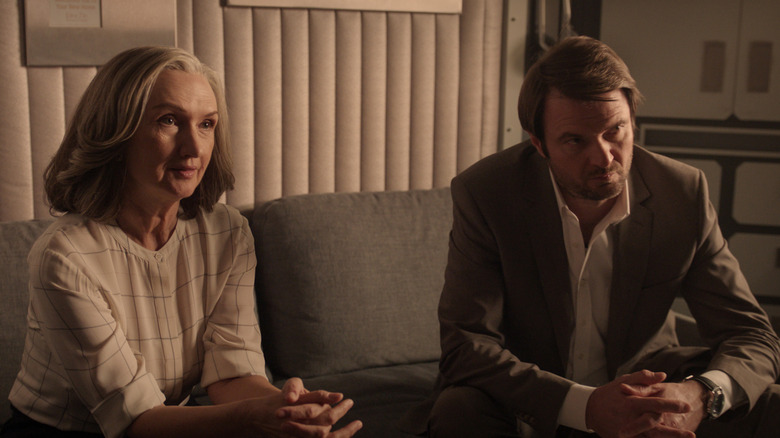
The juxtaposition between the clinical, cold negotiations of Morozova and the visceral, explosive reality of the asteroid sabotage highlights the show’s greatest strength: its ability to connect the macro-politics of history-altering decisions with the micro-struggles of those on the ground.
Looking Ahead: What Comes Next?
As For All Mankind moves toward the season finale, several critical questions remain. Will the United States recognize this incident as an act of war, leading to a direct invasion of Mars? Can the Martian rebels maintain their hold on the Goldilocks asteroid long enough for Morozova’s promised political shift in Moscow to take place? And perhaps most importantly, what role will the remaining members of the Mars-6 Alliance play as they realize they are being sidelined by a secret deal?
The show has successfully maneuvered its cast into a position where every outcome leads to a fundamental change in the world order. Whether it is the total collapse of the U.S.-Soviet partnership or the birth of an independent Martian state, the "Brave New World" that Irina Morozova envisions is one where the Earth is no longer the center of the political universe.
In this alternate reality, history is not written by the victors of the space race, but by those who can control the resources that fuel it. As the tension reaches a boiling point, the only certainty is that the quiet, scientific era of Martian colonization is officially over. The war for the future has begun, and it is being fought on a red planet millions of miles away, with the echoes of the 20th century still ringing in the halls of power on Earth.


 Raul Delapena Setiawan
 Nana Wu





