Muslim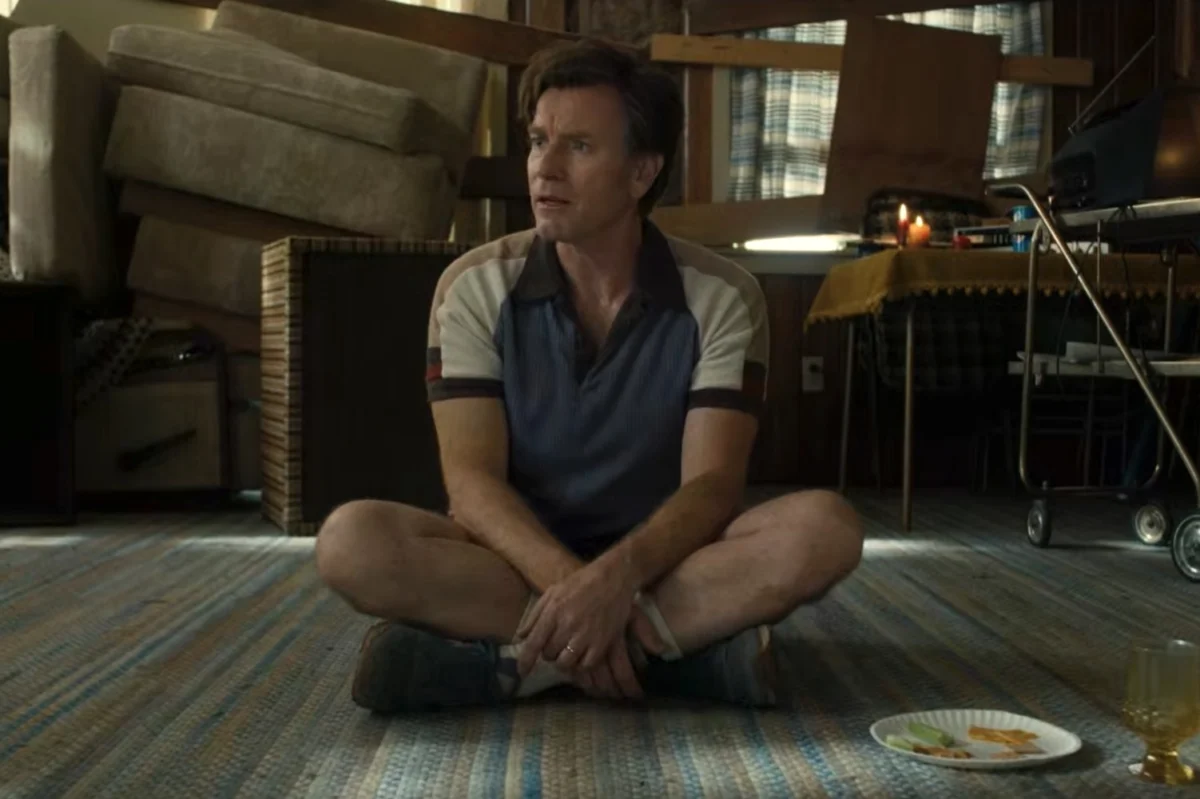
Just when the global audience believed we had finally moved past the exhausted cinematic trope of “haunted-child” vocal renditions of classic songs in movie trailers, the marketing campaign for The End of Oak Street has arrived to prove otherwise. The trailer, which dropped this week, features a child singing a haunting, slowed-down, minor-key rendition of the iconic The Flintstones theme. It is a creative choice that has already sparked significant discourse regarding the state of modern film marketing and the fatigue surrounding “creepy” covers.
However, the trailer’s narrative beats are arguably more jarring than its musical score. After failing to trust the audience’s ability to infer that the suburban Platt family has been displaced in time, the script opts for on-the-nose exposition. Mere seconds into the footage, a child asks, “We’re in the past, aren’t we?” as dinosaurs loom in the background. It is a moment of bluntness that has left many film critics questioning the studio’s lack of faith in the viewer’s intelligence.
Main Facts: The Premise and the Players
The End of Oak Street is the latest project from visionary writer-director David Robert Mitchell, whose previous work, It Follows, remains a hallmark of modern atmospheric horror. In this new endeavor, Mitchell explores a high-concept premise: What happens when an entire suburban neighborhood is mysteriously uprooted and deposited into an era where dinosaurs roam the Earth?
The film boasts an A-list cast, anchored by Academy Award-winner Anne Hathaway and Ewan McGregor. The duo portrays the heads of the Platt family, seen wearing attire that suggests a mid-20th-century aesthetic—likely the 1960s or 70s—further complicating the film’s temporal mystery. They are joined by young actors Maisy Stella and Christian Convery, who play the couple’s children.
The film is slated for a wide release on August 14. While early teasers focused on the psychological dread of the unknown, the latest trailer leans heavily into the creature-feature aspects, showcasing a violent clash between modern domesticity and prehistoric apex predators.
Chronology: The Evolution of the Marketing Campaign
The marketing cycle for The End of Oak Street has been an exercise in tonal shifting. When the first promotional materials were released, they were notably more subtle. The teasers relied on environmental storytelling—glimpses of giant footprints, distorted radio signals, and the presence of small, elusive creatures stealing household snacks. These early clips were widely praised for their restraint, as they focused on the “uncanny valley” of a neighborhood suddenly out of sync with reality.
However, the most recent trailer represents a departure from that grounded mystery. By revealing the full-scale presence of dinosaurs and the physical “slice” in the earth beneath the neighborhood, the studio has shifted the film’s perceived genre from a psychological thriller to a high-octane survival action movie.
This chronological shift in marketing has caused a division in the fan base. Those who were attracted to the intellectual mystery of the project are concerned that the film may be pivoting toward a standard “man versus monster” spectacle, while others are excited by the potential for high-stakes, CGI-heavy set pieces.
Supporting Data: The Genre of Prehistoric Survival
The concept of “time-displaced survival” has seen varying degrees of success in Hollywood. From the classic Land of the Lost to the more recent Jurassic World franchise, audiences have a well-documented appetite for the collision of human civilization and prehistoric biology.
According to box office tracking data for films involving speculative biology and time displacement, there is a clear trend toward “neighborhood-scale” survival horror. Projects that focus on the loss of the familiar—the idea that the “domestic sphere” is no longer safe—tend to perform well with younger demographics (ages 18–34).
However, there is also a risk of “prehistoric fatigue.” With the Jurassic World series having saturated the market with dinosaur-related content over the last decade, The End of Oak Street must rely on more than just the spectacle of predators. The film’s success will likely hinge on the "how" and "why" of the displacement—a narrative hook that the current marketing has largely kept under wraps, perhaps in an attempt to protect the script’s third-act reveals.
Official Responses and Creative Intent
Director David Robert Mitchell has remained characteristically tight-lipped regarding the film’s plot. In a brief statement provided to trade publications, Mitchell noted, “The film is less about the dinosaurs themselves and more about the fragility of the social contract when the environment you call home is fundamentally redefined by a force beyond your comprehension.”
Despite the director’s attempt to frame the film as a high-concept drama, the studio’s decision to highlight the action—specifically the scenes featuring the family dog facing off against a dinosaur—suggests that the marketing department is prioritizing “memeability” and visceral thrills.
When asked about the choice of the Flintstones cover, a spokesperson for the studio stated, “We wanted to lean into the juxtaposition of the familiar suburban life and the chaotic, dangerous reality of the Cretaceous period. The music choice is intended to serve as a bridge between these two disparate worlds.”
Implications: The Future of Trailer Marketing
The reaction to the The End of Oak Street trailer highlights a growing frustration among cinephiles regarding the “trailerization” of films. In an era where algorithms dictate what audiences see, studios are increasingly pressured to pack trailers with spoilers and “shock” moments to ensure engagement on social media platforms like TikTok and Instagram.
The inclusion of the “We’re in the past, aren’t we?” line is a symptom of this trend. It reflects a perceived need to guide the audience by the hand, ensuring that even the most casual viewer understands the plot immediately. This trend, however, has implications for the overall health of the film industry:
- Diminishing Returns on Mystery: By revealing the core twist (time travel to a dinosaur-inhabited past) in the marketing, the studio potentially undermines the sense of discovery that usually drives ticket sales for mystery-driven films.
- Tonal Mismatch: When the marketing promises an action movie but the film delivers an atmospheric character study, it often leads to poor audience reception, even if the film itself is well-crafted.
- Audience Skepticism: The backlash against “eerie child-singing” tropes suggests that audiences are becoming hyper-aware of marketing tactics, which can lead to a cynical viewing experience.
Final Thoughts: Should We Watch?
Whether The End of Oak Street will manage to transcend its marketing campaign remains to be seen. On one hand, you have a director of immense talent, David Robert Mitchell, working with a cast that includes heavyweights like Anne Hathaway and Ewan McGregor. The potential for a thoughtful, terrifying, and visually stunning exploration of displacement is undeniably there.
On the other hand, the marketing materials have painted a picture of a film that may be overly reliant on standard tropes. The image of a family holding shotguns against a prehistoric threat is a classic trope, but it requires a deft hand to prevent it from sliding into camp.
Ultimately, the film asks a compelling question: If you were transported to a world where you were no longer at the top of the food chain, would you survive, or would you be “chomped” like your neighbors? While the trailer suggests a grim outcome for most, the survival instinct of the Platt family may offer the emotional core that makes this film worth the price of admission.
For those who enjoy the spectacle of dinosaurs and the domestic terror of a lost neighborhood, August 14 will provide the answer. Until then, we are left to wonder if the “how” and “why” of this temporal disaster will be as captivating as the CGI predators, or if the film will simply be a loud, expensive, and ultimately forgettable jaunt through history. Whether you choose to walk down Oak Street or steer clear, the discourse surrounding this film proves that even in the age of the internet, the allure of the prehistoric remains as powerful—and as divisive—as ever.

 Nana Muazin
 Raul Delapena Setiawan