Lina Irawan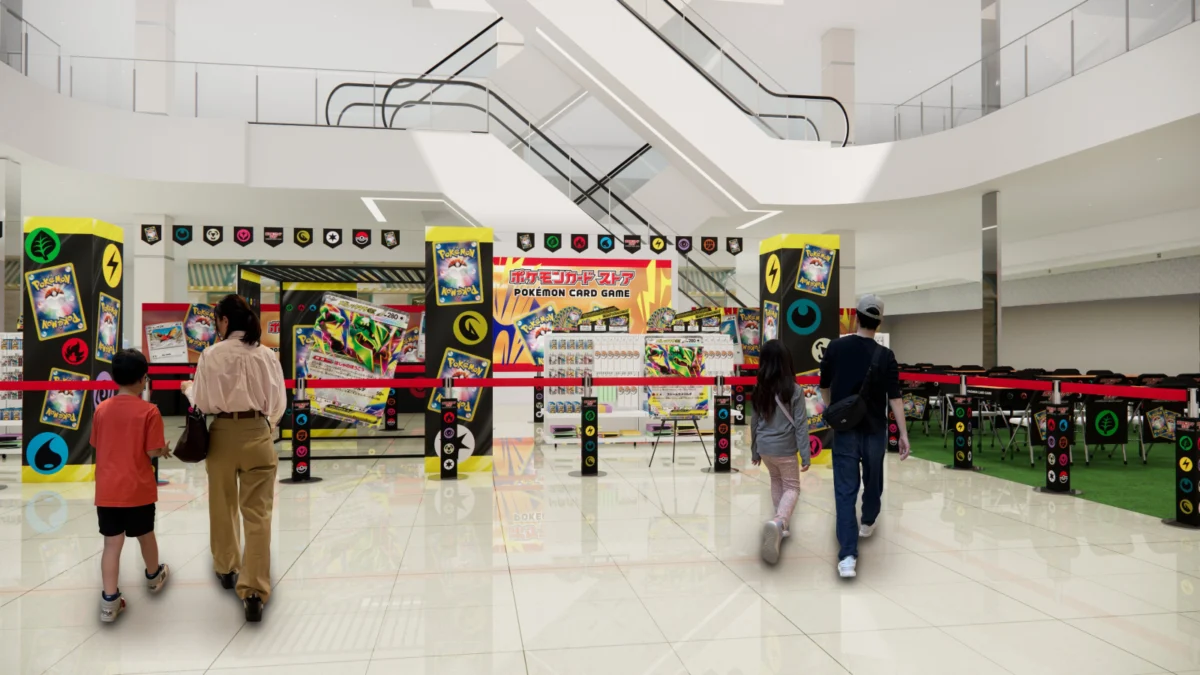
In a bold move that signals a paradigm shift for the retail landscape of high-demand collectibles, The Pokémon Company has announced the implementation of mandatory facial-recognition technology at five temporary pop-up stores across Japan. Scheduled to operate from July 31 through August 16, 2026, these locations are designed to coincide with the highly anticipated launch of the Pokémon Trading Card Game (TCG) Mega expansion: Storm Emerald.
While the initiative is officially framed as an effort to ensure a “safe and orderly shopping environment,” the underlying reality is a strategic strike against the pervasive issue of scalping. By digitizing entry requirements, Pokémon is effectively turning its storefronts into high-security zones where a simple scan of the face determines whether a fan can access the latest merchandise.
The Mechanics of Entry: How the System Works
Beginning July 31, visitors at AEON Mall Natori, Chofu PARCO, AEON Mall Higashiura, AEON Mall Hiroshima Fuchu, and AEON Mall Chikushino will encounter a rigorous entry protocol. According to an official notice published by The Pokémon Company on July 24, every shopper aged elementary-school level or older is required to submit to a facial-recognition scan upon arrival.
This scan is a prerequisite for both entering the premises and collecting a numbered queue ticket. The system functions as a digital gatekeeper, maintaining a real-time database of visitors throughout the day. Under the new policy, each individual is strictly limited to a single entry and one queue ticket per 24-hour period. Should an individual attempt to re-enter or procure a second ticket, the system will trigger an automatic alert, resulting in an immediate denial of entry.
The protocol extends beyond the initial point of sale. Customers wishing to temporarily exit the store—perhaps for a restroom break or to visit other parts of the mall—must notify staff before leaving. Failing to secure staff confirmation before exiting results in an immediate forfeiture of re-entry privileges for the remainder of the day, regardless of whether a purchase was completed.
Children of preschool age are the only demographic exempt from the scan; however, they are prohibited from entering unaccompanied and must remain under the direct supervision of a guardian at all times. Perhaps most crucially, the company has made consent a non-negotiable condition of entry: those who refuse the scan or decline to adhere to these strict behavioral guidelines are barred from the store entirely.
A Chronology of Escalation
The decision to adopt biometric surveillance represents the latest, and perhaps most extreme, chapter in a long-standing battle between The Pokémon Company and the secondary market. For years, the global surge in the popularity of Pokémon cards—driven by both genuine collectors and speculative investors—has led to chaotic scenes at retail locations.
- Early 2020s: As the pandemic-era trading card boom accelerated, Japanese retailers began experiencing massive, often unruly crowds. Scalpers, utilizing coordinated teams, began monopolizing limited stock, leading to empty shelves for children and hobbyists.
- 2023–2025: Pokémon responded with a series of incremental measures, including lottery-based sales for rare expansions and strict purchase limits per customer. Despite these efforts, professional resellers often circumvented these rules using fake IDs or by employing "mules" to wait in line.
- July 2026: Recognizing that traditional human oversight was insufficient, The Pokémon Company unveiled the facial-recognition initiative. This pivot toward biometric enforcement marks a significant escalation in the company’s commitment to controlling the flow of its product.
- August 2026 (Projected): Looking ahead, the company is also exploring the integration of Japan’s "My Number" national identification system for online sales, lotteries, and official event registration. This potential move suggests that the company is moving toward a fully integrated, national digital identity verification process for all official Pokémon commerce.
Data Privacy and Ethical Considerations
The implementation of facial recognition has naturally sparked a debate regarding data privacy. According to the official policy, the company will collect both the number of visits per customer and their specific facial-image data.
The Pokémon Company has stated that this information will be stored securely for an "unspecified period" before being permanently deleted. While the company maintains that this data collection is essential for the integrity of the store experience, it raises questions about the scope of corporate surveillance. In a retail environment, the line between "protecting the customer experience" and "monitoring the consumer" can become blurred. Critics have expressed concern over the normalization of biometric collection in public spaces, particularly in environments frequented by children.
However, in the context of Japanese consumer culture, where "fairness" in retail is highly valued, the reaction has been nuanced. Many long-time collectors view the move as a necessary evil to combat the aggressive tactics of resellers who have effectively "gated" access to the hobby for years.
Implications for the Secondary Market
The most immediate impact of this policy is the disruption of the "professional scalper" business model. By effectively creating a unique, biometric-verified identity for every shopper, the system renders the most common scalping strategies—such as having a single individual return to the counter multiple times or using multiple people to buy up inventory—virtually impossible.
If this pilot program proves successful at the five specified AEON Mall locations, it is likely that The Pokémon Company will expand the technology to other temporary pop-up stores and potentially high-traffic retail events. The scalability of this system could fundamentally alter how limited-edition merchandise is sold in Japan.
However, the technology does not address the broader international market. Pokémon has explicitly stated there are currently no plans to implement similar facial-recognition systems in permanent Pokémon Centers or at retail locations outside of Japan. This leaves international fans, who face similar scalping issues in regions like North America and Europe, without a parallel defense mechanism.
Official Stance and Future Outlook
The Pokémon Company has avoided using the term "anti-scalping" in its official communications, preferring to focus on the rhetoric of "providing a safe shopping environment" and "preventing crime." By framing the issue through the lens of safety and fair access, the company avoids potential legal pushback regarding price fixing or market manipulation, while still achieving its primary goal: ensuring that the products reach the hands of fans rather than the inventory shelves of resellers.
As of now, the trial remains localized. The industry is watching with bated breath to see if this high-tech solution will actually increase the availability of Storm Emerald cards or if it will simply drive resellers toward more sophisticated methods of circumvention.
If the technology successfully minimizes the queues and prevents the hoarding of cards, it may well become the new standard for the industry. For now, the shoppers entering those five specific stores in August will be participants in one of the most ambitious experiments in retail history—a world where, to get a pack of cards, one must first offer their face to the machine. Whether this leads to a more equitable hobby or a dystopian shopping experience remains to be seen, but one thing is clear: The Pokémon Company is no longer content to let the market solve its own problems. They are taking control, one scan at a time.

 Lina Hope
 Nana Muazin