Nana
Nana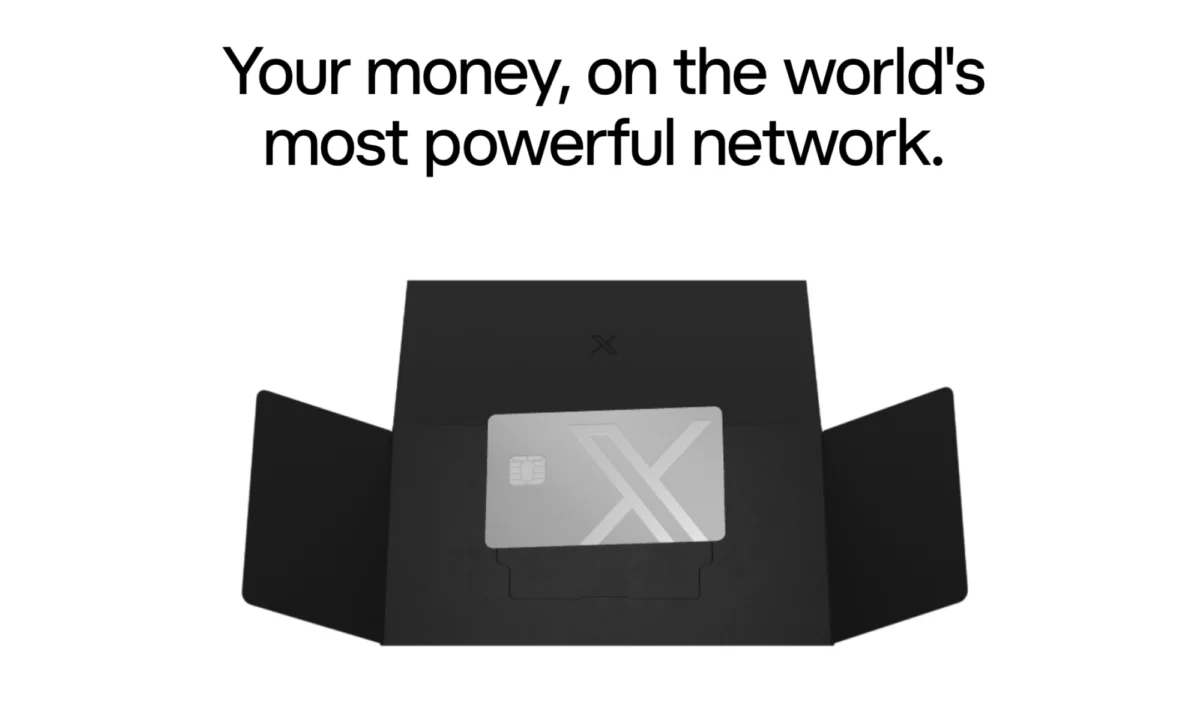
Elon Musk has long envisioned a digital ecosystem where social interaction, commerce, and finance converge into a single, seamless experience. This week, that vision transitioned from theoretical ambition to functional reality as the platform formerly known as Twitter officially launched "X Money," a suite of banking and financial services integrated directly into the X application. By bridging the gap between social networking and retail banking, Musk is aggressively pushing X toward his ultimate goal: the creation of a true "everything app" capable of rivaling global financial institutions.
The Core Offering: What is X Money?
The launch of X Money marks a pivotal shift in the platform’s utility. Designed exclusively for paying X Premium and Premium+ subscribers, the service aims to eliminate the friction between consuming content and managing personal finances. At its core, X Money functions as a fully realized digital bank.
The service provides users with a comprehensive financial dashboard within the X app, facilitating peer-to-peer (P2P) payments, seamless money transfers, and the management of a dedicated deposit account. Perhaps most notably, the platform has introduced "the X card"—a physical Visa debit card that allows users to make in-person transactions and conduct fee-free ATM withdrawals at locations worldwide.
To ensure the security and regulatory legitimacy of the platform, X has partnered with Cross River Bank, a well-regarded financial institution. Consequently, all deposits held within X Money accounts are FDIC-insured up to $250,000, offering users the same level of security found at traditional brick-and-mortar banks.
Key Features and Competitive Incentives
X is leveraging aggressive financial incentives to drive adoption among its most loyal power users. The platform’s interest rates are designed to outperform many traditional high-yield savings accounts:
- High-Yield Returns: Premium+ subscribers are immediately eligible for a 6% annual percentage yield (APY) on their deposits. Premium subscribers can unlock this same rate by meeting specific "Qualifying Direct Deposit" requirements.
- Cash Back Rewards: The physical X Card offers a 3% cash back incentive on eligible purchases, positioning it as a competitive player in the crowded landscape of retail credit and debit cards.
- Early Access to Funds: In a bid to attract users who rely on payroll direct deposits, X has implemented a feature allowing users to access their earnings up to two days earlier than traditional banking cycles typically permit.
- Digital Integration: Beyond the physical card, the service is fully compatible with modern digital wallets, including Apple Pay and Google Pay, ensuring that the transition from a "social" app to a "transactional" app is as fluid as possible.
A Chronology of Ambition: From PayPal to the Everything App
To understand the strategic significance of X Money, one must look at the historical trajectory of Elon Musk’s career. Long before his acquisition of Twitter, Musk was a key player in the fintech revolution.
- The Dot-Com Origins: In the late 1990s, Musk co-founded X.com, one of the world’s first online banks. The company eventually merged with Confinity to become PayPal, a move that fundamentally altered the global landscape of digital commerce. Musk’s departure from the company did not dim his interest in the mechanics of money movement.
- The Twitter Acquisition: When Musk acquired Twitter in 2022 for $44 billion, he made no secret of his intention to dismantle the existing platform and rebuild it as an "everything app"—a concept modeled after China’s WeChat, which serves as a central hub for messaging, social media, payments, ride-sharing, and government services.
- The Roadmap to Finance: Throughout 2023 and early 2024, Musk dropped numerous hints regarding the platform’s financial future. During all-hands meetings and through various posts on the site, he expressed frustration with the pace of development, famously claiming it would "blow his mind" if X did not integrate financial services by the end of 2024.
- The Testing Phase: Earlier this year, reports emerged of an internal "alpha" testing phase for X’s payment infrastructure. Engineers were tasked with stress-testing the P2P transfer systems, ensuring that compliance and anti-money laundering (AML) protocols were robust enough to meet U.S. regulatory standards.
- The Official Rollout: The Monday announcement serves as the culmination of these efforts. X Money is now live for a subset of U.S. users, with a tiered rollout plan intended to scale the infrastructure before a broader, perhaps international, launch.
Supporting Data: The Economics of the Everything App
The decision to gate X Money behind a subscription paywall is a calculated strategic move. By requiring an X Premium or Premium+ subscription, Musk is effectively forcing an ecosystem where financial users are also content creators or high-engagement consumers.
The competitive landscape for digital-first banking is intense. Competitors like Chime, SoFi, and Cash App have spent years cultivating massive user bases by offering simplified interfaces and high-yield incentives. X’s entry into this market is a "super-app" play; it relies on the premise that users would prefer to keep their social and financial lives in a single location rather than switching between disparate apps.

Financial analysts note that the 6% APY offered by X is significantly higher than the national average for standard savings accounts. By positioning the X Card as a digital wallet-friendly tool, the platform is betting on high transaction volume to offset the costs of these high-yield incentives. The data indicates that if X can successfully convert even a fraction of its active user base into banking customers, it would instantly become one of the largest fintech entities in the United States.
Implications: The Regulatory and Societal Horizon
The integration of banking services into a social media platform is not without its risks. The most significant hurdles remain regulatory.
Regulatory Scrutiny
Operating as a bank—or a digital conduit for banking—requires a complex web of state-by-state money transmitter licenses in the U.S., in addition to federal oversight. While the partnership with Cross River Bank provides a legal "wrapper" for these operations, regulators such as the Consumer Financial Protection Bureau (CFPB) and the Federal Reserve will likely keep a close eye on how X handles user data. The intersection of social media behavior and financial transaction history creates a massive, unprecedented dataset that privacy advocates are already flagging as a potential area of concern.
The Trust Factor
For X, the primary challenge is not technological—it is psychological. Users have historically kept their banking separate from their social media identities. Convincing the general public to trust a social media platform—one that has undergone significant volatility since Musk’s takeover—with their primary deposit account will be the company’s greatest hurdle.
The security of the platform is paramount. Any breach, hack, or perception of mishandled funds would be catastrophic, not only for the X Money product but for the broader X platform. Musk has emphasized that the backend infrastructure is designed for high-security, high-frequency finance, but the history of social media platforms entering the fintech space is littered with failed experiments.
The Future of "Everything"
If X Money succeeds, it will force a fundamental realignment in the tech industry. Competitors like Meta (which attempted its own financial forays with Libra/Diem) and Snap may feel pressured to revisit their own banking ambitions.
Furthermore, the "everything app" model fundamentally changes the nature of the internet. It transforms the user from a passive content consumer into an active participant in an integrated digital economy. By making X the place where one talks, shares, and now spends, Musk is betting that the convenience of an integrated experience will eventually outweigh the concerns over centralization.
Conclusion
The launch of X Money is a watershed moment for Elon Musk’s social media experiment. It signals that the "Twitter" era is officially dead, replaced by a utility-focused, revenue-driven platform that seeks to be as indispensable to the user’s wallet as it is to their social discourse. As the service rolls out to more users, the true test will be whether the promise of convenience, high interest rates, and seamless integration is enough to convince a skeptical public that their bank, their social network, and their digital life belong in the same place. For now, the first step into the "everything app" future has been taken, and the financial world is watching to see if X can deliver on its ambitious promises.


 Nana Wu