Nana Muazin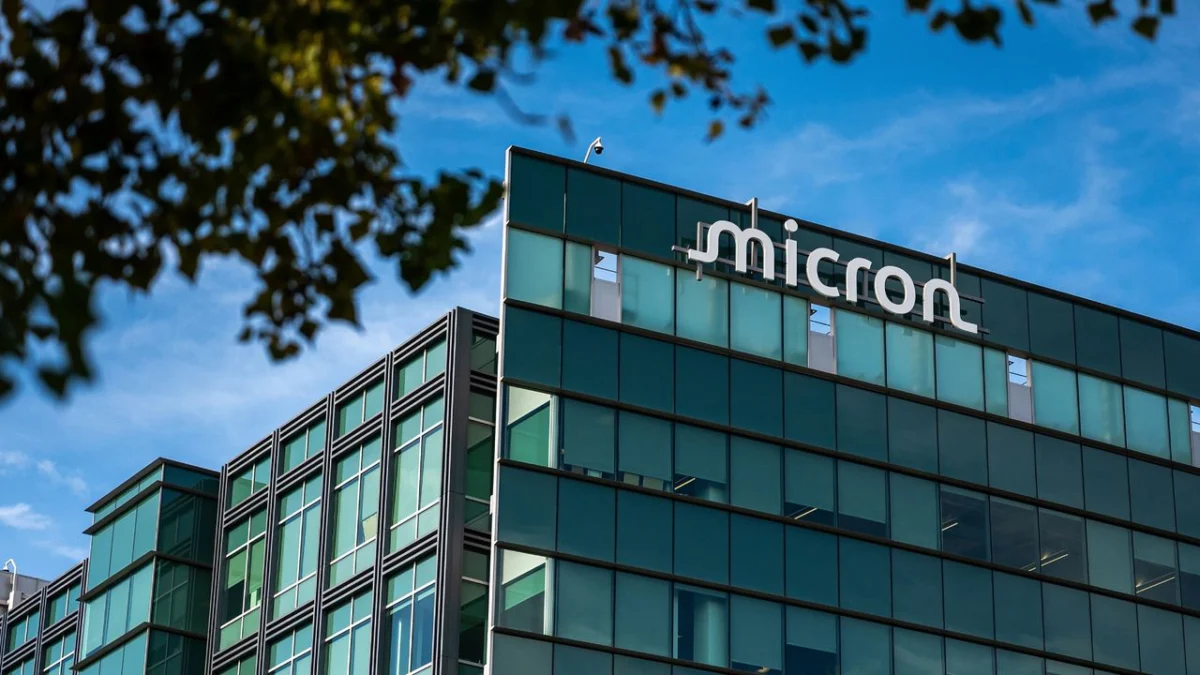
The global semiconductor landscape is currently defined by an insatiable hunger for high-performance memory chips, a byproduct of the unrelenting artificial intelligence (AI) boom. As industry giants rake in unprecedented revenues, a parallel narrative of labor friction has emerged. Micron Technology, the U.S.-based memory behemoth, finds itself at the center of a high-stakes standoff in Taiwan, where its attempt to mollify a disgruntled workforce with a significant bonus package has been met with immediate rejection and a looming threat of industrial action.
The Core Conflict: A Billion-Dollar Discrepancy
In September 2026, Micron announced what it termed the “largest rewards package in company history.” The move was designed to distribute a portion of the company’s staggering fiscal success—fueled by an astronomical $50.47 billion in cumulative net income over the last four quarters—to its 60,000-strong global workforce. For employees based in Taiwan, this translated to a one-time cash appreciation bonus of NT$1 million (approximately US$31,650).
However, rather than calming the waters, the announcement served to exacerbate existing tensions. The union representing workers at Micron’s critical Taoyuan facility quickly dismissed the proposal, labeling the lump-sum payment a “distraction” from their broader, structural demands. The workers argue that the current bonus system is opaque, arbitrary, and fails to reflect the massive value they generate in an era where AI-driven demand has pushed Micron’s Q3 earnings to a 346% year-over-year increase.
Chronology of the Dispute
The escalation of this conflict did not happen overnight. It is the culmination of a year defined by record earnings and hardening labor-management relations.
- Early 2026: As AI-driven demand for HBM (High Bandwidth Memory) and DDR5 surged, Micron’s profit margins expanded at an unprecedented rate. Employees began lobbying for a more formalized profit-sharing mechanism, citing the high cost of living and the immense pressure of increased production targets.
- September 1, 2026: Tensions reached a breaking point when local unions in Taoyuan and Taichung—representing roughly two-thirds of Micron’s 15,000-strong Taiwan workforce—threatened a formal strike. They explicitly referenced the massive payouts seen at regional competitors like Samsung and SK Hynix as a benchmark for their own compensation.
- September 4, 2026: Government-led mediation efforts, intended to bridge the divide between management and labor, collapsed after both sides failed to reach a consensus on the structure of the bonus system.
- September 11, 2026: Micron unilaterally announced the NT$1 million cash bonus for eligible employees hired on or before August 29, 2025. The company touted this as a major victory for staff welfare, noting that total compensation for some manufacturing workers could reach 68 months of basic salary.
- Post-Announcement: The union immediately rejected the offer. A second round of government-mediated talks is scheduled for September 21, 2026. If these negotiations fail, the union has signaled it will proceed with a strike vote, supported by an internal survey where 80% of members expressed a willingness to walk off the job.
Supporting Data: By the Numbers
To understand the intensity of the standoff, one must look at the financials driving both the company’s success and the workers’ frustration.
The Company’s Fiscal Dominance
Micron’s performance in fiscal year 2026 has been nothing short of historic. With a GAAP net income of $28.24 billion in the third quarter alone, the company is reaping the rewards of the AI infrastructure race. These figures have provided the capital necessary for the massive bonus pools, which the company claims are intended to reward employees for an "extraordinary year."
The Employee Payout Structure
Under the proposed plan, the compensation is tiered:
- Flat Cash Bonus: NT$1 million for long-term employees.
- Direct Labor: Minimum total cash compensation of NT$1.7 million (US$53,809), with total rewards equivalent to 35 to 68 months of basic salary.
- Junior Engineers: Projected average total compensation of NT$3.4 million (approx. US$106,250), split between cash and equity grants.
Despite these figures appearing generous to the outside observer, the union contends that they are not a substitute for a transparent, sustainable, and permanent profit-sharing model.
Official Responses and Union Demands
The union’s rhetoric remains focused on "institutional safeguards." They are not simply asking for a larger check; they are demanding a fundamental shift in how Micron treats its human capital. Specifically, the union is calling for:
- Profit-Sharing Transparency: A permanent policy where 15% of the company’s quarterly operating profits are allocated to a worker bonus fund.
- Structural Reform: A move away from "one-off" bonuses decided by management, which they argue are used to silence dissent rather than foster long-term loyalty.
- Benchmark Alignment: A one-time payout closer to 83 months of salary for the current fiscal year to bring them in line with the record-setting settlements seen at rival firms like SK Hynix, which recently committed to allocating 10% of its annual operating profit to employees for the next decade.
Micron, for its part, maintains that it provides competitive compensation packages that reflect the high value of its workforce. By emphasizing that this is the "largest rewards package in company history," the firm is attempting to frame its position as one of generosity, effectively asking the union to accept the record-breaking payout as a sign of good faith.
Broader Implications: A New Era for Semiconductor Labor
The Micron dispute is not an isolated incident; it is a symptom of a larger, systemic shift within the global semiconductor industry. For decades, the sector was characterized by steady growth and manageable labor relations. The AI boom has shattered this status quo, creating a "gold rush" environment where profit margins have become disconnected from traditional wage structures.
The "Samsung Effect"
The Micron standoff mirrors the situation at Samsung, where 30,000 union members took to the streets to demand a larger share of the company’s AI-driven profits. When workers see rivals like SK Hynix or Samsung negotiating multi-billion-dollar packages, it creates a "competitive pressure" that forces local unions to raise their own expectations.
The Risk of Disruption
The semiconductor industry is uniquely vulnerable to labor stoppages. Because of the "just-in-time" nature of the global supply chain and the extreme precision required in chip manufacturing, even a short-term strike can result in billions of dollars in lost production, damaged wafers, and supply chain bottlenecks that ripple across the automotive, smartphone, and data center markets.
The Role of Government
In Taiwan, as in South Korea, the government is being forced into the role of a referee. With the semiconductor industry being the backbone of the Taiwanese economy, the government has a vested interest in ensuring that labor disputes do not result in significant downtime. However, as the failure of the September 4th mediation shows, the government’s influence is limited when the fundamental disagreement is over the philosophy of corporate profit-sharing rather than just the dollar amount.
Conclusion: The September 21st Turning Point
As the industry looks toward September 21, 2026, the situation remains precarious. Micron’s management is attempting to navigate a path that maintains its fiscal discipline and shareholder value while managing a workforce that feels emboldened by the company’s record-breaking success.
The union’s 80% strike approval rate suggests that the workforce is prepared to engage in a protracted conflict to achieve their goals of structural change. Whether this dispute concludes with a breakthrough in profit-sharing negotiations or a historic strike at one of the world’s most vital manufacturing hubs remains to be seen. What is clear is that the "AI Boom" has brought more than just profit to the semiconductor sector; it has brought a new, powerful demand for economic equity that companies can no longer afford to ignore.

 Nana Wu
 Ammar Sabilarrohman