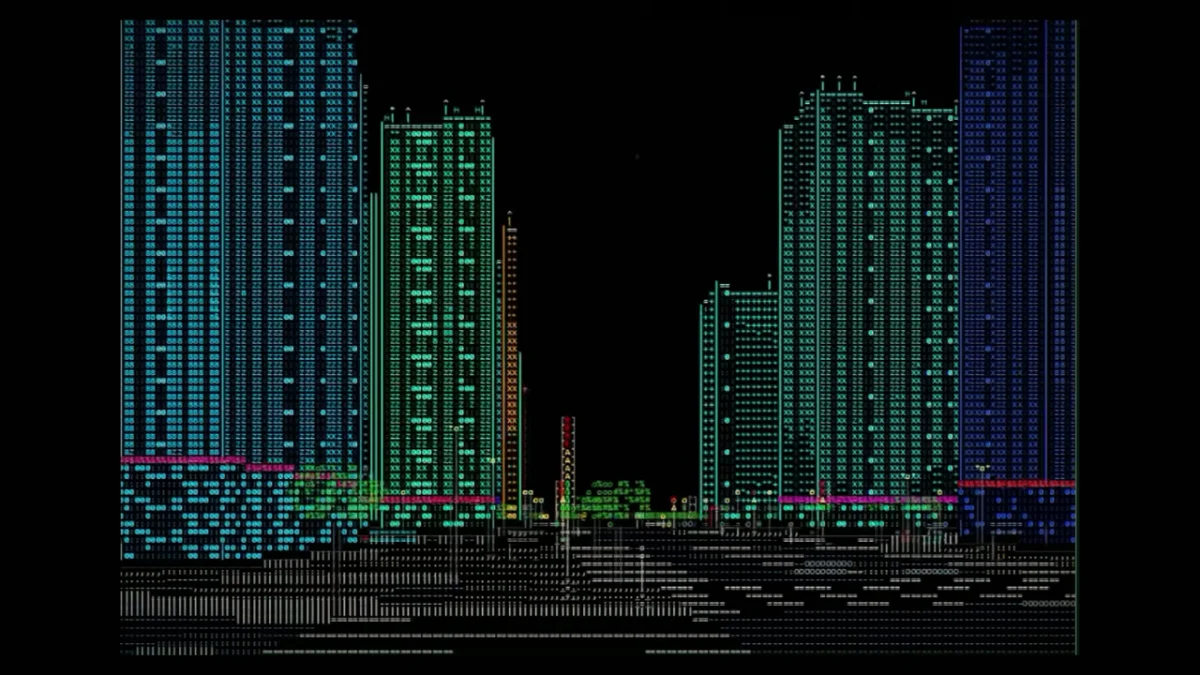
In an era defined by hyper-realistic graphics, massive asset libraries, and the relentless pursuit of photorealism via path-tracing and AI upscaling, a singular project has captured the collective imagination of the internet. Grow Now! Games, a solo development entity, has unveiled a playable browser-based demonstration of a walkable ASCII cyberpunk city. The project, which eschews modern game engines like Unity or Unreal in favor of a minimalist, custom-built architecture, has become a viral sensation, proving that technical ingenuity often outshines raw computational brute force.
The project, which gained massive traction after an initial YouTube showcase garnered over a million views, has now evolved from a passive visual demonstration into an interactive experience. By leveraging a remarkably compact 283KB Rust WebAssembly (Wasm) engine, the developer has successfully delivered a dense, atmospheric, and navigable urban environment directly within a standard web browser.
A Chronology of the ASCII City
The ascent of the ASCII City project has been swift and organic. It began as a technical experiment, a "what if" scenario exploring the limits of text-based rendering in a modern web environment.
- The Initial Reveal: The project first caught the public eye via a YouTube video titled A Walkable ASCII Cyberpunk City in One HTML File. The sheer technical audacity of packing a functional 3D-adjacent world into a single file triggered widespread fascination, leading to over 9,000 comments and viral status across various developer forums and social media platforms.
- Expansion of Features: Recognizing the interest, Grow Now! Games followed up with ASCII City Update: Interiors, Elevation & Skyscrapers. This update demonstrated that the engine could handle not just a flat plane of text, but verticality, internal building layouts, and the complex atmospheric effects associated with the cyberpunk aesthetic.
- The Playable Build: This week, the project reached a new milestone: a fully playable browser build. Users can now step into the neon-drenched, character-based streets, providing a tangible look at the engine’s real-time capabilities.
Technical Underpinnings: The Architecture of Efficiency
The technical architecture behind the ASCII City is a masterclass in optimization. Rather than relying on traditional GPU-heavy rendering pipelines, the developer utilized a combination of Rust, WebAssembly, and WebGL shaders to bridge the gap between retro aesthetics and modern web performance.
The Rust-WebAssembly Synergy
The engine core, compiled into a 283KB .wasm module, is the beating heart of the city. Upon startup, it reserves a modest 1,152KB of linear memory. To keep the simulation efficient, the engine uses modular Rust code divided into distinct responsibilities: world.rs for geography, population.rs for entities, and rendering.rs for visual output.
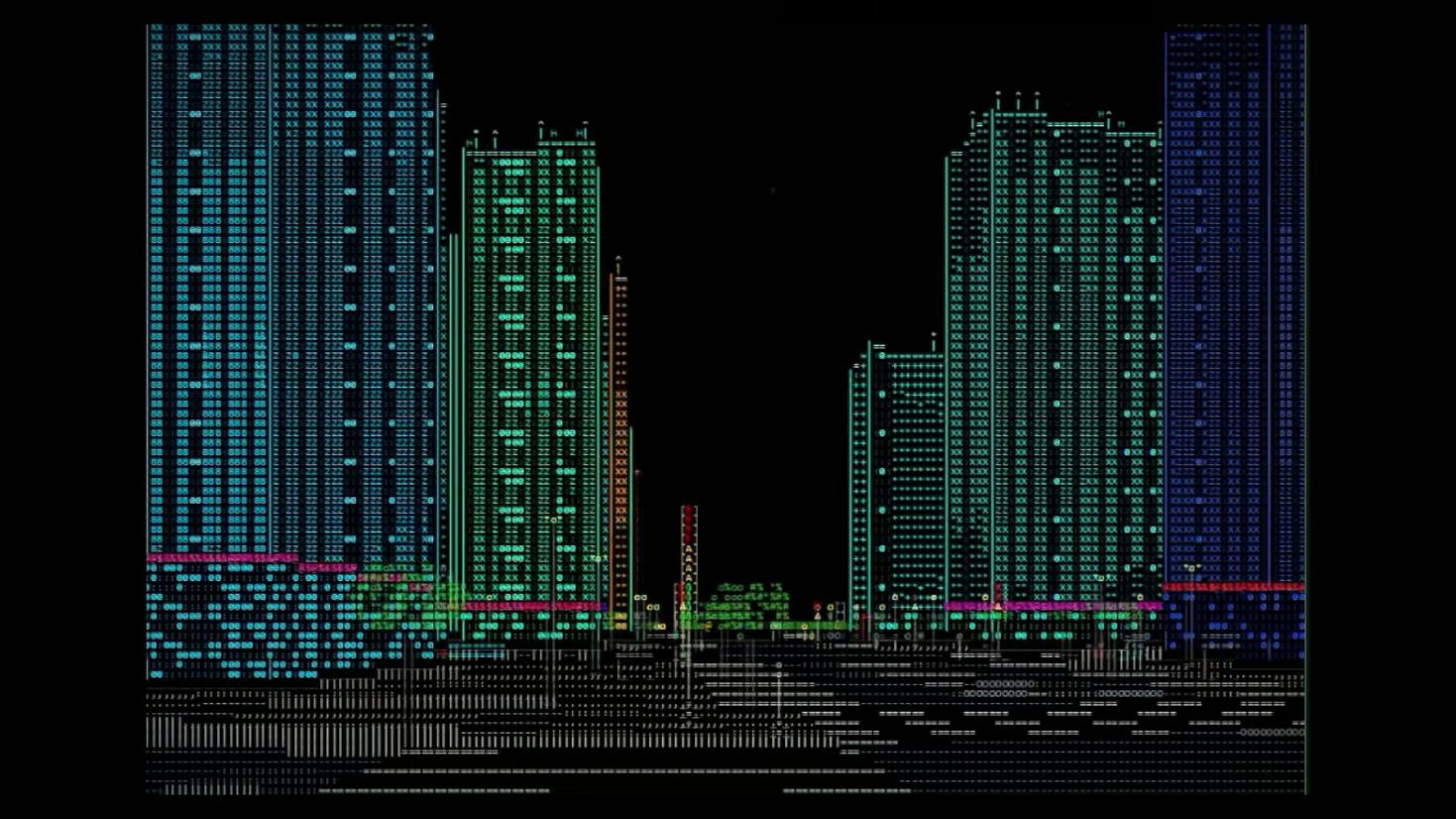
The communication between the Rust engine and the JavaScript layer is remarkably lean. Instead of passing heavy objects, the engine generates byte arrays packed with information about building heights, tile types, light flags, and window styles. This data-driven approach allows for massive procedural generation without the overhead of traditional asset loading.
WebGL and the Art of the Atlas
The visual output is handled by a custom WebGL renderer. Instead of rendering every character individually every frame, the engine employs a "character atlas" approach. Characters are drawn once into an atlas canvas using standard fillText calls, cached per character-color combination, and uploaded to the GPU as a texture.
This process reduces the rendering bottleneck to a single texImage2D call per update, with the final scene drawn as a series of textured quads. For users on older hardware or restricted environments, the project includes fallbacks: a 2D Canvas drawImage path and a direct fillText mode, ensuring the city remains accessible regardless of the user’s graphics capabilities.
Supporting Data: By the Numbers
The efficiency of this project is best understood through its specific performance metrics:
- Memory Footprint: The entire engine binary is a mere 283KB.
- Render Density: On desktop browsers, the simulation renders 180 columns by 80 rows—a total of 14,400 individual character cells—at 10px in the Consolas typeface.
- Dynamic Scaling: Mobile devices utilize a distinct profile, scaling the grid down to 48 rows and between 96 and 168 columns to accommodate touch input and varying aspect ratios.
- Buffer Management: The vertex buffer pre-allocates 2.76MB, a safety measure that allows the engine to double its capacity instantly if a frame exceeds current buffer limits.
The Context of "Extreme Optimization"
The ASCII City project joins a growing niche of "extreme optimization" projects that seek to push the boundaries of what is possible with minimal resources. This trend reflects a reaction against the bloat of modern software development, where even simple applications often require hundreds of megabytes of overhead.
For instance, a recent project saw a functional Backrooms game for the 1994 Sega 32X, utilizing custom raycasting in SH-2 assembly. Similarly, the Doom multiplayer tribute—implemented entirely in SQL—demonstrated that even non-traditional languages could be coerced into real-time rendering. The ASCII City, however, occupies a unique space by being both highly optimized and remarkably accessible through the web. It serves as a reminder that the "cyberpunk" aesthetic—characterized by high-tech and low-life—is best captured when the technology itself feels like an act of rebellion against current industry standards.
Implications for Future Game Development
The success of Grow Now! Games’ project suggests several key implications for the future of web-based gaming and software engineering:
1. The Rise of "Engine-less" Development
The project demonstrates that for specific visual styles, the heavy lifting provided by massive engines like Unity or Unreal is unnecessary. By building a bespoke engine, developers can achieve significantly lower latency, faster load times, and deeper integration with browser APIs, all while maintaining complete control over the memory footprint.
2. Procedural Generation and Data Density
The method of passing base64-packed byte arrays from Rust to JavaScript highlights a potent strategy for high-performance procedural generation. By separating the logic of world creation from the presentation, developers can create "infinite" worlds that are stored in a few kilobytes of logic rather than gigabytes of static 3D models.
3. The Accessibility of Retro Aesthetics
As hardware becomes more powerful, the aesthetic value of "retro" styles—such as ASCII, pixel art, and low-poly—is increasing. The ability to run high-fidelity simulations in a browser opens the door to a broader demographic of players, particularly those in regions with limited hardware or slower internet connections.

4. Technical Resilience
In an era of live-service games that require constant server connectivity and large patches, a project that is entirely self-contained within a 283KB file is an exercise in digital preservation. It is a game that can, theoretically, exist forever, unaffected by server shutdowns or engine depreciation.
Conclusion
The ASCII Cyberpunk City is more than just a nostalgic nod to the days of terminal-based computing. It is a sophisticated technical statement. By stripping away the layers of modern graphics APIs and asset-heavy pipelines, Grow Now! Games has exposed the elegant math beneath the digital surface.
Whether it serves as a blueprint for future indie developers or simply stands as a testament to the power of efficient coding, the project has left an indelible mark on the development community. It reminds us that at the intersection of Rust, WebAssembly, and a handful of characters, there is still an entire universe waiting to be built—one byte at a time.