
 Reynand Wu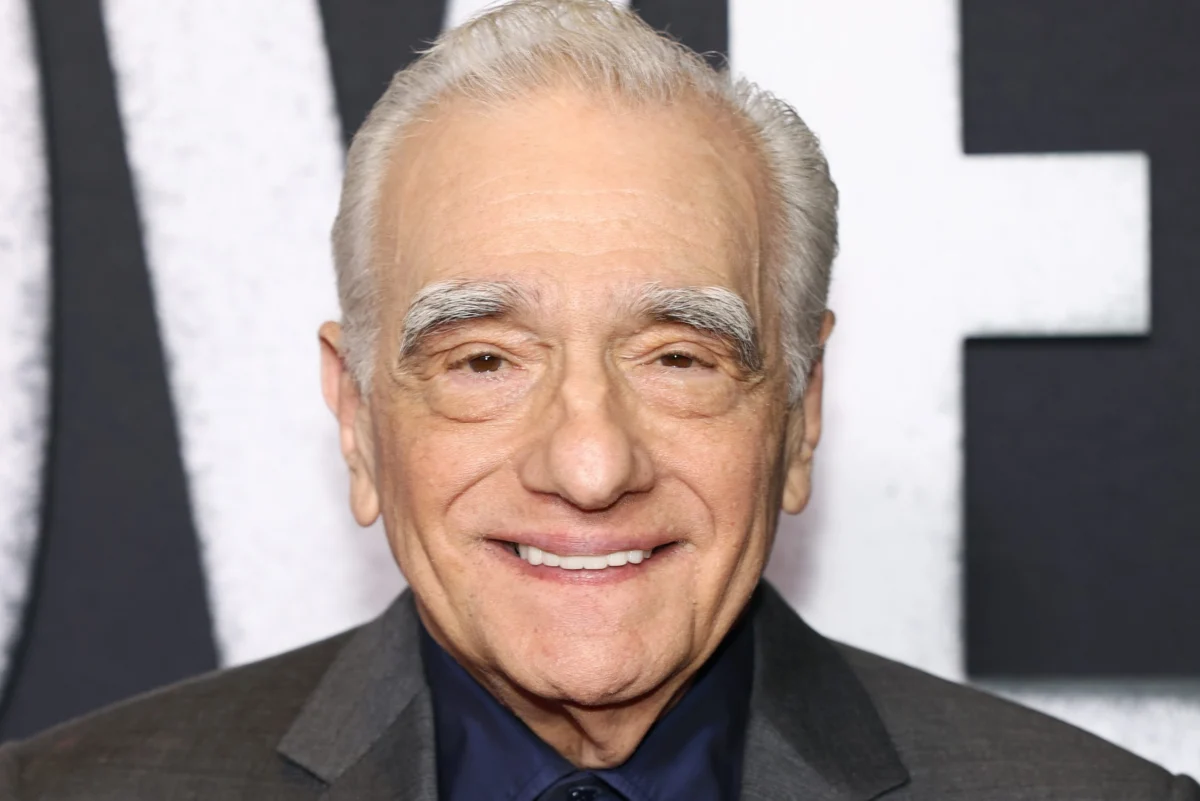
In a landmark move that bridges the gap between Hollywood’s most revered living auteur and the historic heart of European filmmaking, Martin Scorsese has been tapped to serve as the honorary president of the David di Donatello Academy. The appointment, which marks a significant shift in the governance of Italy’s most prestigious cinematic institution, signals a renewed effort to bolster the global standing of Italian cinema.
The David di Donatello Awards, often referred to as Italy’s equivalent of the Academy Awards, represent the pinnacle of achievement in the country’s film industry. By bringing Scorsese—a director whose very identity is inextricably linked to his Italian heritage—into the fold, the Academy is not merely adding a title to a legend; it is cementing a symbolic and strategic partnership intended to revitalize the cultural export of Italian film on the world stage.
The Evolution of the David di Donatello Academy
The appointment of Scorsese follows a series of calculated structural changes within the David di Donatello Academy, an entity overseen by the Italian government. In recent months, the institution has embarked on a comprehensive overhaul of its governance, moving away from a consolidated power structure toward a more specialized, committee-driven approach.
For years, the Academy was led by Piera Detassis, a prominent film journalist and former artistic director of the Rome Film Festival. Detassis, who made history in 2018 by becoming the first woman to head the organization, held a dual mandate as both the president of the Academy and the artistic director of the awards ceremony. Her tenure, which oversaw a period of significant modernization for the awards, concluded recently as her mandate formally expired.
In the wake of her departure, the Italian Ministry of Culture, led by Alessandro Giuli, has opted to decouple these responsibilities. The new leadership structure features Silvia Calandrelli, a high-ranking executive at the state broadcaster RAI, as the Academy’s president. Complementing her leadership is Gianluca Farinelli, the esteemed head of the Bologna Film Archives and the director of the Il Cinema Ritrovato festival. Farinelli, a globally respected figure known for his rigorous dedication to film restoration and archival work, has been appointed as the artistic director of the David di Donatello Awards.
This trifecta—Calandrelli’s institutional oversight, Farinelli’s curatorial expertise, and Scorsese’s honorary global stewardship—marks a new era of governance for the foundation, which plans to round out its leadership team with a newly appointed artistic steering committee in the coming months.
A Legacy Rooted in Italian Soil
For Martin Scorsese, the acceptance of this role is deeply personal. Despite being born in Queens, New York, Scorsese’s cinematic language, his thematic obsessions, and his stylistic bravado are frequently traced back to the neo-realist masters of post-war Italy. His documentaries, such as My Voyage to Italy (1999), serve as a testament to his lifelong devotion to the works of Rossellini, Fellini, De Sica, and Antonioni.
In a formal statement addressed to Minister of Culture Alessandro Giuli, Scorsese expressed his profound gratitude for the invitation. "Italian cinema has been a constant source of inspiration throughout my life," Scorsese wrote. "The films, authors and artistic traditions born in Italy have profoundly shaped both my understanding of cinema and my work. Being associated, in this capacity, with the Academy and the David di Donatello Awards is particularly meaningful to me."
He further underscored his intent to be an active participant in the Academy’s mission. "I will be honored to support the Academy’s commitment to the international promotion of Italian cinema and film culture, and to contribute to its cultural initiatives and activities," he added.
The Minister’s Rationale: Why Scorsese?
The proposal to invite Scorsese was championed by Minister Alessandro Giuli, who viewed the move as essential for the Academy’s future. In a statement detailing the rationale behind the appointment, Giuli emphasized the unique connection between the director and the country.
"Few filmmakers embody the profound connection between the great Italian tradition and the history of cinema like him," Giuli stated. He noted that the appointment is not merely a bureaucratic gesture but an "extraordinary recognition for our cinema and for Italy, the land of his origins."
For the Italian government, having a figure of Scorsese’s stature advocating for their national industry provides an unprecedented level of visibility. It serves as a validation of the "Italian brand" within the international festival circuit and the global awards season. Minister Giuli’s enthusiasm was palpable as he remarked on the emotional weight of the appointment: "The words he addressed to me and the Fondazione Accademia del Cinema Italiano are a tribute to our masters and to the cinematic culture that helped shape his vision."
While the appointment still awaits a formal resolution from the Academy’s board of directors, the move is widely regarded as a formality, with unanimous support expected across the organization.
Implications for Global Cinema
The integration of Martin Scorsese into the upper echelons of the David di Donatello Academy carries significant implications for the future of European film distribution and cultural preservation.
1. Elevating the Global Profile
The David di Donatello Awards have historically struggled to maintain the same international "buzz" as the Oscars or the César Awards. By associating the name of Martin Scorsese with the ceremony, the Academy ensures that global media will take a heightened interest in the winners and the artistic trajectory of Italian cinema.
2. The Focus on Restoration and Heritage
With Gianluca Farinelli—a champion of film preservation—at the helm of the awards, and Scorsese as the honorary president, the Academy is signaling a shift in priorities. There is a clear intent to move beyond simply celebrating the current year’s box office hits to honoring the technical craft and the historical lineage of the medium. This alignment is expected to boost international funding and interest in the restoration of classic Italian films.
3. A New Governance Model
The move to separate the roles of President and Artistic Director suggests a more professionalized, corporate approach to running the Academy. By delegating the artistic vision to a specialist like Farinelli while retaining institutional stability through RAI’s Calandrelli, the Italian government is attempting to inoculate the Academy against the political fluctuations that often plague state-run cultural entities.
Looking Ahead: The Road to the Next Awards
As the Academy finalizes its new artistic steering committee, the industry is watching closely to see how this leadership team will manifest in the next ceremony. The "Scorsese effect" is already being felt, as the news of his appointment has reignited conversations about the necessity of protecting European cinematic traditions in an era increasingly dominated by global streaming conglomerates.
For Scorsese, the role represents a homecoming of sorts—a way to give back to the tradition that provided him with the blueprints for his own masterpieces, from Taxi Driver to Killers of the Flower Moon. As he steps into this honorary capacity, he brings with him the weight of decades of cinematic history, ensuring that the legacy of Italian cinema remains not just a subject for study, but a living, breathing force on the global stage.
The appointment stands as a testament to the enduring power of Italian storytelling, confirming that while the world of cinema continues to change, its most sacred roots remain firmly planted in the soil of Italy. As the Academy prepares for its next chapter, it does so with a renewed sense of purpose, guided by the wisdom of its new honorary president and the expertise of its revitalized leadership team.


 Pevita Pearce
 Asep Darmawan




