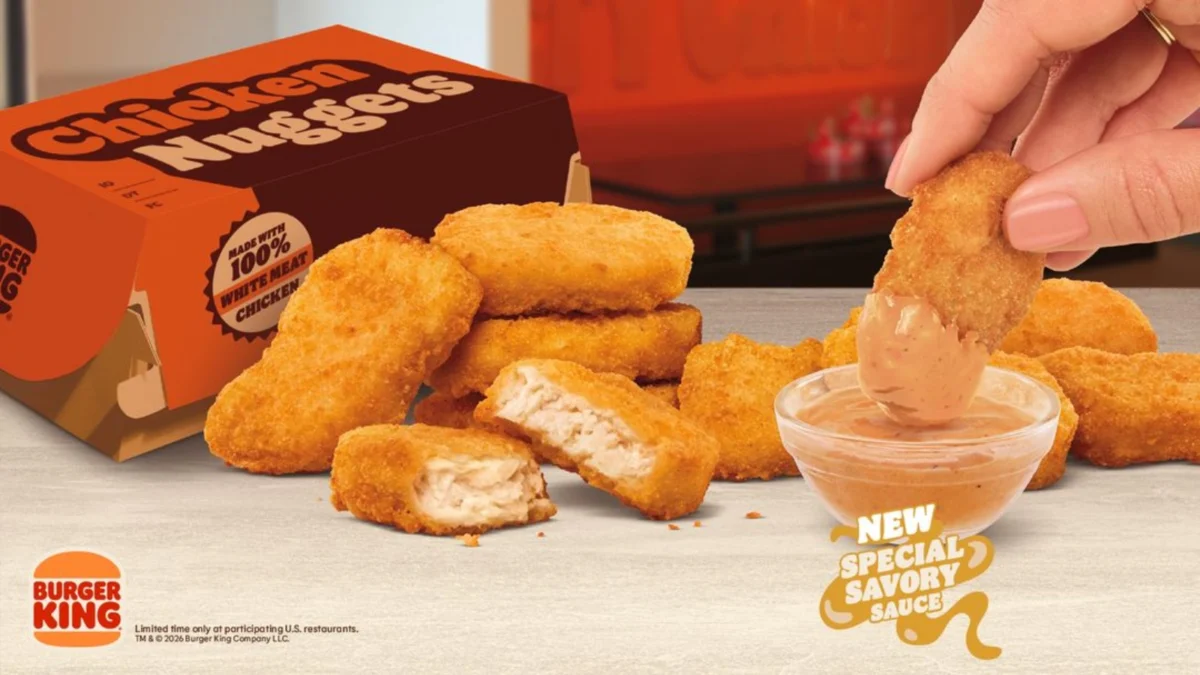
In a move that underscores the growing power of digital-age consumer feedback, Burger King has officially announced a top-to-bottom reimagining of its chicken nugget recipe. The decision follows a tidal wave of criticism from patrons who described the chain’s former offerings as "rubbery," "dry," and ultimately "disappointing." By pivoting its culinary strategy to align with the specific demands of its customer base, the fast-food giant is attempting to reclaim its status in the highly competitive poultry wars of the quick-service restaurant (QSR) industry.
The overhaul, which includes both the nuggets themselves and a complete restructuring of the dipping sauce portfolio, is scheduled for a nationwide rollout on September 1. This initiative is not an isolated experiment but a hallmark of a broader strategic shift within Burger King, which has increasingly leaned on direct customer input to dictate its menu innovation.
The Chronology of a Culinary Crisis
The journey toward this new recipe began earlier this year when Burger King launched an aggressive "listening initiative." The company established multiple channels—including texts, phone lines, and social media commentary—to solicit unvarnished opinions on its food quality and overall dining experience.
For many years, Burger King’s nuggets had occupied a functional, if uninspired, position on the menu. However, as competitors elevated their own chicken offerings—ranging from premium white-meat fillets to artisanal breading techniques—the disparity between market expectations and Burger King’s product became glaring. By mid-2024, the volume of negative feedback reached a tipping point. Customers were not just complaining about minor inconsistencies; they were labeling the texture as unpalatable.
Realizing that brand loyalty was at stake, the company’s culinary team, led by Amy Alarcon, Head Chef for Burger King US and Canada, began the process of "deconstructing" the nugget. Over several months, the team moved away from corporate-dictated R&D to a model of participatory development. They engaged focus groups that included the chain’s "toughest critics"—specifically children—to iterate on the chicken’s structural integrity and flavor profile.
The Anatomy of the Overhaul: What Changed?
While Burger King has remained tight-lipped regarding the proprietary details of its new processing techniques, the company confirmed that the overhaul touched every major component of the product.
The Chicken and Breading
The primary focus of the new recipe was to eliminate the "dry" texture that had become a persistent point of contention. Industry analysts speculate that this involved a change in the meat-to-binder ratio and a transition to higher-quality white-meat sourcing. The breading, which previously suffered from becoming soggy or excessively thick, has been reformulated to provide a consistent, golden crunch that holds its own against the juicy interior.
The Dipping Sauce Renaissance
Recognizing that a nugget is only as good as the sauce that accompanies it, Burger King has overhauled its entire condiment lineup to match the quality of the new protein. The centerpiece of this launch is a new, limited-time "Special Savory Sauce." This complex blend features a base of BBQ seasoning, ketchup, garlic, onion, and black pepper, rounded out with creamy and tangy notes that are intended to elevate the dining experience from mundane to culinary.
The standard sauce lineup has also received a significant upgrade:
- Honey Mustard: Reformulated to be noticeably richer and creamier with a more balanced acidity.
- Buffalo: Updated to feature a sharper profile, marrying the heat of cayenne pepper with the richness of butter and the aromatic depth of fresh garlic.
- Sweet & Sour: Revamped to include more pronounced pineapple notes, providing a bright, fruity acidity that finishes with a savory, lingering depth.
Official Responses and Culinary Philosophy
The strategy behind these changes represents a fundamental shift in how Burger King views its relationship with the consumer. Rather than viewing customer complaints as an annoyance to be managed, the executive team has rebranded them as an essential research and development asset.
"We take Guest feedback seriously, and when we received thousands of texts, calls, and comments telling us our nuggets needed a total overhaul, we listened," Amy Alarcon stated in an official company release. "Our culinary team evaluated every element of the experience, from the chicken and breading to the sauces that bring it all together. Throughout the process, we invited real Guests… to test and refine the recipe, helping us create a nugget we believe delivers the quality, taste, and experience that they have been asking for."
This "guest-centric" philosophy is the cornerstone of the company’s current management trajectory. Under the guidance of parent company Restaurant Brands International (RBI), Burger King has been systematically auditing its menu. The nugget overhaul follows similar adjustments made to the flagship Whopper sandwich, signaling that no legacy menu item is immune to the "listening initiative."
Market Implications and Competitive Landscape
The timing of this launch is significant, as the QSR market finds itself in the midst of a "Chicken War." The competition for the consumer’s poultry dollar has never been fiercer. While Burger King seeks to stabilize its position with a revamped core item, competitors are simultaneously diversifying their offerings to capture different market segments.
Notably, McDonald’s—the perennial giant in the nugget space—has recently confirmed the return of its "Spicy Chicken McNuggets." By reintroducing a product with a flavor profile that targets thrill-seekers, McDonald’s is doubling down on variety. This creates a fascinating divergence in strategy: Burger King is focusing on perfecting its "base" product to win back disgruntled loyalists, while McDonald’s is leveraging limited-time offers to drive urgency and excitement.
Industry experts suggest that Burger King’s move is a defensive necessity. In an era where food influencers on TikTok and Instagram can sway public perception of a brand overnight, a product that is consistently described as "rubbery" is a significant liability. By proactively admitting fault and soliciting feedback, Burger King is attempting to build "brand resilience"—the ability to recover from a negative reputation by demonstrating that they are an organization that listens.
The Road Ahead: Will It Be Enough?
The success of the new nuggets will ultimately be determined by the "second wave" of feedback. Burger King has already requested that customers continue to share their thoughts after the September 1 launch. This creates a continuous loop of accountability that the company must now maintain.
If the new recipe succeeds, it could serve as a blueprint for how large-scale fast-food chains handle product failures in the future. Rather than quietly changing a recipe and hoping no one notices, Burger King has turned the failure into a narrative of improvement and partnership with its customers.
However, the challenge remains: can a chain that built its reputation on the flame-grilled burger successfully compete in a chicken-dominated market? The answer lies not just in the taste of the new nuggets, but in the consistency of the execution across thousands of locations. Quality control will be the ultimate test. If the nuggets taste great at the headquarters test kitchen but fall short in a high-volume, late-night franchise environment, the "rubbery" reputation may be hard to shed.
Conclusion
The overhaul of Burger King’s chicken nuggets is a case study in modern corporate agility. By acknowledging the failures of its previous product and inviting the public into the development process, the company has managed to turn a PR vulnerability into a marketing campaign focused on quality and responsiveness.
As of September 1, the market will decide if the new recipe hits the mark. For Burger King, this is more than just a menu update—it is a test of whether a legacy brand can truly pivot in response to the voice of the customer. In a landscape where consumer preferences are fickle and competition is relentless, Burger King’s willingness to "start over" may be exactly the kind of innovation the brand needs to secure its future. Whether or not this new recipe becomes the "gold standard" remains to be seen, but the transparency of the effort suggests that the days of ignoring the customer are officially over for the Home of the Whopper.