

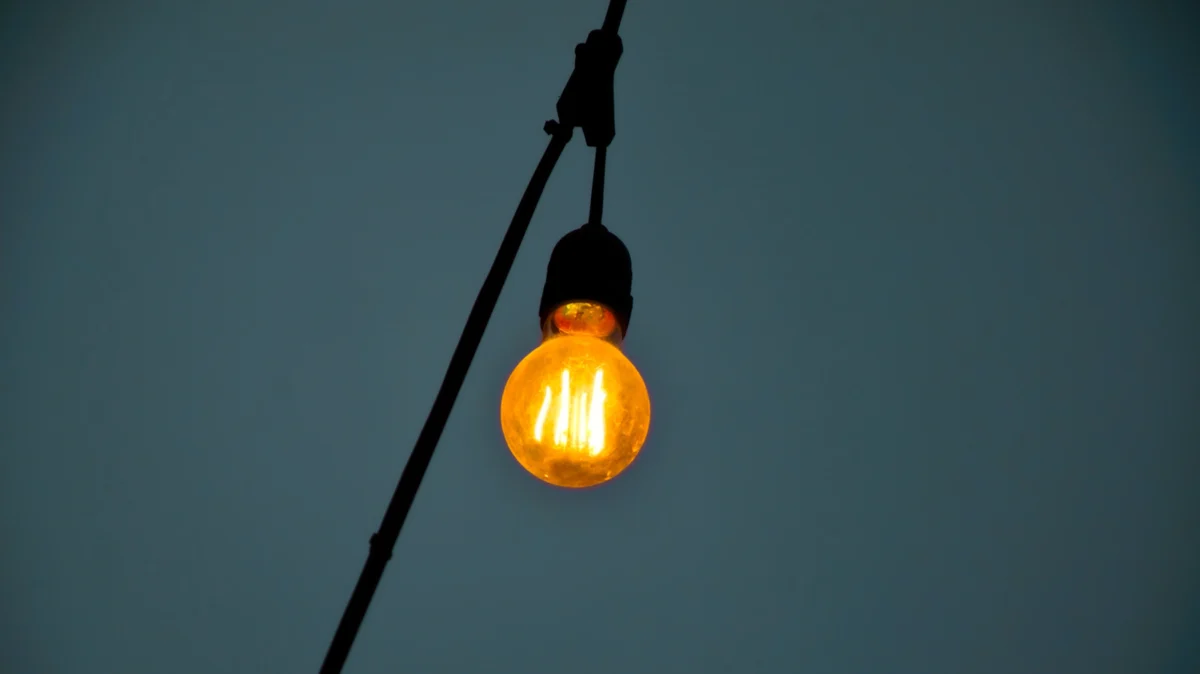
The modern home is increasingly becoming an ecosystem of connected intelligence. From smart thermostats that learn your temperature preferences to refrigerators that track your grocery inventory, automation has permeated every corner of our living spaces. Among these devices, the smart light bulb stands as the entry-level gateway to the "Internet of Things" (IoT). With a simple screw-in installation and a few taps on a smartphone, users can command their home lighting with the authority of a monarch, dimming rooms or scheduling "away modes" from thousands of miles away.
Yet, as the adoption of smart lighting surges, a lingering question remains: Does the convenience of always-on connectivity negate the inherent energy-saving benefits of LED technology? To understand whether these devices are truly green or merely energy-draining luxuries, we must dissect their electrical architecture, their standby power consumption, and the long-term economic trade-offs.
The Mechanics of Connectivity: Why Smart Bulbs Draw Power
At their core, smart bulbs are traditional LED bulbs augmented with a microchip, a wireless radio (typically Wi-Fi, Zigbee, or Bluetooth), and a power management system. While the light-emitting diode (LED) component is arguably the most efficient lighting technology available today, the added electronics transform the bulb from a passive component into an active, always-listening device.
The "Phantom Load" Phenomenon
Unlike a standard LED bulb—which functions as a simple circuit that is either open (off) or closed (on)—a smart bulb is never truly "off" in the traditional sense. When a user turns a smart bulb "off" via an app or voice command, the light-emitting portion of the device is cut off, but the communication module must remain powered. This allows the bulb to listen for the next "turn on" command.
This creates what engineers call a "phantom load" or "standby power consumption." While the energy required to maintain this connection is minute, it is constant. In an era where energy conservation is prioritized, this small, persistent draw has sparked significant debate among energy efficiency experts and environmental advocates.
Chronology of Smart Lighting Adoption
The evolution of smart lighting has moved rapidly over the past decade, shifting from a niche hobbyist interest to a mainstream consumer staple.
- 2012: The launch of the Philips Hue system introduced the concept of the connected bulb to a global audience, utilizing a bridge/hub architecture that relied on Zigbee protocols to minimize power draw.
- 2015–2017: The rise of voice assistants like Amazon Alexa and Google Assistant catalyzed the market. Bulbs began moving away from proprietary hubs toward direct Wi-Fi connectivity, simplifying setup but increasing the individual power requirements of each bulb.
- 2019: A seminal study published in ScienceDirect brought quantitative rigor to the conversation, confirming that the majority of smart bulbs on the market maintained a standby power draw below 0.5 watts, aligning with Energy Star guidelines.
- 2022–Present: The introduction of the "Matter" smart home standard has begun to unify communication protocols, potentially leading to more efficient power management in future-generation smart bulbs as manufacturers standardize low-energy connectivity.
Supporting Data: Quantifying the Energy Drain
To assess the environmental impact, one must look at the hard numbers. Research indicates that the average smart bulb consumes between 0.2 and 0.5 watts while in standby mode. While this figure seems negligible in isolation, it is the cumulative effect that warrants scrutiny.
The Math of Standby Power
If a smart bulb draws 0.5 watts of power 24 hours a day, it consumes roughly 4.38 kilowatt-hours (kWh) of electricity per year. Depending on your local utility rates, this equates to a cost of approximately $0.35 to $1.30 per bulb annually. In a home with 20 smart bulbs, this adds $7 to $26 to the annual electricity bill—a cost purely for the privilege of remote access.
However, context is vital. The U.S. Department of Energy (DOE) estimates that "standby power" accounts for 5% to 10% of a household’s total energy expenditure. Yet, smart bulbs are rarely the primary offenders. A modern home is littered with "vampire devices":
- Televisions and Streaming Boxes: Often draw 5–15 watts in standby.
- Microwaves: The clock and control panels are constant, low-level power drains.
- Gaming Consoles: Particularly when set to "instant-on" modes, these can consume significant wattage while idle.
- Routers and Modems: These are essential, non-negotiable drains that dwarf the power consumption of all the light bulbs in a house combined.
Official Responses and Standards
Regulatory bodies, most notably the Energy Star program under the U.S. Environmental Protection Agency, have recognized the unique profile of smart lighting. Their guidelines explicitly account for the standby power necessary for connectivity. By setting a ceiling of 0.5 watts for standby consumption, the program ensures that while smart bulbs do draw more power than "dumb" LEDs, they do not become inefficient "power hogs."
Manufacturers have largely aligned with these standards. Philips Hue, in their internal technical whitepapers, has emphasized that their modern lighting products are engineered to minimize this "always-on" footprint, often achieving standby levels well below the 0.5-watt threshold. This indicates that the industry is aware of the trade-off and is actively iterating to improve the efficiency of the underlying wireless radios.
The Economic and Practical Implications
Is the convenience worth the energy penalty? The answer depends on how the smart bulb is utilized.
The Efficiency Paradox
While smart bulbs consume more energy in standby, they offer features that can lead to massive energy savings in other areas. A smart bulb can be programmed to turn off automatically when a room is vacant, ensuring lights are never left on overnight. Furthermore, the ability to dim bulbs—which is often easier and more granular with smart systems—can reduce energy usage by 20% to 40% when the lights are actually in use.
If a user replaces a high-wattage incandescent bulb with a smart LED and uses that bulb’s scheduling features to ensure it is off for eight hours a day, the net energy savings from the lighting reduction far outweigh the cost of the standby power. The device essentially pays for its own "phantom" energy consumption through operational efficiency.
The Hidden Cost: Hardware Longevity
A significant, often overlooked, factor is the lifespan of the hardware. Traditional, "dumb" LED bulbs are renowned for their longevity, often lasting 20 to 40 years. Smart bulbs, however, are rated for 15 to 25 years. This is not because the LED diode itself fails, but because the complex circuit board inside the base is subject to heat and electronic degradation.
When you factor in the higher upfront cost of smart bulbs—ranging from $8 to $15 on average compared to $2 to $4 for traditional LEDs—the economic argument shifts from "saving energy" to "buying convenience." The smart bulb is a premium product, and the price paid is a combination of the hardware, the connectivity software, and the long-term energy cost of the standby mode.
Conclusion: A Balanced Perspective
The narrative that smart bulbs are "energy-wasting" gadgets is largely a myth born from a misunderstanding of how they function. While it is scientifically accurate to state that they consume more electricity than traditional bulbs, the magnitude of this difference is statistically minor compared to other household appliances.
If your primary goal is absolute energy minimization, traditional LED bulbs remain the superior choice. However, if your goal is a modern, automated home that reduces unnecessary lighting time through intelligent scheduling and automation, the smart bulb is a tool that, when used correctly, can contribute to a lower overall carbon footprint.
The "price" of connectivity is a modest, constant power draw, but the dividend is a level of control that allows for better management of your home’s total energy consumption. As technology progresses toward more efficient wireless protocols and higher-quality hardware, the gap between "smart" and "efficient" will likely narrow even further, making the smart home not just a convenience, but a sustainable standard for the future.











