In the high-stakes theater of the North American automotive market, the metrics of success are often as varied as the vehicles themselves. For decades, industry observers have measured greatness by sheer volume, a game dominated by the "Big Three" Japanese manufacturers: Toyota, Honda, and Nissan. However, a recent analysis of mid-2026 sales data reveals a staggering disparity that highlights two fundamentally different philosophies of business: the Honda approach of mass-market ubiquity and the Mazda strategy of curated, premium-leaning niche growth.
The headline figure is as simple as it is jarring: in the first six months of 2026, the Honda CR-V—a single nameplate—outperformed the entire North American sales volume of the Mazda brand. This revelation serves as a profound case study in how two Japanese titans have chosen to navigate an increasingly competitive and electrified global landscape.
Main Facts: The Numbers Behind the Narrative
The data for the first half of 2026 (January through June) provides a clear snapshot of this divergence. During this six-month window, Mazda reported a total of 201,834 vehicle sales across the North American market. While these figures represent a respectable footprint for a brand that prides itself on being an "enthusiast-centric" manufacturer, they pale in comparison to Honda’s heavy hitter.
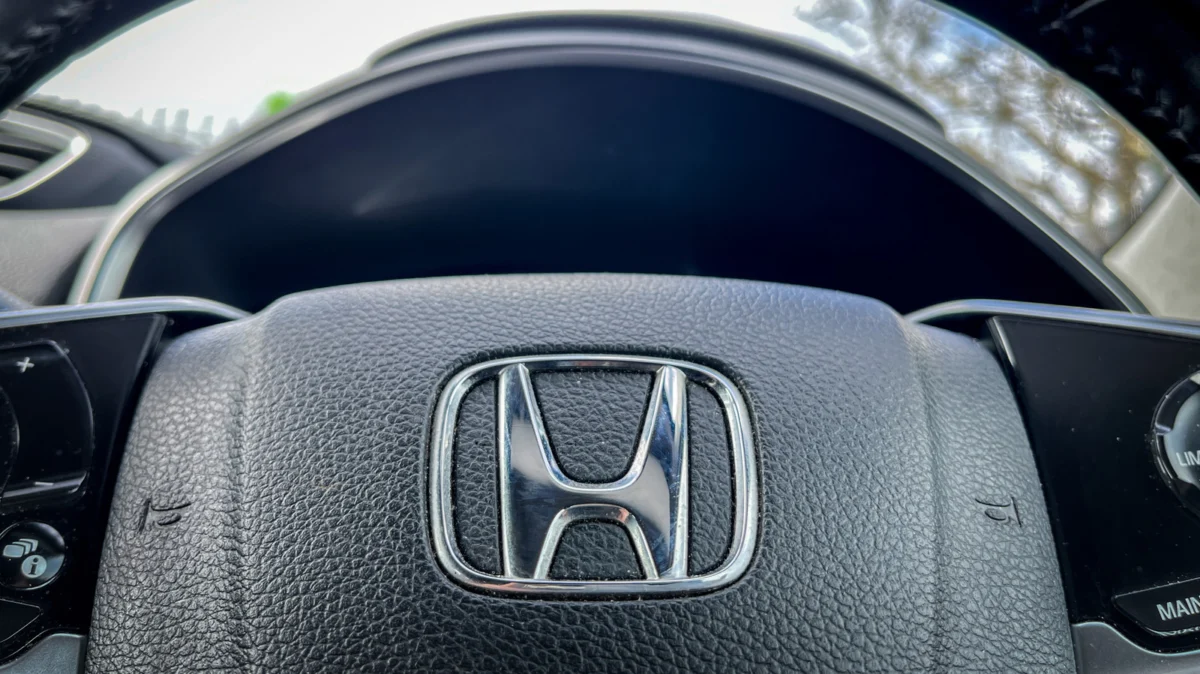
In that same timeframe, Honda sold more than 226,114 units of the CR-V alone. To put this into perspective, the CR-V’s volume represents a lead of more than 12% over Mazda’s entire diverse portfolio, which ranges from the compact Mazda3 sedan to the flagship CX-90 three-row SUV. Furthermore, Mazda’s total sales figure includes operations in Canada, providing the brand with a broader geographic reach than if it were relying solely on the U.S. market. Despite this, total sales for the Japanese manufacturer saw a 4% contraction compared to the same period in 2025.
A Chronological Perspective: Defining the Brand Identities
To understand this gap, one must look at the historical trajectory of both companies. Since entering the U.S. market in the 1970s, Mazda has occupied a unique space. Unlike its domestic rivals that chased the "appliance" segment—focusing on bulletproof reliability for the average commuter—Mazda leaned into its "Zoom-Zoom" identity. It targeted drivers who wanted a connection to the road, favoring chassis dynamics, premium interior materials, and evocative design over the lowest common denominator of mass-market appeal.
Honda, conversely, solidified its reputation as the standard-bearer for the suburban American family. Through the 1980s and 1990s, the Civic and the Accord became cultural staples. By the time the CR-V arrived in the mid-90s, Honda had already built a deep well of trust with consumers. While Mazda was busy engineering the MX-5 Miata to save the roadster from extinction, Honda was perfecting the art of the multi-purpose family vehicle.
Over the last 50 years, this division of labor has only deepened. Mazda has remained steadfast in its vision, prioritizing brand prestige and profitability per unit over outright volume. Honda has scaled its infrastructure to accommodate millions of units, becoming a juggernaut of manufacturing efficiency.
Supporting Data: The Composition of Mazda’s Lineup
Mazda’s current strategy involves an extensive, albeit specialized, lineup. In the U.S., the brand offers a dense array of options:
- The Mazda3: Available as both a sedan and a hatchback, catering to the compact segment.
- The MX-5 Miata: A halo sports car that keeps the brand’s performance pedigree alive.
- The Crossover Fleet: Comprised of the CX-30, CX-5, CX-50, CX-70, and the premium CX-90.
The sales breakdown for the first half of 2026 reveals where the volume is concentrated. The CX-50 has emerged as the brand’s most popular model, with 64,819 units shipped. Close behind is the evergreen CX-5, which moved 62,692 units. The remainder of the portfolio shows more modest figures: the CX-30 (21,616 units), the flagship CX-90 (21,271 units), and the Mazda3 (20,452 units).
While these numbers represent a decline in total volume, Mazda executives point to qualitative successes. The company recorded its best-ever June in terms of total sales, and the newer mild-hybrid variants—the CX-90 and CX-70—have seen record-breaking momentum for the summer month. Additionally, the brand’s certified pre-owned program reached its second-highest sales month in history, suggesting that while new car volume has dipped, the residual value and desirability of the brand remain high.
Official Responses and Strategic Outlook
Mazda leadership has rarely expressed a desire to compete directly with Honda or Toyota in terms of raw volume. In various investor communications, Mazda has emphasized its "Premium" transition. By moving away from the "discount" image that plagued many smaller automakers in the early 2000s, Mazda is attempting to position itself as a "near-luxury" alternative to the likes of Acura or Lexus, but at a more accessible price point.
The 4% sales dip is viewed by analysts not necessarily as a failure, but as a byproduct of this transition. As the brand leans into higher-margin models like the CX-90 and the electrification of its lineup, the volume game becomes secondary to the profitability game. "We are not chasing the fleet sales or the low-margin segments that inflate volume," a source close to the company’s operations suggested. "We are looking for the customer who values the driving experience and the interior craftsmanship, which allows for a different kind of financial sustainability."
The Implications: What This Means for the Consumer
The disparity between the Honda CR-V’s dominance and Mazda’s boutique strategy has several implications for the automotive market at large.
1. The Death of the "One Size Fits All" Market
The fact that one model can outsell an entire brand proves that the U.S. market is bifurcating. There is a massive, insatiable appetite for the "Goldilocks" vehicle—the CR-V—that provides enough space, efficiency, and reliability for the average household. Conversely, there is a dedicated, albeit smaller, segment of buyers who are increasingly bored by the homogeneity of mass-market crossovers. These are the buyers keeping Mazda afloat.
2. The Profitability vs. Volume Debate
Honda’s scale allows it to absorb the R&D costs of new technology more easily across millions of units. Mazda, with a much smaller footprint, must be surgical with its investments. This is why we see Mazda partnering with other manufacturers or focusing on hybrid technology rather than going "all-in" on expensive, pure-electric platforms as quickly as some of its competitors.
3. Future Market Volatility
The 4% decline in Mazda’s sales highlights the risks of a niche strategy. When interest rates fluctuate or the economy tightens, the "enthusiast" buyer is often more sensitive than the "necessity" buyer. A family needs a CR-V to get to work and school; a driver wants a Mazda CX-50 for the weekend. During economic headwinds, wants are the first to be deferred.
Conclusion
The story of the Honda CR-V outselling the entire Mazda brand is not a tale of Mazda’s failure, but a reflection of the brand’s deliberate choice to exist on the periphery of the mass market. While Honda continues to refine the blueprint of the modern, reliable, high-volume automobile, Mazda is playing a different game—one focused on brand equity, design language, and the emotional resonance of the vehicle.
For the average consumer, this landscape offers a healthy choice: the security of the herd with a Honda, or the individualistic, premium-leaning experience offered by Mazda. As we look toward the remainder of 2026 and into 2027, the real test will be whether Mazda’s strategy of "premium-niche" growth can withstand the pressures of a cooling market, or if the siren song of mass-market volume will eventually force a change in the company’s long-standing philosophy. For now, the CR-V remains the king of the road by count, but Mazda remains the champion of the driver’s soul.