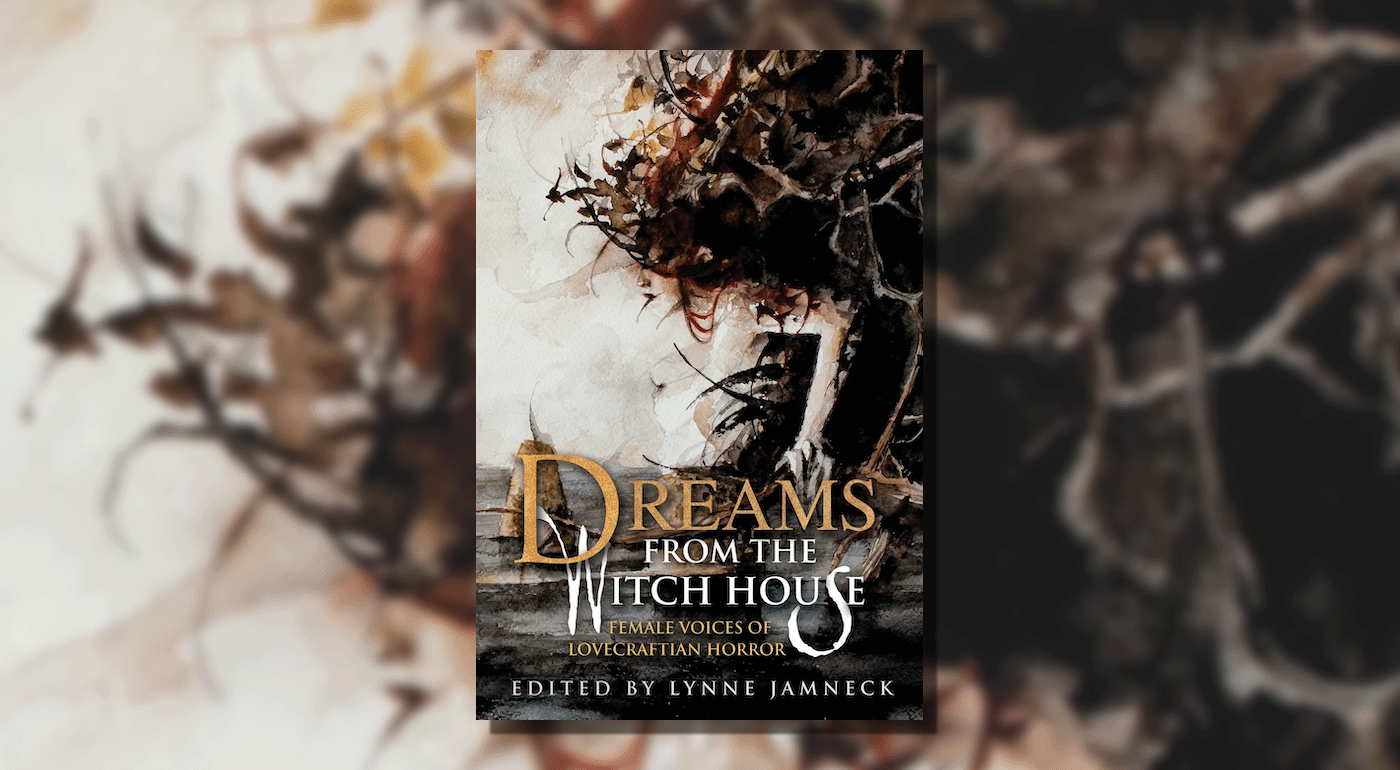
The intersection of biography, literary myth-making, and the subconscious remains one of the most fertile grounds for modern weird fiction. In her 2015 short story "The Child and the Night Gaunts," published in Lynne Jamneck’s acclaimed anthology Dreams From the Witch House, author Marly Youmans does more than merely pay homage to H.P. Lovecraft. She conducts a deep-tissue examination of the psychological machinery that birthed one of the 20th century’s most enduring literary legacies. By blurring the lines between the historical Howard Phillips Lovecraft and the archetypal "dreamer," Youmans constructs a narrative that is both a haunting exploration of generational trauma and a brilliant meta-commentary on the nature of the creative process.
The Chronology of a Shadow-Haunted Childhood
To understand the weight of Youmans’ narrative, one must first map the timeline of the "Night Gaunts" as they manifested in the real life of H.P. Lovecraft. The creatures—described by the author in his letters as "lean, faceless, rubbery, winged things"—first began to plague the young Lovecraft at the age of three or four.
These were not merely garden-variety childhood nightmares; they were, by Lovecraft’s own admission, paralyzing, systematic, and formative. They persisted until his late childhood, around age nine, serving as the primary architects of his later "cosmic horror" aesthetic. Youmans’ story adopts this chronology, weaving it into a six-part structure that follows the "Child" through various stages of development:
- The Gold Boat: An introduction to the child’s immersion in the "sea of dream," where he is a vessel piloted by faceless entities, sinking toward a final abyss.
- The Black Seed: The internal corruption of the dreamer, where nightmares take physical root in the arteries and veins, manifesting as a permanent state of psychic siege.
- The Astronomer: A biographical nod to the child’s early obsession with the stars, facilitated by real-world figures like Brown University’s Winslow Upton, here transformed into a tragic encounter with the "truth" behind the veil.
- The Curse: A fictionalized genealogy involving an ancestor, "Theobald Lovecraft," who supposedly consorted with the Gaunts, grounding the protagonist’s terror in the weight of inherited guilt.
- The Terror by Night: A depiction of the Night Gaunts not as mere monsters, but as a perverted monarchy, ruling over a void where souls are replaced by fragments of the abyss.
- The Final Acceptance: The maturation of the dreamer, who realizes that his only path to power is to document the horror, transforming the "parasomniac" room of his mind into a workshop of artistic creation.
Supporting Data: The Intersection of Myth and Biography
Youmans’ narrative is underpinned by a meticulous layer of "weirdbuilding." The story draws heavily from Lovecraft’s Selected Letters and his semi-autobiographical accounts of his upbringing in Providence, Rhode Island.
Central to the story’s impact is the concept of "Theobald Lovecraft." While no such individual exists in the HPL family tree, the name functions as a brilliant literary device. Lovecraft himself occasionally signed letters as "Grandpa Theobald" or used the pseudonym "Lewis Theobald, Jr." By elevating this internal joke to the status of an ancestral curse, Youmans suggests that Lovecraft’s horror was not just external, but deeply self-inflicted—a "miscegenation" of the imagination that he felt compelled to nurture.
Furthermore, the story’s mention of the "parasomniac room" serves as a clinical anchor for the supernatural. Parasomnias—sleep disorders ranging from night terrors to sleep paralysis—are the biological reality behind the "clutch of the Night Gaunts." By grounding the story in the physiological experience of a child who feels a heavy weight on his chest, Youmans bridges the gap between the psychiatric reality of Lovecraft’s youth and the mythic, bat-winged monsters of his fiction.
Perspectives and Literary Commentary
The critical reception of "The Child and the Night Gaunts" has been defined by its status as a "nested" tale. Ruthanna Emrys, a notable voice in the Reactor column, draws a compelling comparison between Youmans’ story and the Thousand and One Nights, noting that the story exists entirely within the dream-space. While other works, such as the film Howard Lovecraft and the Frozen Kingdom, opt for an adventurous, "brave child" narrative, Youmans retains the crushing anxiety of the original biography.
"It’s about a kid frightened of what happened to his father, putting fantastical shapes to the invisible and inexplicable," Emrys notes. This distinguishes the story from pastiches that merely pile on the tentacles; Youmans understands that the true horror is the realization that the "Night Gaunts" are not going away, but are instead becoming part of the dreamer’s anatomy.
Anne M. Pillsworth, another prominent voice in the Reading the Weird series, emphasizes the "poetic precision" of the imagery. She highlights how Lovecraft’s own description of the Gaunts in his Fungi from Yuggoth sonnets—specifically the use of the word "titillating"—points to the ambiguous, almost intimate nature of the terror. Youmans captures this perfectly in the final scene, where the monsters begin to develop faces. This is a profound shift: the moment the unknown becomes known, the fear is transformed into a "lucid control," marking the birth of the adult writer who can finally stare back at his demons.
Implications: The Legacy of the Dreamer
The ultimate implication of Youmans’ work is that Lovecraft’s "madness" was the fuel for his genius. By portraying the Night Gaunts as entities that sweat tears when the child imagines horrors worse than their own, Youmans asserts that the artist holds dominion over their own nightmare landscape.
This interpretation suggests a "taming" of the cosmic horror tradition. The Night Gaunts, once the symbols of a helpless child’s victimization, become the tools of the writer’s trade. The story argues that the "curse" of the Lovecraftian imagination is not a malady to be cured, but a vocation to be fulfilled.
In the broader context of the "weird fiction" genre, "The Child and the Night Gaunts" stands as a significant contribution to the study of the "Lovecraftian" as a psychological category. It reframes the author’s biography not as a tragedy of mental health, but as a lifelong process of transmuting personal trauma into universal dread.
For readers and scholars alike, the story remains a vital touchstone. It reminds us that we are all, in a sense, children in the dark, clutching our foolscap notebooks and trying to describe the things that loom over our beds. As Youmans suggests, if we look closely enough, if we are brave enough to document the terror with enough precision, we may eventually force the faceless monsters to look back at us—and in that gaze, find the seeds of our own creation.
"The Child and the Night Gaunts" remains a essential read for those interested in the recursive nature of storytelling. It is a work that validates the idea that we do not simply read Lovecraft; we inhabit the same "parasomniac" spaces he once did, forever haunted by the flapping of membranous wings in the North wind’s swell.