For many, the title The Cat Returns might evoke the rhythmic, haunting melody of the American campfire staple "The Cat Came Back"—a song famously marked by its various versions, ranging from the quaintly "sweet" to the bleakly apocalyptic. However, those expecting a Ghibli-fied musical adaptation of a folk song are in for a whimsical surprise.
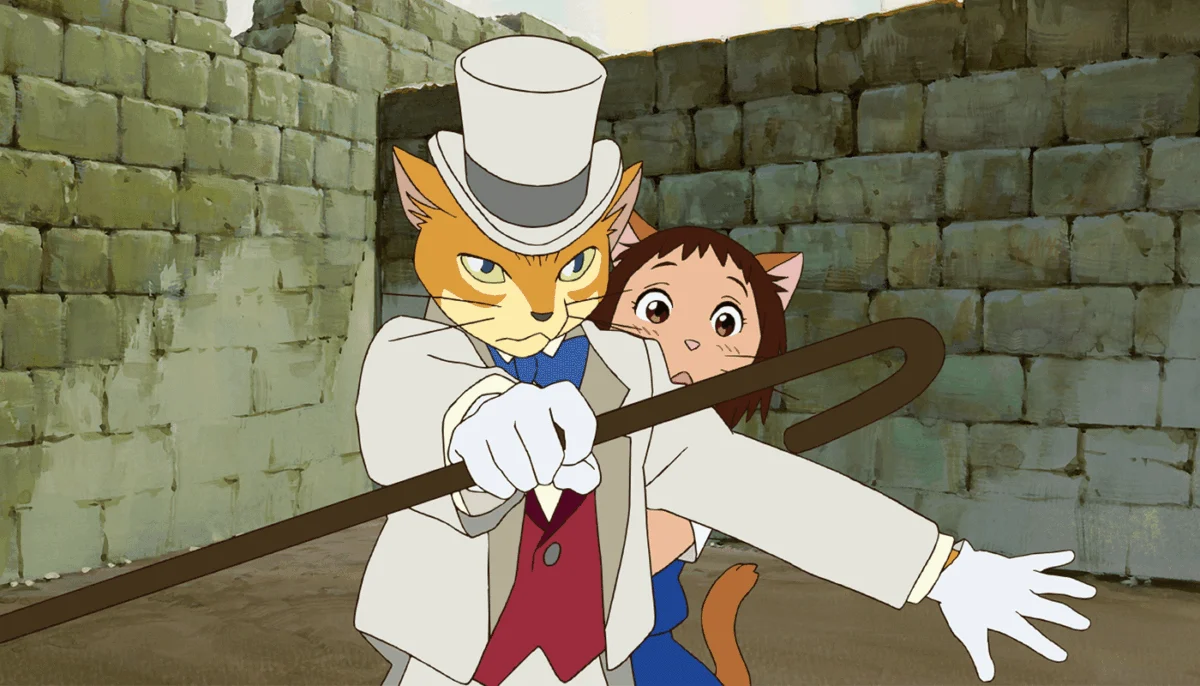
The Cat Returns is not a folk revival; it is a meticulously crafted expansion of the Studio Ghibli cinematic universe. Specifically, it functions as a narrative spinoff of the 1995 masterpiece Whisper of the Heart. In the original film, the Baron—an elegant, anthropomorphic feline figurine—was the product of the protagonist Shizuku’s creative mind as she navigated the pressures of adolescence and her own budding literary career. Years later, that figment of imagination stepped off the page and into his own feature-length adventure, proving that in the world of Ghibli, even a child’s daydream can possess a soul of its own.
Main Facts: A Narrative of Identity and Agency
At its core, The Cat Returns is a coming-of-age fantasy that examines the intersection of reality and the subconscious. The story centers on Haru, an ordinary, somewhat lackluster high school student who feels perpetually invisible. Her life changes irrevocably after she performs a singular, impulsive act of heroism: rescuing a cat from the path of an oncoming truck using a lacrosse stick.
The cat, as it turns out, is no ordinary stray. He is Prince Lune of the Kingdom of the Cats. Haru’s act of kindness triggers a chain reaction of supernatural gratitude, culminating in her unwanted abduction into the Cat Kingdom. Here, the film shifts from a domestic drama into a high-stakes fantasy. Haru is offered a life of luxury and a marriage proposal to the prince—proposals she never solicited. With the help of the Baron and a boisterous, rotund feline named Muta, Haru must navigate the treacherous politics of the Cat Kingdom to reclaim her humanity before she is permanently transformed into a cat.
Chronology: From Classroom Daydreams to the Cat Bureau
The lineage of The Cat Returns is as important as its plot. The film’s evolution follows a distinct timeline that reflects the studio’s commitment to internal consistency:
- 1995: The release of Whisper of the Heart, where the Baron appears as a static, porcelain figurine created by Shizuku.
- 2002: The release of The Cat Returns, directed by Hiroyuki Morita, which takes the Baron from the world of the "creator" into his own reality.
- The Narrative Bridge: The film establishes the "Cat Bureau," a sanctuary for creations that have been given a soul through the power of human affection and artistic intent.
- The Climax: Haru’s race against time to escape the Kingdom of the Cats before the final transition of dawn, a classic trope reinterpreted through the lens of Ghibli’s trademark emotional resonance.
Supporting Data: Character Dynamics and Thematic Depth
The film’s depth is derived from its cast of archetypes, each representing a facet of Haru’s internal struggle.
The Baron and Muta: A Study in Contrasts
The Baron serves as the film’s moral and strategic anchor. He is a work of art brought to life, embodying dignity, Victorian-esque etiquette, and a profound sense of duty. In contrast, Muta is the "chonky" white cat who serves as a catalyst for action. While the Baron represents the ideal self—composed and wise—Muta represents the raw, unvarnished truth of the physical world. Their partnership is essential, as the Baron’s intellectual solutions are often insufficient without Muta’s brute, intuitive force.
The Cat King: The Antagonist of Good Intentions
Perhaps the most complex character in the film is the King of the Cats. He is not a traditional villain driven by malice, but rather by an overwhelming, entitled sense of altruism. He believes he is showering Haru with the "best" gifts—mice, catnip, and marriage—because, in his worldview, these are the ultimate rewards. His failure to listen to Haru reflects a systemic lack of empathy, a critique of figures who believe they know what is best for others without ever asking for their consent.
The World-Building of Pocket Universes
The film introduces a unique mechanic regarding the intersection of worlds. Cats can traverse the barrier between our reality and the Kingdom of the Cats freely, but their form changes based on their environment. In our world, they are quadrupeds; in the Kingdom, they walk upright and converse. This transition serves as a visual metaphor for how different environments force individuals to adopt different personas to survive.
Official Responses: A Legacy of Voice Talent
The English-language localization of The Cat Returns stands as a hallmark of early 2000s animation dubbing. The production team secured a cast that brought both star power and profound emotional intelligence to their roles:
- Anne Hathaway (Haru): Captured the essence of the reluctant protagonist, reminiscent of her breakout role in The Princess Diaries.
- Cary Elwes (The Baron): Brought the required gravitas and charm to the character, grounding the fantastical elements in a sense of courtly nobility.
- Tim Curry (The Cat King): Delivered a performance that managed to be both imposing and absurd, perfectly capturing the King’s "mob boss" temperament with a final, iconic "Ciao, babe."
- Kristine Sutherland and Kristen Bell: Provided the vital emotional support, grounding Haru’s journey in the relatable stakes of friendship and maternal care.
Implications: The Search for Self
The central thesis of The Cat Returns is the importance of "being yourself." While the King of the Cats is constantly trying to mold Haru into a feline princess, the Baron serves as the facilitator who allows Haru to rediscover her own agency.
The "Creation" Philosophy
The film posits a fascinating philosophical stance: "Whenever someone creates something with all their heart, that creation is given a soul." This is the justification for the Baron’s existence, and it mirrors the studio’s own dedication to the craft of animation. By turning a secondary character from Whisper of the Heart into the lead of The Cat Returns, Ghibli was essentially proving its own point: the characters they create with heart and precision take on lives of their own, independent of the original narrative.
Intersecting Realities
The film implies that the "magical" world is not a distant realm, but a layer of existence just beneath the surface of the mundane. The fact that street cats in our world react with terror when the Cat Kingdom’s procession arrives suggests that the barrier is thin and that animals possess a primal awareness of the supernatural that humans typically lack. Haru’s realization—that she had, as a child, claimed she could talk to cats—suggests that she wasn’t hallucinating; she was simply tapping into a truth that the adult world had conditioned her to ignore.
Conclusion: A Bittersweet Departure
As the film concludes, there is an inherent bittersweetness. The transition from childhood (the world of daydreams and talking cats) to adulthood is marked by the closing of portals. Haru must leave the Baron and the Bureau behind, but she emerges as a more confident, self-actualized young woman.
The Baron’s parting words resonate as a mantra for the audience: "If you find yourself troubled by something mysterious or a problem that’s hard to solve, there’s a place you can go where you always find help. You just need to look for it."
Ultimately, The Cat Returns is not merely a film about cats or magic; it is a film about the necessity of imagination. It encourages the viewer to find their own "Cat Bureau"—a place of refuge and clarity—within the chaos of their own lives. Whether through art, reflection, or the simple act of bravery, the film reminds us that the ability to change our destiny is a power we possess, provided we are willing to step through the portal and face the consequences of our own choices. Through the combined efforts of director Hiroyuki Morita and the legendary Ghibli animation team, The Cat Returns remains a quintessential exploration of the boundary between the stories we tell and the people we become.