


For the better part of two decades, the American mobile landscape has been dominated by a "Big Three" hegemony: AT&T, T-Mobile, and Verizon. These carriers have successfully conditioned consumers to accept monthly bills ranging from $70 to over $100 per line, often justified by the promise of "unlimited" data, bundled streaming services, and the siren song of a "free" smartphone. However, a growing segment of the population is waking up to a different reality: lower cost does not equate to lower quality.
As the cost of living continues to climb, savvy consumers are increasingly turning to Mobile Virtual Network Operators (MVNOs). By stripping away the bloat of physical retail footprints, complex device financing, and unnecessary media bundles, these lean providers offer the same robust network infrastructure at a fraction of the price.
Understanding the MVNO Mechanism: Infrastructure vs. Service
To understand why MVNOs can offer service for $15 to $30 a month while major carriers charge triple that, one must first understand the distinction between a Mobile Network Operator (MNO) and a Virtual operator.
MNOs are the custodians of the physical layer. They own the spectrum licenses, the thousands of miles of fiber-optic backhaul, and the cell towers that blanket the nation. Maintaining this infrastructure requires billions of dollars in capital expenditure, which the MNOs recoup through premium pricing models.

MVNOs, conversely, operate on a "wholesale" model. They negotiate bulk access to these established networks. When you sign up for a service like Mint Mobile, you aren’t connecting to a "Mint" tower; you are connecting to T-Mobile’s infrastructure. The MVNO acts as a service layer—handling customer billing, support, and plan customization—while the MNO handles the actual transmission of data.
The Trade-offs of the Virtual Model
The efficiency of the MVNO model comes with a few caveats. In times of extreme network congestion—such as at a packed stadium or during a major public event—the MNO typically prioritizes their direct customers. If you are on an MVNO, you might experience a marginal decrease in data speeds compared to a customer on a premium "unlimited" plan with the host carrier. However, for the average user, this performance gap is virtually imperceptible in daily life.
A Chronology of the Mobile Shift
The rise of the MVNO is not an overnight phenomenon, but rather a slow-moving revolution that has been catalyzed by three specific developments in the telecommunications industry:
- 2010–2015: The Emergence of the "Value" Brand. Early MVNOs were often viewed as low-quality alternatives for those with poor credit or extreme budgetary constraints. Companies like Cricket and MetroPCS (before they were acquired by AT&T and T-Mobile, respectively) began to bridge the gap between "budget" and "functional."
- 2015–2019: The Google Fi Experiment. When Google entered the space with Project Fi (now Google Fi Wireless), it legitimized the concept of a "lean" carrier for the tech-savvy consumer. It introduced transparent pricing, international roaming, and a focus on flexible data usage.
- 2020–Present: The Post-Pandemic Correction. As inflation eroded disposable income, consumers began auditing their monthly expenses. The maturation of eSIM technology—which allows users to switch carriers in minutes without visiting a store—has removed the final barrier to entry for millions of subscribers.
Supporting Data: The Economics of Switching
The financial case for switching is stark. According to industry data, the average American household spends over $1,200 annually on mobile phone service. By transitioning to a mid-tier MVNO plan, a single user can often reduce their annual expenditure to under $300.

The "Free Phone" Trap
A significant portion of the "Big Three" revenue comes from device financing. Carriers often lure customers with "free" phones, provided they sign up for an expensive 36-month contract. If a customer wishes to leave the carrier, they are liable for the remaining balance of the device.
In contrast, the MVNO model encourages users to purchase unlocked phones directly from manufacturers like Apple, Google, or Samsung. While this requires a higher upfront cost, it grants the consumer total freedom. Without a tethered device, the user is free to switch carriers whenever a better deal emerges, creating a more competitive and fluid market.
Strategic Options: Evaluating the Landscape
The MVNO market has matured into a diverse ecosystem, catering to different consumer needs.
Mint Mobile: The Subscription Approach
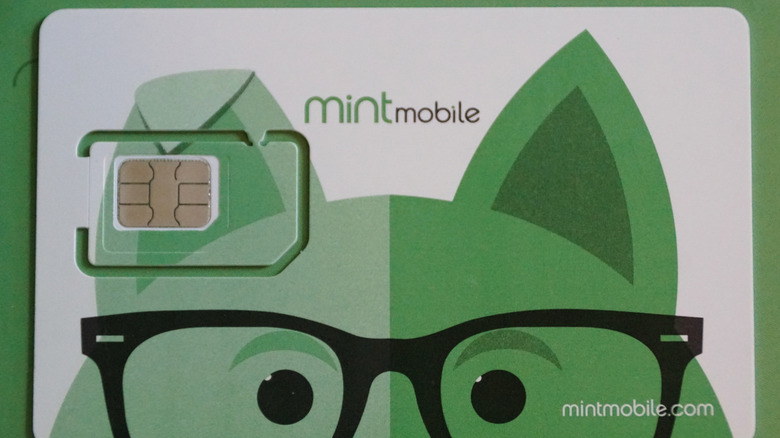
Owned by T-Mobile, Mint Mobile leverages a bulk-purchasing strategy. By incentivizing customers to pay for three, six, or 12 months of service upfront, they pass the savings directly to the user. Their pricing structure remains one of the most aggressive in the industry, starting as low as $15/month.
Visible: The Verizon-Backed Powerhouse
Visible offers a unique proposition: it is owned by Verizon and operates exclusively on their network. By removing the brick-and-mortar storefronts entirely, they provide unlimited data plans that include hotspot access for a flat monthly rate, with all taxes and fees included.
US Mobile: The Universal Option
US Mobile stands out for its flexibility. They offer plans that operate on all three major carrier networks, allowing the user to select the network that provides the best coverage in their specific geographic area. This level of customization is ideal for families with varying data needs.
Google Fi Wireless: The Global Traveler
For those who cross borders frequently, Google Fi remains the gold standard. While more expensive than a basic MVNO, it includes international data roaming as a native feature, eliminating the need for exorbitant "day passes" or local SIM cards when traveling abroad.
Implications for the Future of Connectivity
The shift toward MVNOs signals a broader change in consumer behavior: the rejection of "bundled" value in favor of modular service. As the telecommunications industry continues to evolve, the following implications are becoming clear:

- The Death of the Contract: The era of the multi-year service contract is effectively over. Consumers are increasingly valuing portability and the ability to vote with their wallets.
- Infrastructure Decoupling: We are seeing a move toward a model where the network (the pipe) is separated from the service (the experience). This forces MNOs to compete not just on coverage, but on the quality of their wholesale partnerships.
- Increased Transparency: Because MVNOs rely on digital-first customer experiences, they are forced to be more transparent about pricing, data caps, and coverage limitations. The "hidden fees" that often plague traditional carrier bills are largely absent in the MVNO space.
Conclusion: Is it Time to Cut the Cord?
For the vast majority of consumers, the high-priced plans offered by major carriers are a relic of a bygone era. Unless you require specialized enterprise features, multiple device financing, or a very specific bundle of third-party streaming subscriptions, the math simply does not support staying on a premium postpaid plan.
The process of switching has never been easier. With the ubiquity of eSIMs, checking coverage maps, porting your existing number, and activating a new service can be accomplished during a lunch break. By performing an audit of your actual monthly data usage and moving to an MVNO that aligns with those needs, you are not just saving money—you are reclaiming your agency in a market that has long counted on your complacency.
The Big Three carriers will always have their place, particularly for heavy-duty enterprise users and those who value the convenience of a physical retail store. However, for the average modern consumer, the "virtual" path is, ironically, the most grounded and sensible choice for the future.











