

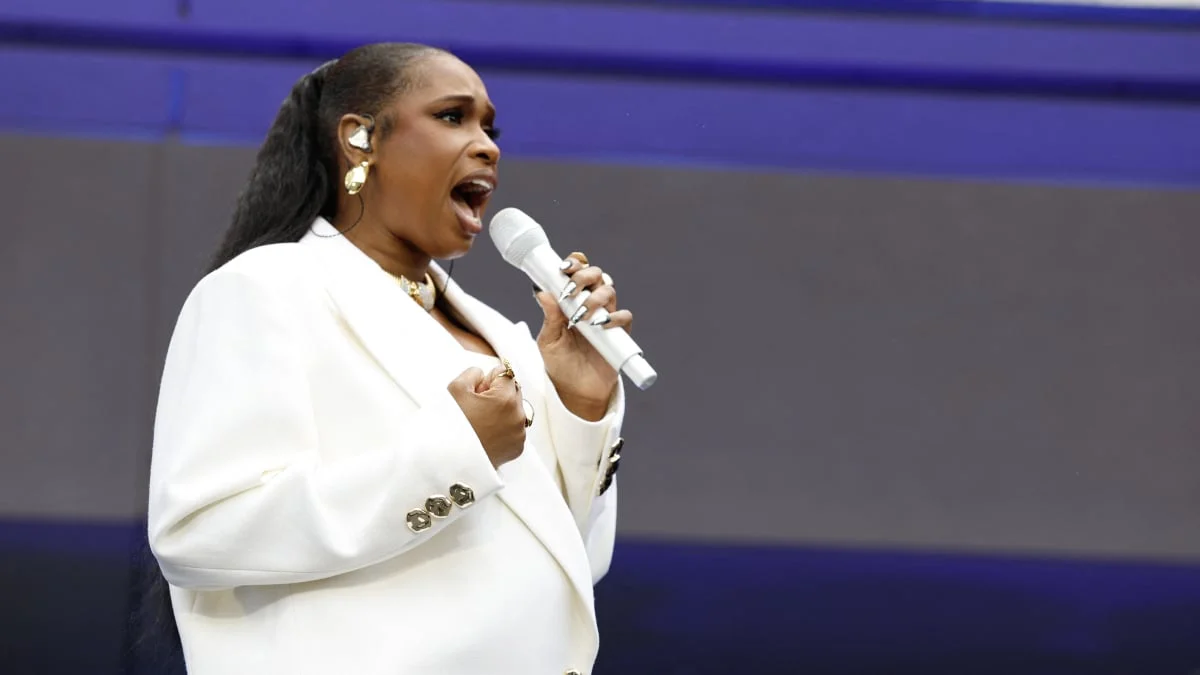
The U.S. Men’s National Team may have been eliminated from the 2026 FIFA World Cup, but the "Star-Spangled Banner" is set to take center stage at the tournament’s grand finale. On July 14, FIFA officially announced that Grammy and Academy Award-winning powerhouse Jennifer Hudson will perform a "special rendition" of the American national anthem prior to the World Cup final on Sunday, July 19. The stage for this performance is the New York New Jersey Stadium (MetLife Stadium) in East Rutherford, New Jersey.
While the selection of a high-profile artist for a global sporting event is standard, the inclusion of the host nation’s anthem at a match featuring two foreign teams—Spain and Argentina—has ignited a firestorm of debate among the global soccer faithful. As the tournament reaches its zenith, the decision highlights a growing friction between traditional international football culture and the increasingly "Americanized" commercial strategy adopted by FIFA for the 2026 cycle.
Chronology: A Tournament of Spectacle
The road to the 2026 final has been marked by a departure from the minimalist traditions of the past. FIFA’s announcement of the pre-game ceremony, scheduled for 1:30 p.m. ET—exactly 90 minutes before the scheduled 3:00 p.m. kickoff—is designed to be a grand celebration of the host nations: Canada, Mexico, and the United States.
The timeline for the day is meticulously packed. The festivities will begin with a pre-game show headlined by Post Malone, featuring appearances by Robbie Williams, Nicole Scherzinger, Laura Pausini, and streamer IShowSpeed. Tom Cruise is also slated to make an unannounced special appearance. Following these performances, the atmosphere will transition to the formal ceremony, where Hudson will deliver the anthem.
This is not the first time such an occurrence has happened on U.S. soil. During the 1994 World Cup, the legendary saxophonist Kenny G performed the U.S. anthem during the closing ceremony. However, in an era of hyper-connected social media, the 2026 decision has faced immediate pushback. Critics argue that since the U.S. is one of three host nations, the absence of the Canadian and Mexican anthems creates an exclusionary narrative that privileges the American market over the tournament’s collective host status.
The Infrastructure of Entertainment
The controversy surrounding the pre-game anthem is merely the tip of the iceberg in what many fans describe as the "Super Bowl-ification" of the World Cup. For the first time in the tournament’s storied history, the final will feature an 11-minute halftime show, curated by Coldplay frontman Chris Martin. The lineup is unprecedented in its scale, featuring performances by Madonna, Shakira, BTS, and Justin Bieber.
The show is not purely for entertainment; it is tied to the FIFA Global Citizen Education Fund, a charitable initiative aimed at expanding educational and athletic opportunities for children globally. Supporting acts include Burna Boy, conductor Gustavo Dudamel, the PS22 Chorus, and iconic figures from Sesame Street and The Muppets.
Despite the charitable intentions, the reaction has been lukewarm among traditionalists. Soccer, a sport defined by its continuous 45-minute halves, is being interrupted by an American-style halftime extravaganza. This follows a series of frustrations expressed throughout the tournament regarding "hydration breaks" and extended stoppage times, which many viewers have labeled as thinly veiled attempts to create additional windows for commercial advertisements.
Supporting Data: The Economics of the American Market
Why would FIFA risk the ire of its core global fanbase? The answer lies in the ledger. FIFA projects that the 2026 tournament cycle will generate a record-shattering $13 billion in revenue. The United States represents the most lucrative sports media market in the world, and FIFA is clearly prioritizing the expansion of soccer’s footprint within that demographic.
The data suggests the strategy is working. Fox Sports reported that group-stage broadcasts averaged over 5 million viewers—nearly double the audience for the same stage in the 2022 Qatar tournament. Spanish-language broadcasts on Telemundo and Peacock have similarly smashed records, indicating that the tournament is successfully engaging both the traditional soccer-loving Hispanic population in the U.S. and the broader, casual American sports audience.
By leaning into the "American spectacle" format, FIFA is effectively converting casual viewers who are accustomed to the production value of the NFL or the NBA into regular consumers of international football. The anthem performance, while seemingly an anomaly, serves as a symbolic anchor for this new, massive audience.
Official Responses and FIFA’s Rationale
FIFA has defended the inclusion of the anthem as a gesture of hospitality and respect for the host nation. In their official communication, the organization emphasized that the pre-game ceremony is a "separate event" from the match itself. Once the ceremony concludes, the tournament reverts to standard international protocol: both the Spanish and Argentinian national anthems will be performed according to tradition, ensuring the integrity of the match itself is preserved.
However, the lack of a formal statement addressing the exclusion of Canadian and Mexican anthems has left a void in the narrative, allowing criticism to flourish online. FIFA’s silence on this point suggests that the organization is more concerned with capturing the massive U.S. domestic television market than with balancing the diplomatic sensitivities between the three host countries.
Implications: A New Era for Global Football?
The implications of this shift are profound. If the 2026 final serves as a success, it will likely set the blueprint for future FIFA events. We are witnessing a fundamental shift in how the World Cup is packaged. It is no longer just a soccer tournament; it is a global entertainment product that prioritizes high-octane, celebrity-filled, and ad-friendly television slots.
For the purists, this is a betrayal of the "Beautiful Game." They argue that the sport should remain autonomous from the distractions of halftime concerts and extraneous musical performances. Yet, for FIFA’s board of directors, the goal is growth. By importing the structure of American sports, they are ensuring that the World Cup becomes a permanent fixture in the American cultural consciousness.
As fans prepare for the final at MetLife Stadium, the tension is palpable. On one side, there is the intense, historic rivalry between Spain and Argentina on the pitch. On the other, there is the meticulously engineered spectacle surrounding it. Jennifer Hudson’s voice will likely carry over the stadium with professional grace, but her presence will remain a lightning rod for the debate over what the World Cup should be: a celebration of a sport, or a vehicle for global commerce?
How to Follow the Final
For those looking to witness this historic event, the match between Spain and Argentina is scheduled for Sunday, July 19.
- Pre-game Ceremony: Commences at 1:30 p.m. ET.
- Kickoff: Scheduled for 3:00 p.m. ET.
- English-Language Viewing: Broadcast will be available on Fox, with streaming options via Fox One and the Fox Sports app.
- Spanish-Language Viewing: Coverage will be provided by Telemundo and Peacock. All 104 matches of the tournament, including the final, have been available for live stream on Peacock, marking a significant milestone in digital accessibility for the tournament.
As the sun sets on the 2026 World Cup, the performance of "The Star-Spangled Banner" will serve as a final reminder that, even when the home team is long gone, the influence of the host nation is woven into the very fabric of the game. Whether this is the future of football or a temporary American detour remains to be seen.











