

For years, critics have characterized Facebook as a digital relic—a social network tethered to the past while younger generations migrate toward the ephemeral, algorithmic feeds of TikTok or the visual-first aesthetic of Instagram. Yet, beneath the surface of status updates and political discourse, a massive commercial engine has been quietly humming. Facebook Marketplace has successfully rebranded the social giant as the modern-day digital bazaar, a peer-to-peer powerhouse that has effectively usurped the role once held by Craigslist.
Recognizing that its most valuable users are no longer just socialites, but small-scale entrepreneurs and power-sellers, Meta has officially launched "Seller," a standalone application dedicated to the Marketplace ecosystem. This move marks a significant shift in Meta’s product philosophy, moving away from a monolithic app experience toward a suite of specialized tools designed to keep professional-grade users within the Facebook orbit.
The Genesis of the ‘Seller’ App
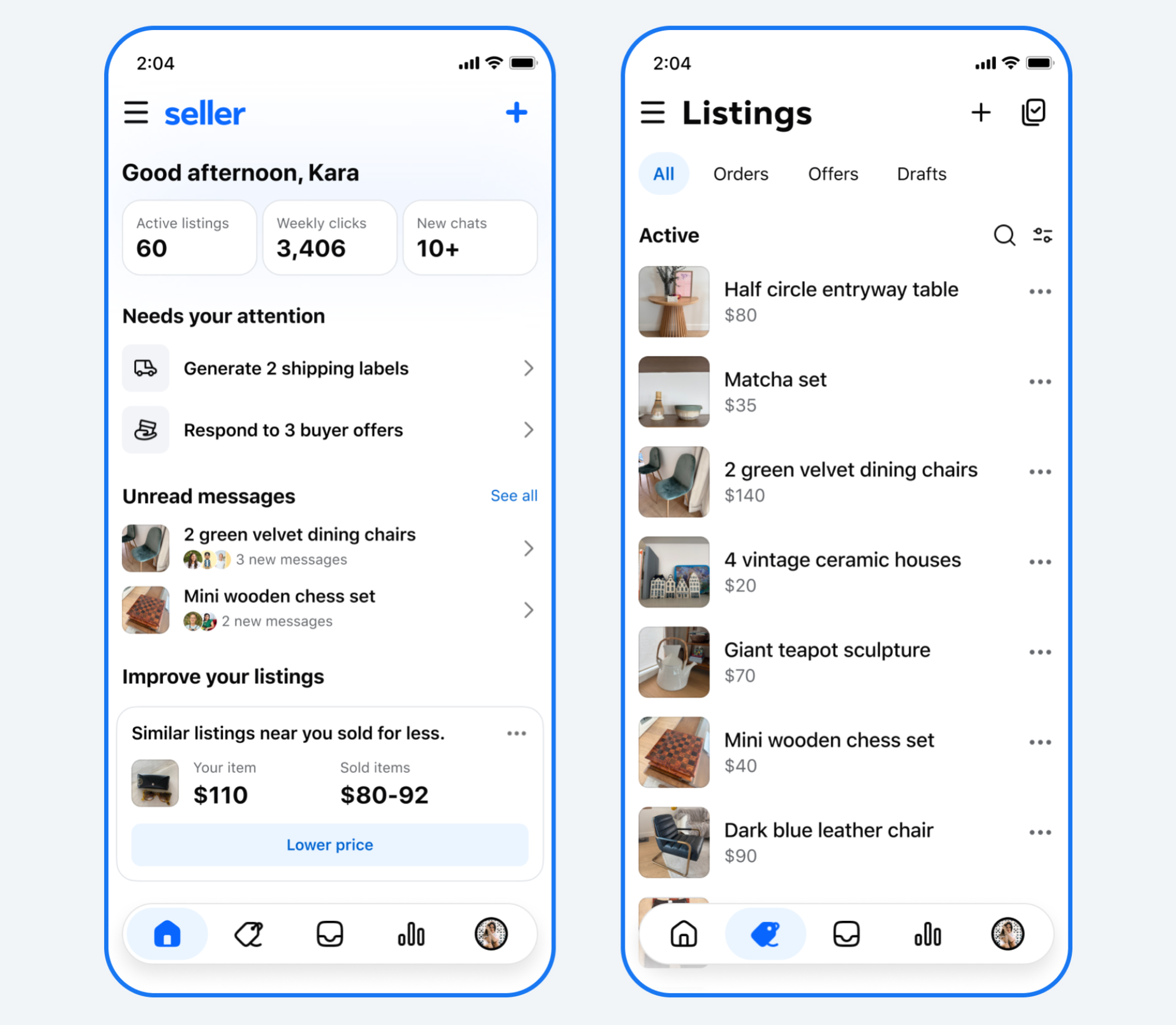
The launch of the Seller app on Friday represents a culmination of Meta’s efforts to streamline the chaotic, high-volume nature of online reselling. For the millions of users who treat Marketplace not just as a place to offload an old couch, but as a secondary revenue stream, the standard Facebook interface has long been a source of friction.
The new application is designed to be a frictionless environment for power users. Upon logging in with their existing Facebook credentials, sellers gain access to a dedicated suite of tools that go beyond the capabilities of the standard Marketplace tab. These include a centralized dashboard for inventory management, a specialized inbox for buyer inquiries, and comprehensive analytics that track the performance of both active and archived listings.
By decoupling these high-utility functions from the main Facebook app, Meta is acknowledging a fundamental truth about its platform: Facebook is no longer just a place to talk to friends; it is an economic hub.
A Chronology of Marketplace Evolution
To understand why Meta is investing in a standalone app, one must look at the trajectory of Facebook Marketplace since its inception.
- 2016: Facebook launches Marketplace, a direct, mobile-first challenge to Craigslist, aimed at facilitating local commerce.
- 2018–2020: The platform experiences explosive growth, integrating features like shipping, local pickup, and business pages, effectively becoming the default online garage sale for millions.
- 2023–2025: As social engagement on the core Facebook app stabilizes, Marketplace usage surges, with internal data revealing that a staggering one-third of young adults on the platform are active Marketplace users.
- May 2026: Meta launches "Forum," a standalone app designed for Facebook Group administrators, signaling a new strategy of creating "power user" satellites.
- July 2026: Meta officially releases the "Seller" app, formalizing the professionalization of the Marketplace experience.
This timeline reflects a deliberate, phased transition from a general-purpose social network to a modular ecosystem of specialized professional tools.
The Technology Under the Hood: AI-Driven Commerce
One of the most compelling features of the Seller app is its heavy integration of artificial intelligence. In an era where manual data entry is viewed as a barrier to entry, Meta has introduced a "Scan-and-List" feature.
Users can simply point their smartphone camera at a product, and the app’s AI will automatically populate the listing details, including title, category, and suggested pricing. This is a game-changer for high-volume resellers who spend hours documenting inventory. By removing the tedious aspects of the selling process, Meta is positioning itself as the most efficient platform for amateur and professional sellers alike.
Supporting Data: Why Marketplace Matters
The numbers behind the platform are staggering. According to internal metrics provided by Meta, more than 420 million items are listed on Marketplace every single month. This volume is not merely a byproduct of occasional users clearing out their closets; it represents a robust, persistent economy.

- User Demographics: One-third of all young adults using Facebook are active Marketplace participants. This statistic is critical for Meta, as it proves that even as younger users diversify their social media usage, the utility of Marketplace remains a primary draw for the platform.
- Monetization Strategy: Despite the immense volume of transactions, Meta maintains a unique monetization model: it does not take a commission or percentage of sales. Instead, the company relies on an ad-supported model within the Marketplace interface. By keeping the barrier to entry at zero, Meta ensures a high density of listings, which in turn attracts more buyers, creating a powerful network effect that competitors like eBay or specialized resale apps struggle to replicate.
Official Responses and Strategic Vision
In an interview with The New York Times, Tom Allison, the head of Facebook, provided clarity on the company’s broader vision. He likened the new Seller app to a professional-grade video editing suite—a tool meant to empower the "creator" class of commerce.
"We want to provide the infrastructure for those who are building businesses on our platform," Allison stated. "Just as we provide professional tools for creators on Instagram, we recognize that our Marketplace sellers are creators in their own right. They deserve tools that match the scale of their ambition."
This shift suggests that Meta is moving toward a strategy of "unbundling." By providing standalone applications for specific segments—like Group Admins (via Forum) and Marketplace Sellers (via Seller)—Meta is creating a "sticky" ecosystem. Even if a user spends less time scrolling through their Facebook feed, the necessity of the Seller app ensures they remain within the Meta ecosystem throughout their workday.
Implications for the Future of Online Commerce
The release of the Seller app has significant implications for the broader retail landscape.
1. The Death of the "Generalist" App
For years, the industry predicted that "super-apps" would handle everything from social interaction to grocery shopping. Meta’s current strategy suggests the opposite: the future lies in specialized, high-utility apps that work in tandem with a central hub. By separating these tools, Meta is reducing "feature bloat" in the main Facebook app while providing a premium experience for its most valuable users.
2. A Challenge to Niche Marketplaces
Platforms like Poshmark, Depop, and eBay are currently on notice. By integrating AI-assisted listing and maintaining a zero-fee structure, Facebook is leveraging its massive user base to undercut the costs associated with specialized resale platforms. If a user can list a product in seconds via the Seller app without paying a commission, the incentive to use competing platforms diminishes significantly.
3. The Shift to "Prosumer" Social Media
We are witnessing the end of the "passive social media" era. The next frontier for platforms like Facebook is the "prosumer" market—users who are not just consuming content, but are actively producing goods, managing communities, or running businesses. By catering to these users, Meta is insulating itself against the volatility of social media trends.
Conclusion: Is This the Reinvention of Facebook?
For some, Facebook may still feel like a digital relic of the mid-2000s. However, the release of the Seller app proves that Meta is far from stagnant. By treating its users as economic participants rather than just passive scrollers, the company is successfully pivoting into the role of a digital infrastructure provider.
Whether this move will satisfy investors looking for growth or effectively combat the dominance of TikTok remains to be seen. What is clear, however, is that for the millions of people who rely on the local, high-volume, and free nature of Facebook Marketplace, the platform is not dying—it is evolving into a professional-grade engine for the modern gig economy.
As Meta continues to roll out these standalone tools, the social network as we once knew it may fade into the background, replaced by a sophisticated, AI-driven suite of professional utilities that are essential for the next generation of online commerce. In the digital age, the most successful companies are often those that stop trying to be everything to everyone and start being the most indispensable tool for someone. With the Seller app, Meta is betting that the power sellers of the world are the key to its next decade of relevance.











