

For content creators across the globe, the pursuit of high-fidelity audio in a compact form factor has long been dominated by one name: DJI. Following the resounding success of last year’s DJI Mic Mini—a device lauded for its portability, intuitive app integration, and accessible price point—the tech giant has officially pulled back the curtain on its successor: the DJI Mic Mini 2.
However, as the creative community begins to evaluate the incremental upgrades brought by this new iteration, a stark reality has emerged. While the device is rolling out across international markets, American creators are being left in the dark. Once again, regulatory hurdles and corporate strategy have created a geographical divide, leaving U.S.-based users to watch from afar as the latest tool in the creator economy bypasses their market entirely.
The Core Facts: What’s New in the Mic Mini 2?
The DJI Mic Mini 2 arrives as a refined iteration rather than a radical reinvention. First identified by industry observers at The Verge, the product is currently hitting shelves in most global markets.
Pricing and Bundling
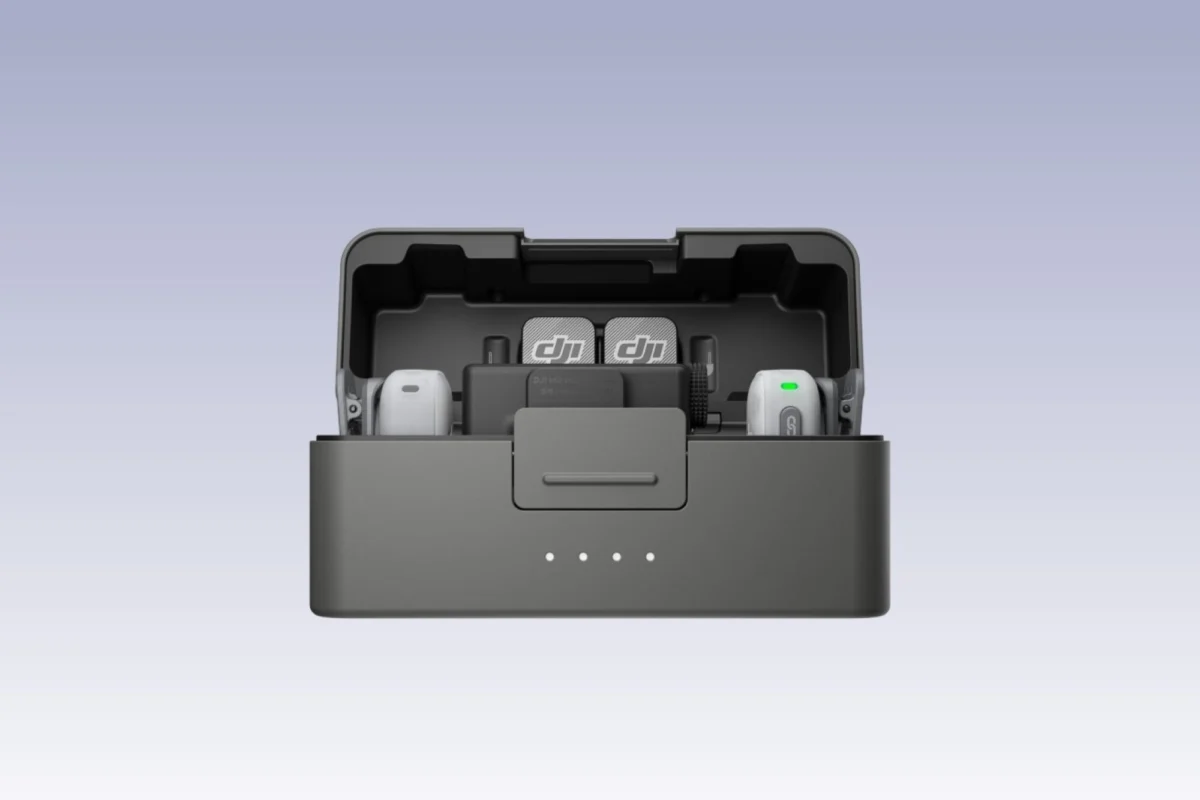
The launch strategy for the Mic Mini 2 centers on tiered accessibility. The entry-level bundle, priced at approximately €59, provides a comprehensive starting point for solo creators, including:
- A single mic transmitter.
- A dedicated wireless receiver.
- A compact charging case designed for on-the-go replenishment.
For those requiring more robust production capabilities, a premium bundle is available at approximately €99. This package upgrades the kit with a larger receiver, two transmitters for multi-person interviews or dual-channel recording, and an expanded charging case.
Aesthetic and Functional Upgrades
The hardware updates, while modest, address specific pain points identified in the original model. The standout feature of the Mic Mini 2 is a series of magnetic, swappable mic covers. These covers allow users to customize the physical appearance of their microphones, either to blend into specific clothing or to serve as a stylistic accent.
Beyond the aesthetic, DJI has introduced new, specialized voice presets. These software-based enhancements are designed to streamline post-production workflows, allowing creators to achieve professional-grade vocal profiles directly at the point of capture, rather than relying on heavy software intervention later.

Chronology: The Evolution of DJI’s Audio Dominance
To understand the current state of the Mic Mini 2, one must look at the trajectory of DJI’s expansion into the audio hardware space.
- 2023: The Original Breakthrough: DJI launched the original Mic Mini to widespread critical acclaim. It was positioned as the "budget-friendly" alternative to industry standards, proving that high-quality wireless audio did not require an oversized footprint or a professional cinema budget.
- Early 2024: Mounting Regulatory Friction: Throughout the past year, DJI has faced increasing scrutiny in the United States. This period saw the company’s product pipeline slow to a crawl in the U.S. market, as federal investigations and trade restrictions began to complicate the launch of new hardware, ranging from drones to handheld stabilizers.
- Late 2024/Early 2025: The Silent Launch: With the introduction of the Mic Mini 2, the pattern of "delayed or denied" U.S. releases has crystallized. While global markets celebrate the release, the U.S. remains the only major market consistently excluded from these rollouts.
Supporting Data: The Impact on Content Creators
The appeal of the Mic Mini line lies in the intersection of form and function. Market data from the past 18 months suggests that the "vlogging" and "short-form video" segments are the fastest-growing categories in consumer electronics.
The original Mic Mini’s success was driven by three core pillars:
- Portability: The ultralight design made it an essential companion for smartphone-first creators.
- App Ecosystem: DJI’s mobile application allows for real-time gain adjustment, noise cancellation toggling, and firmware updates, effectively putting a sound engineer’s console in the palm of the user’s hand.
- Price-to-Performance Ratio: At a sub-€100 price point, the hardware outperformed microphones costing two to three times as much, democratizing high-quality audio for students, social media influencers, and independent journalists.
The Mic Mini 2 seeks to double down on these metrics. By introducing magnetic covers, DJI is clearly targeting the aesthetic-conscious creator who views their equipment as a part of their overall "look." However, the lack of a significant jump in audio sampling rates or battery life suggests that DJI is prioritizing workflow refinement over revolutionary sound technology.
The "U.S. Problem": Official Responses and Context
The elephant in the room is the persistent lack of a U.S. release. When asked about the absence of a dollar price tag and the lack of availability in the United States, DJI has remained largely opaque, mirroring the approach taken during the recent launch of the Osmo Pocket 4 and other high-profile gear.
The root cause is a complex web of geopolitical and regulatory tension. The U.S. government has expressed ongoing concerns regarding the data privacy and security protocols of Chinese-manufactured electronics. These concerns have manifested in a series of legislative efforts aimed at restricting or outright banning the use of DJI products in various government and private sectors.
Consequently, for every new release, DJI must navigate an increasingly hostile regulatory environment. The result is that the U.S. launch of any new DJI hardware is now indefinitely postponed, with no clear timeline for when—or if—these products will ever officially reach American consumers.

Implications for the Creative Industry
The implications of this situation are twofold: one for the market, and one for the individual creator.
The Fragmented Market
For the global market, the Mic Mini 2 is a win. It provides an affordable, high-quality tool that keeps the creator economy moving forward. However, for the U.S. market, the situation is creating a "gray market" economy. Already, we are seeing U.S.-based creators resorting to importing devices from Europe or Asia, which often entails paying premium shipping fees, dealing with warranty voiding, and navigating potential power-adapter compatibility issues.
The "Innovation Plateau"
From a technical standpoint, the modest nature of the Mic Mini 2’s upgrades—compared to the significant leap from the original DJI Mic to the Mic Mini—suggests that the market for compact wireless audio may be reaching a point of diminishing returns. When the most notable update is a set of magnetic, colored covers, it indicates that the hardware is already "good enough." The real innovation in the future will likely move away from the microphone itself and into AI-driven audio processing software.
The Creator’s Dilemma
American creators who rely on the DJI ecosystem are now forced to make a difficult choice: stick with aging hardware that is increasingly difficult to service, or jump ship to competitors like RØDE or Hollyland. While these competitors are stepping up to fill the void left by DJI’s absence in the U.S., many creators feel a strong brand loyalty to DJI’s intuitive app and seamless integration.
Conclusion
The DJI Mic Mini 2 is a testament to the company’s ability to iterate on a winning formula. It is stylish, portable, and remains a top-tier choice for creators who value simplicity and efficiency. However, the shadow cast by its absence in the United States cannot be ignored.
As the regulatory standoff continues, the Mic Mini 2 serves as a symbol of the broader fragmentation of the tech world. For international users, it is a new tool to elevate their storytelling. For U.S. users, it is yet another reminder that the geopolitical landscape is now an inextricable part of the creative process. Whether this creates an opening for American audio competitors or simply forces creators to get more creative with their procurement methods remains to be seen. One thing is certain: in the world of content creation, the silence in the U.S. market is growing louder by the day.












No comments yet. Be the first to join the conversation!