

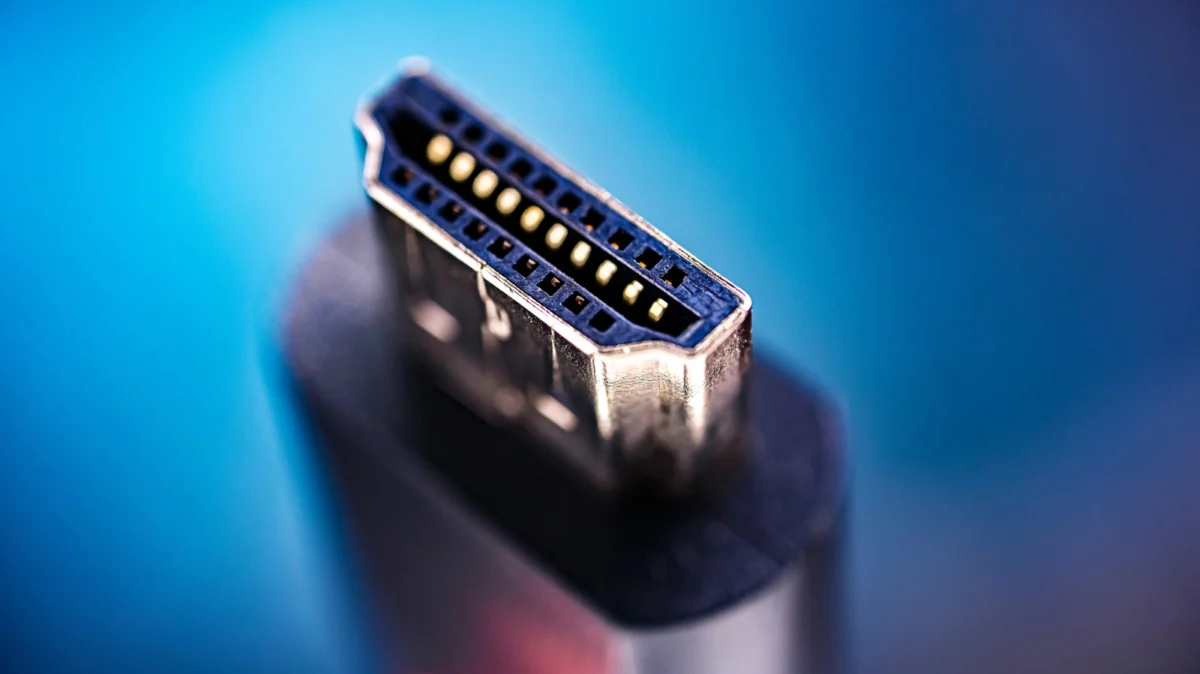
For decades, the home theater industry has been haunted by a persistent myth: that a $100 HDMI cable will yield a "richer," "sharper," or "more vibrant" picture than a $10 alternative. In the world of high-fidelity audio and video, consumers are often conditioned to believe that price is a direct proxy for performance. However, when it comes to the digital infrastructure connecting your gaming console to your television, the reality is far more grounded in physics than in marketing hype.
In most cases, a budget-friendly cable is indistinguishable from its high-end counterpart. Because HDMI transmits digital data—a stream of ones and zeros—it does not "process" the image or sound in the way an analog cable might have in the era of VCRs and component video. If the cable can reliably carry the bandwidth required by your display and source device, you have reached the ceiling of potential quality. Spending more will not make the picture sharper or the sound better; it will simply make your wallet lighter.
The Core Reality: Digital Data and Bandwidth
To understand why expensive cables are rarely the solution to AV woes, one must understand what an HDMI cable actually does. Unlike older analog cables, where signal degradation could lead to fuzzy pictures or ghosting, an HDMI cable acts as a digital conduit. It is a highway for data packets.
The data being transmitted—whether it is a 4K movie stream or an uncompressed gaming feed—either arrives intact or it does not. If the cable is high enough quality to carry the signal, the image will be perfect. If the cable is incapable of handling the bandwidth, you will not see a "dimmer" or "blurry" picture; you will likely see no picture at all, or perhaps flickering, "snow," or intermittent blackouts.
There is no "audiophile" version of a digital bit that produces a warmer tone. The bits are binary. If your system requires 48Gbps to maintain a 4K/120Hz signal, a cable that supports that bandwidth will provide the exact same performance regardless of whether it cost $10 or $100.
A Chronology of the HDMI Standard
The confusion surrounding HDMI cables is partially due to the evolution of the technology itself. Since its inception in the early 2000s, HDMI has undergone several major iterations, each designed to handle increasing resolutions and frame rates.
- HDMI 1.0 – 1.2: The early days, supporting basic HD resolutions. These cables were sufficient for the 720p/1080i era.
- HDMI 1.3 – 1.4: Introduced support for 1080p and early 3D capabilities. These cables were the standard for the better part of a decade.
- HDMI 2.0: A massive leap that brought support for 4K at 60Hz and HDR (High Dynamic Range), necessitating higher bandwidth.
- HDMI 2.1: The current gold standard, supporting 4K at 120Hz, 8K, and Variable Refresh Rate (VRR). This standard requires "Ultra High Speed" certification to handle up to 48Gbps.
- HDMI 2.2 / Ultra96: The emerging frontier, aimed at high-end display enthusiasts needing bandwidths up to 96Gbps for ultra-high refresh rate gaming and 8K displays.
The chronological shift in these standards is exactly why people often believe they need "better" cables. If a user tries to run a PlayStation 5 at 4K/120Hz using an old, legacy cable from 2010, the system will fail. The user then assumes the problem is "cable quality," when the reality is a lack of sufficient bandwidth capacity.
Supporting Data: Why Certification Matters
The HDMI Licensing Administrator (HDMI LA) is the official body that governs these standards, and they have strict rules against using "version numbers" (like "HDMI 2.1 cable") in marketing. This is because consumers were becoming confused by a landscape of contradictory labels.
Instead, the industry has shifted toward descriptive naming conventions that clearly denote the cable’s capabilities:
- Premium High Speed HDMI: Certified for up to 18Gbps. This is the sweet spot for most users who stream 4K content via Netflix, Disney+, or YouTube.
- Ultra High Speed HDMI: Certified for up to 48Gbps. This is essential for modern gaming consoles (PS5, Xbox Series X) and high-end PC gaming setups that demand 4K resolution at 120Hz.
- Ultra96 HDMI: The newest tier, supporting up to 96Gbps. This is largely overkill for the average household but is required for top-tier 8K displays and uncompressed 4K at 240Hz.
The data suggests that the most critical factor is not the price tag, but the official QR-coded certification label on the packaging. When a cable carries this certification, it has been lab-tested to ensure it meets the bandwidth claims. If you are shopping for a cable, ignore the brand prestige and look for the label.
Official Responses and Industry Guidance
Manufacturers like Sony, LG, and Samsung have become increasingly vocal about the necessity of using proper cables, especially as gaming technology has outpaced legacy hardware.
Sony, in its support documentation for the PlayStation 5, explicitly warns users against using older, unrated cables if they encounter black screens or resolution drops when attempting to engage 4K/120Hz modes. They advise users to utilize the cable included in the box—which is specifically engineered to handle the PS5’s bandwidth requirements—or to purchase a cable that explicitly carries the "Ultra High Speed" certification.
The industry consensus is clear: Do not pay for "gold-plated connectors" or "oxygen-free copper" if the cable doesn’t meet the necessary bandwidth certification. These are often marketing ploys designed to extract premiums from consumers who are worried about their high-end gear.
The Exceptions: When Spending More Actually Pays Off
While the "cheap cable is fine" rule holds true for 90% of home setups, there are specific, technical scenarios where spending more is not just recommended—it is mandatory.
The Length Factor
Physics is the enemy of long cables. As an HDMI signal travels through a copper wire, it encounters resistance and interference. At short lengths (under 3 meters), this is rarely an issue. However, when you need to run an HDMI cable across a room—perhaps to a ceiling-mounted projector—the signal begins to degrade.
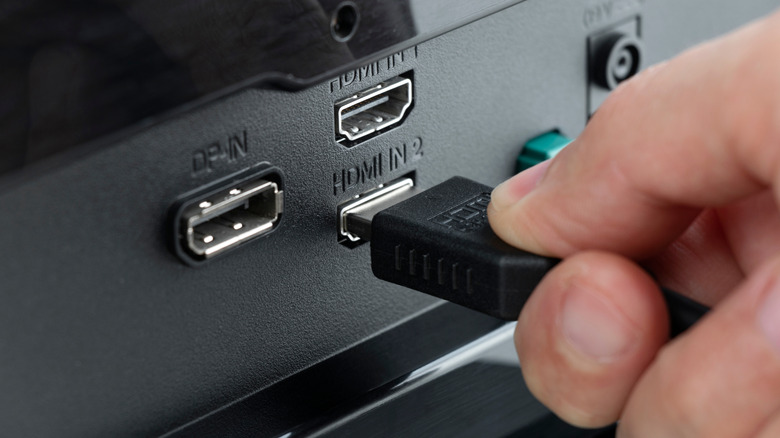
For these longer runs, a standard copper cable will eventually fail to maintain its high-speed integrity. This is where "active" or "optical" HDMI cables come into play.
- Active Cables: These contain small, powered circuits that "boost" the signal, ensuring it reaches the destination intact.
- Optical Fiber Cables: These convert the electrical signal into light pulses, which can travel much longer distances without loss.
These technologies are significantly more expensive to manufacture than standard copper cables. In this instance, you are not paying for "better picture quality" in a subjective sense; you are paying for the engineering required to transport a high-bandwidth signal over a long distance.
Directionality
A crucial implication of using active or optical cables is that they are often directional. Because they contain signal-processing electronics, the "Source" end must go into your player (console/PC) and the "Display" end must go into your TV. Plugging these in backward will result in no signal, a common point of frustration for users who don’t realize their premium, long-run cable requires specific orientation.
Implications for the Modern Consumer
The era of the "boutique" HDMI cable is effectively coming to an end as consumers become more tech-literate. The implications for the average buyer are twofold:
- Shop by Category, Not Price: Before you purchase, identify the needs of your device. If you are streaming, an 18Gbps cable is sufficient. If you are gaming, ensure you have a 48Gbps "Ultra High Speed" certified cable.
- Verify, Don’t Assume: Use the HDMI Licensing Administrator’s verification tools. If you are buying a cable that claims to be "Ultra High Speed," it should be verifiable via its packaging.
Ultimately, the best approach is to stop viewing HDMI cables as a component that needs "upgrading" and start viewing them as a piece of infrastructure. If the infrastructure meets the requirements of the data being sent, the performance will be optimal. By choosing the right category of cable, you ensure that your display is receiving the full, pristine signal intended by the creators, without falling for the premium pricing traps that have plagued the AV market for years.
In the modern digital age, the smartest purchase is the one that provides the necessary bandwidth at the lowest possible cost, leaving you more budget to invest in the hardware that actually impacts your viewing experience—your TV, your speakers, and your content.











