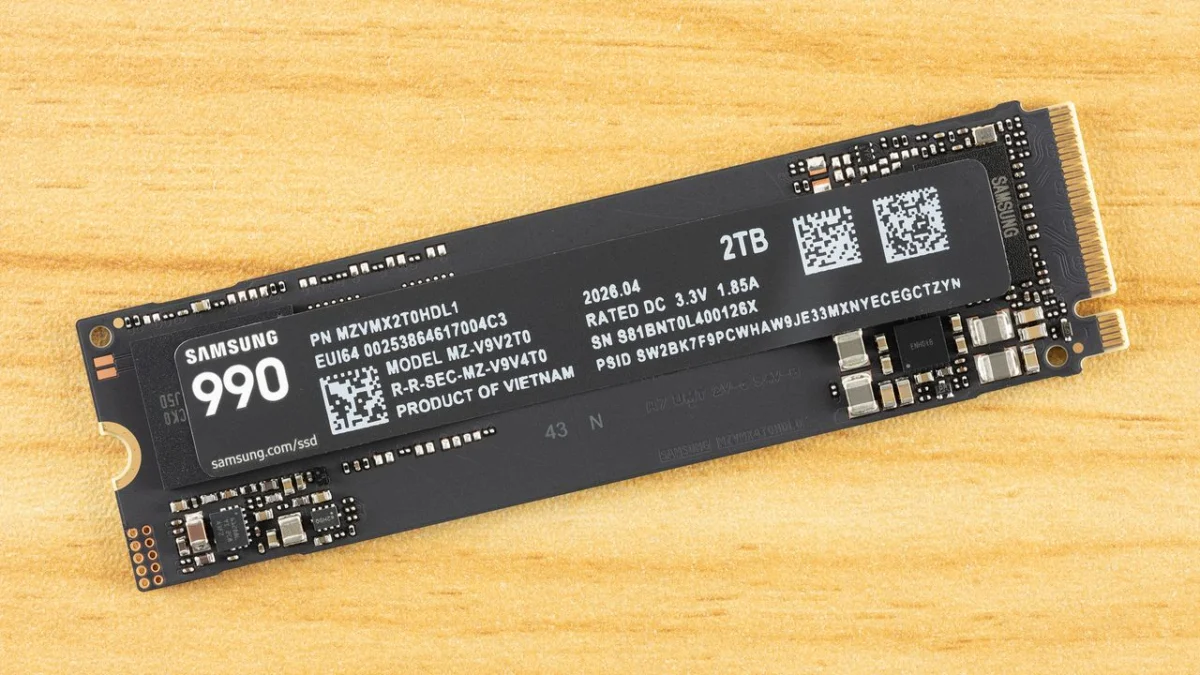
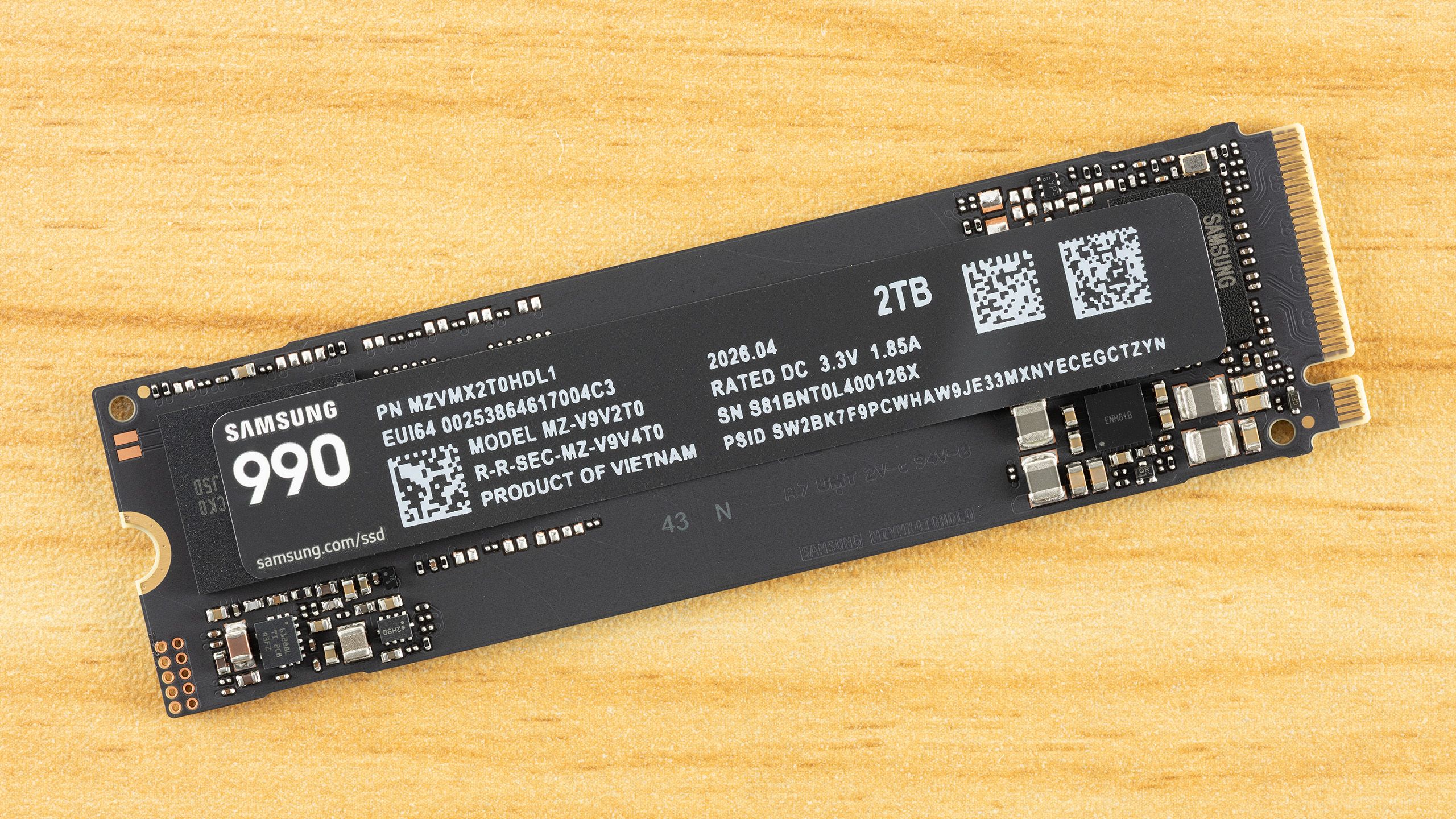
In the high-stakes world of PC hardware, storage has become one of the most volatile components for enthusiasts and system builders alike. As memory prices continue to fluctuate due to global supply chain pressures and shifts in manufacturing priorities, finding a high-performance, high-capacity drive at a reasonable price point has become increasingly difficult. However, a significant opportunity has emerged: Samsung’s newly launched 990 PCIe Gen 4 SSD (2TB) has seen a substantial price reduction, dropping to $339.99 on Amazon—a notable departure from its $529.99 MSRP.
For those looking to bolster their storage capacity without succumbing to the inflated costs of the current "RAMpocalypse," this deal represents a rare moment of relief. But beyond the price tag, what does the Samsung 990 actually bring to the table in a market saturated with QLC and TLC alternatives?
Main Facts: The New Standard in QLC Performance
The Samsung 990 series, introduced earlier this year, serves as a strategic pivot for the tech giant. Built as a QLC (Quad-Level Cell) derivative of the acclaimed 990 EVO Plus, the drive utilizes Samsung’s proprietary PiccoloQ controller paired with cutting-edge V9 QLC Flash memory.
While traditionalists have long debated the merits of QLC versus TLC (Triple-Level Cell) memory, the Samsung 990 makes a compelling case for the former, particularly for gaming and media consumption. The core advantage of the drive lies in its ability to leverage pSLC (pseudo-Single Level Cell) caching. By designating a portion of its capacity to act as a high-speed cache, the drive maintains impressive read/write performance during everyday tasks, provided the user keeps sufficient free space on the drive to prevent the controller from struggling with data management.
Key Specifications at a Glance:
- Interface: PCIe Gen 4.0
- Capacity: 2TB (with a 1TB variant also available)
- Architecture: V9 QLC Flash
- Controller: PiccoloQ
- Target Audience: Gamers, content consumers, and general workstation users.
Chronology: A Market in Flux
To understand why this discount is so significant, one must look at the recent history of the semiconductor memory market. The last 18 months have been defined by what industry analysts have dubbed the "RAMpocalypse"—a period marked by aggressive production cuts by major NAND and DRAM manufacturers intended to stabilize plummeting wholesale prices from 2022 and 2023.
As production slowed, inventories tightened. By mid-2024, the "oversupply" narrative had vanished, replaced by a surge in pricing for high-end components. Samsung, as the world’s leading memory manufacturer, has been at the center of this transition. The launch of the 990 series was carefully timed to provide a cost-effective, high-capacity storage solution that could sit beneath the flagship 990 Pro while still delivering the brand reliability and PCIe 4.0 throughput that modern users demand.
The current discount on the 2TB model represents the first major promotional push for the series, likely aimed at capturing market share as users look to upgrade their storage for increasingly massive AAA gaming titles and high-resolution video editing projects.
Supporting Data: Performance Benchmarking
In rigorous laboratory testing, the Samsung 990 has demonstrated that QLC-based drives are no longer the "second-tier" components they were once perceived to be. When compared against the existing 990 EVO and 990 EVO Plus, the 990 maintains near-identical latency figures, which is crucial for quick game load times and rapid system responsiveness.
Performance Highlights:
- Latency: The drive competes favorably with the 990 EVO, proving that the controller architecture is well-optimized for real-world usage patterns.
- Bandwidth: In synthetic benchmarks, the 990 outperformed the 990 EVO, indicating that the V9 QLC flash is capable of sustained throughput that satisfies the requirements of the PCIe Gen 4 interface.
- 3DMark Scores: The drive showed strong performance in gaming-specific benchmarks, holding its own against heavy hitters like the Crucial P310, which is widely considered the gold standard for current-generation QLC drives.
- Console Compatibility: For PlayStation 5 users, the 990 offers a compelling upgrade path. Its thermal efficiency and bandwidth make it an ideal "drop-in" drive for expanding console storage, often outperforming the base internal drives found in older storage configurations.
Official Perspectives and Industry Positioning
Samsung’s strategy with the 990 series is clear: they are targeting the "value-performance" segment. By utilizing V9 QLC technology, Samsung can offer higher density at a lower price point compared to their TLC-based Pro series.
Industry analysts note that while TLC remains the preferred choice for professional write-heavy workloads—such as 8K video rendering or server-side databases—the average consumer’s usage profile is predominantly "read-heavy." Gaming, streaming, and launching applications are tasks where the 990 excels. By positioning the drive in this bracket, Samsung is essentially acknowledging that the vast majority of users are paying for "over-spec" TLC drives they don’t actually need.
The company has maintained a focus on software support as well, with the Samsung Magician software suite providing users with firmware updates, health monitoring, and drive optimization tools that remain among the best in the industry.
Implications: Is Now the Time to Buy?
For the prospective buyer, the current $339.99 price point for the 2TB model serves as a "buy signal," but it comes with caveats.
Why the Price Matters
The SSD market is notoriously reactive. If you are currently operating on a full drive or are preparing your system for the upcoming holiday gaming season, the 990 offers a balance of price-to-performance that is difficult to find elsewhere. However, these discounts are often time-limited promotional events. Given the ongoing volatility in memory pricing, there is no guarantee that this price will hold through the next quarter.
The Trade-off: QLC vs. TLC
Users must understand the nature of the hardware. While the Samsung 990 is an excellent drive, it is not designed for endurance-heavy enterprise environments. For the average user—someone who installs games, edits the occasional photo, and runs productivity software—the life cycle of a QLC drive will comfortably span the lifetime of the PC build. However, power users who move terabytes of data daily should still weigh this against the durability of a TLC-based 990 Pro.
Strategic Recommendations:
- Evaluate Your Storage Needs: If you are hovering near the capacity limit of your current drive, 2TB is currently the "sweet spot" for price-per-gigabyte.
- Monitor Your Cache: Because this is a QLC drive, ensure you have at least 15-20% of the drive capacity free to allow the controller to manage the pSLC cache efficiently.
- Check Your Interface: While it is backwards compatible with PCIe 3.0, you will only see the full benefits of the 990 if your motherboard supports PCIe 4.0.
Conclusion: A Calculated Upgrade
The Samsung 990 represents the evolution of storage tech, proving that density and speed can coexist without an astronomical price tag. In an era where hardware costs often feel unpredictable, this discount offers a rare moment of stability for the savvy consumer.
Whether you are a console gamer looking to expand your library or a PC enthusiast building a secondary rig, the 990 provides the reliability of the Samsung brand combined with performance that punches well above its class. As the memory market continues to shift, securing high-quality storage at a discount is a strategy that will pay dividends in system longevity and performance. With the current Amazon promotion offering a significant markdown, the barrier to entry for high-speed, high-capacity storage has never been lower—but as history in the tech sector suggests, these opportunities are fleeting. Those in the market for a storage upgrade would be wise to act while the current price adjustment remains in effect.